Honours and awards: Fellow of the Society of Antiquaries of Scotland

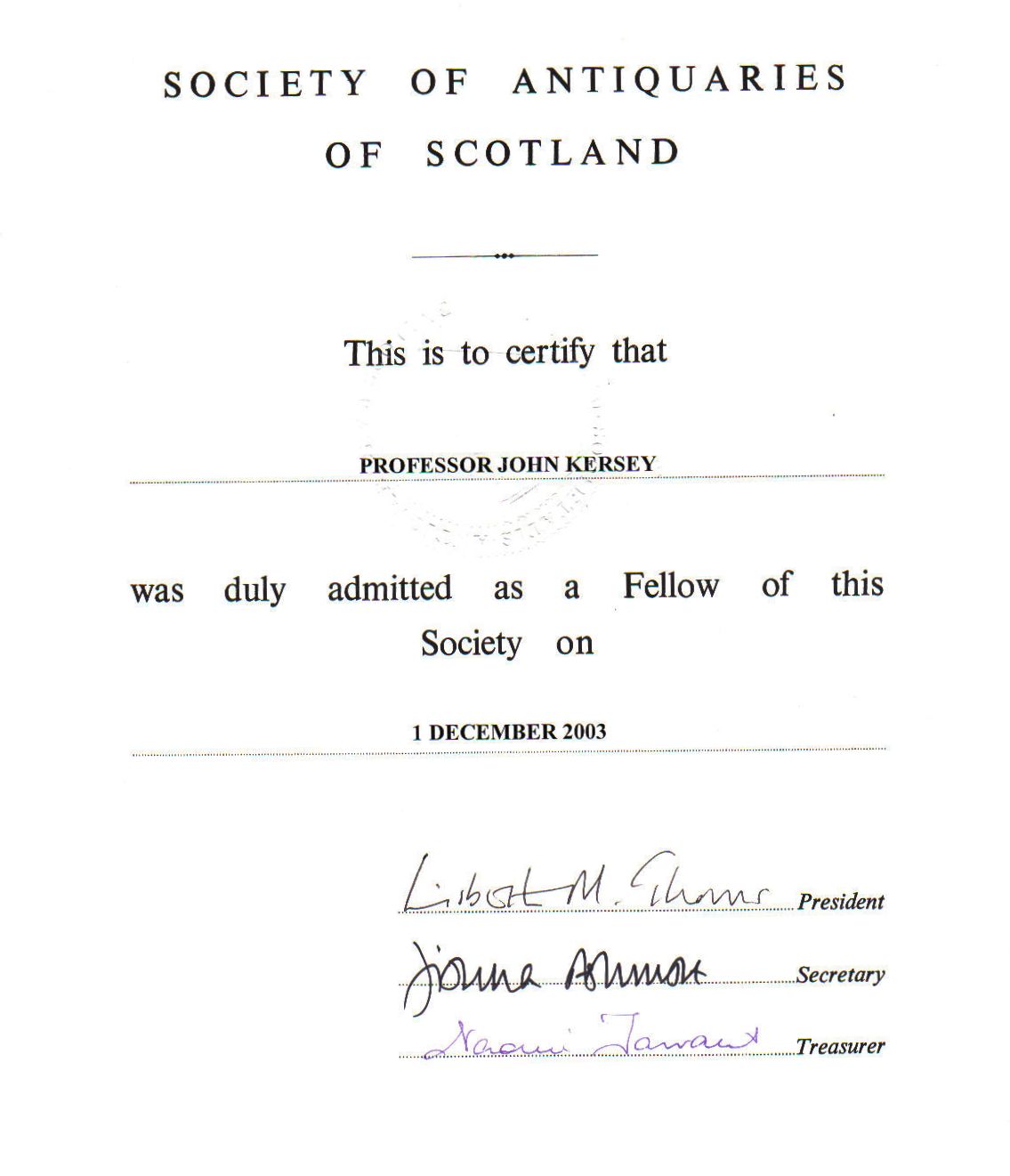
I was a Fellow of the Society of Antiquaries of Scotland between December 2003 and July 2018.

FSA Scot

At the time of my election, the Fellowship was described as “the mark of the established scholar”. The Fellowship was based on election with Fellows required to remit an annual subscription to maintain their status.

After fourteen years as a Fellow, I resigned from the Society in July 2018.

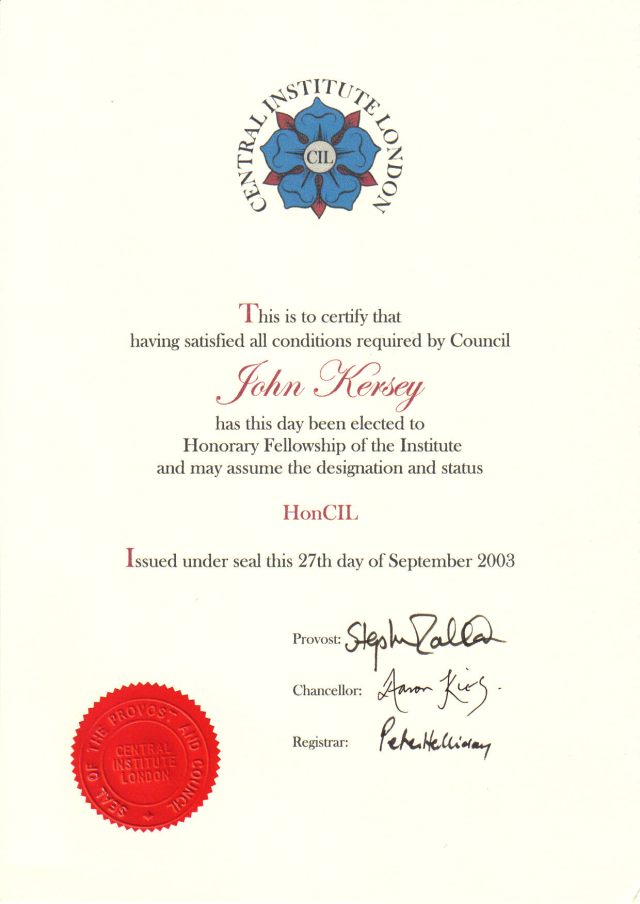
Honours and awards: Honorary Fellowship of the Central Institute London, Fellowship of the Academic Society of London

The Central Institute London was originally founded in 1989. In a bid to attract new members, the constitution and format of the Institute was changed at the end of 1999. CIL became a non-examining social body, retaining some elements of a learned society, concerned with academic dress, ceremonial and related issues. It advised several bodies on the design of academic dress and succeeded in raising awareness of its areas of interest.

The Institute elected applicants to membership at one of several levels. The level of membership was assessed by Council based upon the applicant’s CV and a supporting letter of application.

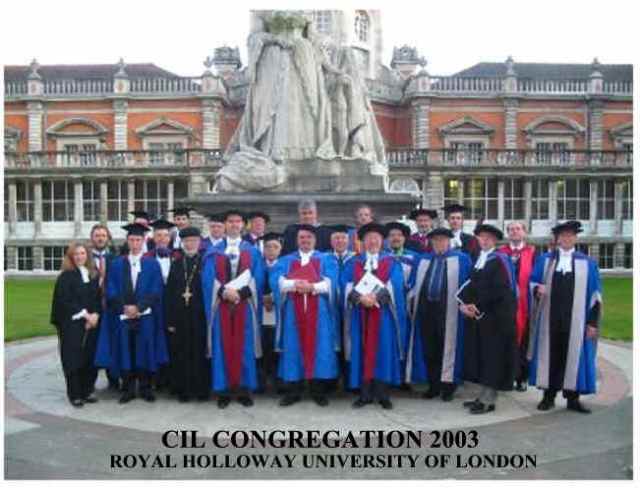
The Institute held three successful Congregations, the last of which, including the Sir John Gielgud Memorial Lecture, took place at the chapel of Royal Holloway, University of London, on 1 November 2003. On that occasion, I was admitted to Honorary Fellowship of the Institute.

I am in the back row, second from right.

In May 2005, the Council of CIL announced that the Institute would cease its activities, citing a decline in membership. This was in my view regrettable, since CIL fulfilled a unique niche in its fields of interest. CIL wore its (considerable) learning lightly. It encouraged members to enjoy academic dress and ceremonial without becoming stuffy or overly tied to the academic establishment in its approach.

On 1 November 2000, Andrew McConnell, quondam Registrar of the CIL, had established the Academic Society of London, which was described as being in the style of the ancient Academies of Rome, as an intellectual centre where scientific, literary and artistic culture mingled side by side together for the greater achievement of mankind, providing the context for the ‘Renaissance man’.

The aims of the Society were: (1) to provide and foster the opportunity for an open dialogue across all disciplines of academia (2) To foster and encourage a more combined interdisciplinary approach to research and study (3) To reconsider academic credentials and achievements within a framework of ‘connoisseurship’ as encouraged by the philosophy of Elliot Eisner.

On 1 June 2000, the ASL was incorporated by simple charter into the CIL. It consisted of Members, who were admitted without prerequisites, and Fellows, who were diplomates, graduates or otherwise professionally qualified. The ASL survived the dissolution of the CIL in 2005 and was run by a Council of three members for some years, now electing solely to the Fellowship by invitation only. I was elected an Honorary Fellow of the Academic Society of London in June 2008, shortly before it too was dissolved.

Honours and awards: Honorary Doctor of Music from Ansted University

Ansted University was founded in 1999 and chartered in the British Virgin Islands as a private international university. From the outset its focus was on the delivery of education on a nonprofit basis via distance learning. Ansted is an acronym standing for A Noble System of Technology for Educational Development.

The University was supported by the Ansted Foundation, whose focus was on supporting Ansted University financially in the area of project development funding including campus set-up funding, grant programmes for research studies and publications.

The Foundation and the University subscribed to the following aims:

  • Activities that increase mutual understanding and tolerance for diversity
  • Activities that sustain the vitality of artistic traditions in changing contexts
  • Activities that aim to preserve, document or increase public access to tangible and intangible culture
  • Activities that address common problems requiring international cooperation etc.
  • To promote World Peace through cultivating of Social Responsibility practice
  • To promote centres of excellence and knowledge corridors and entrepreneurship in education, training and research

The University established Ansted University Asia Regional Service Center in Penang, Malaysia. This office co-ordinated Ansted activities internationally under the leadership of Professor Roger Haw. The University grew through making agreements and affiliations with other universities and professional bodies internationally. Although it was a private body, its commitment to quality was recognized to the point that its graduates were accepted for further study at several accredited universities in the USA. It also partnered with the World University Roundtable in Arizona, USA, which was how I came to become involved with its work.

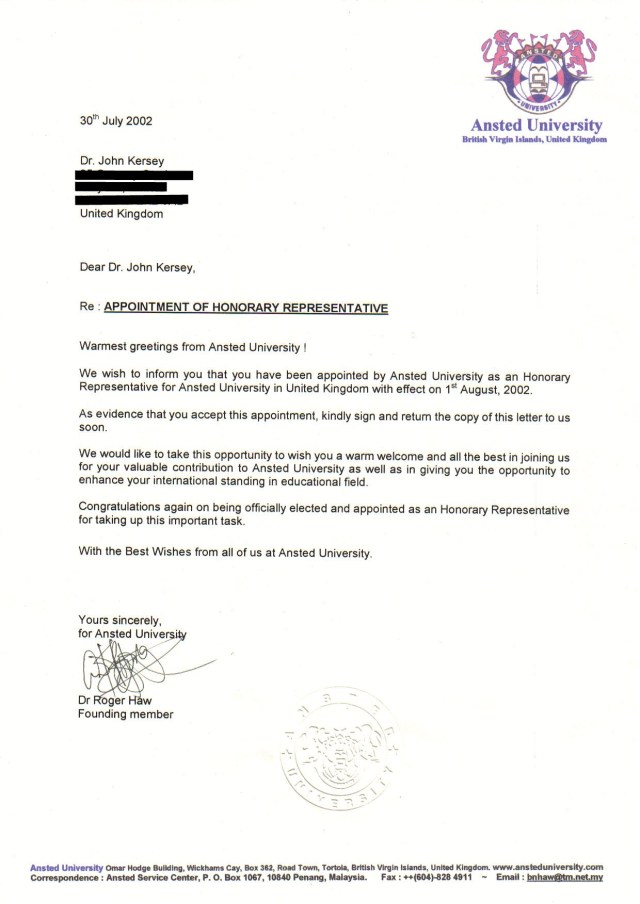
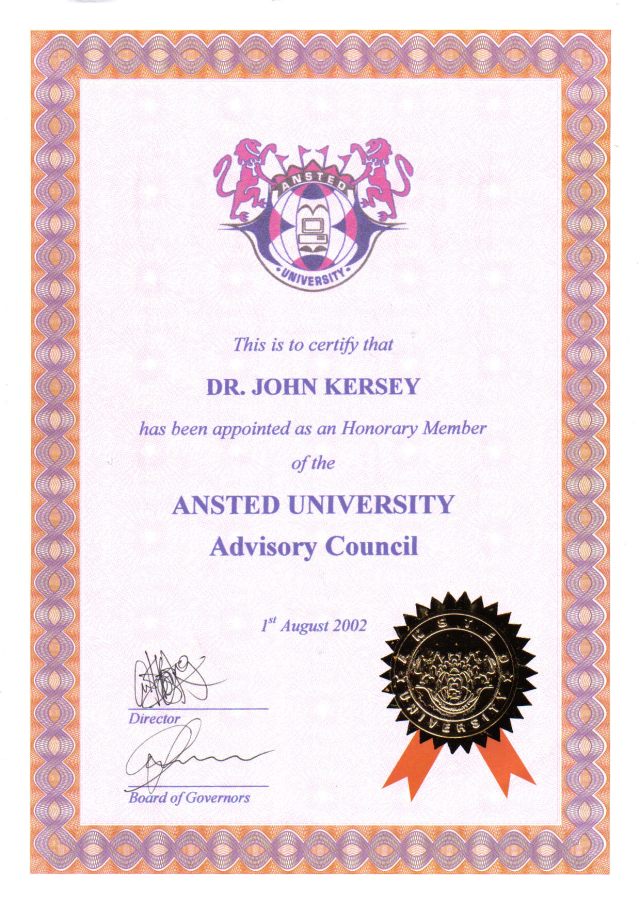
Between 2002 and 2007, I served as Honorary Representative for the UK and as an Honorary Member of Advisory Council for the University.

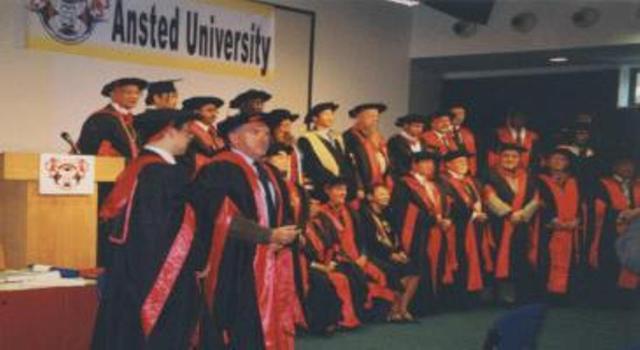
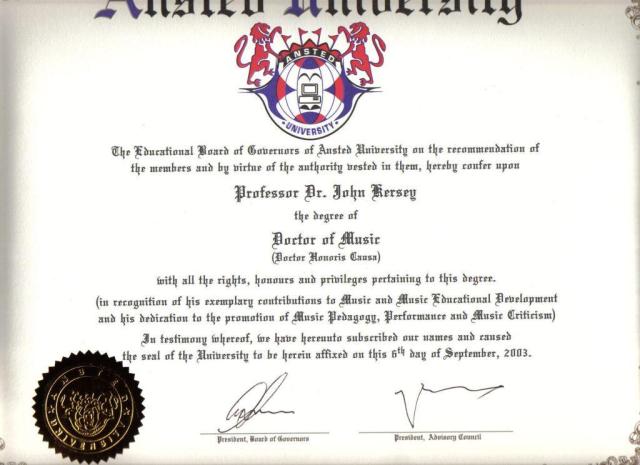
In 2003, the University announced that it wished to confer on me the honorary degree of Doctor of Music, and that this would be done at its convocation ceremony in my hometown of London, UK. I was a member of the organizing committee for this event, which took place at the North Campus of London Metropolitan University. Professor David Crowther of London Metropolitan University also held a professorship at Ansted University and served as chairman of the organizing committee. At the ceremony, my musical setting of the Ansted anthem was also performed.

The honorands at the convocation. I am in the front row, first on the left (with my back to the camera).

The citation for the award read “in recognition of his exemplary contributions to Music and Music Educational Development and his dedication to the promotion of Music Pedagogy, Performance and Music Criticism”.

In my address to the Convocation, I expressed some thoughts about the progress that had been made in education by institutions such as Ansted University,

“No longer is the educative process invariably seen as an externality to be imposed upon the individual, but increasingly as a holistic experience that draws upon the many facets of human potential and that has direct and absolute relevance to the world of employment. In every field of learning we are seeing a greater concentration on the essentials of professional practice, the “tools of the trade”, so to speak, which might be conceived as formulating a set of flexible competences that will adapt and grow through the career of an individual. Thus we can more truly today than ever before speak of education as a means to the empowerment of the whole person; an intellectual and professional liberation from otherwise restricted horizons.

An important part of this revolution is one that is particularly close to my own heart, which is the process by which significant competencies and knowledge acquired outside a formal educational setting are now capable of being converted into academic credit for mid-career individuals, who are thus now able to achieve academic recognition for those core elements of skills and learning that have brought about their existing professional success. This life-changing opportunity represents an important shift in the way we perceive learning; no longer does learning undertaken outside the classroom necessarily have a lesser value than that undertaken within it, nor does learning stop at the point of course completion. Indeed, since one of the elements of providing individuals with the “tools of their trade” is teaching them how to continue learning and developing, it would be rather disappointing if that learning and development concluded as they walked out of their University!

It is the furtherance of these things, as well as the constant need to widen educational participation, that has contributed to the evolution of the new methodologies of distance learning, which are now accepted as mainstream within progressive educational communities, and which have begun to create a global marketplace in educational terms, with all the implications of diversity and increased consumer choice that this brings with it. Many of those involved in education have talked about the creation of a society where lifelong learning takes place. In Britain today, that’s starting to happen, and for many of us, it is not a moment too soon.”

When I established Claremont University of Arts (Seychelles) very much on the principles cited in my address above, Ansted University signed a wide-ranging Memorandum of Understanding with the new institution.

However, the focus of Ansted University had now shifted from a generalist institution to one whose profile was increasingly dominated by the fashionable topic of Corporate Social Responsibility. While I was generally in sympathy with CSR, it was not an area of my expertise, nor something that I wanted to pursue in depth. As a result, I became less involved with the University and did not renew my appointments as representative and council member when they expired in 2007. The University’s website became defunct in 2022, when it is assumed to have closed.

Honours and awards: Order of St Cornelius the Centurion

The Order of St Cornelius the Centurion was a religious and chivalric order of ecumenical and international membership within the Anglican Independent Communion, a Continuing Anglican church. The mission of the Order was expressed in prayer and service to others. The Order counted over 700 members and had close links with the Legion of Frontiersmen-IOC, the Sovereign Military Order of The Temple of Jerusalem, the Imperial Ethiopian Order of Saint Mary of Zion, and the Order of Saint Stanislas.

The Order was led by a Lord Abbot, the late Dr Colin Tatem (1946-2006). Dr Tatem was born on the Turks and Caicos Islands and lived for much of his life in the Bahamas. He was variously a college professor, a journalist, and a lecturer at a Boys’ Correctional Facility. He was consecrated as an Abbot for the Order of St Cornelius by the late Archbishop Peter Compton-Caputo of the Anglican Independent Communion. Archbishop Peter’s widow, Deaconess Catherine Compton-Caputo, served as Dr Tatem’s Special Assistant for Community Outreach in the Order.

Latterly, Dr Tatem’s son Christopher, who was also ordained and served as Prior of the Order, established the St Cornelius Abbey in Newark, New Jersey, USA.

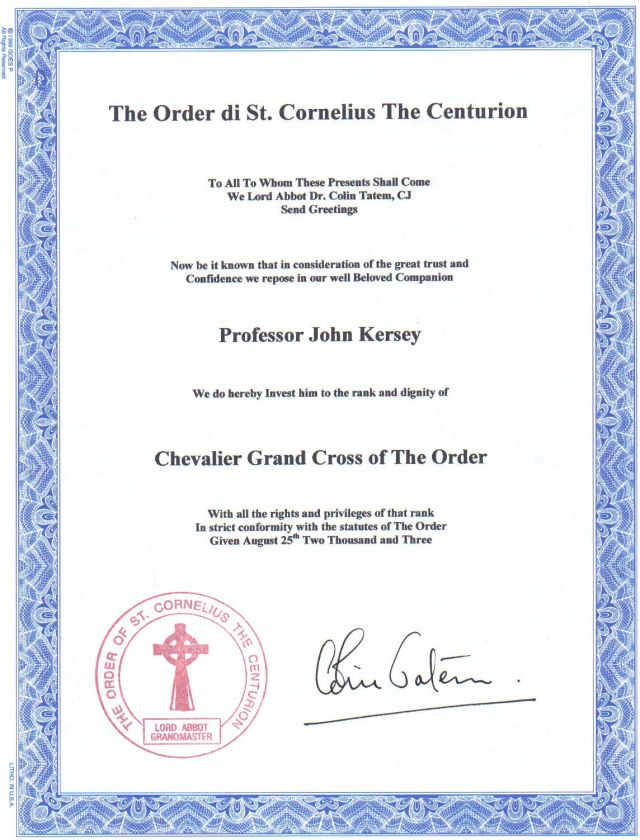
In 2003, the Order of St Cornelius the Centurion admitted me as a Chevalier Grand Cross.


Honours and awards: Fellowship of the Faculty of Liturgical Musicians

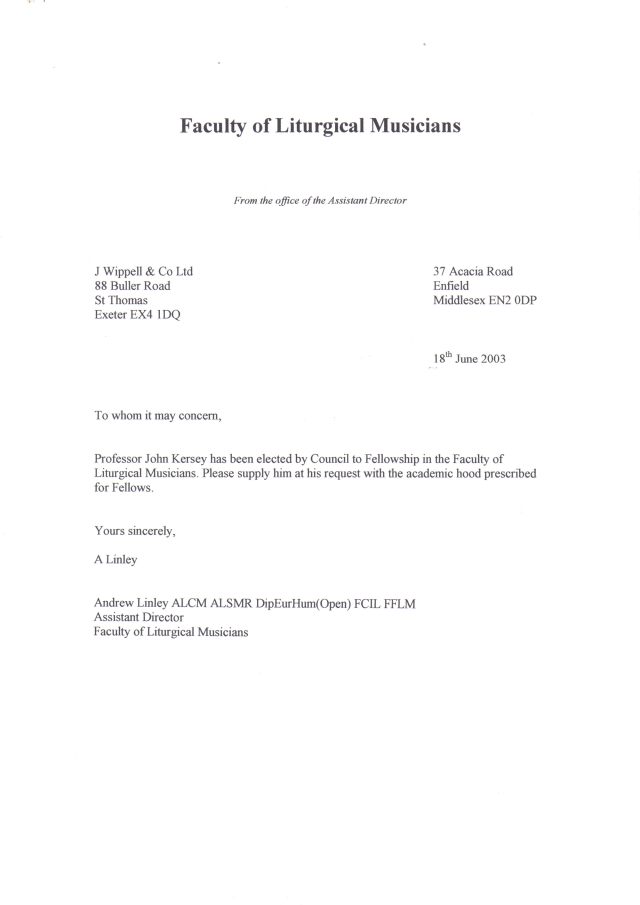
Originally founded as a subsidiary society of the Central Institute London in 2001, the Faculty of Liturgical Musicians was independently administered from 2003. Fellowship of the FLM was originally open only to existing members of the CIL who held a musical qualification; after 2003, the CIL restriction was lifted and all who were musically qualified were permitted to apply, with the Faculty defined as “an independent learned society composed of church musicians and other persons interested in liturgical music.” There were no fees payable for membership.

As of 2004, the aims of the FLM were defined as follows:

“a.) To promote the highest standards in the performance of liturgical music.
b.) To raise awareness of the richness and diversity of liturgical music and its associated heritage.
c.) To encourage liturgical musicians to share their skills and experiences, making liturgical music accessible to a wider audience.
d.) To preserve the heritage of liturgical music.
e.) To give formal recognition to the achievements of its members.”

According to its Constitution, “Those elected Fellows shall either hold a higher-level qualification in, or substantially in, music, for example, a degree, or a music college diploma at any level, or have several years’ experience as a church musician of demonstrable ability.”

The Director of the FLM, Stephen R. Crosbie, was organist and choirmaster of Kirkcudbright Parish Church, Dumfries.


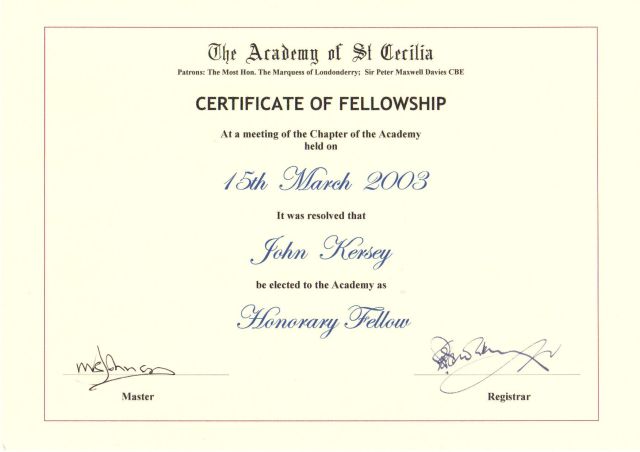
Honours and awards: Honorary Fellowship of the Academy of St Cecilia

The Academy of St Cecilia was founded in 1999 as a learned and social society with a particular interest in Early Music, loosely interpreted as music before 1825. It has included a number of distinguished figures in the field of Early Music amongst its Honorary Fellows, and has enjoyed the association of patrons who include James Bowman, Monica Huggett, Naji Hakim, Professor Reinhard Strohm and Sir Peter Maxwell Davies. The Master of the Academy, the late Mark Frusher Johnson, was a teacher of music and a singer with professional choirs.

The Academy elected to its Fellowship all with an interest in early music. Honorary Fellowship was reserved for heads, officers and staff of musical organisations, universities, examining bodies etc. who were considered to have made a significant contribution to early music.

The activities of the Academy centred upon the UK, but in latter years, in response to a continuing growth in membership, Regional Representatives were appointed for Australia and Canada. In the UK, the Academy’s twice yearly General Meetings were initially held in London’s historic Church of St Margaret, Lothbury, where the formal business of the Academy was followed by musical entertainment of a high standard including vocal and organ recitals, choral concerts and illustrated lectures. Subsequently, the Academy developed a closer association with the Roman Catholic Church, and organized workshops on plainchant as well as several meetings at the London Oratory School.

The Academy formerly produced an annual newsletter, Vox, which included articles written by members and relevant items of interest. It also maintained an Early Music Advisory Panel consisting of Honorary Fellows, who were available to answer specialist questions in that area.

The Academy was less active in the second decade of the new century, and with Mark Johnson’s death in 2018 it appears to have ceased activity.

I was elected an Honorary Fellow of the Academy in 2003.

Honours and awards: Royal House of Susiana

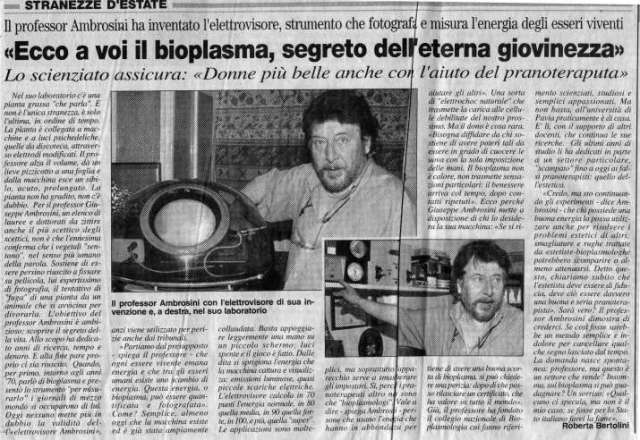
Giuseppe Ambrosini was an Italian scientist and expert in alternative medicine, who published widely and often appeared on television and in the newspapers discussing his ideas. Born in Varese in 1936, he undertook most of his studies in Rome and obtained a professorship in zoology. In science, his chief area of expertise was in the study of rodents, particularly the chinchilla, and he published a number of books on the genetic selection and breeding of chinchillas in captivity. He also worked on the subject of animal communication, and published a book on communication in cats.

From the 1970s onwards, he became increasingly interested in alternative medicine and parapsychology. Ambrosini’s research concentrated on one main question: when natural healers such as Reiki practitioners raise or place their hands on a subject, what actually happens? The scientific answer is “nothing”, and yet the subject often claims to undergo some form of transformative experience during or after such an encounter – which some assert amounts to healing. Ambrosini asserted that what was transferred from the healer to the subject in a successful healing session was an essence that he called bioplasma, which he identified as a life force capable of effecting rejuvenation. He devised and patented a number of machines (including the elettrovisore) and systems that aimed to provide evidence of the transmission of bioplasma and these were enthusiastically discussed in the press and presented at several public trials.

Ambrosini’s interests ranged widely, and he also made contributions to the areas of anthropology and criminology. He made over 300 appearances on national and regional television, and devised and presented a 200 episode series on art called Arte, civiltà dei popoli. Of an aristocratic family, he also took a great interest in chivalry and nobility, and received many ranks and appointments in international Orders. In 2003, he was honoured by His Royal and Imperial Highness Prince Pascal I Bandeira Moreira, Chief and Head of the Name and Arms of the House of Great Gothia (whose House was recognized by decree of the deposed Ottoman Sultan Abdul Hamid II of 1 May 1910), and elevated to the ranks of Theocratic King of Elam and King of Susiana. Ambrosini, who took the regnal title of Tammaritu III Yosef I, went on to establish several dynastic Orders.

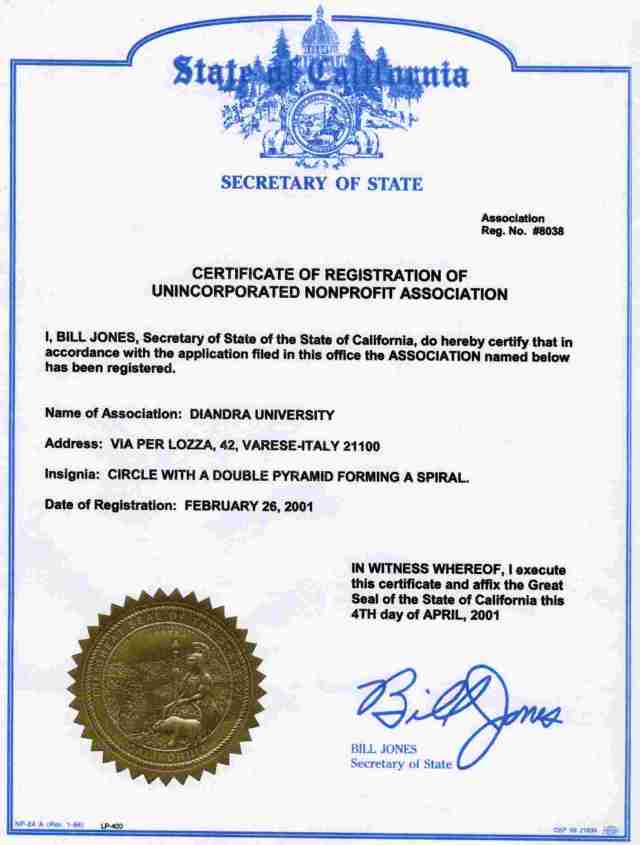
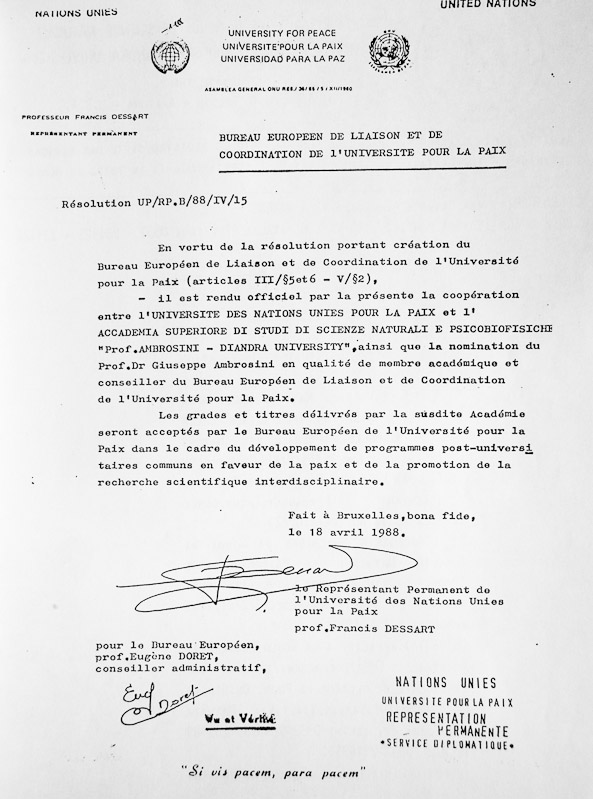
In 1981, Ambrosini established the Accademia Superiore di Studi di Scienze Naturali e Psicobiofisiche Prof. Ambrosini – Diandra University (Deed 7-2-81 N°17942/3382) which was registered as a nonprofit association under Italian law. There were further registrations in Brazil, Spain and California, USA.

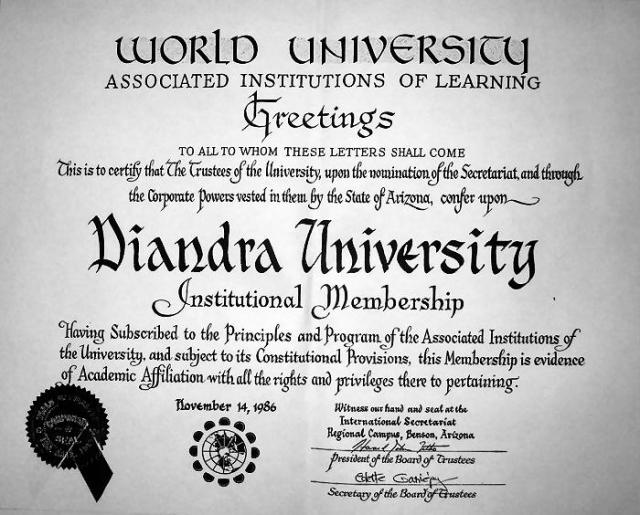
The Diandra University became affiliated with the World University, Arizona, USA, in 1986.

The Diandra University was also affiliated to the Parthasarathy International Cultural Academy in Madras, India. It offered a Masters degree in collaboration with the Centro de Altos Estudio en Ceremonial de Buenos Aires “General don Manuel Belgrano”, Argentina, as well as a PhD program in social (humanitarian) service and a diploma in criminology.

In 1988, a treaty of recognition was signed between the European Bureau of the United Nations University for Peace (whose main campus is in Costa Rica) and the Diandra University. This provided that the University for Peace would accept the degrees issued by the Diandra University.

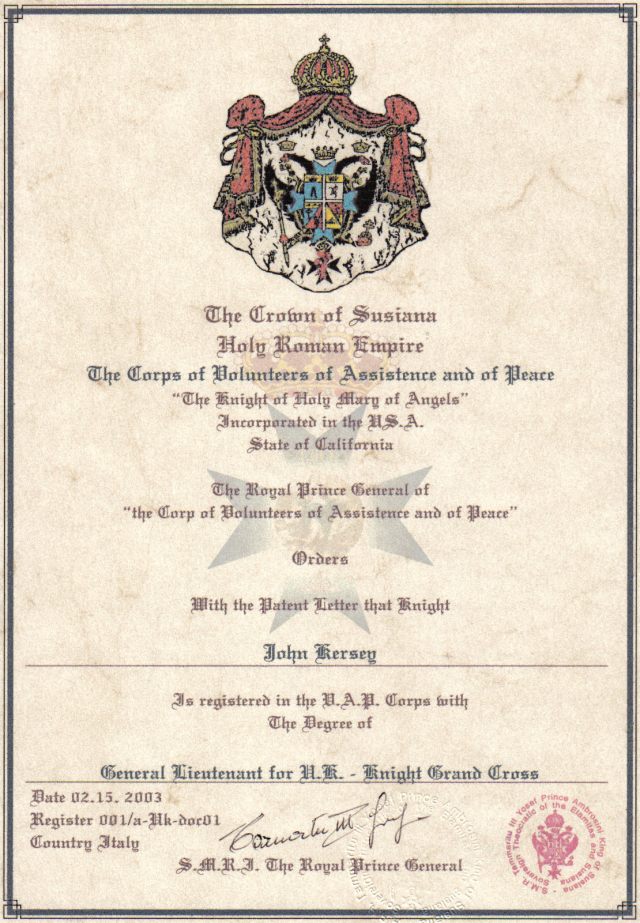
In 2003, in my capacity as Secretary-General of the Institute of Arts and Letters, London, I wrote to inform Ambrosini of the decision of that body to elect him to their Fellowship. Following our correspondence, Ambrosini appointed me to the rank of Knight Grand Cross in his Corps of Volunteers of Assistance and of Peace “The Knights of Holy Mary of Angels”.

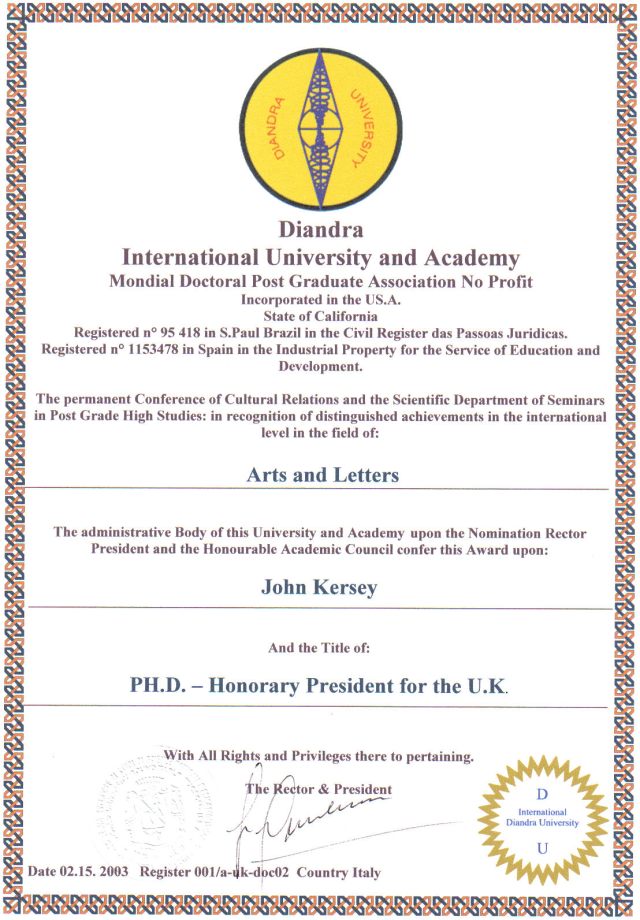
I was also awarded an honorary PhD of the Diandra University and appointed as its Honorary President for the UK.

Honours and awards: Membership of the International Writers’ Association, Ohio

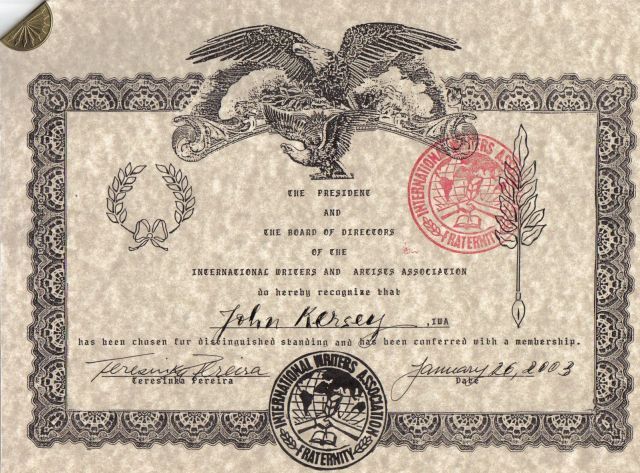
The International Writers’ Association, based in Ohio, USA, was founded in 1978 by Teresinka Pereira, who was Professor Emerita of Languages at Bluffton College, Ohio, and a published poet. The IWA was founded to promote the goal of understanding, friendship and literature/art exchange across the continents. It promoted creative and critical thinking in literature and art, and defended reason, science, freedom of inquiry and ethical alternatives.

The membership extended to around 1,350 persons in 125 different countries, and included Nobel Peace Prize laureate Rigoberto Menchu, former President of Brazil Dr Fernando Henrique Cardoso, former President of Cuba Fidel Castro and Professor Noam Chomsky.

I was admitted as a member of the IWA in 2003.


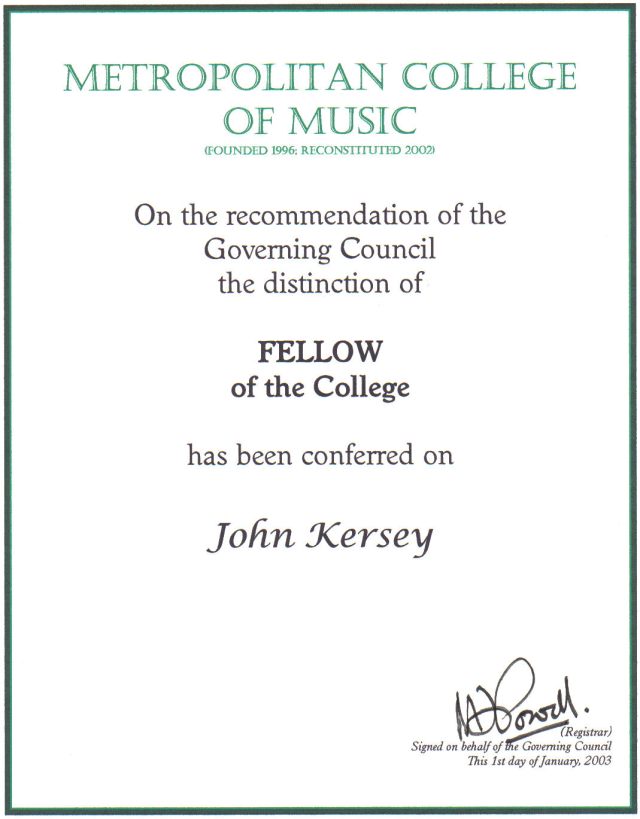
Honours and awards: Fellow of the Metropolitan College of Music

The Metropolitan College of Music was founded in 1996 and re-constituted in 2002. Following its re-constitution, it awarded the diploma of Fellow only. This was awarded to persons considered worthy of the award by the Governing Council of the College. It was not an “honorary” award; recipients became full Fellows of the College, usually in recognition of service to music. Fellows, after a period of one year from their own election, could recommend candidates to Council for consideration. In exceptional circumstances Council might, through the Registrar, consider nominations from non-members of the College.

The College subsequently changed its name to the Metropolitan College of Musicians. I was admitted as a Fellow and then served as a Member of Governing Council between 2003 and its closure in 2015. Although serious differences had emerged between members of Council in 2005, the College continued to function for a decade subsequently. I was strongly opposed to its closure, believing that the College fulfilled a distinctive role for musicians, but was outvoted.

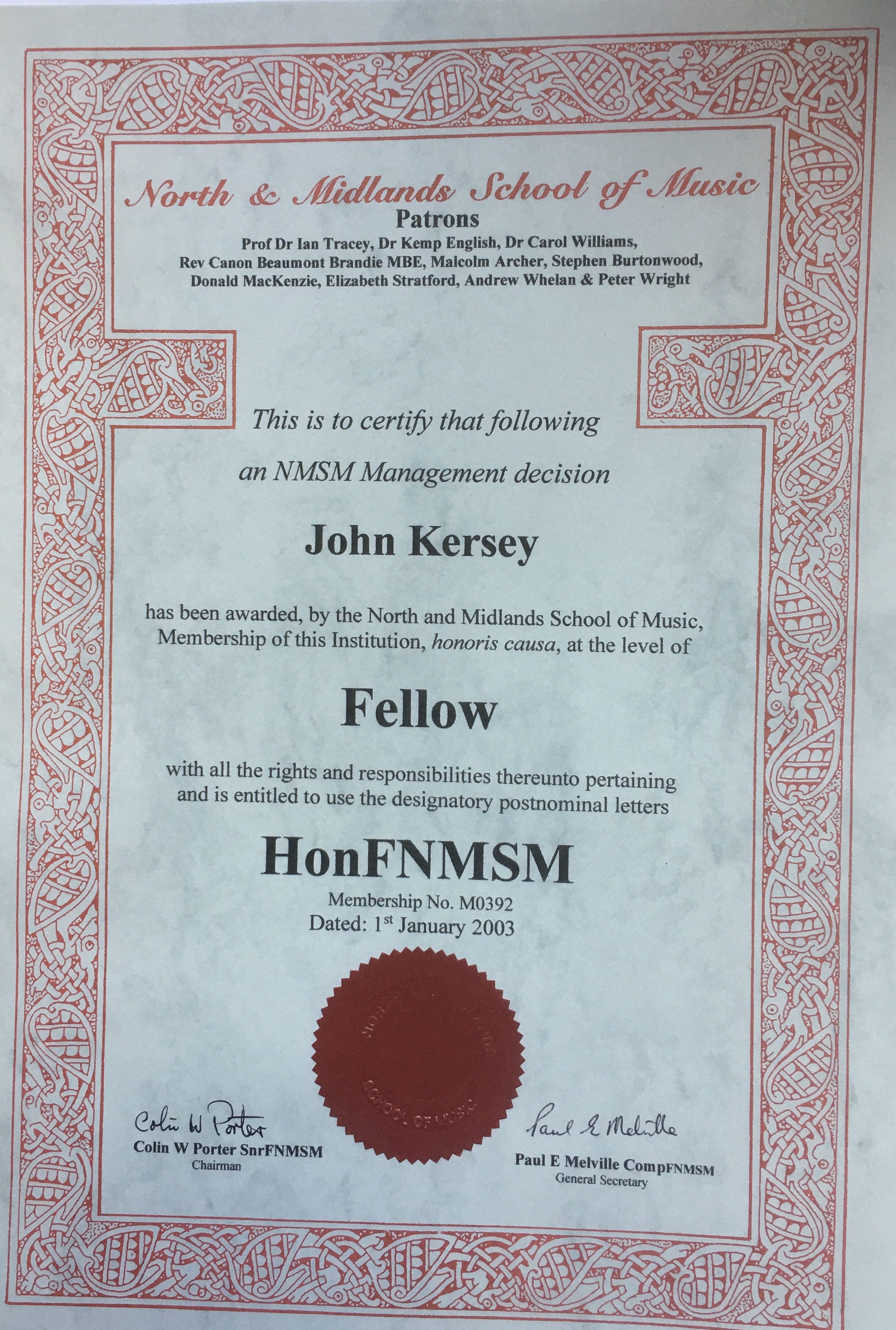
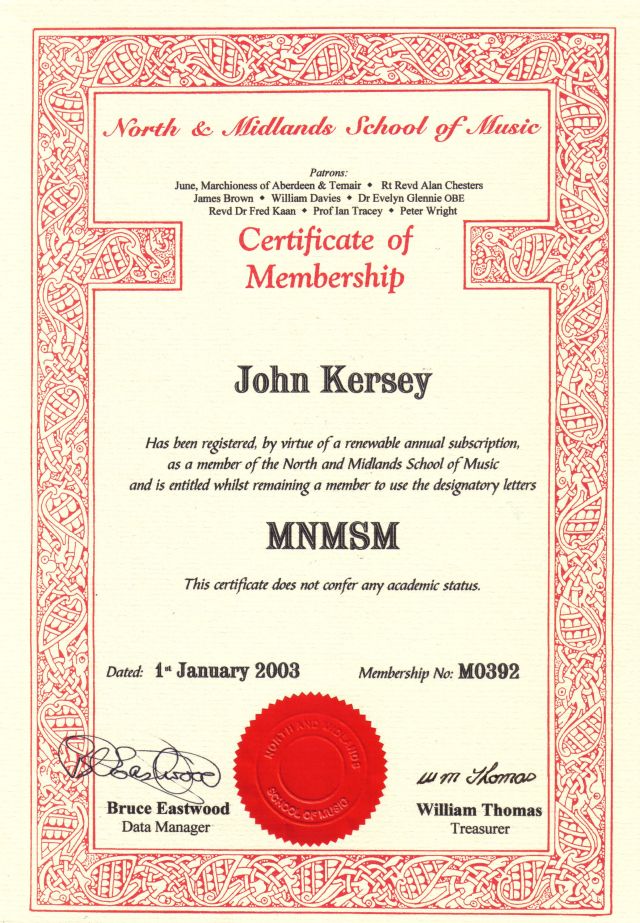
Honours and awards: Honorary Fellowship of the North and Midlands School of Music

The Lancashire School of Music was founded in 1986 by the well-known organist of the Blackpool Tower Ballroom, Reginald Dixon, and soon established itself as an examining body within Lancashire. Its original purpose was to encourage young keyboard musicians. The LSM was run by Dixon from Blackpool and then from Manchester where premises were purchased. There was a strong emphasis on encouraging players of the electronic home organ. Upon Dixon’s death the LSM was carried on by John Dickinson until his own death in 1990. Dickinson introduced a graded examination scheme that was recognised by the then Department for Education and Science. There was also a wide range of diploma awards, which were made largely on the basis of accreditation of prior learning.

Upon the death of Dickinson the LSM fell into abeyance. Although restarting it was discussed, it was eventually felt that the desired aims and objectives would be better served by a new institution. Consequently the North and Midlands School of Music (NMSM) opened in 1993, in which Dr Colin Parsons, the late James Holt, Neil Shepherd, and the late Michael Howard were the leading forces.

Today the NMSM is active as an examining body, differing radically from other colleges in that it does not prescribe a set syllabus for its awards, instead allowing candidates a great deal of flexibility in the way they choose to present themselves for examination. Admission at member level is possible without examination. The NMSM also encourages musical performance through occasional concerts and recitals. The Thomas Memorial Fund, which assists young performers from disadvantaged backgrounds with the costs of NMSM examination fees, is administered by the School. The School’s membership has been reported to stand at around 300.

In 1999 the NMSM incorporated the Association of Church Musicians (which had been founded under the patronage of the late Sir John Gielgud) and the London Academy of Music. Since 2001, it has had a close relationship with the Australian Society of Musicology and Composition.

The NMSM has a number of distinguished patrons, including Professor Ian Tracey, Evelyn Glennie and Peter Wright. In 2008, Dr Colin Parsons, now Principal Emeritus, was awarded the MBE for his services to the School.

In 2003, I was awarded an Honorary Fellowship by the NMSM.

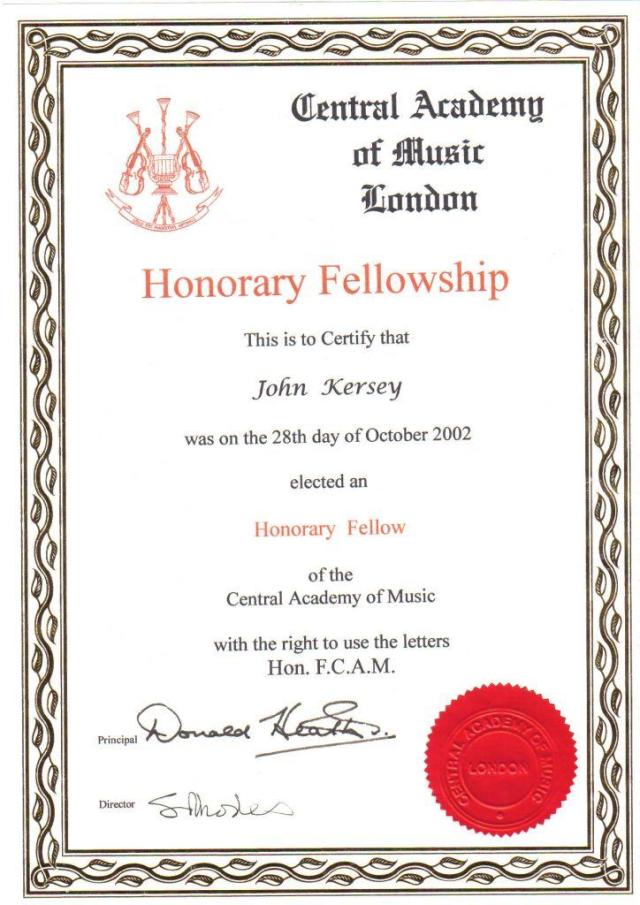
Honours and awards: Honorary Fellow of the Central Academy of Music

The Central Academy of Music was founded as an examining board in 1985 by Dr Donald Heath and the late Ray Turnecliffe in order to encourage the playing of the electronic keyboard. It was a company limited by guarantee in the United Kingdom. The Academy offered Grades 1 to 9 initially, and later on diplomas were introduced. At that time no other college offered examinations in electronic keyboard. Subsequently, the Academy also offered examinations in piano and electronic organ, and had centres throughout the UK and Ireland leading to a busy programme of examining throughout the year.

CAM syllabuses were wide-ranging and flexible, and the Academy’s friendly but rigorous approach won a loyal following in the popular organ world and beyond.

I was appointed as an examiner for the Academy by Dr Heath, and subsequently examined for graded examinations at their centres in Ipswich and Wolverhampton. In 2002, the Academy awarded me an Honorary Fellowship.

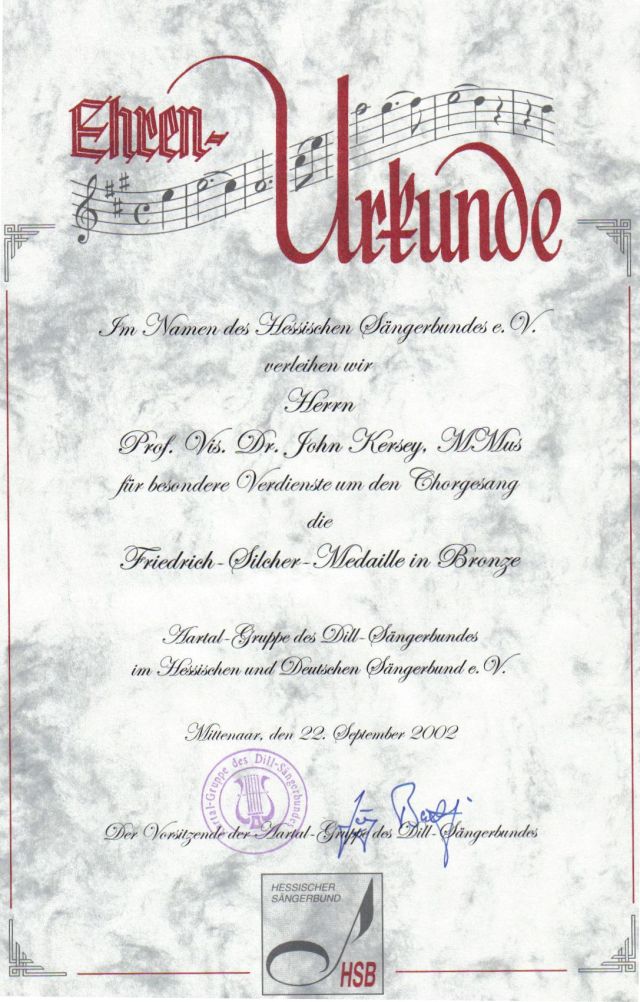
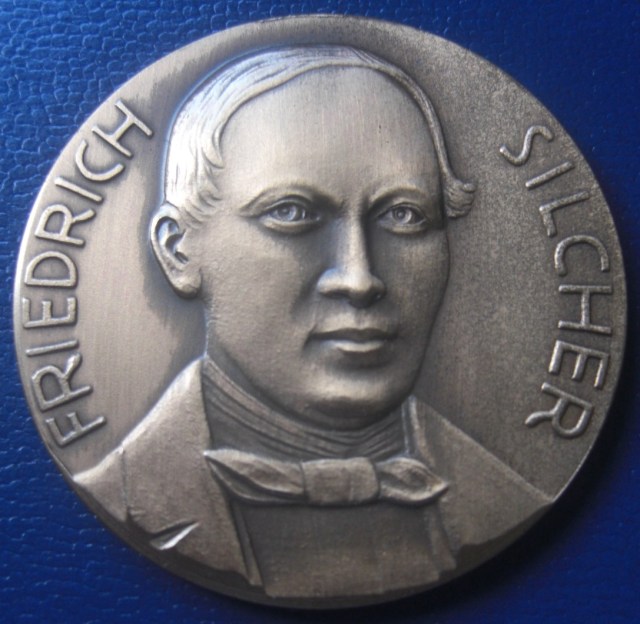
Honours and awards: Friedrich Silcher Medal in Bronze of the Chorgruppe Aartal of the Dill-Sängerbund of the Hessischer Sängerbund, Germany

I have been awarded the Friedrich Silcher Medal in Bronze of the Chorgruppe Aartal of the Dill-Sängerbund of the Hessischer Sängerbund, Hessen, Germany. The medal recognizes activities of special merit towards choral singing.

The Hessischer Sängerbund is an association of over 70,000 choral singers and over 2,200 choirs in the Hesse region.

Honours and awards: Parthasarathy International Cultural Academy, Madras, India

The Parthasarathy Cultural Academy was founded in the year 1968 by the late Professor Ramaswamy Ramanujam of the University of Madras, with the aims of establishing world peace and developing brotherhood in mankind, protecting basic human rights, identifying and properly honouring the eminent personalities who serve mankind and liberating people from poverty.

Since the death of Prof. Ramanujam, the activities of the Academy have continued under his daughter Dr R. Mangai Begum.

PICA presentation ceremony in Madras

To implement these services, special educational activities were started. These included awareness camps, group discussions of service-minded people, debates and various cultural activities that could bring service institutions together, each of which were organized all over India. PCA organised several processions, fastings and protests to protect human rights and get justice for the affected people/community. Programmes were organised to liberate the people from blind faith. Steps were taken to uplift the people from below the poverty line, to create equality between rich and poor and to develop the economic status of the poor.

PCA has strived throughout to establish peace and harmony in society. It has worked to bring the feelings of oneness between religions and different faiths. Prof. Ramaswamy was a strong believer in the creed, ‘There is only one caste, i.e. humanity and one religion that is One God”. The sincere services of PCA attracted the attention of educationalists, industrialists and eminent personalities from Tamil Nadu as well as elsewhere in India to involve themselves with PCA activities. This helped PCA to extend its services to solve the problems of the common public, to promote educational activities, to encourage self employment, to protect human rights, to guide and counsel the people in need and much more. These programs created an awakening among the people and brought the Founder, Prof. Ramanujam, to attention all over the world. In consequence he received several honorary doctorates and chivalric awards.

International Service Organisations and Voluntary Organisations came forward to recognize Parthasarathy Cultural Academy as an International Service Organization. Reflecting this international focus, Parthasarathy Cultural Academy changed its name to Parthasarathy International Cultural Academy in 1980. Parthasarathy Cultural Academy has honoured dignitaries by awarding them their highest award of ‘Ratna’. It also acts as a publishing imprint and has published several devotional and spiritual works of its founder.

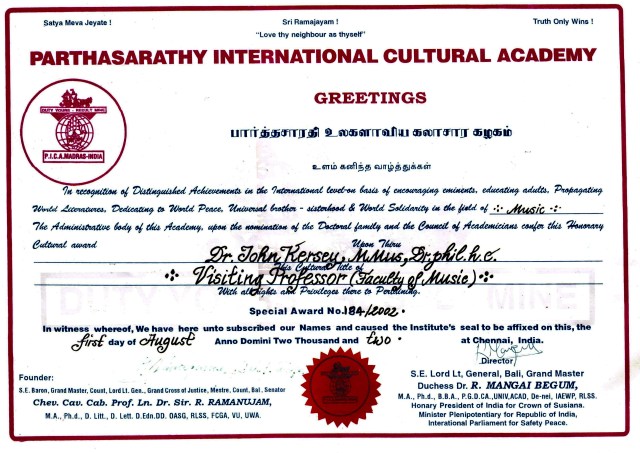
In 2002, I was nominated by the Academy’s Delegate for Europe, Dr Helmut Bräundle-Falkensee, for the award of an Honorary Visiting Professorship.

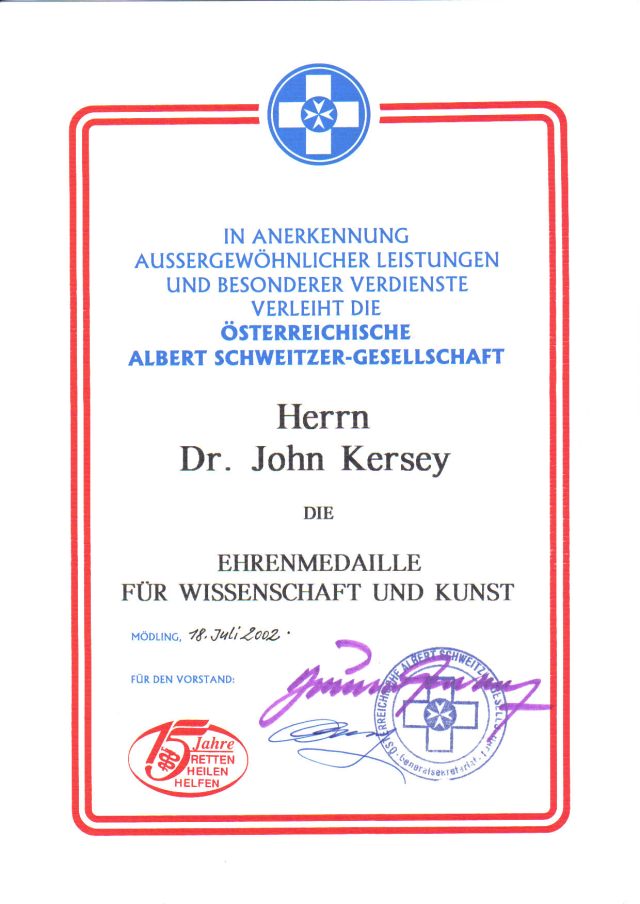
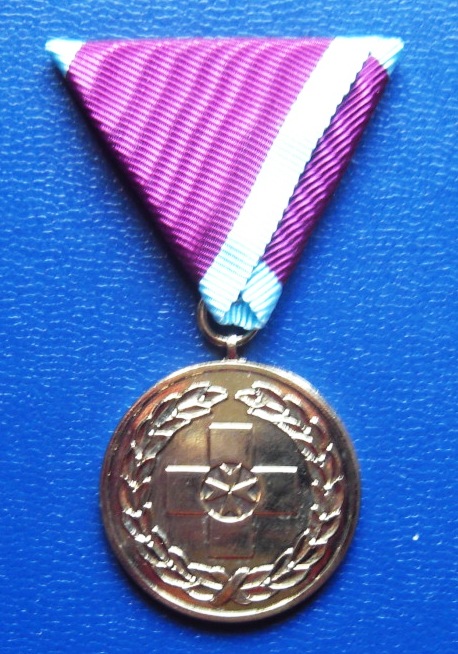
Honours and awards: Medal of Honour for Science and Art, Austrian Albert Schweitzer Society

In October 1984, a number of committed Christians, including Helmut and Johanna Bräundle-Falkensee, Josef Gamperl, Elisabeth Gräfin Polzer-Hoditz and Olga Leitinger, decided to found the Austrian Albert Schweitzer Society (ÖASG) as a Christian-humanitarian, non-profit and non-political aid organization. In February 1985 it was registered as an association in Austria. By decision of April 15, 1991 (GZ 63.337/23-5-2/91) the awards of the ÖASG were certified by the Federal Ministry of Defense for the general wearing permit for the uniform of the Austrian army. By letter dated April 28, 1995 (12.410/1365-II/13/95), the Ministry of the Interior expressly permitted the appearance and shape of the uniform, distinctions and badges of the ÖASG. Over the years, a worldwide organization developed from a relief organization to support the Albert Schweitzer Primeval Forest Hospital in Lambarene (Gabon). The ÖASG today has around 500 members around the world and is a member of the United Nations Global Compact.

In 2002 I was successfully nominated by the founder of the ÖASG, the late Helmut Bräundle-Falkensee, for the award of the Medal of Honour for Science and Art of the ÖASG. Three awards of this medal were made each year, presented at ceremonies in Brussels or Vienna.

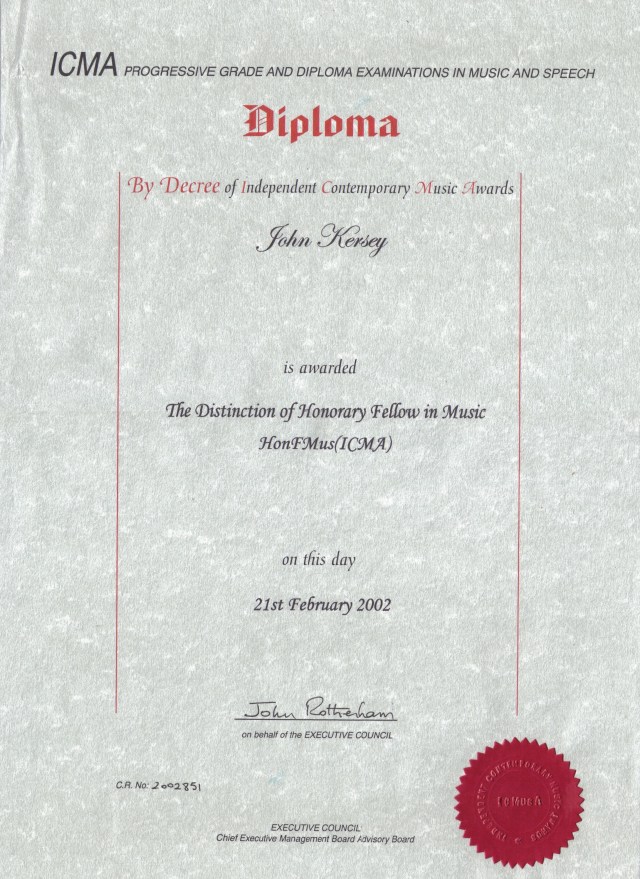
Honours and awards: Honorary Fellowship in Music of ICMA

It may justly be said that ICMA (Independent Contemporary Music Awards) was one of the first examining bodies to take seriously the concept of examinations combining both classical and popular music, through the grades to diploma level, a concept that has since been widely adopted by the “traditional” institutions. They were the first to offer an options list of supporting tests for practical examinations, and candidates are able to offer alternative pieces for approval to play at the examination.

ICMA is notable for its highly flexible approach to examining, arranging times at the candidate’s convenience and conducting the examination in surroundings familiar to the candidate. It has a substantial and loyal following throughout the UK.

In addition to its principal work of examining, ICMA offers an advice line, a regular newsletter and endeavours to organise both formal and informal social events for students and teachers.

As well as its main office in Witney, Oxfordshire, ICMA has also maintained a base in Scotland.

I was awarded an Honorary Fellowship in Music by ICMA in 2002.

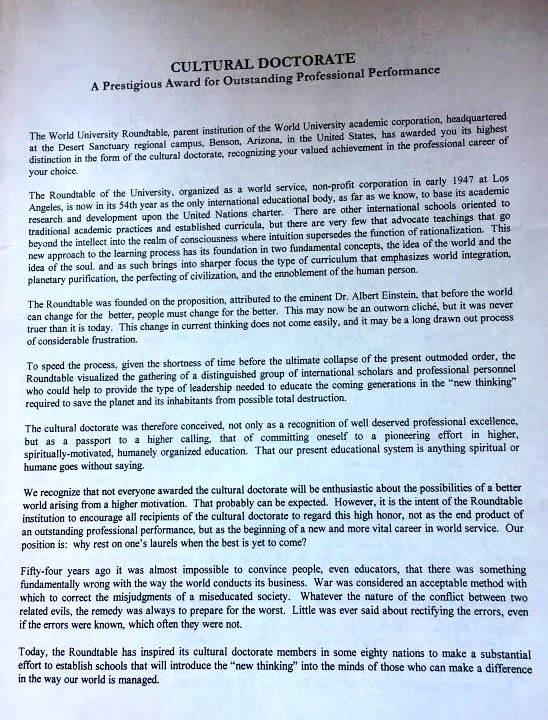
Honours and awards: Cultural Doctorate in Philosophy of Music from the World University Roundtable, Arizona

Howard John Zitko (1911-2003) was responsible, largely single-handedly, for the creation of the World University Roundtable, an international learned society that was, some twenty years later, to create the World University in Arizona and, via its Regional Colleges, in Africa, Asia and South Africa as well. His vision of education was ambitious and all-encompassing, rooted in an esoteric spiritual consciousness which pervaded everything that he did. In his pursuit of the World University ideal of a global educational establishment transcending national and cultural boundaries, Zitko was far ahead of his time; many of his ideas concerning experiential education have since passed into the mainstream contexts of the non-traditional, open and distance education movements in the USA and elsewhere. If his pioneering achievement was at times acknowledged more by a circle of initiates rather than by the public at large, this was a reflection of the way his ideas had come to capture the mind of a generation to such an extent that they had ceased to be merely the property of a single individual and passed into common consciousness.

Born on 26 October 1911 and educated at the Universities of Wisconsin and California, Zitko entered the Christian ministry in the 1930s in Milwaukee, Wisconsin, later becoming pastor of churches in Hollywood and Huntington Park, California. His interest in spiritual matters transcended orthodox Christianity, however, and he began to become increasingly involved with the Arcane school of belief, whose chief protagonist was Alice A. Bailey. Other esoteric spiritual influences acknowledged by Zitko at this time included C.W. Leadbeater (Theosophy), Max Heindel (Rosicrucianism), Manly P. Hall, Edgar Cayce, Krishnamurti, Aurobindo and Sivananda. Influenced by these teachings, Zitko became much involved in Lemurian and Atlantean philosophy, which was at that time to the forefront of spiritual investigation, and was a leading member of the Lemurian Fellowship, heading its Midwestern Division. Spurred on by this research, he produced in 1936 his philosophical masterwork; the Lemurian Theo-Christic Conception, a complex and extremely wide-ranging work of some 325,000 words outlining in a lucid and cogent manner his credo, and addressing much that was then at the forefront of spiritual science and esoteric philosophy. This was presented by the Lemurian Fellowship as a study course during the 1940s, when it attracted many students, and was subsequently revised in 1956 and 1979 before publication by the World University Press. In 1940, Zitko had followed the Conception with the publication of An Earth-Dweller’s Return, the edited unpublished manuscripts of the spiritual master Phylos, part of which had been published in 1884 by the medium Frederick Spencer Oliver as A Dweller on Two Planets. These Zitko also made available to the public, initially through the Lemurian Press and later through the World University Press. He was later to author Democracy in Economics – Streamers of Light from the New World, World University Insights and New Age Tantra Yoga.

Zitko’s productive activity was crowned in 1946, when, inspired by the recent foundation of the United Nations, he addressed an audience of educators and lay members on the winter solstice at the Echo Park Women’s Club, Los Angeles, outlining the establishment of a world university on a world scale with a world programme that would further the cause of world peace and understanding. From that meeting a board of thirteen trustees was formed in Los Angeles, resulting in the incorporation of the World University Roundtable in California on February 24, 1947, as a non-profit religious, educational and charitable corporation that would work towards the furtherance of the World University vision. Of these thirteen, comprising spiritual leaders, educators, naturopaths and others, Zitko was the last to survive, although his colleague Dr Norman Walker was to live to the age of 108. It was this board that inaugurated the Los Angeles Section of the World University in 1948 with forty instructors and a diverse curriculum; however, the section was to founder for lack of funding and suitable space a few years afterwards. The World University movement thus created was to be described as the “Grandaddy” of all such experiments by Dr Robert Muller, former secretary-general of the United Nations.

In 1950, the erstwhile First Lady, Eleanor Roosevelt, endorsed the World University, praising its world peace initiatives. With a mind towards expansion, Zitko oversaw the creation of the World University Association of Schools, which was to embrace numerous worldwide institutions in the succeeding years. The concept, partly born of financial necessity, was that in each country the university would grow from the grass roots rather than according to a centralised plan; in this way existing schools would affiliate to the World University and in time work towards Regional College status. In 1952, adherents in Buenos Aires published a four-page informative bulletin about the World University and distributed 10,000 copies; this complimented the University’s own bimonthly journal, eventually entitled Liftoff, which continued in publication for 56 years from 1947 until its last issue in May-June 2003, bringing news of the World University to its many adherents around the globe. From 1947 onwards, an Annual Conference was organised in accordance with the Roundtable constitution, initially at  the Roundtable headquarters, then in Washington, DC from 1967-75, but subsequently expanding to take in locations in Europe, Asia, Africa and Latin America. The 1970 Conference was held simultaneously in Nigeria, the Netherlands and the USA; after this Conferences took place in, amongst other places, Brussels (1992), Rome (1993), England (1996), Bali (1997), Korea (1979, 1990), India (1987), Canada (1984), Puerto Rico (1994), Germany (1995), USA (Los Angeles, 1976, Oregon, 1977, Texas, 2000) and St Lucia (2002). The 2003 Conference had been scheduled for Arizona, but was pre-empted by Zitko’s death. It was perhaps these Annual Conferences, which brought together educators from around the world, that were the supreme demonstration of the strength of support for the World University movement.

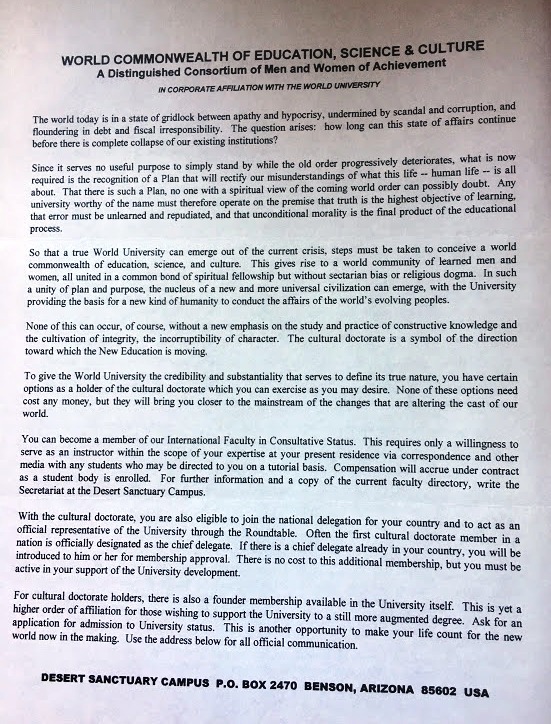
The organisation of the Roundtable proceeded with the appointment of Chief Delegates in each country in which there was representation (that total rising to more than 80 countries by the close of the twentieth-century) and the formation of national offices in those countries beginning with India in 1987 and succeeded by Nigeria and Ghana in 1991, Italy in 1992, Argentina, Greece, Bulgaria, Luxembourg, Bangladesh and others. Membership was by invitation, with each Chief Delegate invited to nominate individuals of considerable distinction in their fields for the award of the Cultural Doctorate in their discipline, which honorary award then brought these individuals into the work of the World University. In addition ordinary membership of the Roundtable was open to those from all walks of life who wished to support the endeavour. In time the roll of the Cultural Doctorate membership was to grow to several hundred, embracing educators, spiritual and political leaders, business people, writers, artists, musicians and others. One of the last recipients was the Governor-General of St Lucia, Dame Pearlette Louisy. In India, the members of the Roundtable were so numerous as to merit the creation of the “Indian Alumni of the World University” under the chairmanship of Dr J.J. Bennett in 1988; the roll of this organisation stood at 88 in 2001. Its activities have included the reprinting of Liftoff in Indian languages, the sponsorship of essay competitions, and the involvement in political, social and humanitarian projects throughout the sub-continent.

In 1958, the World University Roundtable offices moved to Huntington Park from their former location in Hollywood and Burbank, in consequence of Zitko’s appointment to a new ministry there. He was to hold this appointment until 1964, when he devoted himself full-time to the work of the World University. 1962 had seen former US President Dwight D. Eisenhower advocate a World University in an address to the Confederation of Organizations of the Teaching Profession in Stockholm, Sweden, and as a result the World University received banner headlines in the Los Angeles Times. In 1964, Zitko and the World University organised a move to Arizona, where two years later they reached an agreement with the Horizon Land Corporation to relinquish six hundred acres leased from the State Land Department. Once it had become clear that a substantial campus was now a real possibility, the Roundtable trustees organised the new incorporation of the World University itself in Arizona as an institution of higher education on December 21, 1967, having registered the Roundtable in Arizona in 1964. This represented a fulfilment of the original aims of the Roundtable conceived some twenty years earlier, thus creating a twofold organisation comprised of a spiritual arm (the Roundtable) and an academic arm (the University). 1967 also saw the publication of Michael Zweig’s “The Idea of a World University” (Southern Illinois University Press) in which the World University was given honourable mention.
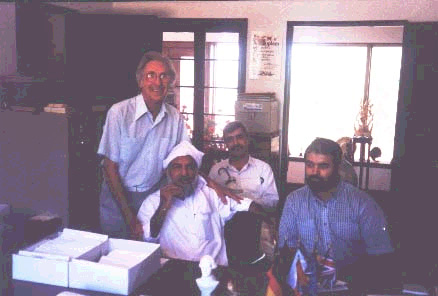
Dr Zitko (standing) with international visitors at the Desert Sanctuary Campus

In 1969, after surrendering the lease on their previous land, the World University purchased a complex of buildings in Tucson, to which was added a library, which was to be the University’s home until 1985. That year saw the purchase of the University’s final home, the 80-acre Desert Sanctuary Campus at the foot of the Rincon Mountain Range near Benson, Arizona, and two years later, once the move was complete, the Tucson campus was sold. The Desert Sanctuary Campus had originally been used as a yoga ashram and a school for disadvantaged young people; now it was adapted for the World University with the conversion of its nine buildings to provide offices, visitor accommodation and a substantial library. The library building came to house what is arguably the finest library on esoteric and spiritual science and related subjects in the world, consisting of some 25,000 books, manuscripts and other resources, together with theses that had been submitted for the cultural doctorate. 2003 had seen a successful restoration project completed on the library  building. The campus, which is of outstanding natural beauty, also featured an Olympic-size swimming pool. Zitko was to make the campus his home; he received visitors from throughout the world there, and together with a small staff of volunteers administered the business of the World University without salary, funded by donations and by the trust that he had established to support the University in perpetuity. Chief among this staff must be mentioned Zitko’s devoted Secretary, Dr Jill Overway, an expert in yoga also resident on the campus, who typed and prepared each edition of Liftoff and handled much in the way of communications, latterly including messages from around the world via email.
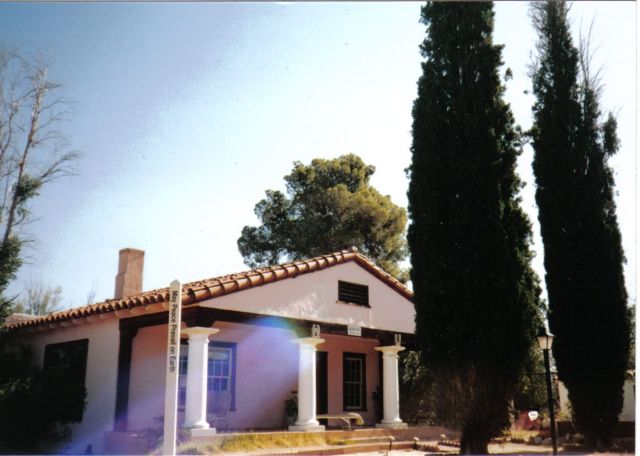
The activities of the University expanded to encompass a substantial publications arm during the 1970s; as well as Zitko’s writings, it published works of literary criticism, child development, poetry by the acclaimed Canadian poet Stephen Gill and the autobiography of impresario Irwin Parnes.

By the 1990s the World University was ready to initiate a series of Regional Colleges, beginning with the North American Regional College (housed at the Desert Sanctuary Campus) in 1998. This college published a prospectus of non-traditional experiential and spiritual studies leading to certificate and diploma awards, with forty-four faculty members drawn from around the world. Although all courses were offered by distance learning, some on-campus instruction also took place, and in 2002 programmes leading to the award of a research doctorate in association with Zoroastrian College were made generally available (from which programme Dr S.S. Walia was the first to graduate in Energy Science, following a thesis on the therapeutic qualities of solar energy). In the following year, the Design, Technology and Management Society initiated the South African Regional College in Ladismith, although this was to cease affiliation in 2002 following a change in management of the DTMS. This was to be followed by the South East Asian Regional College (the World Association of Integrated Medicine in India), the West African Regional College and World University Computer Center (Nigeria) and the Zoroastrian Regional College (the Zoroastrian College, India). At the time of Zitko’s death, Queen’s University, Bangladesh (the largest private university in that country) and the Daya Pertiwi Foundation, Indonesia, were in the process of seeking Regional College status.

Some twenty or so schools and other organisations, whilst not achieving Regional College status, were affiliated or associated with the World University; these included to name but a few, the University for Human Goodness in North Carolina, USA, the Vidya Yoga Free University, Brazil, Ansted University, British Virgin Islands and Malaysia, the International States Parliament for Safety and Peace, the International Association of Educators for World Peace, the Academy of Ethical Science, India, and the Mandingo Academy, New York, USA. Other institutions had formed affiliations with the World University in earlier years, including notably the Parthasarathy International Cultural Academy, India, the Accademia Superiore di Studi di Scienze Naturali e Psicobiofisiche Prof. Ambrosini – Diandra International University and Academy, Italy, Brazil, Spain and USA, and the World University of Intercultural Studies, Bulgaria.

A website was set up by the World University and Roundtable in 1998, and in 2001 this registered 45,784 hits. After the September 11 attacks, the number of hits snowballed from an average of 1,800 per month to an astonishing 12,959 in the month of those events, suggesting that a wider audience was turning to the World University in times of crisis.

Each winter solstice from 1956, commemorating the tenth anniversary of the foundation of the Roundtable, was designated World University Day and formed the focus for an outpouring of worldwide messages to the Desert Sanctuary Campus, sharing in telepathic rapport with the ceremony conducted there. 2002 saw an unprecedented demonstration of support, with many messages from around the globe producing what Zitko described as a “stream of love divine”. In his own words, “there never was a greater conviction among all…that the World University was linked with a Higher Authority, cognizant of the dedication expressed by all those who have made the commitment to support the vision which underlies the New World Civilisation of “Light, Love and Power.” The ceremony had included the Affirmation of Djwhal Khul the Tibetan, a Message of the Master Phylos and Zitko’s own keynote address delivered earlier that year at the Annual Conference in St Lucia.

Zitko was a man of imposing presence and energy, and his spiritual qualities became quickly apparent in any discourse. He was generous with his time and encouragement and was an entertaining and thought-provoking correspondent, sending his review of the year’s events as a Christmas gift annually. His humanity and warmth were witnessed by the many friends he counted throughout the entire world, making the Desert Sanctuary Campus a focus for those who sought an educational and philosophical ideal that transcended temporal boundaries. One rarely exchanged ideas with him without leaving with a renewed faith in human nature. I corresponded with him over a number of years, and in his last message to me he wrote “you are one of the most valued members in our world institution.” The World University survived Dr Zitko’s death, but its activities were gradually discontinued and the campus in Benson was eventually sold.

In answer to the question of how he maintained his faith in the World University in the face of what was at times significant opposition, including at one point a death threat against his person, Zitko replied simply, “Serve as selflessly as possible with your eyes on the stars and your feet on the ground, and let the result take care of itself.”

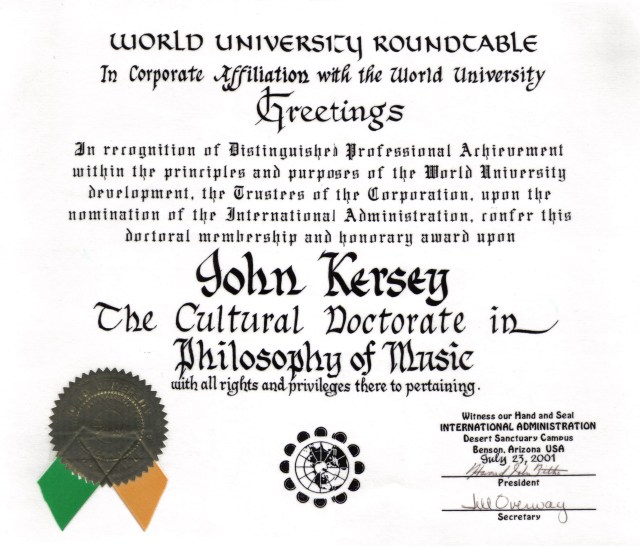
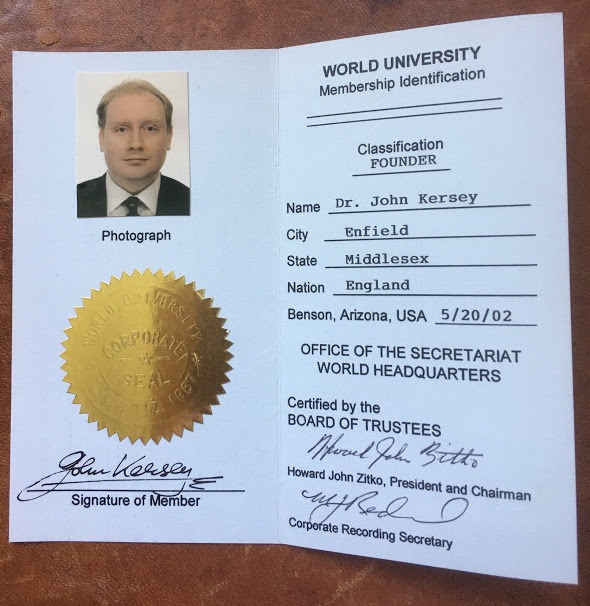
In 2001, I was awarded the Cultural Doctorate in the Philosophy of Music by the World University Roundtable. Subsequently I served the institution as a Founder Member of the World University and as Vice-Delegate and President of its English National Office.
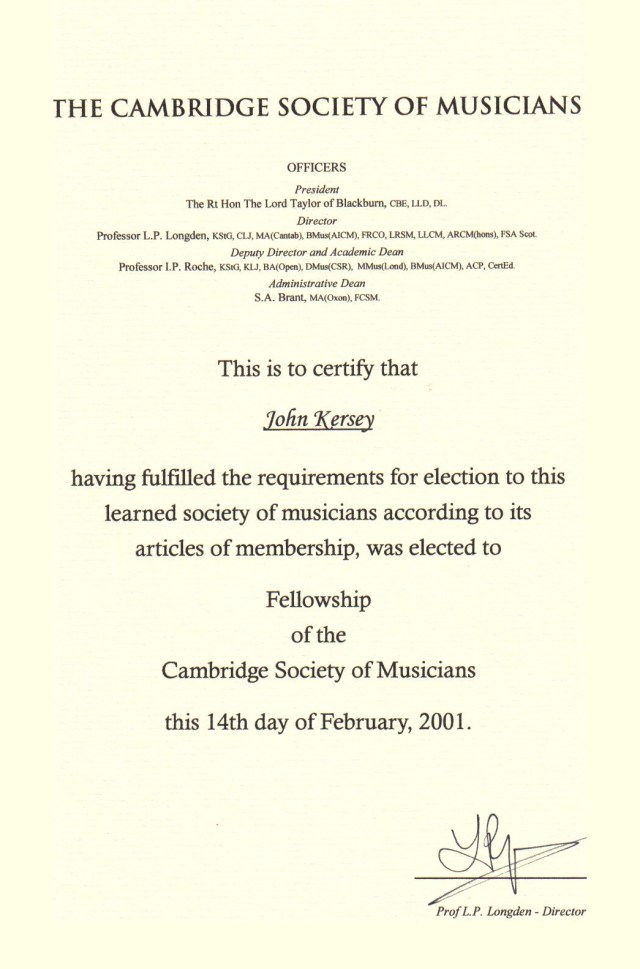
Honours and awards: Fellowship of the Cambridge Society of Musicians

The Cambridge Society of Musicians was a learned society of musicians and music educators founded in Cambridge in 1991 by musicians who were graduates of the University. It restricted its membership to those who could prove an active involvement in the practice of music. Election to the various grades of membership was on the basis of the applicant’s prior qualifications and experience. Fellowship was restricted to graduates in music or music education or those who could prove equivalent experience, and who were determined to be “active amateur or professional musicians who are able to clearly demonstrate a high level of musical competence.”

The Society appears to have become inactive around 2004.

Freedom of the City of London

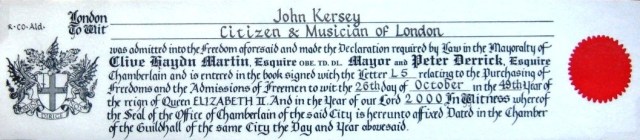
The Freedom of the City of London can be gained through being proposed by one of the City’s Livery Companies or by direct application supported by a suitably qualified proposer and seconder. A limited number of Freemen are admitted each year by the Clerk to the Chamberlain of the City of London during a ceremony at Guildhall. A certificate is presented to the recipient together with a book entitled “Rules for the Conduct of Life”.

Although the Freedom is neither an honour nor an award (except on those rare occasions when it is conferred as the Honorary Freedom), the majority of recipients are men and women who are well established in their chosen field, some of whom have achieved success, celebrity or public recognition.

There is a number of historic privileges attached to the Freedom, most of which are apocryphal, including the right to be hanged by a silken cord if convicted of a capital offence and to carry a naked sword in public. The only privilege that is regularly exercised today is the right to drive sheep over London Bridge, which has been done on a number of occasions to raise funds for charity.

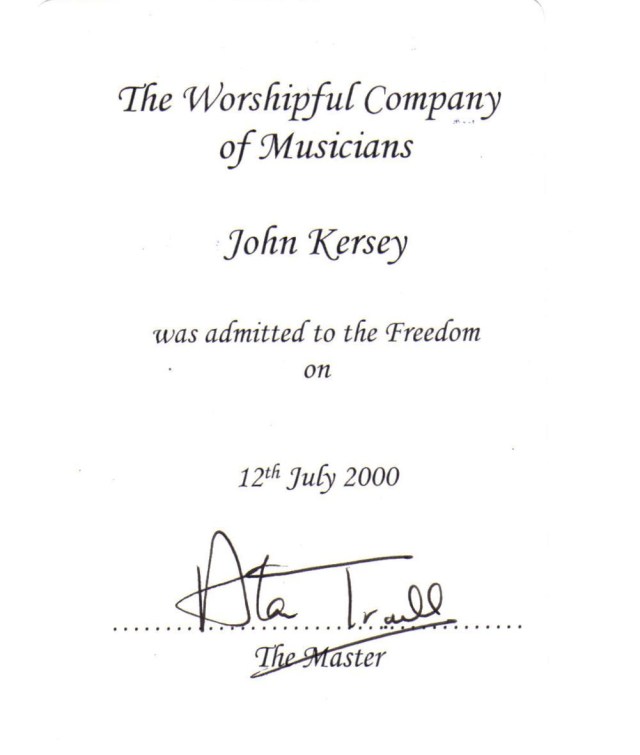
The designation “citizen and musician” on the certificate signifies that I was proposed for the Freedom by the Worshipful Company of Musicians. I was admitted to the Freedom of the Company on 12 July 2000 and promoted to Liveryman on 9 October 2002.


Honours and awards: Liveryman of the Worshipful Company of Musicians

Following my proposal by two Past Masters of the Worshipful Company of Musicians, the late John Iles senior and junior, I was admitted to the Freedom of the Company in July 2000.

Shortly afterwards, I was admitted to the Freedom of the City of London.

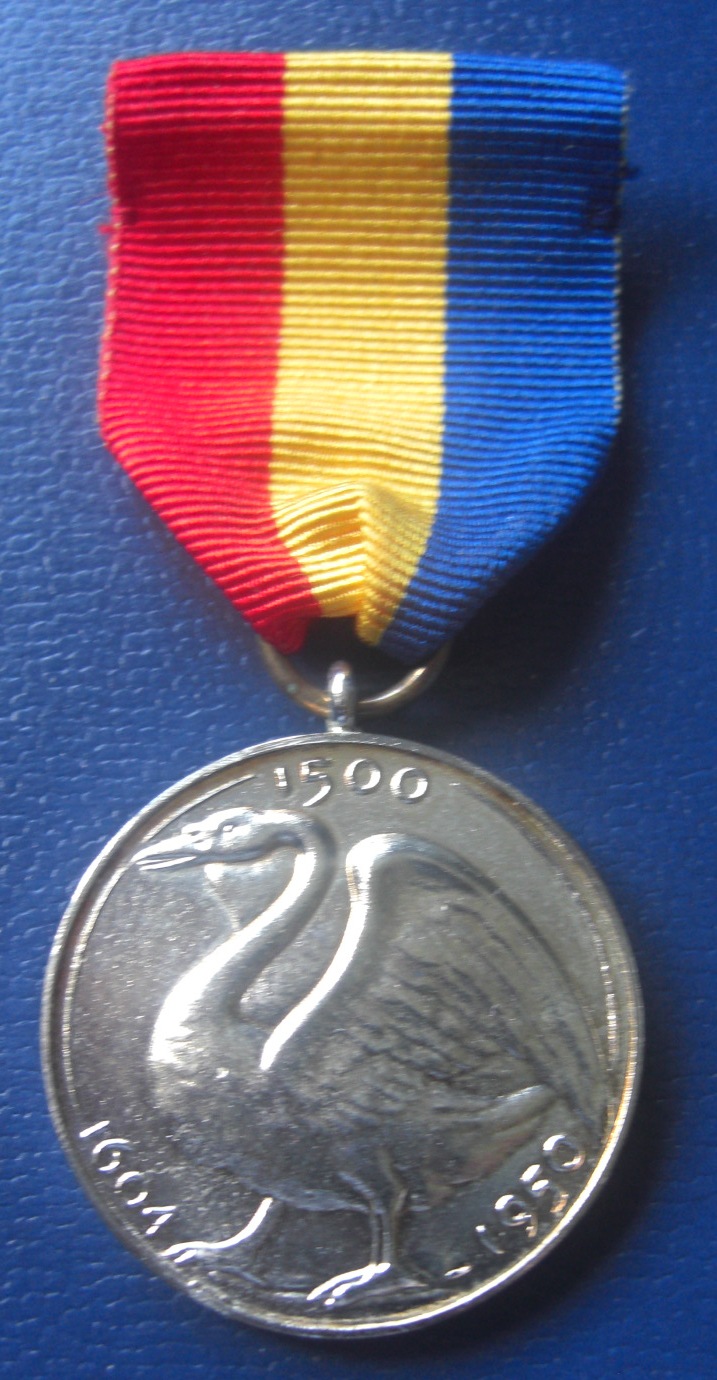
In 2002, I was clothed with the Company’s Livery and presented with the Company’s Livery Badge. The Badge is of silver, bearing the Company’s emblem of the silver swan and its dates of foundation on the obverse, and on the reverse the name of the Liveryman and the date of his admission to the Livery.

WCM1WCM2

At the time of my admission in 2000, the system was that the incoming candidate was admitted as a Freeman of the Company and then could progress to clothing with the Livery after two years, in both cases on payment of a Fine which was a life subscription. As of the early years of the century, this was a reasonably substantial sum that was not greatly different from the sums requested from other learned societies for life membership. I was explicitly told that once the Livery Fine was paid no further financial input was required, unless one wished to attend formal events which were paid for on an individual basis.

The Company decided to introduce quarterage (an annual subscription) in 2003, and this became compulsory for new members and was also payable by members of the Court. The subscription was not inconsiderable and has since increased. Initially, it was not made retrospective, but around 2013 it was decided that those Liverymen who did not elect to pay it (having been admitted under the previous life subscription arrangements) would be designated as “dormant” and deprived of most of the privileges of membership, although they would not (and indeed could not legally) be removed from the Livery.

My position was and is that I had entered the Company on terms that would provide life membership and with which I had complied fully, and that in effect the Company had breached this agreement by attempting to change those terms retrospectively. At the time of my admission, the Company concentrated on specific areas within music which were also interests of mine – notably jazz and brass bands. It seemed to me a friendly organization with a welcome amateur spirit, and since I greatly like and wished to encourage amateur music-making I felt a synergy with its enthusiasms and was happy to volunteer my services should they have been required. I attended several of its informal lunches and at one of these met the late Dr Leonard Henderson, who would become a significant influence on my work.

The lunches ceased fairly early on, and the Company was overtaken by an ethos of competition with the other Livery Companies and a quest for status within the musical establishment. This meant that the focus became less upon the membership as a body of professional and amateur musicians and more upon the membership becoming a source of financial input and donation. I did not welcome this change and had never seen my membership in these terms. In my view, it was a development that would remodel the Company as a club for the affluent and would as such exclude the majority of musicians. What it certainly did was destroy the amateur ethos that had formerly prevailed, and I felt this was greatly regrettable.

Accordingly, I remain a Liveryman today, but take no part in (nor endorse) the activities of the Company. I continue to hope that at some point in the future there may be a change of heart regarding the prevailing direction of the Company and its approach to the membership.

Honours and awards: Fellow of the Royal Geographical Society

I was a Fellow of the Royal Geographical Society between October 1998 and December 2018.

FRGS

Fellowship was by election and was maintained by paying an annual subscription. At the time of my election, the Fellowship was not only intended for those professionally engaged in geography but also embraced those who had an avocational interest in the subject. My interest in cartography stems from childhood (resulting in a large and somewhat unruly collection of antique maps) and has since been augmented by interests in the history and other aspects of public transport systems in England as well as a general regard for our environment and its preservation from commercial encroachment.

Starting in 2007, the Beagle Campaign was launched with the stated objectives “to reactivate the society’s own research and re-establish the Royal Geographical Society (with IBG) as the world leader of exploration endeavour: to advance geographical science on all fronts and to bring together the relevant scientific/exploration departments – under the society’s umbrella; it can also help solve climate change conundrums and other pressing issues related to human interaction with Earth. The RGS (with IBG) is in the unique position to achieve these goals, for we live in a new age of exploration as if everything the Society has achieved since its foundation has been training for this time.” This reflected the pivotal role of the RGS in having sponsored leading expeditions such as those of Darwin, Shackleton, Livingstone, Stanley, Scott and others. The campaign sought to place exploration once more as a primary rather than peripheral part of the Society’s activities. This appealed to me not merely from my Romanticist admiration for the explorers of the past but because I could see the considerable value of exploration in today’s world.

Unfortunately, despite gathering considerable support among the Fellowship and in the national press, the Society voted against the resolution put by the Beagle Campaign that it should once again mount large-scale multidisciplinary expeditions (in addition to continuing to support smaller-scale or independent external expeditions). Almost 40% of those Fellows and Postgraduate Fellows voting had supported the resolution, revealing a deeply divided Society.

The writer Justin Marozzi, one of the supporters of the campaign, had summarized the issue in an article for Standpoint Magazine entitled, “What is the Royal Geographical Society for — exploration or ‘post-socialist urban identities’?” Marozzi expressed the divide thus, “In the 19th century, when the Royal Geographical Society was a byword for international exploration and scientific discovery, the German naturalist and explorer Alexander von Humboldt helped lay the foundations for modern geography with his magnum opus Kosmos, a prodigious, five-volume attempt to unify the various strands of geographical science. Charles Darwin considered Humboldt “the greatest scientific traveller who ever lived”. For many geographers today, this sort of physical geography is deeply unfashionable and downright irrelevant. Human geographers, by definition, are more interested in people than in places. They are interested, among other things, in gender, culture, health, development, urban environments, behaviour, politics, transportation and tourism. Many physical geographers feel increasingly alienated by their colleagues’ distrust of empirical science, a scepticism informed largely by the post-modernist assault on geography in recent years…

Among six projects that the RGS says demonstrate its commitment to support (other people’s) research, are two fairly eyebrow-raising studies. One, conducted by Dr Craig Young and colleagues from Manchester Metropolitan University, is entitled “Global change and post-socialist urban identities”. Another, led by Dr Heaven Crawley and colleagues from Swansea University, is “Children and global change: Experiencing migration, negotiating identities”. Professor Ian Swingland, founder of the Durrell Institute for Conservation and Ecology, is unimpressed. “My scientific and international experience strongly suggests to me that neither of these projects is academically robust, likely to change anything on the ground, improve the status of the environment or the social woes of the world, and they are frankly to a large degree incomprehensible,” he wrote in an open letter to Sir Gordon Conway, the RGS president. “They will make no difference to anything other than those prosecuting the work. What are ‘post-socialist urban identities’ exactly? What are ‘children’s reflexive negotiations of their identities’ precisely? And does it matter? And will this work educate the future ways we can help the world?” What such research appears to demonstrate is the tragic introversion and irrelevance of swathes of contemporary academe, academics writing for academics, leaving the rest of the world none the wiser — or better off. In an era when environmental woes and challenges press in on us, the RGS’s failure to provide high-profile leadership on vital issues such as climate change, global warming, biodiversity, the forced migration of species, deforestation, desertification and a host of other scientific unknowns is deeply regrettable. What can one say of post-structuralist cultural studies other than they provide careers for a certain breed of academic geographer?”

Although the vote was lost, the Beagle Campaign vowed to continue, but it made no further headway and it was clear that the Society’s leadership were minded to impose their view of the way ahead rather than making any meaningful compromise. The criteria for election to the Fellowship were redefined so as to now be principally aimed at the academic and professional geographer.

After twenty years as a Fellow, I resigned from the Society in December 2018.