Honours and awards: Nebraska Admiral

An honorary military commission is considered by some to be the American equivalent of being knighted. The honorary title of Colonel is conferred by some states in the United States of America. The origins of the titular colonelcy can be traced back to colonial and antebellum times when men of the landed gentry were given the title for financing the local militia without actual expectations of command. This practice can actually be traced back to the English Renaissance when a colonelcy was purchased by a lord or prominent gentleman but the actual command would fall to a lieutenant colonel, who would deputize for the proprietor. It has come to be associated in popular culture with the image of the aristocratic Southern gentleman, not least because of one of the most famous Kentucky Colonels, Harland D. Sanders.

Some states bestow other military commissions. The highest honour of the State of Nebraska is that of Nebraska Admiral (or in full, Admiral of the Great Navy of the State of Nebraska), bestowed personally by the Governor of Nebraska. The title is deliberately tongue-in-cheek; Nebraska is landlocked, and the diploma makes humorous reference to the command of tadpoles and goldfish. The Great Navy of the State of Nebraska was created in 1931 when the Acting Governor appointed twenty or so prominent Nebraskans as Nebraska Admirals. Today, recipients are considered to qualify on the basis that they have “contributed in some way to the state, promote the Good Life in Nebraska, and warrant recognition as determined by the Governor”.

Honours and awards: Honorary Texan

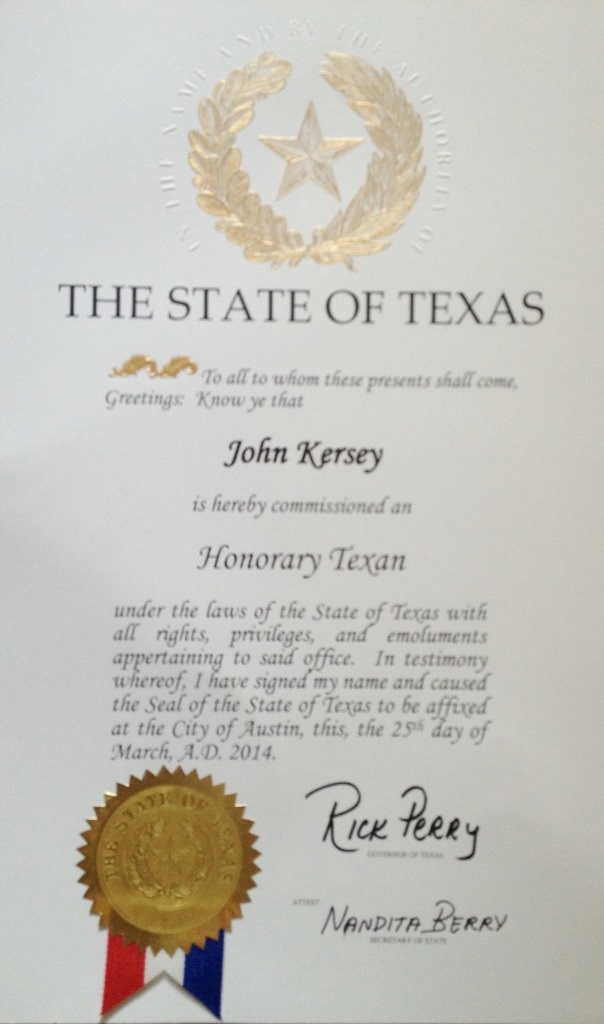
Since the 1930s, the Governor of Texas has bestowed the honour of Honorary Texan upon any person who, in his or her opinion, is worthy of the qualities of the Lone Star State but has not had the good fortune to be counted among its citizens.

The award of Honorary Texan has frequently been bestowed by the Governor on foreign visitors to Texas and for foreigners who have provided assistance to Texas businesses doing business in a foreign country. Another category of recipients is children of native Texans when those children have been born outside the boundaries of Texas. While the honour is understood no longer to be bestowed on foreign nationals today, two notable British recipients in the past few decades have been Lord Hague of Richmond (in 1999, when leader of the Conservative Party; he was quoted as saying “I might be persuaded to wear the boots, but I’m certainly not going to wear the hat”) and musician Phil Collins (in 2015).

I was delighted to be commissioned an Honorary Texan in 2014.

Honours and awards: Gold Cross of Merit of the Royal Order of St Stanislas

I have been honoured by the Royal Order of St Stanislaus in Poland. The Order continues the chivalric work established by the Most Revd. Prince Juliusz Nowina-Sokolnicki, formerly its Grand Master. Prince Juliusz was a bishop of the Apostolic Episcopal Church in which I also serve.

The Order has conferred one of its highest awards, the Gold Cross of Merit, upon me.

GCMStSIn addition, I have received the Medal of the Commandery of Wrocław of the Order.

Medal of the Wroclaw CommanderyOStS patents

Honours and awards: Honorary Brotherhood in the Ordine Militare e Religioso dei Cavaliere di Cristo and Academic Membership “ad honorem” in the Accademia Templare di San Bernardo da Chiaravalle

I have been honoured by the Ordine Militare e Religioso dei Cavalieri di Cristo (Religious and Military Order of the Knights of Christ, abbreviated as OMRCC) in Italy. The OMRCC is a modern Order inspired by the historic Templar tradition, and is organized as a Public Association of the Faithful of the Roman Catholic Church. It is an active charitable body with numerous humanitarian projects worldwide and welcomes donations from those wishing to support its work.

The Grand Vicar International of the OMRCC, H.E. Frà Federico Righi, has been admitted as a Knight Officer of the Order of the Crown of Thorns under my Grand Mastership.

I have been awarded Honorary Brotherhood in the OMRCC and Academic Membership “ad honorem” in the associated Accademia Templare di San Bernardo da Chiaravalle, which has been established for the purpose of historical research into the Templar tradition and St. Bernard of Clairvaux.

The connexion with modern Templars today reflects the legendary foundation of the Order of the Crown of Thorns as a continuation of the Templar legacy, as well as the ecclesiastical succession of the Prince-Abbot from Bernard Fabré-Palaprat, founder of the Ordre du Temple in 1804, which is commemorated in the Ecclesia Apostolica Divinorum Mysteriorum within the Abbey-Principality of San Luigi.

10013681_658742797504589_555017928_n

10152940_658742790837923_1813976160_n

Honours and awards: Grosses Verdienstkreuz in Silber from the Freundeskreis Hoch- und Deutschmeister, Mannheim/Baden, Germany

I have been honoured with the Grosses Verdienstkreuz in Silber from the Freundeskreis Hoch- und Deutschmeister, Mannheim/Baden, Germany. The Freundeskreis Hoch- und Deutschmeister commemorates the military tradition of the Deutschmeistern, who were established as a regiment by treaty of the Emperor Leopold I and the Grand Master of the Teutonic Order in 1696. Thereafter the military tradition of the Hoch- und Deutschmeistern is distinguished by numerous battle honours.

From the end of the nineteenth-century, former members of the regiment and related organizations formed a German confederation of associations under the protection of the Grand Master of the Teutonic Order. From 1986, this umbrella organization has been headquartered in Vienna. It includes German members, belonging to the federal government, who meet on St George’s Day each year at Bad Mergentheim. Since 1993, the Freundeskreis Hoch- und Deutschmeister Mannheim/Baden has been among their number, becoming a member of the central Vienna organization from 2010 onwards.

FkHuDM

Honours and awards: Tennessee Squire

The Tennessee Squire Association was established in February 1956 by the famous Jack Daniel Distillery in Lynchburg, Tennessee.

Following World War II, the demand for Jack Daniel’s whiskey was higher than production could keep up with and their first National Sales Manager, Winton Smith, was looking for a way to keep customers around the country happy while supplies were low. He decided that loyal fans who had written the Distillery saying they could not get any Jack Daniel’s whiskey would instead receive a plot of land, a square inch of unrecorded property on the Distillery’s grounds. This would make them part owners, or Squires, and the first members inducted into the Tennessee Squire Association.

Today, the Tennessee Squire Association is an exclusive club, with many prominent members from the worlds of government, business and entertainment. To become a member, you must be nominated by an existing Squire. By tradition, however, each Squire can only nominate one member in his or her lifetime (thank you, Zackary). There is a secret room reserved for Squires at the Lynchburg Distillery, and not even the tour guides are allowed to mention it.

Ownership of a square inch of the Distillery land is generally unproblematic. From time to time, others request to graze their cattle on it, and occasionally there is trouble with skunks or possums. By and large, however, peace reigns.

The honour of Tennessee Squire is probably one of the more unusual distinctions around today. It goes without saying that it is the more valued because the quality of the product it commemorates remains second to none.

Honours and awards: Member of the Royal Society of Musicians

I was a Member of the Royal Society of Musicians between February 2014 and November 2018. Membership was by election and payment of an annual subscription.

In 2018, the Society announced its intention to impose a Code of Conduct upon its members. I felt that this was contrary to the spirit of the Society and would hardly have been something of which a free spirit like Handel would have approved. Specifically, the proposed Code intended not to tolerate discrimination on the grounds of “level of intellectual or professional achievement”, which I found absurd given that in my view achievement should be the foundation of any society devoted to the practice of a profession and that elected its members from that profession.

Elsewhere, the Code proposed to give the Board of Governors the sole power to discipline or expel a member who had “acted in a way which is in conflict with the interests of the Society”. I had previously seen similar measures to this used elsewhere as an unsubtle means of quelling dissent in the ranks. Like other changes in the Society such as the unexpected sale of its historic headquarters, much seemed to be being implemented in a “top-down” manner that was not in my view the way that such an institution should be run. In my view, members of a professional society should be responsible for its major executive decisions by democratic vote, rather than most of the power resting with a less accountable elite.

I resigned from membership of the Society in November 2018.

Honours and awards: Kentucky Colonel

An honorary military commission is considered by some to be the American equivalent of being knighted. The honorary title of Colonel is conferred by some states in the United States of America. The origins of the titular colonelcy can be traced back to colonial and antebellum times when men of the landed gentry were given the title for financing the local militia without actual expectations of command. This practice can actually be traced back to the English Renaissance when a colonelcy was purchased by a lord or prominent gentleman but the actual command would fall to a lieutenant colonel, who would deputize for the proprietor. It has come to be associated in popular culture with the image of the aristocratic Southern gentleman, not least because of one of the most famous Kentucky Colonels, Harland D. Sanders.

Today, Kentucky Colonel is the highest title of honour bestowed by the Commonwealth of Kentucky, USA. Commissions for Kentucky colonels are given by the governor and the secretary of state to individuals in recognition of noteworthy accomplishments, contributions, and outstanding service to community, state, or the nation. The Governor of Kentucky bestows the honor of a colonel’s commission, through the issuance of letters patent. The commission is a legal act of the Office of the Governor and lifetime appointment. At the time I received my commission in 2014, it was only possible for a person to be nominated for the honour by an existing Kentucky Colonel.

Honours and awards: The International States Parliament for Safety and Peace

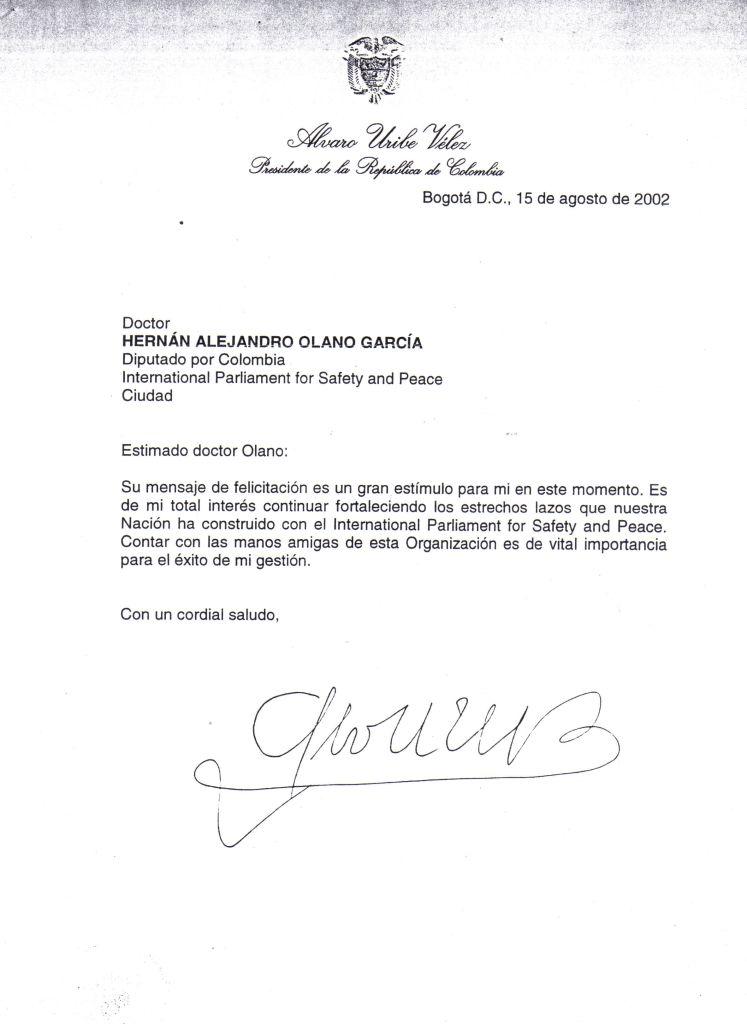
The International States Parliament for Safety and Peace (ISPSP) was founded in December 15, 1975 by a letter of the Constitution of the International Legislative Assembly. It was juridically recognized by the International Law and the first nations to recognize it were the United States and Italy. It was a parallel organization to the United Nations and, like the United Nations, had representative ambassadors from all nations. The headquarters of the ISPSP was in Italy. The Lord President of the Parliament was the late Archbishop Viktor Busa, President of the Council of the States. In 2005, he received the Grand Cross of the Order of Independence of Equatorial Guinea and also the Decoration of Diplomatic and Humanistic Merit “Mahatma Gandhi”. Msgr. Viktor Busa was in 2007 appointed as Vice President of the Council of State Security and of the Committee of World Culture and Sports (DUMA), as well as Expert Counselor in Problems of National Security of Russia.

Msgr. Viktor Busa was an activist devoted to the cause of peace, defense of life, and human rights. He was engaged in the struggle for these causes for almost 30 years, without a break, since the creation of the ISPSP. His visionary dream for peace in the world and respect for human beings makes his life really remarkable. Two years after the creation of the ISPSP, his partner and co-founder of the ISPSP and its first General Secretary, Archbishop Makarios III (President of Cyprus), died. Msgr. Viktor Busa went ahead alone, as the chair of the ISPSP, until Dr. Spyros Kyprianou (then new President of the Republic of Cyprus) was elected Vice President International of ISPSP. Working together with his new partner, he created the Assembly of the Parliament, and in 1987, signed a convention with President Rodrigo Carazo, at the University of Peace of the United Nations, in Costa Rica.

After looking for the concurrence of all of the nations in the world, through their representative governments, the Parliament counted some 400 senators, 800 deputies, ambassadors and ministers, who contributed, like their President and General Secretary, with their volunteer work, to the cause of peace.

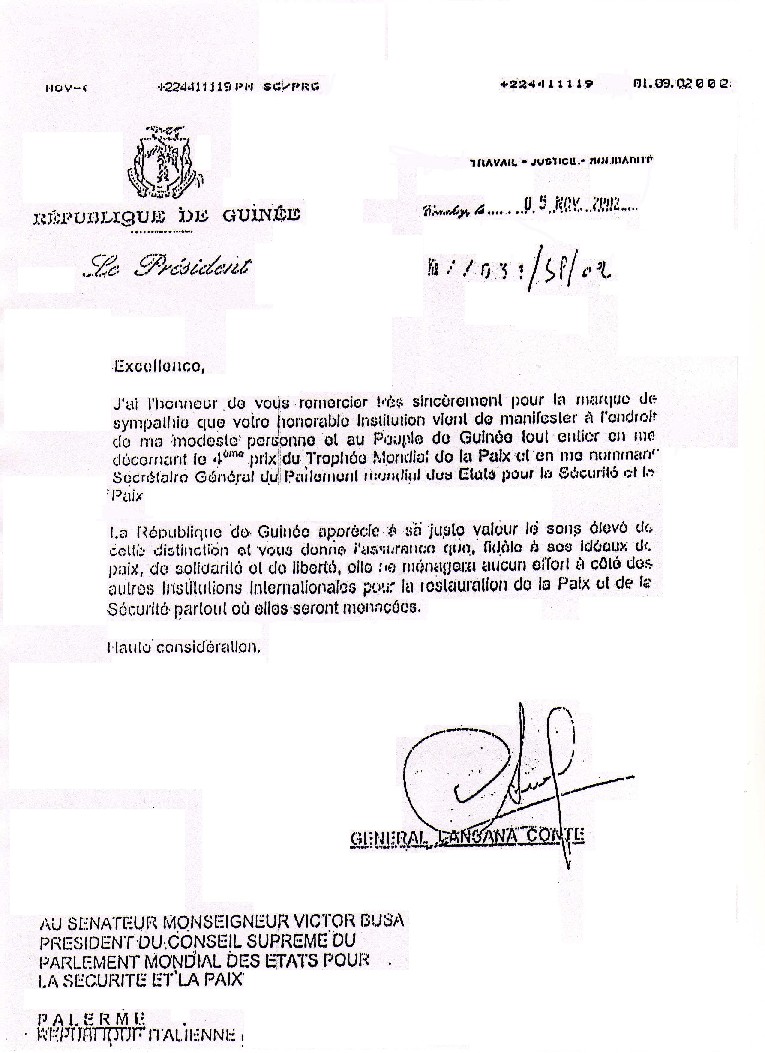
The work of the delegates and ministers of the ISPSP towards peace and enforcement of the respect for life and human rights included rendering help and support to all of the people of the world, observing the right of safety and peace in all aspects: moral, political, diplomatic, cultural, religious, economic and social. This was provided free of charge to the governments. ISPSP organized commissions to send to the country in need, with the participation of volunteer ministers and parliamentary diplomats, who travelled and worked free of charge in order to resolve conflicts and help to re-establish security and peace. Following the re-establishment of safety and peace, the ISPSP presented, as an incentive, Peace Trophies to the head of the places or countries where the commission worked.

Some recipients  of the ISPSP Peace Trophy
1989 – Mikhail Gorbachev, President of the USSR
1990 – Mobuto Sese Seko, President of Zaire
1995 – Nelson Mandela, President of South Africa
1995 – Carlos Menem, President of Argentina
2002 – Lansana Conté, President of Guinea
2004 – Teodoro Obiang Nguema Mbasogo, President of Equatorial Guinea
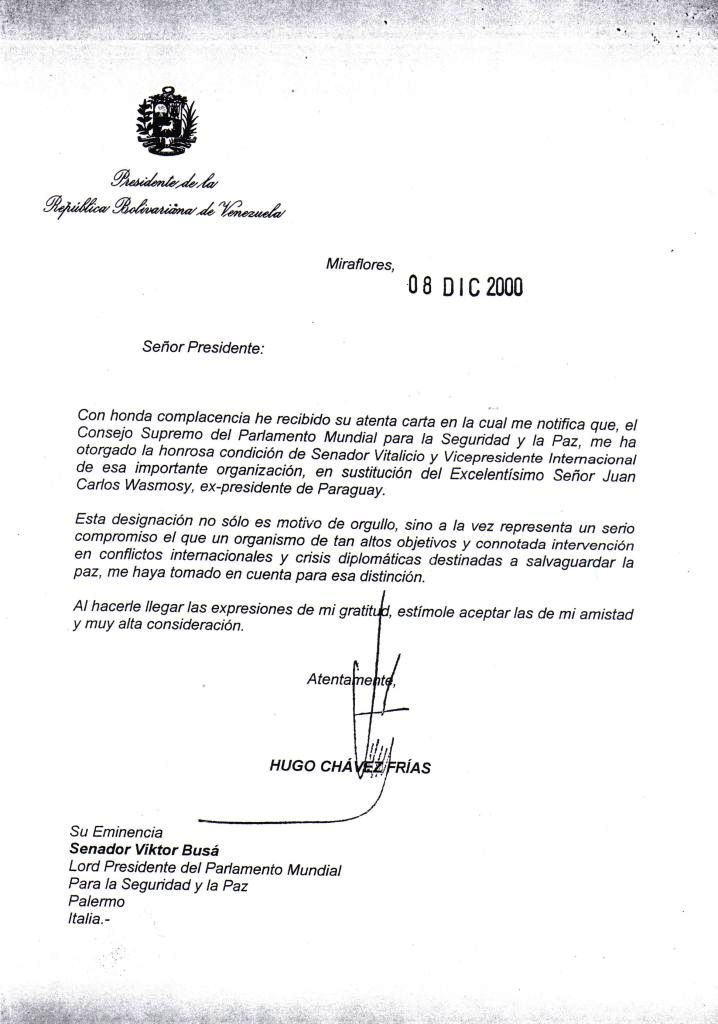
2004 – Hugo Chavez, President of Venezuela
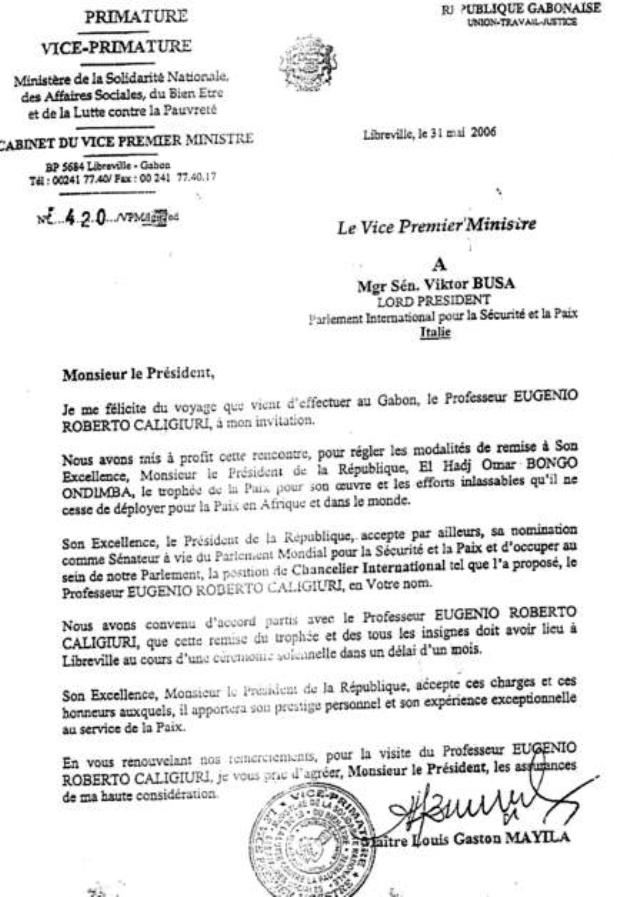
2006 – Omar Bongo Omdimba, President of Gabon

The work of the agents of the ISPSP paid off with good results in many places. Once a year, there was a congress of the ISPSP, where Delegates presented their reports. Victorious interventions were worked out and reported from the Diplomatic Crisis between Turkey and Cyprus; the crisis between Somalia and. Ethiopia; between Iran and Iraq, Ecuador and Peru, and the conflict in Uganda. The ISPSP also made a contribution of diplomatic intervention in wars of several countries and places, as in the Middle East, in the civil war in Sri Lanka, in the countries of the former Yugoslavia, in Rwanda, Congo, Angola and Mozambique. Diplomats from the ISPSP worked in South Africa, Moldavia, Russia and Chechenya. In support of the United Nations, Msgr. Busa and the ISPSP participated in the Conferences of Addis Ababa and Vienna.

As observers, the ISPSP sent diplomats to the general elections in Congo. The democratization of the Republic of Congo started in 1990. In this process, Archbishop Viktor Busa cooperated with the Congolese government in order to give the people assurance of security and to admit the need for immediate peace. ISPSP organized a local sub-division with several Congolese members of different categories, notable jurists, high functionaries, ministries, etc. to negotiate peace with aggressors from the borders of DRC. When the aggression intensified, Archbishop Busa himself organized a series of international conferences, in order to gather international support. This contributed to the acceleration of the United Nations’ resolution in sending in the “Blue Berets” and in assisting in the reconstruction of the nation. There is evidence of recognition from the authorities of several countries, who sent to Msgr. Busa their letters, memoranda, and other tokens of their gratitude for the Parliament services.

In 1985, Archbishop Viktor Busa personally got involved with the creation of the World Organization of the Indigenous and Aborigines Peoples. Several ministers of the ISPSP worked at the front of the Andean Movement for re-culture of the Inca countries. The movement started in Arequipa, Peru and in Cusco, where several ISPSP volunteer diplomats worked directly with the Inca natives in order to achieve a new interpretation of the past history of Peru, including the Inca past. It was a wonderful movement with the creation of schools, workshops, festivals, etc.

In December 2004, the representative of the ISPSP in Chennai, state of Tamil Nadu in India, activated a force of 400 volunteers to assist the “Tsunami” victims. All of the ISPSP representatives all over the world contributed financially to help the people who suffered because of the underwater earthquake in South Asia.

(The information above is adapted from an article by former ISPSP Senator Teresinka Pereira)

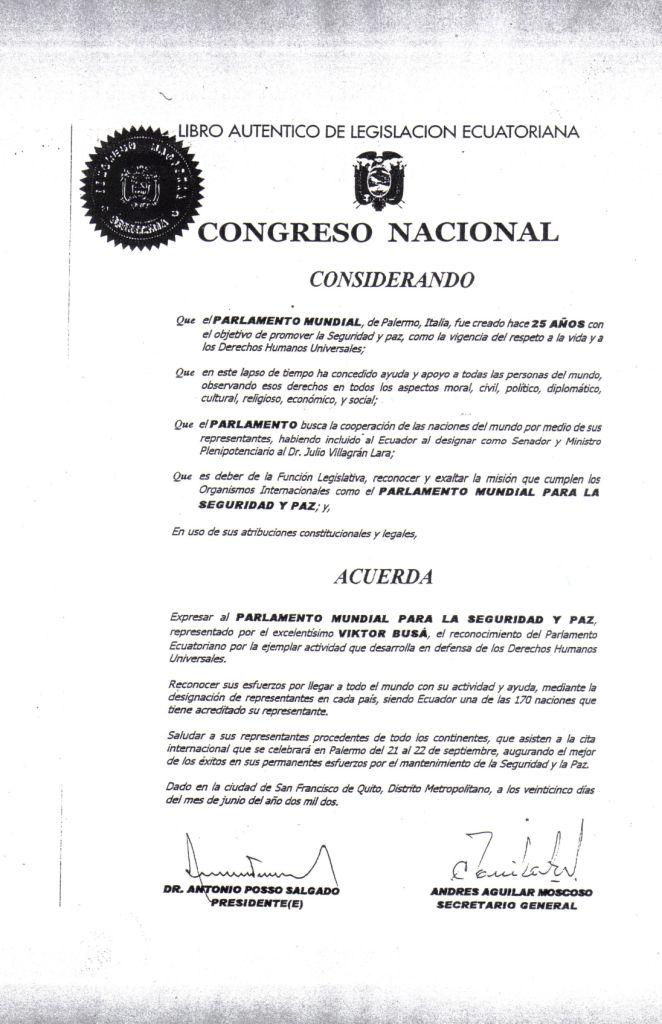
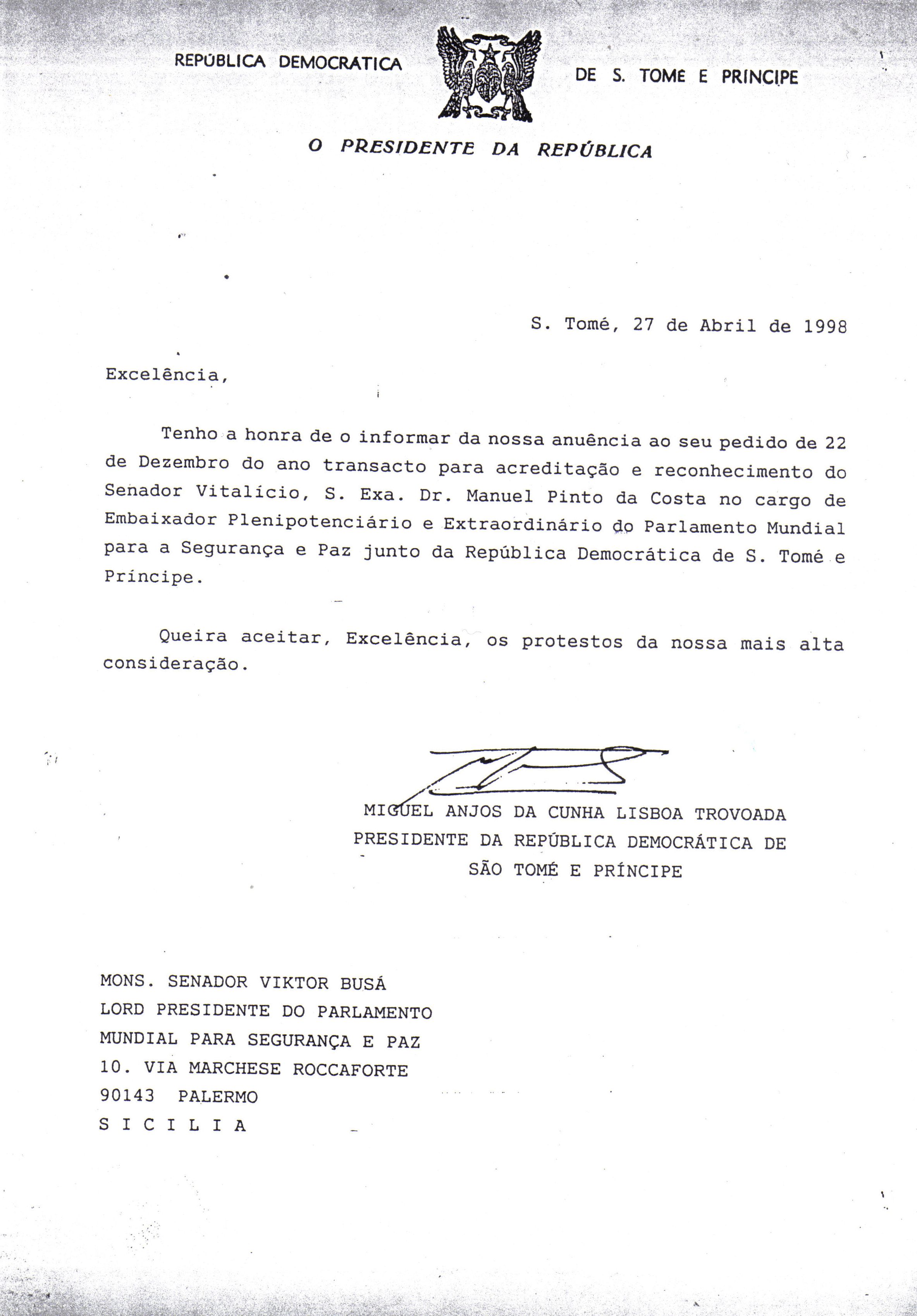
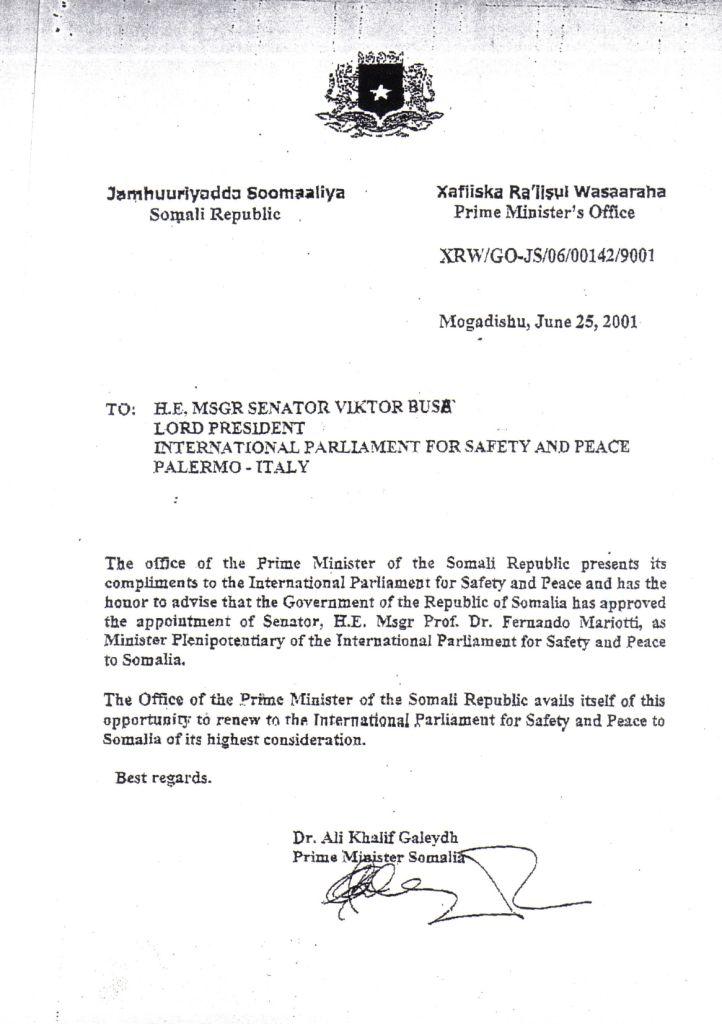
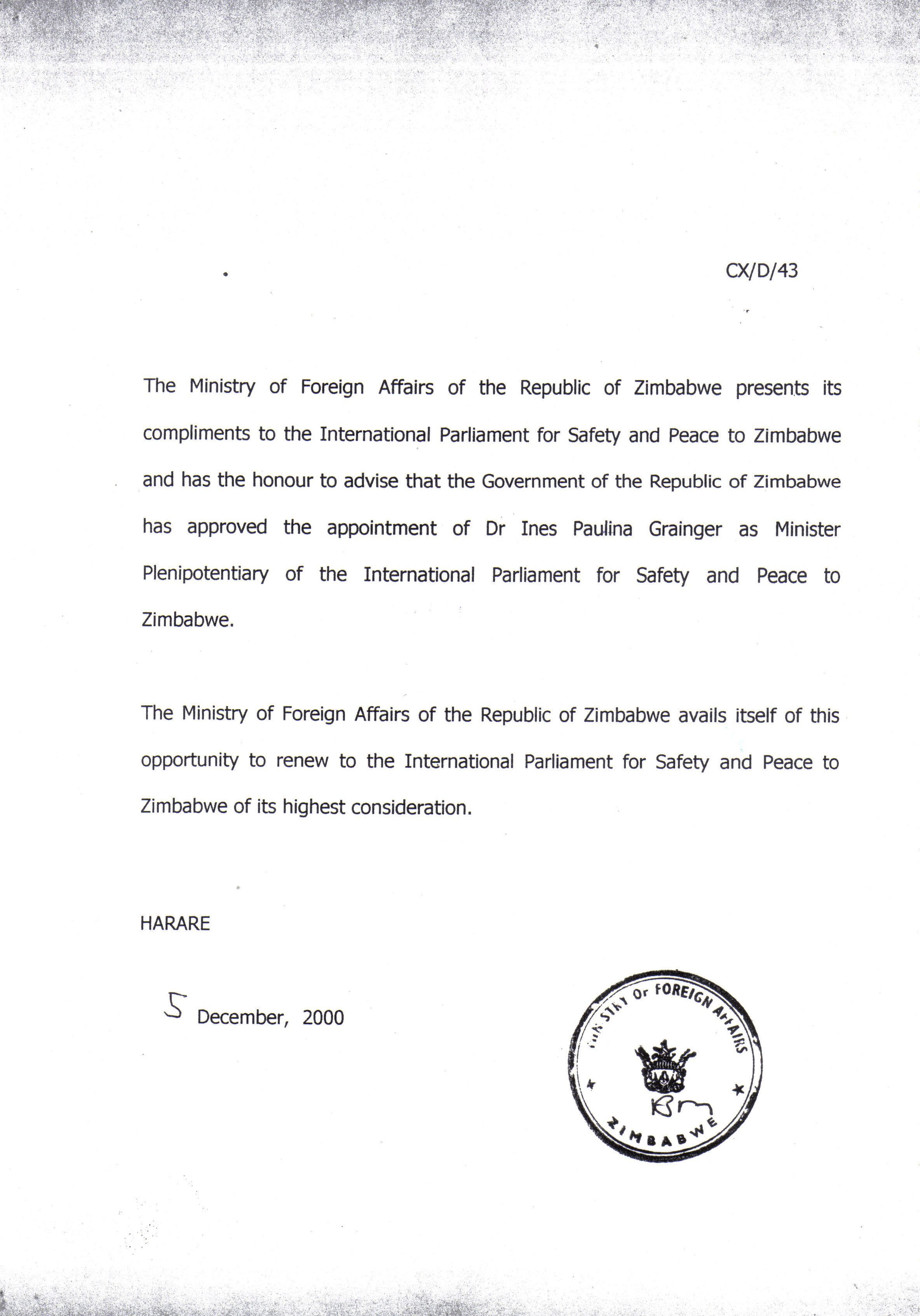
Several nations gave official diplomatic recognition to the ISPSP and its representatives, who were issued with diplomatic passports.

Some of the governmental recognitions of the ISPSP:
>>Colombia
>>Ecuador
>>Gabon
>>The Gambia
>>Guinea
>>Niger
>>São Tome e Principe
>>Somalia
>>Venezuela
>>Zimbabwe

Archbishop Viktor Busa was the Patriarch of Byelorussia in the American World Patriarchs, in communion with the Apostolic Episcopal Church, and episcopally consecrated my adoptive father, Prince Kermit of Miensk. After his death, several of his clergy, who were mostly based in Brazil, joined the Byelorussian Patriarchate of St Andrew the First-Called Apostle which I inherited from Prince Kermit.

Archbishop Busa received many honours and was granted various noble prerogatives. The full explanation of these sometimes complex authorities is outside the scope of this article, though it would provide a fascinating study in its own right. Some sources incorrectly state that the ISPSP was responsible for granting titles of nobility. Archbishop Busa granted some titles of nobility in exercise of his prerogatives, but these were done in his personal capacity as a fons honorum, not by the ISPSP. Likewise, some sources claim that the offices and passports of the ISPSP were available for money. During my decade-long involvement with the ISPSP, I was never asked for any donation or payment of money for anything. I did, however, quickly become aware that fraudsters had produced imitations of the ISPSP’s passports, official documents and website, and were profiting from these.

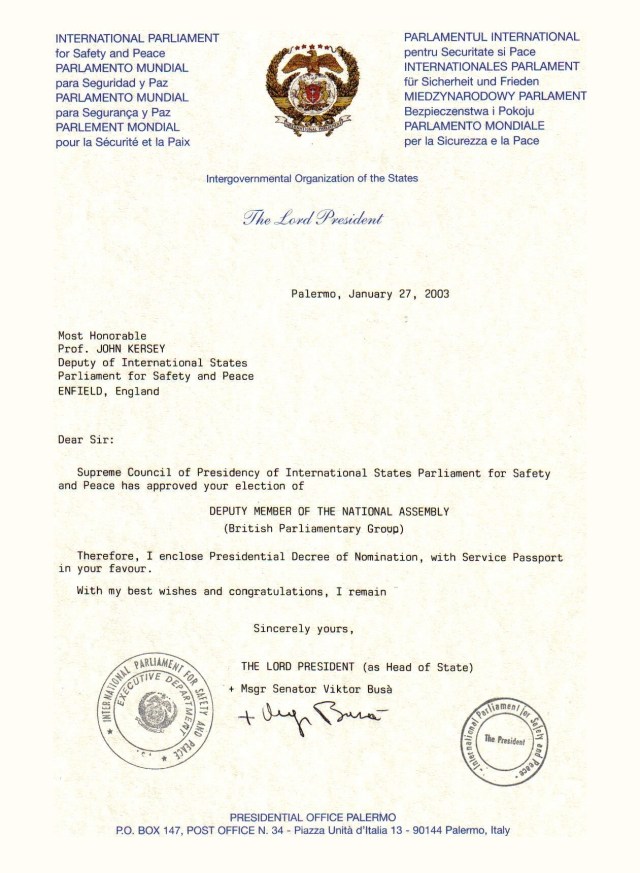
In 2003, I was appointed as a Deputy Member of the Parliamentary Assembly of the ISPSP for Great Britain.
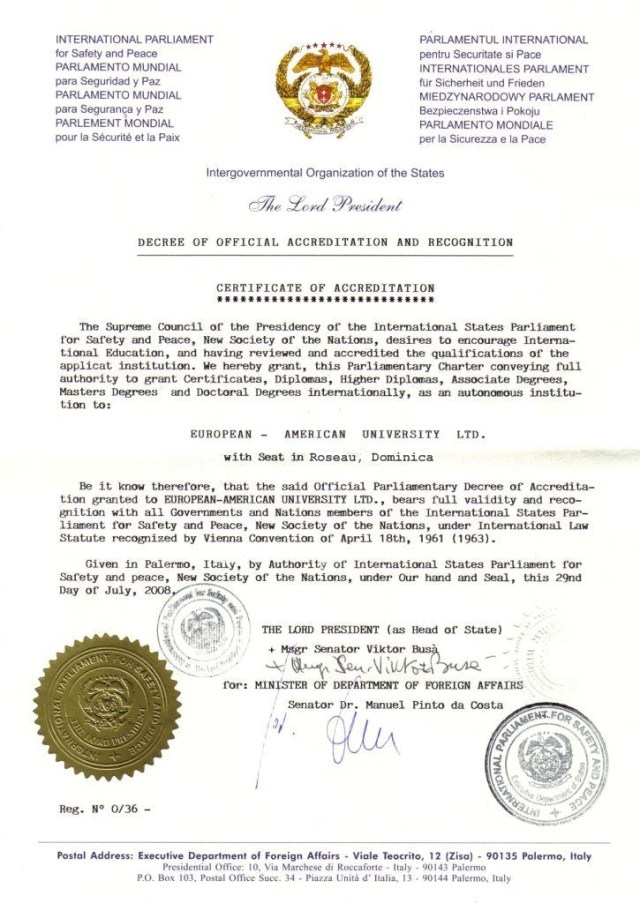
The ISPSP had a significant interest in the support of educational projects, and showed itself willing to support non-traditional education. In 2008, it issued a Parliamentary Charter and Decree  of Accreditation and Recognition to European-American University (Dominica) which was under my presidency.
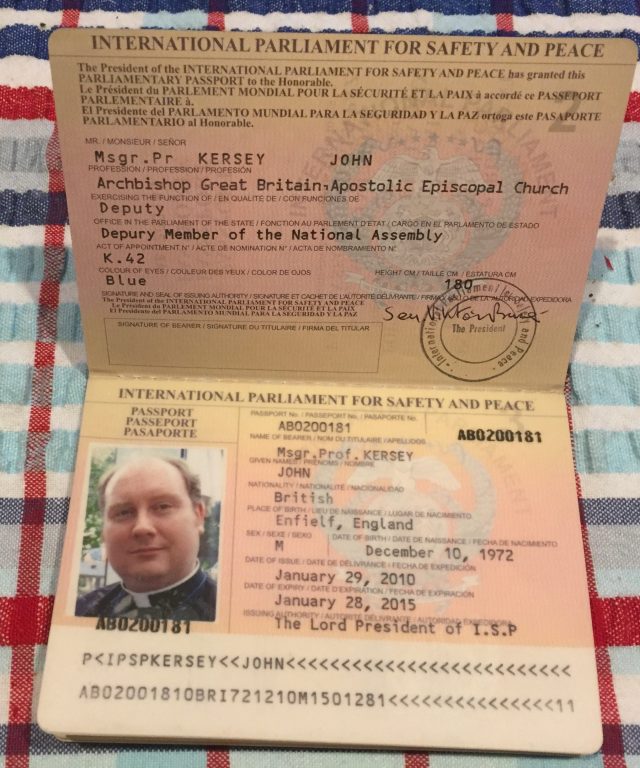
My ISPSP passport issued in January 2010

In May 2010, I was promoted within ISPSP to the position of Vice Minister Political Undersecretary of the Department for Problems of Ethnicity, Race and Religion.
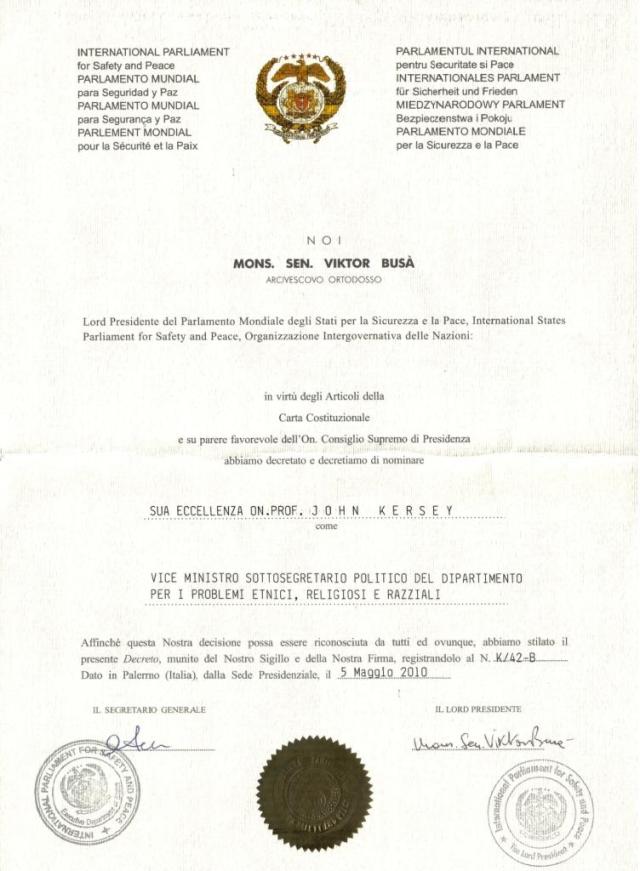
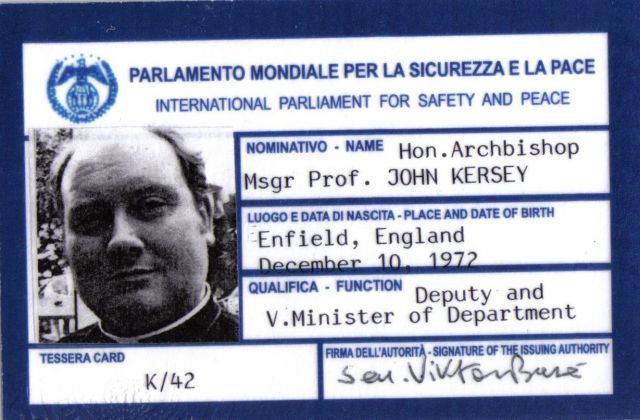
During this period, I worked closely with a friend who was a senior official in the ISPSP and we discussed the steps necessary to put the Parliament on a stronger footing, to realise the immense unrealized potential that it had, and to address some of the problems and criticisms it had faced. In our analysis, the major issue was not Archbishop Busa himself, who was a somewhat unworldly man utterly dedicated to the ISPSP, but rather that some of those who had attached themselves to the ISPSP and to Archbishop Busa had not had the best interests of the Parliament at heart. There were problems with fraudsters, damaging internal conflicts, and even a fake country that had managed to work its way in. Our work was therefore to clean things up. In this mission, we made progress, but we also made enemies.

I had advised the ISPSP regarding the withdrawal of its accreditation from several “educational” institutions that in my view did not meet an acceptable standard, and to form a proper committee for the exercise of its educational functions with published standards. My advice had been well received by Archbishop Busa and was being acted upon. This did not make me popular in certain quarters and the operators of the institutions in question were not slow to exert their influence on Archbishop Busa in an attempt to get rid of me.

There was also increasing factionalism as some Italian members of ISPSP came to see non-Italians as hostile parties and to oppose their involvement in ISPSP affairs. Amid all of this, Archbishop Busa was growing older and more frail. The Italians intended to control the succession and were determined to oust any rivals.

In November 2010, I received several communications, purporting to act in the name of the Parliament, that were couched in insulting and threatening terms. My letter to Archbishop Busa protesting at this treatment included the following passage:

For several years now I have worked together with Ambassador H.E. Dr ——– ——— to seek to address the issue of the International Parliament accrediting unsuitable organisations, and the negative publicity that has resulted from those associations. I have investigated these matters and provided advice which I understand Dr. —- has passed to you and you have then acted upon. Without my advice the Parliament would still have been accrediting the degree mill Weston Reserve University, the International University of Fundamental Studies with its expired government license, and several other “institutions” which are little more than diploma mills operating on the edges of the law and which have seriously damaged the reputation of the Parliament…

I believe we are entitled to expect courtesy and respect in the light of my expertise which has been placed freely at your service, not the defamatory accusations and threats made by Signor ——–.

I believe that the present developments risk serious and potentially devastating consequences for the International Parliament. We cannot stand by while Signor ——- threatens us and seeks to harm those who have been unquestioning supporters of the International Parliament, not to mention our students, graduates and faculty. It is further obvious both from Signor ———’s refusal to respond to my request that he provide proof of his authority, and his communications with Dr. —— that we have seen and enclose, that he is not prepared to commit to a co-operative working relationship with his Parliamentary colleagues, and intends to destroy the progress we have made in the past years.

In protest at the situation, I withdrew European-American University from all connection with the ISPSP and resigned from all the offices I held personally. The response that I received from Archbishop Busa on 19 November was confused and contradictory; it at once gave support to my opponents, but also stated that Supreme Council of the Presidency had refused to accept my resignations.
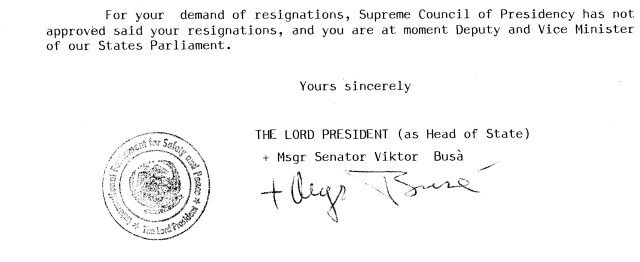
Archbishop Busa died in 2013 and the ISPSP did not survive him. The immediate aftermath became mired in legal conflict, with the succession to Archbishop Busa being impossible to determine. For my part, whatever claims may be made, I do not recognize any organization as being the legitimate continuation of the ISPSP today.


Honours and awards: President’s Lifetime Achievement Award for Volunteer Service, USA

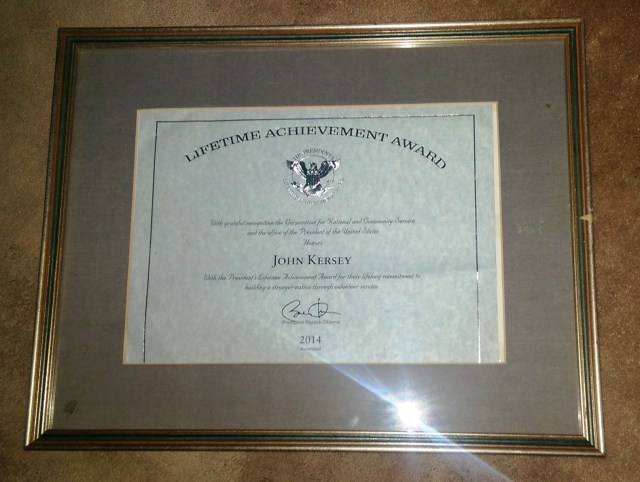
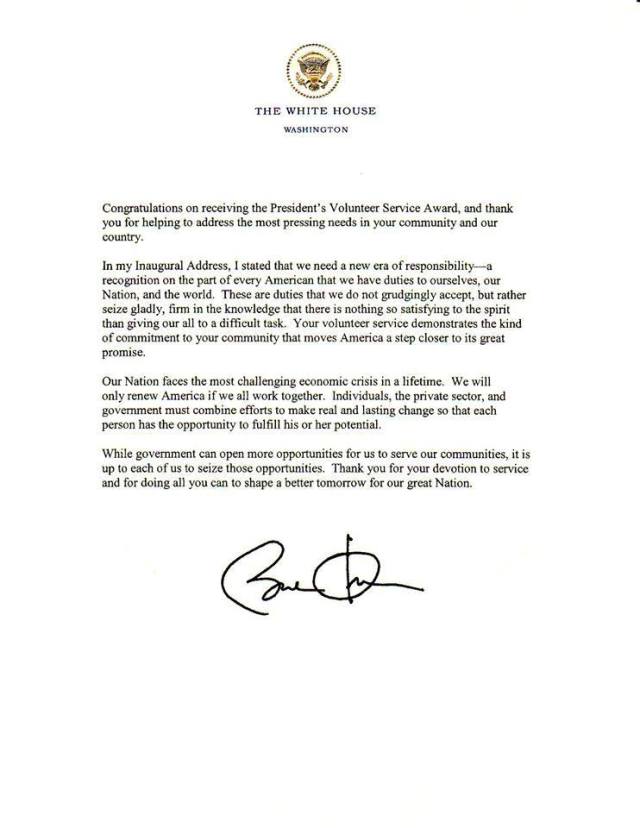
The President’s Volunteer Service Award was established by Executive Order of President George W. Bush in 2003. The award was established to honour volunteers that give hundreds of hours per year helping others through the President’s Council on Service and Civic Participation. The award can be granted to individuals, families and organizations. Depending on the amount of service hours completed, individuals can receive the Bronze, Silver, Gold, and/or the President’s Lifetime Achievement Award (now referred to as the Call to Service award). The President’s Lifetime Achievement Award is the most prestigious, and it has been awarded sparingly. Awardees may receive a personalized certificate, an official pin, medallion, and/or a congratulatory letter from the President depending on the award earned.

In 2014, I was surprised and greatly honoured to receive the President’s Lifetime Achievement Award from President Barack Obama.

Honours and awards: Collegium Heraldicum Concordiae, Poland

herb-chc

I have been honoured by the Polish Collegium Heraldicum Concordiae. The CHC was founded in 2009 to promote traditional and conservative values within society.

The Medal “Pro Probitas” was instituted in 2010 and is awarded in three classes: gold, silver and bronze. It is awarded to those who have promoted conservative values. The obverse design of the medal depicts Adam Jerzy Czartoryski (1770-1861), while the reverse bears a quotation “CONVENIT DIMICARE PRO LEGIBUS, PRO LIBERTATE, PRO PATRIA” (it is fitting to fight in defense of rights, freedoms and country) taken from “Tusculan Disputations” by Marcus Tullius Cicero. The ribbon depicts the national colours of Poland and of France.

I have received the Medal “Pro Probitas” in gold (Class I) which is the highest award of the CHC.

gold medalproprobitasAdditionally, I have received the CHC Medal commemorating the hundredth anniversary of the birth of the late Archduke Otto von Hapsburg. The reverse of the medal depicts a quotation from Vergil, “Semper honoris nomenque laudesque manebunt tuum” (Your honour, name and glory will remain forever)

habsburgmedalhabsburga

The chairman of the CHC is Dr Norbert Wojtewicz, who is a Knight Officer of the Order of the Crown of Thorns. Dr Wojtewicz, who earned his first two degrees from the Papal Theological Faculty in Wroclaw and his PhD from the University of Wroclaw, is the former Keeper of the Laws of the Association of Polish Monarchists. Among his many chivalric offices, he is Grand Herald and member of the Grand Chapter of the Order of Saint Stanislaus, and is author of the official history of the Order. He is photographed below with the late Prince-Bishop Juliusz Nowina-Sokolnicki, Grand Master of the Order of Saint Stanislaus, who was briefly Assistant Bishop to me in my capacity as Archbishop of Great Britain in the Apostolic Episcopal Church.

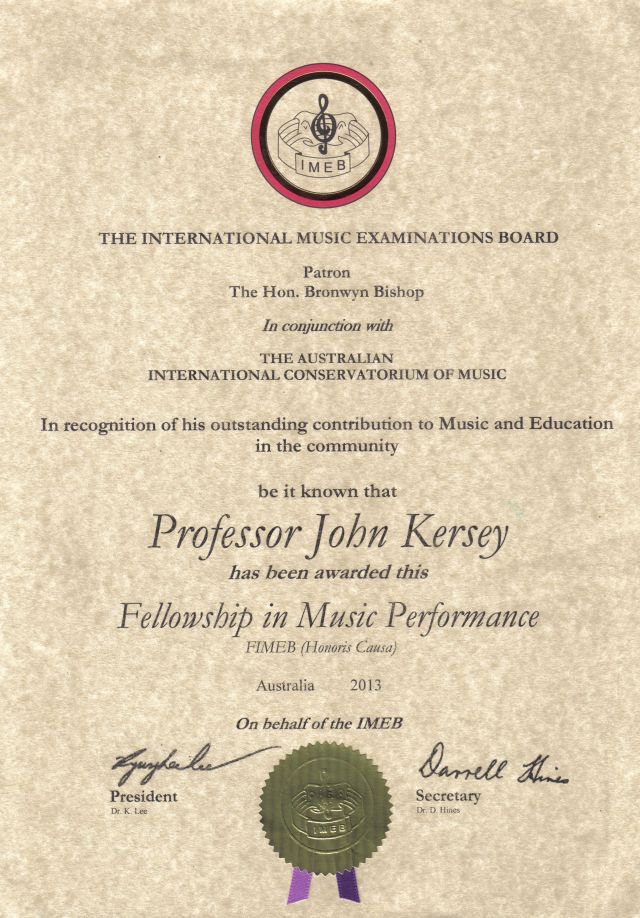
Honours and awards: Fellowship in Music Performance honoris causa of IMEB

The International Music Examinations Board (IMEB) was founded in Australia in 1998 in response to many requests from teachers of music, speech, drama and theatre arts looking for an alternative examination system.

IMEB examinations are perceived to be more flexible and user-friendly than some other examination systems. All examiners are highly qualified and experienced teachers and therefore have a good understanding of the problems faced by both teachers and students.

Being an international board of examiners, IMEB delegates can be found around the globe, such as in Hong Kong, Dubai and Indonesia.

In 2013, I was nominated for the award of a Fellowship in Music Performance honoris causa by IMEB. The citation reads “in recognition of his outstanding contribution to Music and Education in the community.” The award was made in conjunction with the former Australian International Conservatorium of Music.

Honours and awards: Dukedom of Samos in the Royal House Polanie-Patrikios

I have been honoured with the title of Duke of Samos awarded by the Royal House Polanie-Patrikios. The Head of the House, the Most Revd. Prince Kermit William Poling de Polanie-Patrikios, is the direct descendant of at least eleven of the Byzantine emperors. He is a member of clergy of the Order of Antioch and was honoured with membership in the San Luigi Orders by the late Prince-Abbot Edmond II. Today he holds the office of Vice-Chancellor Emeritus of the San Luigi Orders.

Duke of Samos

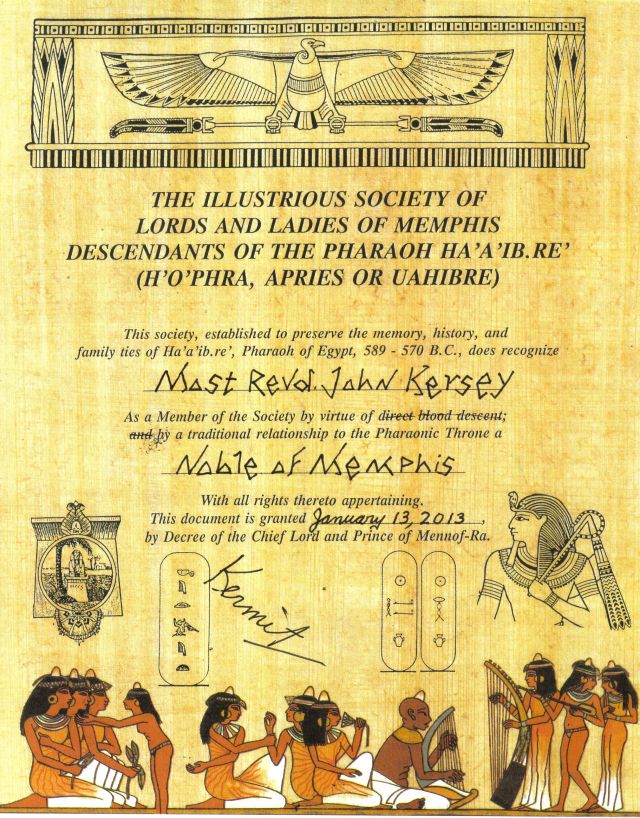
Honours and awards: Noble of Memphis

The Illustrious Society of Lords and Ladies of Memphis, Descendants of the Pharaoh Ha’a’ib.Re’ (H’o’phra, Apries or Wahibre) is a lineage society established by my late adoptive father, Prince Kermit Poling de Polanie-Patrikios, in his capacity as Chief Lord of the Society and Prince of Mennof-Ra. The Pharaoh Wahibre ruled Egypt for ten years around 1670 BC.

The subject of descent from antiquity was a great interest of Prince Kermit, and was given added impetus by the work and publications of the Unit for Prosopographical Research at Linacre College, Oxford, and in particular the work of Christian Settipani on the descent from antiquity of Charlemagne.

With regard to this particular lineage society, see in particular A 4000–Year Old Descent from Antiquity: From the 12th Egyptian Dynasty to the Capetians and Beyond compiled by F.A. Doria with analysis by Chris Bennett and comments by Christian Settipani and N. Taylor (2001). Further studies of antiquity that traced this lineage back to the 13th Egyptian Dynasty established the descent from the Pharaoh Wahibre, which was set out in a publication by Prince Kermit.

Honours and awards: Commemorative medals of the Royal House of Thailand

I have been honoured to have been presented with several commemorative medals of the Royal House of Thailand. They were presented for “outstanding work for the progress of mankind through peace education” by the former Advisor of the President of the Committee for Private Education of the National Assembly.  In Thailand, it is customary for these medals to be worn by members of the civil service and the armed forces.

The medals presented were the Commemorative Medal for the 7th Cycle Birthday Anniversary of King Bhumibol Adulyadej (Rama IX), 2007; Commemorative Medal on the Occasion of the 6th Cycle Birthday Anniversary of H.M. Queen Sirikit, 2004; Commemorative Medal for the Investiture of H.R.H. Prince Vajiralongkorn as Crown Prince, 1972. Each of the medals was first issued on an earlier date, but this presentation was made in December 2012.

Thai medals

Honours and awards: Knight Majus in the Byzantine Order of Leo the Armenian

I have been appointed as a Knight Majus in the Byzantine Order of Leo the Armenian. The Order is a house order of the Dynastic House Polanie-Patrikios, whose head is the Most Revd. Prince Kermit Poling de Polanie-Patrikios. Prince Kermit is the senior living member of the San Luigi Orders, having been admitted to all three Orders by Prince-Abbot Edmond II, and traces his ancestry to several of the Byzantine Emperors.

Honours and awards: Honorary Doctor of Byzantine Studies from the Constantinople Orthodox Institute

The Constantinople Orthodox Institute was established by my late adoptive father, Prince Kermit Poling de Polanie-Patrikios, in his capacity as Head of the Royal House Polanie-Patrikios, on 1 January 2006. It is a study society established to foster interest in Byzantine faith, history and culture, which was particularly encouraged through directed self-study. Various issues of The Excubitor, the journal of the Byzantine Order of Leo V, contained resources for students of the Institute.

The Institute conferred honorary degrees only, and in 2012 I was honoured to receive an honorary Doctor of Byzantine Studies.

Honours and awards: Knight of the Order of the Sacred Cup

The Order of the Sacred Cup is a fraternal fellowship of Christian men. While chivalric in its character, it is not an Order of Chivalry in the classical definition of that term. It acknowledges Jesus Christ, Son of God, as its Grand and only Master. These knights exalt the Sacred Cup and defend the symbolic meaning of the elements of the Last Supper as representing the broken body and shed blood of Jesus. The Order gives forth no code of conduct except that which is handed down through the teachings of Holy Scripture.

The Order of the Sacred Cup was founded in Grafton, West Virginia, USA, on 1 August 1970, with the main purpose to be that of helping and aiding needy children. It still pursues this goal on a selected basis. The order also functions as an honorary award given in recognition of outstanding service to the Church of Jesus Christ.

The Order is truly Ecumenical in nature. The founders and original officers were mostly drawn from Protestant churches. Its original religious charter was bestowed by Patriarch Peter II Zhurawetsky of Miensk, and the Patriarch of Jerusalem, Benedict I, conferred Apostolic Blessings on the Order. His successor Patriarch Diodoros likewise extended his Patriarchal Blessing to the Knights of the Sacred Cup. In 1988 Prince Kermit William of Miensk became Grand Knight Chancellor and held that position with distinction, building up the work and membership of the Order. He appointed me as a Knight of the Order in September 2012. On his death in 2015 he was succeeded by me as his adopted son and heir.

Honours and awards: Royal Protector and Member of Sovereign Council of the Regency of Lomar

206878_216437535034563_5632262_nSince March 2012 I have served as Royal Protector of the Regency of Lomar and as a member of its Sovereign Council. The position of Regent of Lomar, which carries with it the title of Duke of Saih Nasra in the Abbey-Principality, has been vacant following the death of the last Regent, Dom Klaus Schlapps OPR OA, in January 2013.

The Regency of Lomar is fundamentally a small sovereign, non-territorial, non-profit, transnational diplomatic and humanitarian institution, or non-government organization (NGO). ROL primarily provides humanitarian and direct aid for refugees and other abused people, and works closely with international aid, government and non-government organizations in compliance with the UNHCR Convention of the Status of Refugees and the UN Universal Declaration of Human Rights. Although some have described the ROL as a micronation, it has always rejected this term.

logolomarFounded in 1997 in Silicon Valley, California, by Lawrence A. Cleenewerk and a small group of Catholic and Orthodox Christians, Lomar was inspired by the novella The Dream-Quest of Unknown Kadath by H.P. Lovecraft, from which Cleenewerk developed the idea of a state which would provide an “utopian safe haven for refugees and displaced persons”. Initially titling the project the Republic of Lomar after the legendary polar kingdom of the same name, Cleenewerk later adopted an acronym to describe its aims, “Libre Organisation Mondiale d’Aide aux Réfugiés”. In March 1998, the Republic of Lomar Foundation (Fédération Humanitaire Republique de Lomar) was incorporated as a non-profit corporation in Delaware, USA. An office was initially established in Washington, D.C., moving to Nevada in 2004. A paper entitled “The Republic of Lomar, Sovereignty and International Law” discusses the status of Lomar at this time.

passpic1Lomar grew quickly and developed a network of volunteer diplomats, with a particular base in France and consulates in seven countries in all. By 2001, there were over 4,500 registered citizens located all over the world. Lomar issued its own passports, similar to the UN Passport or the Nansen Passport, to the collective community of underprivileged people, including exiles, stateless refugees, victims of oppressive regimes, unrepresented people (Lomar has been a supporter of the UNPO (Unrepresented Nations & Peoples Organization) from the outset) and other deserving individuals who were in need of relocation. Legal help was offered with immigration matters. Although no state formally recognized Lomar, its passports were used to enter countries including Russia and Cuba.

The Lomar flag symbolically represents the green color of Life on Earth and the blue symbol of the sky and life-giving Water. The purple star is the symbol of Hope and Royalty, representing the Polaris Star. The flag was manufactured both in full size and in miniature versions suitable for desktop use.

media_php

In 2001 a group of criminals in Nigeria – a country where Lomar has never had any representation – used the Lomar name without authorization to sell bogus passports and “citizenships”, with tens of thousands of people suffering financial loss as a result. Lomar worked with international police authorities to combat this menace and expose it in the media, but the ensuing scandal was at a heavy cost to its resources and reputation.

In December 2003, Dom Klaus Schlapps was appointed First Counsellor and President of Lomar. He changed the name from Republic to Regency of Lomar and was elected the first Regent in 2004. Finding Lomar’s fortunes at a low ebb, he worked with others, particularly Secretary General HE Renaud Le Mailloux, to revive its humanitarian activities, now no longer concentrating on stateless persons as had previously been the case, and free from all religious or political affiliation.

cameroon_kumboit

Before long, Lomar had started to develop new and productive endeavours. Through Dom Klaus’s project Art Aid a hospital was built in Peru and a daycare centre was also scheduled for construction. A programme of wind turbines in Burkina Faso generated electricity for villages there, and a consignment of ten computers, bicycles and other goods was sent in late 2005. Work in collaboration with the Navti Foundation in Cameroon led to the donation of five tons of humanitarian aid in May 2005, including old computers for the use of children there, sewing machines (with volunteer teachers from ROL to teach their use), bedding and free medicines supplied as a result of Dom Klaus’s association with German-based charity PARMED, where he served as president. Donations were made to the victims of Hurricanes Katrina and Rita. In the People’s Republic of China and Hong Kong SAR, ROL supported the care of the elderly and young children. A Mercedes jeep was donated by PARMED to help ROL work in Cameroon. Literary and music competitions were organized, and a fundraising CD “Sounds of the East” was issued.

image010

The patrons of the ROL included French politician Jack Lang; the Fon of Nso, HRH Fon Sehm Mbinglo I, the Fon of Mbiame, HRH Schindzev Tata II, and the Fon of Nseh, Kwinkor Fonban, from Cameroon; Princess Angela Fugger von Glott; and HIH Prince Nguyen Phuc Buu Phuc of Viet Nam. Dom Klaus received the title of Shufaiy Ngaibunri (equivalent to Duke) from the Fon of Nso in recognition of his humanitarian work.

471564_406934882651493_1750875350_o

The associations entered into by the ROL included Akamai University, Hawai’i, USA, PARMED e v., Leinau, Germany (now defunct, archive site), the Navti Foundation, CRIG International, the Association for Protection of the Rights of the Refugees from Abkhazia (APPRA), Georgia, ANAMED, and the International Green Cross Organization. In February 2012, mutual recognition was extended between the ROL and the Abbey-Principality of San Luigi.

Before 2004 a number of Lomar stamps were issued. Two of these issues are shown below. Proceeds from the sale of the stamps in remembrance of the occupation of Tibet went to the Tibetan government-in-exile.

557136_406043052740676_1958299661_n

In 2006 the only coin of Lomar was issued, a 1 Kurant piece in bronze that depicted the arms of Lomar, the Arctic Wolf and the Polaris Star.

544486_406221336056181_1268913368_n

All of this meant that Lomar stood – and stands still – as one of the most successful virtual government projects in the history of the internet. In 2009, however, a major software and database failure placed its future in jeopardy. With no backups available, activities were suspended and serious consideration was given as to whether Lomar should continue. In 2012, Lomar returned with a limited internet presence and support was sought from outside agencies and individuals for it to resume its work. The sudden and unexpected death of its Regent in the following year again called a halt to its activities, and so Lomar now waits to discover the next chapter in its existence.

Lomar