Work in education – Claremont International University (Seychelles)

Claremont International University, also known as Claremont International University of Arts (CIUAS), was incorporated in the Seychelles on 14 October 2003. The power to confer degrees was contained in the Memorandum of Association of the corporation, and this was specifically approved by the Seychelles International Business Authority as an agency of the Seychelles government. The university name was inspired by the historic Claremont House in Surrey, England. A disclaimer on the website made it clear that there was no connexion with any institution with a similar name in the United States or elsewhere.

The University was an institution where the long-established principles of the conversion of experiential learning into academic credit were realised with integrity for the benefit of mature adults with significant prior learning. The University was consciously set up as an Internet-based entity operating internationally; it maintained no campus and its functions of assessment and administration were decentralized.

Behind the concept of the University was the viewpoint that experiential analysis (APL/APEL) was too often being undertaken to an indifferent standard by other institutions, or used merely as a front for the sale of degrees with little or no due process. The University was intended to implement a thorough experiential credit process under the supervision of qualified faculty, thereby allowing experienced adults to access an accelerated educational process in which their programme was effectively personalized.

The University’s prospectus put the matter thus:

We believe that the lifelong learning that occurs through experience is the most fundamental to personal development, and yet such applied learning is often not sufficiently highly regarded by the educational establishment. In effect, such lack of regard is tantamount to a denial of the rights of the student to have what they can demonstrate that they know recognised through the award of academic credit at the appropriate level, representing instead a reaffirmation of the privileging of the “educated” academic over hoi polloi. For many years the non-traditional movement in education has presented the contrary argument that learning gained in whatever context, be that inside or outside the classroom, is worthy of academic credit. It does not matter, for example, whether your proficiency in playing the organ was gained through college study, through private lessons or through being self-taught. Under this argument, which we enthusiastically support, your proficiency is equally academically valid, and equally worthy of conversion to academic credit, whatever the route taken to acquiring it. In short, we believe that education is about outcomes, not processes.

The concept of an Internet-based university built on experiential assessment was rightly regarded as highly controversial, and from its outset, the University attracted opposition and hostility from those favourable to the mainstream education establishment. Since its intention was to promote disruptive innovation from outside the establishment, this was accepted as inevitable. It quickly also became clear, however, that certain school operators who viewed the University as a challenge to their own substandard product were also determined to attack the University.

Under my Presidency, the University appointed as joint Chancellors my friends the Hungarian war hero General vitez Janos Karászy-Kulin, Grand Master of the International Order of St George, and his wife Dame Iris. They accepted their positions enthusiastically, and the General penned an address to future students.

The work I undertook for the University involved responsibility for all academic matters at strategic level during the phase prior to students being admitted. I was responsible for specification of the University’s academic methodologies based on research and practice evolved in the USA by leading non-traditional institutions and their application to curricular issues in consultation with faculty and board members. I was also responsible for the appointment of faculty, who included senior academics from UK and South African universities, and for supervising all aspects of faculty interface with students, as well as encouraging faculty research, collaboration and professional development.

I was further responsible for the negotiation of agreements with other institutions to bring about an emerging research profile. Using contacts gained through my other academic positions, I completed memorandums of understanding with Knightsbridge University, Denmark, and Ansted University, British Virgin Islands. The scope of these agreements included faculty exchange, credit reciprocation, joint professional development and joint research programmes.

Lastly, I was responsible for quality assurance matters, establishing models for good practice and benchmarking. Several recognised American credential evaluators agreed to evaluate the University’s degrees as equivalent to those issued by regionally accredited universities in the USA, which was a mark of the seriousness and commitment to quality that had been the hallmark of the University from the outset.

I was a member of the following University committees: Academic Council (Chair); Academic Standards (Chair); Institutional Review Board; Long Range Planning (Chair); Student Evaluation and Grievance.

In January 2004, I received an attractive offer from a consortium of educators to purchase the University outright. This was a surprise, since the University had only been launched for a few months. While a handful of internal candidates had been put through the University’s systems free of charge in order to test processes and procedures, the University had yet to embark on marketing or the recruitment of students.

One other factor that was a concern to me was that I had recently received legal advice that the current operating structure of CIUAS was not in compliance with relevant legislation. I disagreed with this advice, and sought further guidance both from other legal experts and from the relevant government departments. This process took some months, but concluded with a consensus that the advice I had previously received was wholly incorrect, and that the operating structure that had been in force had indeed been legally compliant after all. This caused me to question the motivation and possible bias of the lawyer I had initially consulted, whose firm had also acted for competitor institutions, and I came to believe that there had been a deliberate attempt to sabotage the University.

Meantime, however, the Board decided to accept the offer to purchase CIUAS. As part of the transfer agreement, I stepped down from my Board position but was to remain as President on a contracted basis. A new administrative and faculty team was put in place, and a new website instituted by the new Board. Unfortunately, the new Board soon developed other priorities and decided not to continue with CIUAS. While the website remained online for a year or so, no students were recruited and the University had effectively ceased activity.

I learned much from the work that had been done at CIUAS and would put this into effect some years later when the broader-based European-American University would launch to the public.

My education: Knightsbridge University, Denmark

Knightsbridge University was a private distance learning university that was based for most of its history in Denmark.

The history of the University can be divided into two separate phases, consisting respectively of its foundation and first few years, and then the post-1991 Danish-owned era. Knightsbridge University was initially established as a private university in England in 1986 by a group of businessmen who also operated the University de la Romande. In 1988, the Education Reform Act effectively banned private universities in the United Kingdom, but continued to allow foreign private institutions to operate there providing they did not represent that their degrees were UK degrees. Degrees issued by United Kingdom private universities prior to 1988, including those issued by Knightsbridge University, therefore have the same legal status as any other public or private degree issued in the UK before that date.

The second phase of the University’s history began when Danish businessman Henrik Fyrst Kristensen and his English business partner registered Knightsbridge University in Denmark in 1991. In 1993, Kristensen acquired sole control of the University, and became its President (subsequently Vice-Chancellor). Kristensen was a veteran of the Royal Danish Navy and has owned and managed various  trading and import-export companies.

Under Kristensen’s leadership, Knightsbridge University underwent a complete revision designed to position it as an elite private European institution whose offering, according to its explanatory materials, was of “high quality programmes to high calibre candidates, aiming for a global market.” This also meant a strongly business-oriented outlook at a time when this was less usual in academia than it has subsequently become. Knightsbridge University presented a direct and straightforward path to earning a degree, emphasising flexible routes for experienced adults, and its presentation was both well-written and understated. When a website came along in due course, it was notable for its unfussy design and economy of style, rather in keeping with a modern Scandinavian aesthetic.

Throughout the time of Knightsbridge University’s operation there, Denmark’s education system permitted the existence of higher education institutions in the private sector that were wholly self-regulating, as had the United Kingdom prior to 1988. There was no legal restriction on the use of the title of university nor on the award of degrees. Such accreditation systems as were available were directed purely at the obtaining of state funding. No accreditation was available for a private institution that did not seek to make its students eligible for state study grants.  Nor was Knightsbridge University the only private degree-granting institution in Denmark; that sector included several well-regarded business schools. In my view, the application of the term “unaccredited” to such institutions is entirely incorrect. Such a term would only be applicable where there was accreditation available; otherwise it criticizes an institution for not having something that does not actually exist. It was not until 2018, a decade after Knightsbridge University had ceased activity, that Denmark legislated to prevent private organizations from using the title “university” (University Act, section 33a); at the time of writing there still remains no prohibition on private organizations granting degrees.

From time to time, the status of private universities and their degrees was raised with the Danish government. In the Answer to Question no. 103 from the Committee on Science & Technology on 20 March 2003 to the Minister for Science, Technology & Innovation (L125 – appendix 77 (later also called Appendix 96)), the then Minister made it very clear that “…neither the current nor the proposed future legislation gives any possibility for the approval of private providers of education. Such education is provided without state funding and thusly are equal to the courses which [state] universities may offer without state funding and which also need not be nor can be approved by the Ministry…” In a statement explicitly addressing Knightsbridge University, the Danish government qualifications authority CIRIUS stated, “Private institutions without public funding may operate legally without approval or accreditation by Danish authorities. However, if they want to make their students eligible for state study grants they must abide by an accreditation procedure. No state study grants are available for ‘Knightsbridge University’ clients.”(1) In its statement, CIRIUS therefore explicitly acknowledged that Knightsbridge University was legally permitted to operate as a private higher education provider in Denmark. The accreditation procedure referenced in the statement that allowed access to state study grants was a limited scheme for private institutions that was not available for the distance learning degree programmes that made up the entirety of Knightsbridge University’s provision.

Consequently, degrees issued by Knightsbridge University in Denmark are legally issued Danish degrees, with exactly the same legal status as degrees from private accredited providers or indeed Danish state universities, even though they are not part of the Danish state higher education system. They are covered by the Lisbon Convention on the recognition of credentials in Europe, which was signed by Denmark in 1997 and ratified in 2003.

Kristensen’s achievements at Knightsbridge University were considerable. He assembled a body of adjunct faculty and examiners that extended to some three hundred persons, many of whom also served on the faculty of traditional universities. These were augmented by a number of Knightsbridge’s own graduates. The range of programmes was wide and included a number of unusual and niche subjects, such as bibliotherapy and military studies; the University was one of the first to offer a degree in martial arts. Academic standards were strengthened, with internal quality assurance measures and the input of external faculty key to the maintenance of program comparability with “the quality and content expectations one might have of a better-reputed representative of ‘the establishment’.” From the outset, Knightsbridge University had attracted some high achievers, and Kristensen would come to include several members of royal families, government ministers, public and private sector leaders, and individuals of significant achievement who did not always fit into the traditional model of academia. The University gained a reputation for quality over quantity. It was selective in accepting applications, and the reports of a number of graduates indicated that they had found their programs both demanding and worthwhile.

It was clear that what was on offer at Knightsbridge University was significantly different from the low-quality product available from some other private distance-learning universities, and there were a number of reports of graduates using a Knightsbridge degree as the basis for further study in mainstream universities. A Knightsbridge master’s degree was positively evaluated by the German state evaluator of foreign credentials. The Bachelor and Master of Business Administration programmes achieved validation by the Hungarian state university Debrecen Agricultural University, and several specialist Bachelor and Master of Laws degrees were accredited by the UK Association of Lawyers and Legal Advisors. A dual award agreement established that holders of the Knightsbridge Bachelor of Arts in English and in Spanish could obtain the same degree from the state Evangelical University of Paraguay.

In 2004, Kristensen was asked by me to comment on the principles and mission of Knightsbridge University, and replied as follows,

The purpose is to be and remain independent of influence by external authorities. We wish to retain the right to decide what we offer, to whom, where and when. We do not wish to be dictated specific entry or gender quotas, minimum or maximum student numbers, academic year dates, exam dates, or anything else. This desire for total autonomy determines our range of options relative to external bodies. In short, we have no options.

Summing up, our approach is a pragmatic one, albeit one solidly supported by both philosophy and dogma. We have identified and reasonably accurately described a potential market segment, and have developed products and processes to serve this segment. We have been quite successful in attracting highly accomplished individuals to our programmes, individuals for whom the award pursued with us is not necessarily the pinnacle of their life so far, but most often simply one of many milestones in the life of a high achiever.

The quality and integrity of our programmes and provision is borne out by the high number of candidates referred by graduates or other candidates. When people in senior positions in their respective organisations, people used to reviewing options, competent at sorting the wheat from the chaff, contact us on the basis of recommendation by their colleagues, there is no better feeling.(2)

In 1993, Kristensen decided to relocate from Denmark to the United Kingdom. This involved some changes to the University’s registration, since it was necessary to operate under the legal framework for foreign degree-granting institutions that then applied in England, and it would not be possible to maintain the University’s status in Denmark. As a transitional measure, the University had been incorporated in Liberia for a few months in 1993, before incorporation in the Commonwealth nation of Antigua and Barbuda later that year. For several years after the relocation, a European Branch Office was maintained, initially in commercial premises in Torquay and latterly at the Grade II listed Victorian clifftop house there that also served as Kristensen’s home. Alongside the University’s programs at degree level, Knightsbridge College operated from Scotland as a parallel institution offering non-degree courses between 1999 and 2004. After its closure, its courses were offered as part of a turnkey package to budding educational entrepreneurs.

It was believed that some form of governmental recognition would be helpful to Knightsbridge students and graduates. Accordingly, the University made application to the authorities in Antigua and Barbuda, and was granted approval status by its Cabinet in August 1995. Unfortunately, the University then became the centre of a political row, with senior civil servants in the Antiguan Ministry of Education denouncing the Cabinet’s decision to approve the University and failing to confirm its accreditation to enquirers, despite the relevant records and documents from the Cabinet being readily available.

With the new century came the return of the administration from the United Kingdom to Spentrup in Denmark, where the University was registered once more in 2002. It was noted that some graduates held that the University’s private status in Denmark was more prestigious than the Antiguan recognition in any case. In Spentrup, the University again was administered from a home office, and Kristensen said of the approach to facilities, “We do not have to spend enormous amounts on infrastructure, or maintain most of the overheads held by residential institutions. This means we can keep our fees at a reasonable level, even if we receive no forms of funding or grants.”(3)

While there remained a strong element of hostility towards Knightsbridge University and its graduates from those opposed to private sector higher education, there was also some progress to report. Writing in Bears’ Guide to Earning Degrees by Distance Learning at the turn of the century, Dr John Bear said “It is hard not to like Knightsbridge”.(4)

I first came into contact with Knightsbridge University when I answered its website advertisement for new faculty. At the time I was coming to the end of my time in college teaching and looking to explore other career options more suited to my ideology and abilities. I passed the appointment process for the position of adjunct professor and began a long and friendly correspondence with Henrik Fyrst Kristensen. In 2004, I was appointed Dean of the Department of Music, a position I would hold until 2008, and developed a suite of innovative degree and diploma programmes that offered not only the assessment of research and written assignments but also that of applied music in the form of composition and performance.

I corresponded with Dr Wally Willies regarding some of the University’s philosophy and approach. Wally had been head of department at a South African university and earned his doctorate at Knightsbridge. He continues to be a friend and colleague to this day. I found some of his comments particularly pertinent,

Cioran wrote ‘for a writer, university is death’, and I applaud that remark. Fortunately, institutions like KU help a writer to sharpen the claws of creativity, because, somewhere along the line, battle you will. Almost certainly, someone will want to throw mud for their own reasons. If you have the strength and the persistence, you will begin to notice the difference between the cart-horses and the Camargue horses of intellect. I have stopped believing that intellect has any great leadership over our other abilities, but I still feel strongly that engaging in educative activity will bring change, which is the hallmark of growth. A senior degree means that you take on your context, not find your niche…

What I’m saying, I suppose, is that there  is a price to be paid for intellectual freedom, and whether it is worth it, is a matter of individual reality.

My own pithy summary is that, for me, it is better to pay a lot of money to be recognized for meaningful sweat, than to pay a lot of money to be recognized for meaningless sweat. KU will take you along the former rather than the latter road. Not nearly as safe, but a lot more definitive. (5)

Following this, I decided to supplicate for the Doctor of Philosophy degree by published work as a faculty candidate in 2003. In a varied submission, I included work on the history and management of institutions delivering musical education, and also some work that was directly concerned with business education. Added to this was further published work concerned with music criticism and several in-depth studies of musical performances and recordings that had appeared in professional journals.

The PhD by published work is restricted at most institutions to graduates or faculty members, and at Knightsbridge University was examined at the same level as the PhD by thesis. I was assigned to Professor Reginald von Zugbach de Sugg, formerly of Paisley University, the University of Glasgow and the Royal Army Ordnance Corps. Reggie had become something of a legend among his Scottish students and was held in similarly high regard at Knightsbridge. It was not difficult to see why. He combined a remarkable breadth of expertise with charm and an utter dedication to his students. I was delighted when, after my graduation, he was willing to assist me by serving on faculty for some of my other educational projects.

From the outset of my involvement with Knightsbridge University, I was interested to know more about its people. Over the years, I spoke and corresponded with graduates and faculty, read their theses, papers and other published work, and learned of their diverse and often accomplished careers. They must form one of the most unusual and interesting bodies of institutional alumni, with a substantial proportion of high achievers, free thinkers and independent spirits. At the centre of it all was Henrik Fyrst Kristensen himself, who was exceptionally well read in education and its philosophy, and many other subjects as well; witty, humorous and on a number of occasions extremely generous.

My own educational work involved collaboration with Knightsbridge University on a number of occasions, and indeed Knightsbridge was an important support in the early days of European-American University, where a number of Knightsbridge faculty and alumni have since served as Fellows.

Without any prior announcement, the website for Knightsbridge University became unavailable in late 2008, and its Danish registration appears to have been cancelled in June 2010.

Notes:
(1) http://www.ciriusonline.dk/Default.aspx?id=9276, retrieved November 2007.
(2, 3) Kersey, John: A case study of higher education in the private sector: an interview with Henrik Fyrst Kristensen, Vice Chancellor of Knightsbridge University, Denmark, London, Libertarian Alliance Educational Notes no. 37, 2006 ISBN 1 85637 705 9
(4) Bear, John and Mariah: Bears’ Guide to Earning Degrees by Distance Learning, 14th edition, California, Ten Speed Press, 2000, p.220.
(5) Dr Wally Willies, email to the author, 25 August 2003.


Honours and awards: Fellow of the Society of Antiquaries of Scotland

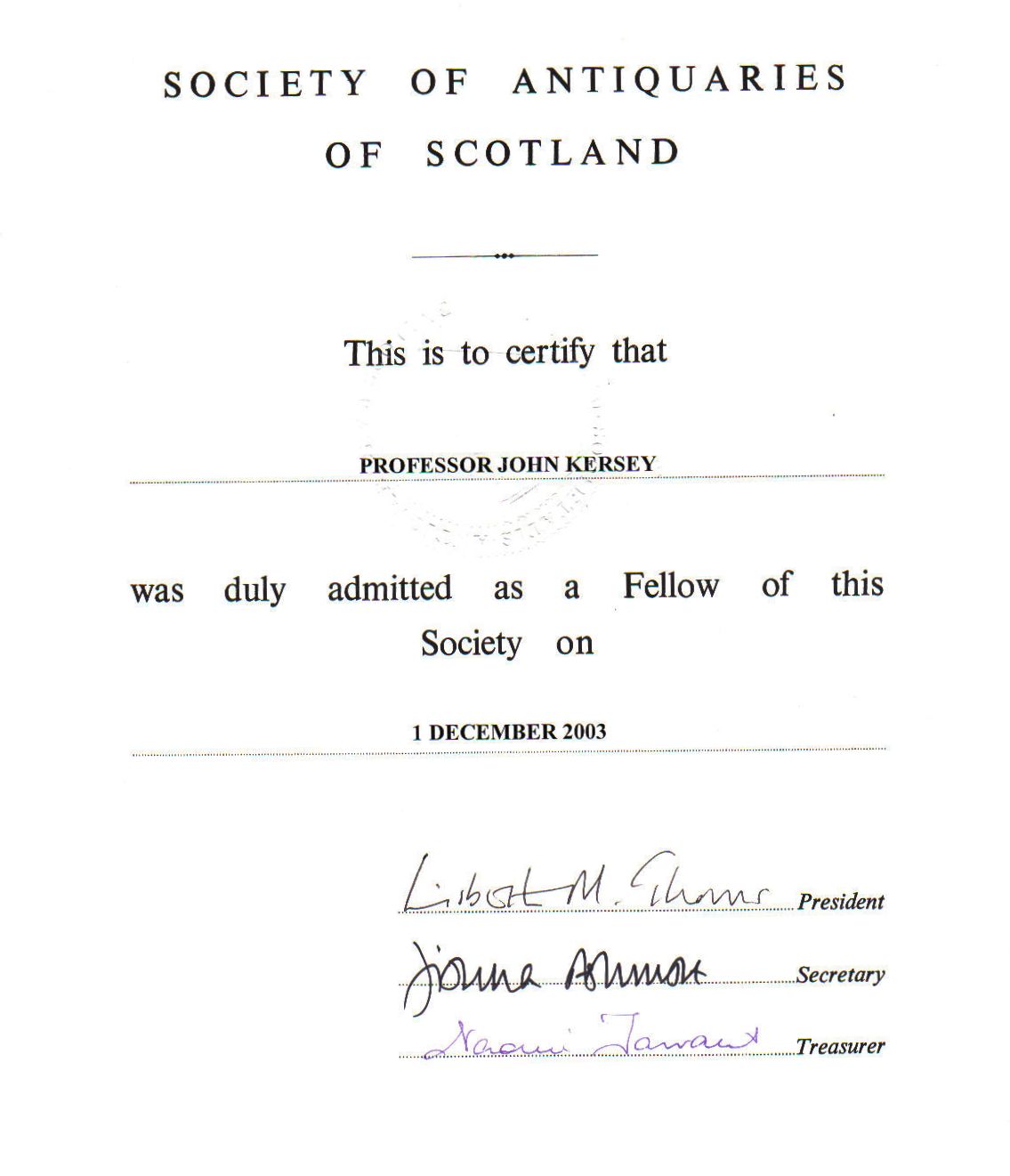
I was a Fellow of the Society of Antiquaries of Scotland between December 2003 and July 2018.

FSA Scot

At the time of my election, the Fellowship was described as “the mark of the established scholar”. The Fellowship was based on election with Fellows required to remit an annual subscription to maintain their status.

After fourteen years as a Fellow, I resigned from the Society in July 2018.

Honours and awards: Fellowship of the Irish Guild of Organists and Choristers

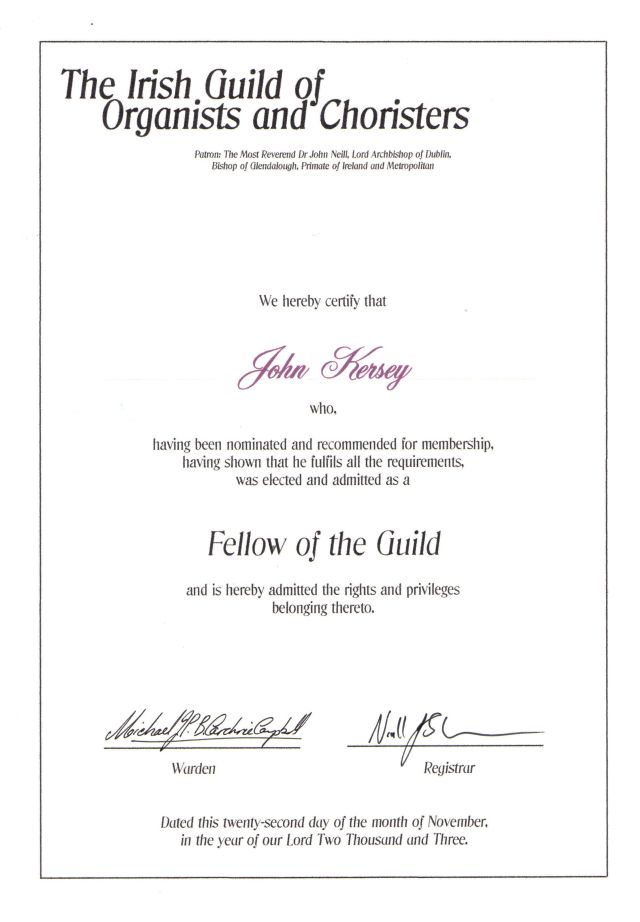
The Irish Guild of Organists and Choristers was founded in 2003 as an independent interdenominational learned society, composed of church musicians and others interested in church music. It was based on the medieval concept of the Guild, which was a group of professionals who gathered together for working and fraternal reasons. The Patron was the Archbishop of Dublin.

The aims of the Guild were to raise awareness of the history of Church music and to promote the highest standards in its practice. The Guild also existed to encourage members in their spiritual lives, and to provide a means whereby they could share experience and resources with other musicians.

Individual membership of the Guild was available at two levels: Associate and Fellow. Although it still exists, it is largely dormant and does not admit new members.

I was elected a Fellow of the Guild in 2003.

Honours and awards: Honorary Fellowship of the Central Institute London, Fellowship of the Academic Society of London

The Central Institute London was originally founded in 1989. In a bid to attract new members, the constitution and format of the Institute was changed at the end of 1999. CIL became a non-examining social body, retaining some elements of a learned society, concerned with academic dress, ceremonial and related issues. It advised several bodies on the design of academic dress and succeeded in raising awareness of its areas of interest.
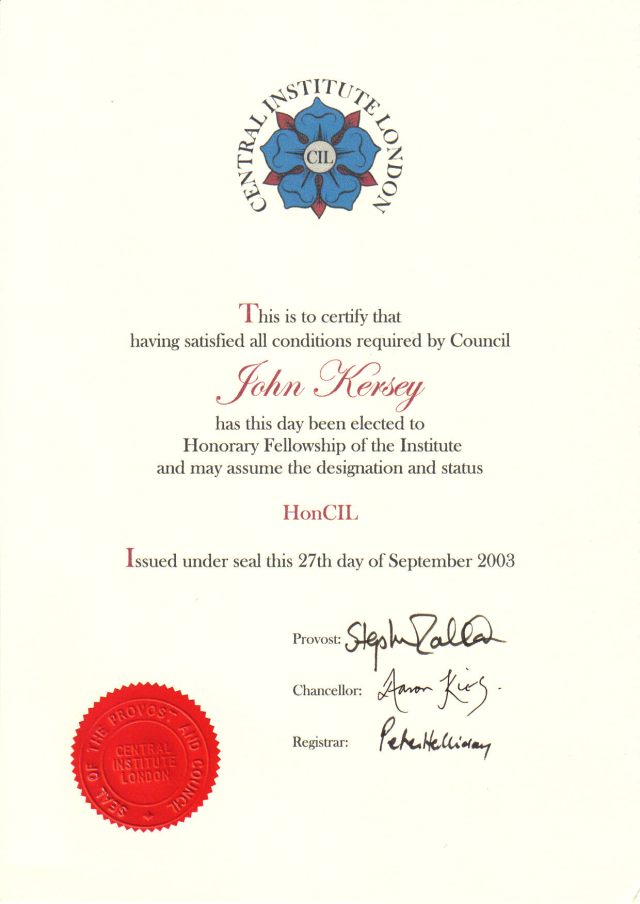
The Institute elected applicants to membership at one of several levels. The level of membership was assessed by Council based upon the applicant’s CV and a supporting letter of application.

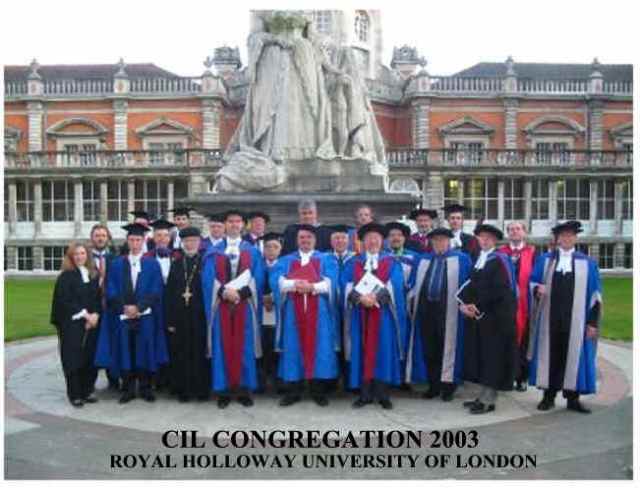
The Institute held three successful Congregations, the last of which, including the Sir John Gielgud Memorial Lecture, took place at the chapel of Royal Holloway, University of London, on 1 November 2003. On that occasion, I was admitted to Honorary Fellowship of the Institute.

I am in the back row, second from right.

In May 2005, the Council of CIL announced that the Institute would cease its activities, citing a decline in membership. This was in my view regrettable, since CIL fulfilled a unique niche in its fields of interest. CIL wore its (considerable) learning lightly. It encouraged members to enjoy academic dress and ceremonial without becoming stuffy or overly tied to the academic establishment in its approach.
On 1 November 2000, Andrew McConnell, quondam Registrar of the CIL, had established the Academic Society of London, which was described as being in the style of the ancient Academies of Rome, as an intellectual centre where scientific, literary and artistic culture mingled side by side together for the greater achievement of mankind, providing the context for the ‘Renaissance man’.

The aims of the Society were: (1) to provide and foster the opportunity for an open dialogue across all disciplines of academia (2) To foster and encourage a more combined interdisciplinary approach to research and study (3) To reconsider academic credentials and achievements within a framework of ‘connoisseurship’ as encouraged by the philosophy of Elliot Eisner.

On 1 June 2000, the ASL was incorporated by simple charter into the CIL. It consisted of Members, who were admitted without prerequisites, and Fellows, who were diplomates, graduates or otherwise professionally qualified. The ASL survived the dissolution of the CIL in 2005 and was run by a Council of three members for some years, now electing solely to the Fellowship by invitation only. I was elected an Honorary Fellow of the Academic Society of London in June 2008, shortly before it too was dissolved.

My education: Fellowship of the Curwen College of Music

The Tonic Sol-Fa College of Music was founded by the Revd. John Curwen (1816-80) at Forest Gate, east London, in 1863. The instrument of government was drawn up in 1869 and incorporation followed in 1875. Curwen had taught himself to read music from a book by the originator of tonic sol-fa, Sarah Glover. He was responsible for developing and integrating the tonic sol-fa method into a comprehensive educational vision for all classes and ages of people that, in his plans for the College, would embrace the training of teachers, the education of students and the provision of a rigorous series of examinations using tonic sol-fa extending from the first grades up to Fellowship. From the outset, the College has always taken a strong interest in choral music. The activities of Curwen’s college were complimented by those of his publishing house, J. Curwen and Sons, which continued as a publisher of educational music until the 1970s.

It was found that the original premises were too far from the centre of London to carry out the College’s mission effectively and therefore new premises were sought. In the early years of the twentieth-century the College was to be found at 27, Finsbury Square, London EC1. From 1939-44 it was housed in Great Ormond Street and in 1944 moved to more spacious accommodation at Queensborough Terrace. During this period, the College was afforded continuity by its long-serving Secretary, Frederick Green, who had been involved with the College from its early years. At one point those wishing to submit for diplomas had first to become shareholders of the College.

In 1967 a decisive development in the College’s history was marked by the appointment of the Revd. Canon Dr. Paul Faunch as Principal of the TSC and Chairman of the separate Curwen International Music Association (a fellowship with especial interest in choral music for past and present students of the College, under the patronage of Dr Zoltan Kodaly). In 1972, he presided over a major re-organisation of the College which saw it re-named and renewed in its pursuit of Curwen’s method. This period saw the College once again housed in the London suburbs, it having removed to Bromley. Dr Faunch died in 1995 and was succeeded by the present Warden, Dr Terry Worroll.

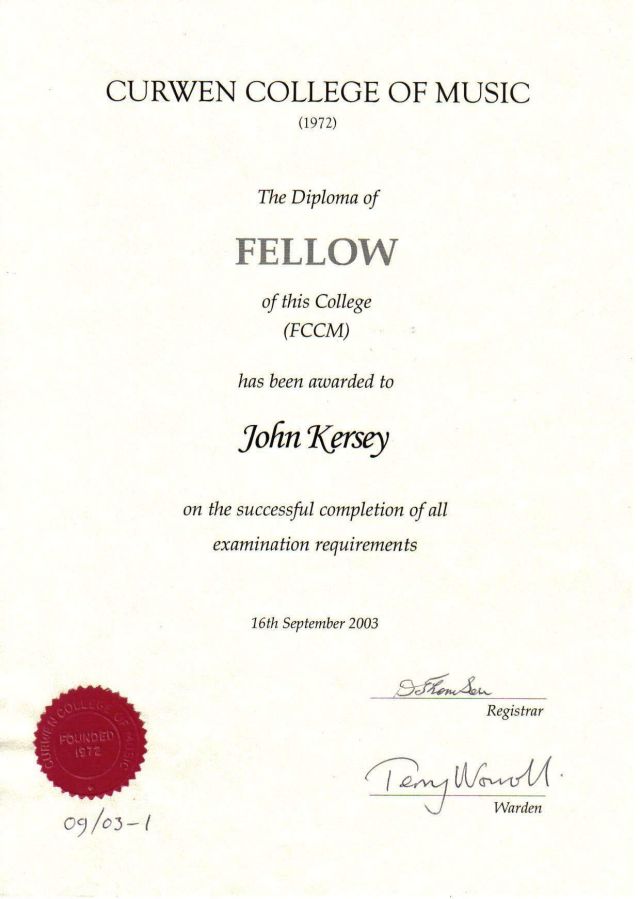
Today, the Curwen College of Music  offers external diploma examinations in practical and theoretical music. In 2003, I was a successful candidate for the Fellowship examination in pianoforte. I was also appointed an Examiner to the College in piano and for dissertations.

Honours and awards: Honorary Doctor of Music from Ansted University

Ansted University was founded in 1999 and chartered in the British Virgin Islands as a private international university. From the outset its focus was on the delivery of education on a nonprofit basis via distance learning. Ansted is an acronym standing for A Noble System of Technology for Educational Development.

The University was supported by the Ansted Foundation, whose focus was on supporting Ansted University financially in the area of project development funding including campus set-up funding, grant programmes for research studies and publications.

The Foundation and the University subscribed to the following aims:

  • Activities that increase mutual understanding and tolerance for diversity
  • Activities that sustain the vitality of artistic traditions in changing contexts
  • Activities that aim to preserve, document or increase public access to tangible and intangible culture
  • Activities that address common problems requiring international cooperation etc.
  • To promote World Peace through cultivating of Social Responsibility practice
  • To promote centres of excellence and knowledge corridors and entrepreneurship in education, training and research

The University established Ansted University Asia Regional Service Center in Penang, Malaysia. This office co-ordinated Ansted activities internationally under the leadership of Professor Roger Haw. The University grew through making agreements and affiliations with other universities and professional bodies internationally. Although it was a private body, its commitment to quality was recognized to the point that its graduates were accepted for further study at several accredited universities in the USA. It also partnered with the World University Roundtable in Arizona, USA, which was how I came to become involved with its work.

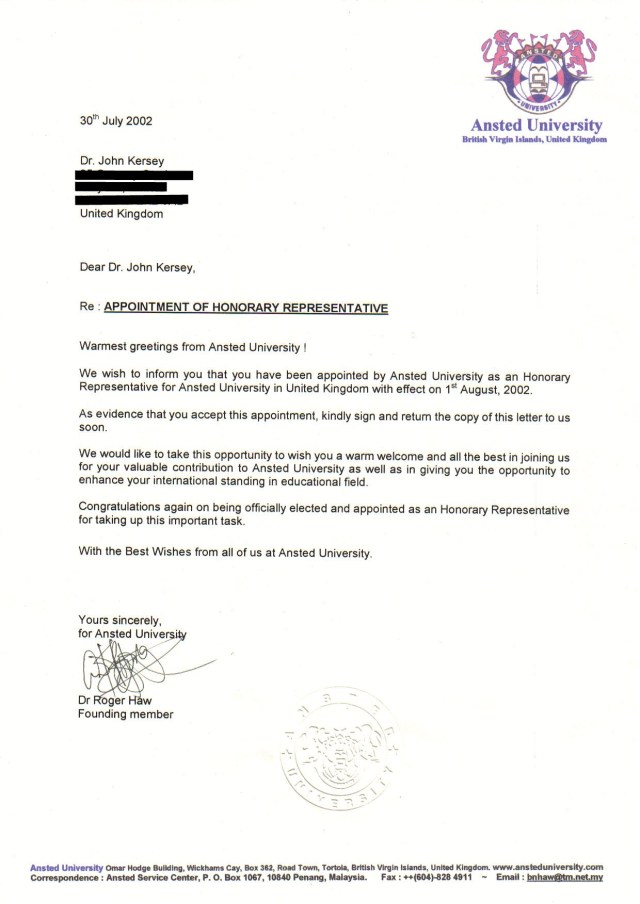
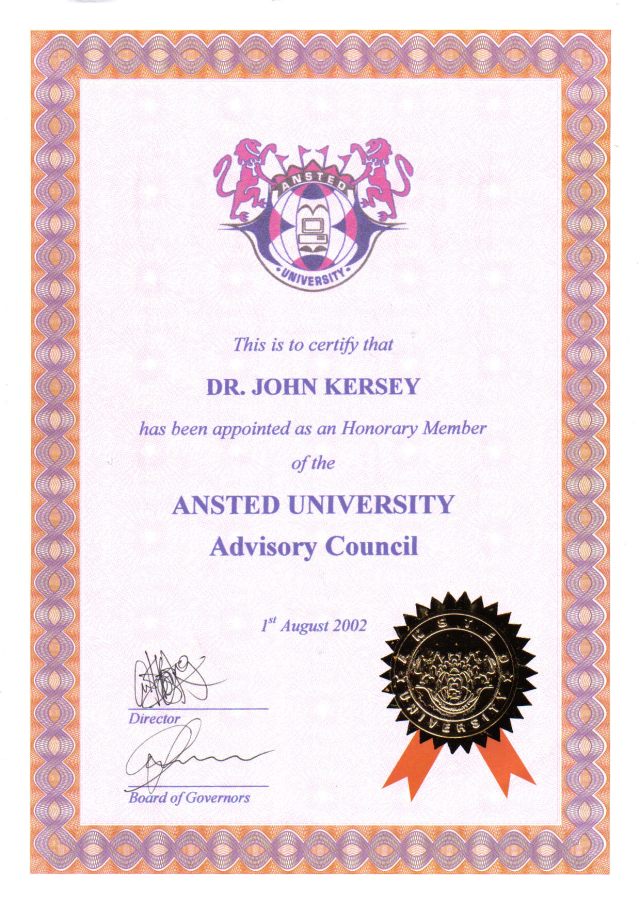
Between 2002 and 2007, I served as Honorary Representative for the UK and as an Honorary Member of Advisory Council for the University.

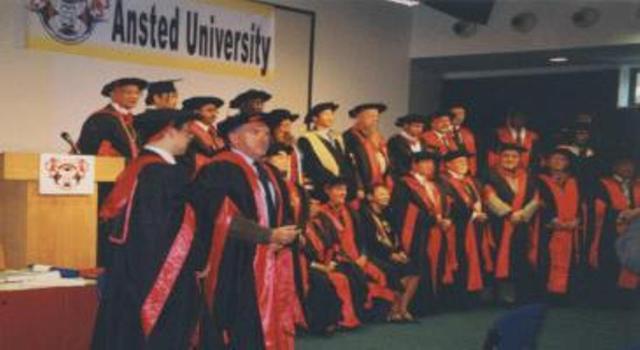
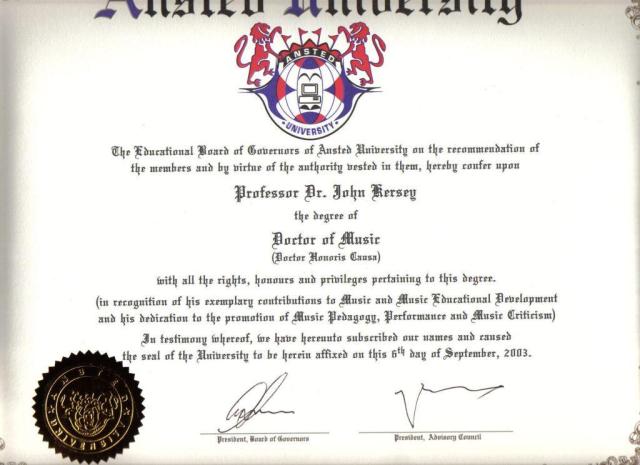
In 2003, the University announced that it wished to confer on me the honorary degree of Doctor of Music, and that this would be done at its convocation ceremony in my hometown of London, UK. I was a member of the organizing committee for this event, which took place at the North Campus of London Metropolitan University. Professor David Crowther of London Metropolitan University also held a professorship at Ansted University and served as chairman of the organizing committee. At the ceremony, my musical setting of the Ansted anthem was also performed.

The honorands at the convocation. I am in the front row, first on the left (with my back to the camera).

The citation for the award read “in recognition of his exemplary contributions to Music and Music Educational Development and his dedication to the promotion of Music Pedagogy, Performance and Music Criticism”.

In my address to the Convocation, I expressed some thoughts about the progress that had been made in education by institutions such as Ansted University,

“No longer is the educative process invariably seen as an externality to be imposed upon the individual, but increasingly as a holistic experience that draws upon the many facets of human potential and that has direct and absolute relevance to the world of employment. In every field of learning we are seeing a greater concentration on the essentials of professional practice, the “tools of the trade”, so to speak, which might be conceived as formulating a set of flexible competences that will adapt and grow through the career of an individual. Thus we can more truly today than ever before speak of education as a means to the empowerment of the whole person; an intellectual and professional liberation from otherwise restricted horizons.

An important part of this revolution is one that is particularly close to my own heart, which is the process by which significant competencies and knowledge acquired outside a formal educational setting are now capable of being converted into academic credit for mid-career individuals, who are thus now able to achieve academic recognition for those core elements of skills and learning that have brought about their existing professional success. This life-changing opportunity represents an important shift in the way we perceive learning; no longer does learning undertaken outside the classroom necessarily have a lesser value than that undertaken within it, nor does learning stop at the point of course completion. Indeed, since one of the elements of providing individuals with the “tools of their trade” is teaching them how to continue learning and developing, it would be rather disappointing if that learning and development concluded as they walked out of their University!

It is the furtherance of these things, as well as the constant need to widen educational participation, that has contributed to the evolution of the new methodologies of distance learning, which are now accepted as mainstream within progressive educational communities, and which have begun to create a global marketplace in educational terms, with all the implications of diversity and increased consumer choice that this brings with it. Many of those involved in education have talked about the creation of a society where lifelong learning takes place. In Britain today, that’s starting to happen, and for many of us, it is not a moment too soon.”

When I established Claremont University of Arts (Seychelles) very much on the principles cited in my address above, Ansted University signed a wide-ranging Memorandum of Understanding with the new institution.

However, the focus of Ansted University had now shifted from a generalist institution to one whose profile was increasingly dominated by the fashionable topic of Corporate Social Responsibility. While I was generally in sympathy with CSR, it was not an area of my expertise, nor something that I wanted to pursue in depth. As a result, I became less involved with the University and did not renew my appointments as representative and council member when they expired in 2007. The University’s website became defunct in 2022, when it is assumed to have closed.

Honours and awards: Order of St Cornelius the Centurion

The Order of St Cornelius the Centurion was a religious and chivalric order of ecumenical and international membership within the Anglican Independent Communion, a Continuing Anglican church. The mission of the Order was expressed in prayer and service to others. The Order counted over 700 members and had close links with the Legion of Frontiersmen-IOC, the Sovereign Military Order of The Temple of Jerusalem, the Imperial Ethiopian Order of Saint Mary of Zion, and the Order of Saint Stanislas.

The Order was led by a Lord Abbot, the late Dr Colin Tatem (1946-2006). Dr Tatem was born on the Turks and Caicos Islands and lived for much of his life in the Bahamas. He was variously a college professor, a journalist, and a lecturer at a Boys’ Correctional Facility. He was consecrated as an Abbot for the Order of St Cornelius by the late Archbishop Peter Compton-Caputo of the Anglican Independent Communion. Archbishop Peter’s widow, Deaconess Catherine Compton-Caputo, served as Dr Tatem’s Special Assistant for Community Outreach in the Order.

Latterly, Dr Tatem’s son Christopher, who was also ordained and served as Prior of the Order, established the St Cornelius Abbey in Newark, New Jersey, USA.

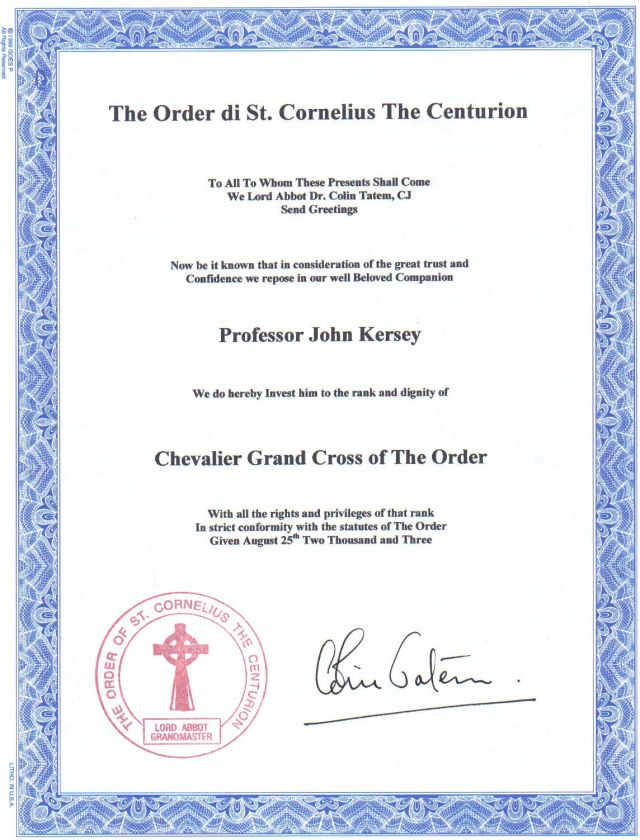
In 2003, the Order of St Cornelius the Centurion admitted me as a Chevalier Grand Cross.


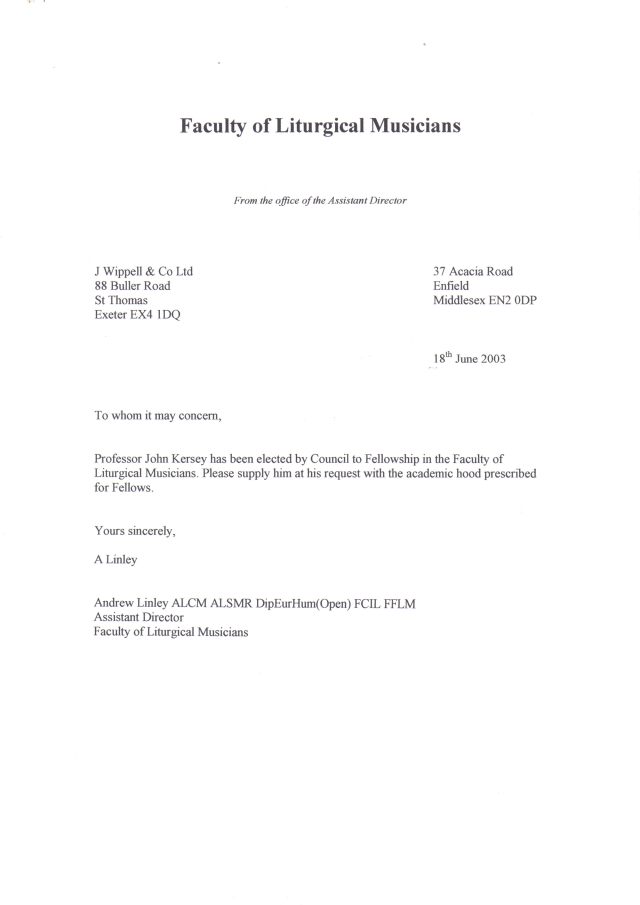
Honours and awards: Fellowship of the Faculty of Liturgical Musicians

Originally founded as a subsidiary society of the Central Institute London in 2001, the Faculty of Liturgical Musicians was independently administered from 2003. Fellowship of the FLM was originally open only to existing members of the CIL who held a musical qualification; after 2003, the CIL restriction was lifted and all who were musically qualified were permitted to apply, with the Faculty defined as “an independent learned society composed of church musicians and other persons interested in liturgical music.” There were no fees payable for membership.

As of 2004, the aims of the FLM were defined as follows:

“a.) To promote the highest standards in the performance of liturgical music.
b.) To raise awareness of the richness and diversity of liturgical music and its associated heritage.
c.) To encourage liturgical musicians to share their skills and experiences, making liturgical music accessible to a wider audience.
d.) To preserve the heritage of liturgical music.
e.) To give formal recognition to the achievements of its members.”

According to its Constitution, “Those elected Fellows shall either hold a higher-level qualification in, or substantially in, music, for example, a degree, or a music college diploma at any level, or have several years’ experience as a church musician of demonstrable ability.”

The Director of the FLM, Stephen R. Crosbie, was organist and choirmaster of Kirkcudbright Parish Church, Dumfries.


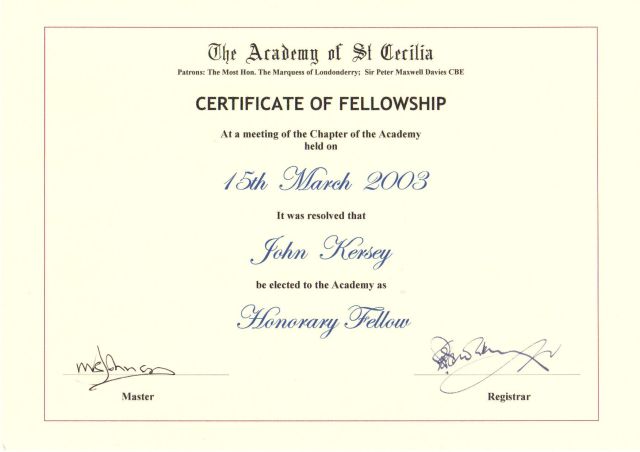
Honours and awards: Honorary Fellowship of the Academy of St Cecilia

The Academy of St Cecilia was founded in 1999 as a learned and social society with a particular interest in Early Music, loosely interpreted as music before 1825. It has included a number of distinguished figures in the field of Early Music amongst its Honorary Fellows, and has enjoyed the association of patrons who include James Bowman, Monica Huggett, Naji Hakim, Professor Reinhard Strohm and Sir Peter Maxwell Davies. The Master of the Academy, the late Mark Frusher Johnson, was a teacher of music and a singer with professional choirs.

The Academy elected to its Fellowship all with an interest in early music. Honorary Fellowship was reserved for heads, officers and staff of musical organisations, universities, examining bodies etc. who were considered to have made a significant contribution to early music.

The activities of the Academy centred upon the UK, but in latter years, in response to a continuing growth in membership, Regional Representatives were appointed for Australia and Canada. In the UK, the Academy’s twice yearly General Meetings were initially held in London’s historic Church of St Margaret, Lothbury, where the formal business of the Academy was followed by musical entertainment of a high standard including vocal and organ recitals, choral concerts and illustrated lectures. Subsequently, the Academy developed a closer association with the Roman Catholic Church, and organized workshops on plainchant as well as several meetings at the London Oratory School.

The Academy formerly produced an annual newsletter, Vox, which included articles written by members and relevant items of interest. It also maintained an Early Music Advisory Panel consisting of Honorary Fellows, who were available to answer specialist questions in that area.
The Academy was less active in the second decade of the new century, and with Mark Johnson’s death in 2018 it appears to have ceased activity.

I was elected an Honorary Fellow of the Academy in 2003.

Honours and awards: Royal House of Susiana

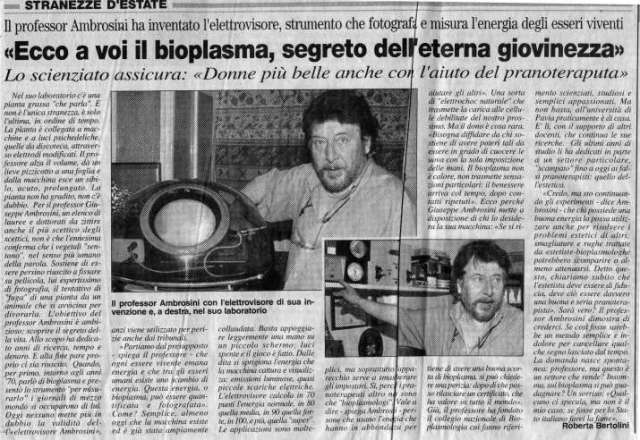
Giuseppe Ambrosini was an Italian scientist and expert in alternative medicine, who published widely and often appeared on television and in the newspapers discussing his ideas. Born in Varese in 1936, he undertook most of his studies in Rome and obtained a professorship in zoology. In science, his chief area of expertise was in the study of rodents, particularly the chinchilla, and he published a number of books on the genetic selection and breeding of chinchillas in captivity. He also worked on the subject of animal communication, and published a book on communication in cats.

From the 1970s onwards, he became increasingly interested in alternative medicine and parapsychology. Ambrosini’s research concentrated on one main question: when natural healers such as Reiki practitioners raise or place their hands on a subject, what actually happens? The scientific answer is “nothing”, and yet the subject often claims to undergo some form of transformative experience during or after such an encounter – which some assert amounts to healing. Ambrosini asserted that what was transferred from the healer to the subject in a successful healing session was an essence that he called bioplasma, which he identified as a life force capable of effecting rejuvenation. He devised and patented a number of machines (including the elettrovisore) and systems that aimed to provide evidence of the transmission of bioplasma and these were enthusiastically discussed in the press and presented at several public trials.

Ambrosini’s interests ranged widely, and he also made contributions to the areas of anthropology and criminology. He made over 300 appearances on national and regional television, and devised and presented a 200 episode series on art called Arte, civiltà dei popoli. Of an aristocratic family, he also took a great interest in chivalry and nobility, and received many ranks and appointments in international Orders. In 2003, he was honoured by His Royal and Imperial Highness Prince Pascal I Bandeira Moreira, Chief and Head of the Name and Arms of the House of Great Gothia (whose House was recognized by decree of the deposed Ottoman Sultan Abdul Hamid II of 1 May 1910), and elevated to the ranks of Theocratic King of Elam and King of Susiana. Ambrosini, who took the regnal title of Tammaritu III Yosef I, went on to establish several dynastic Orders.

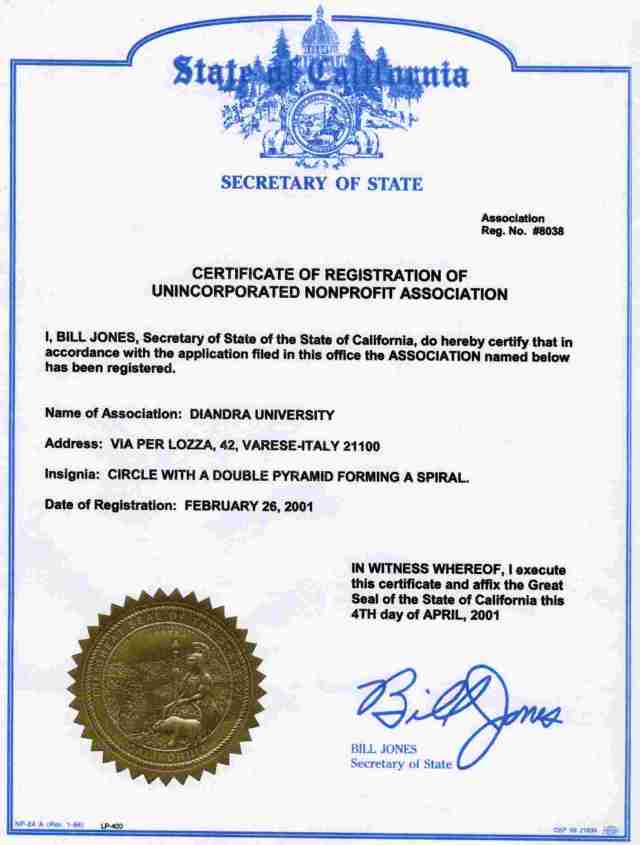
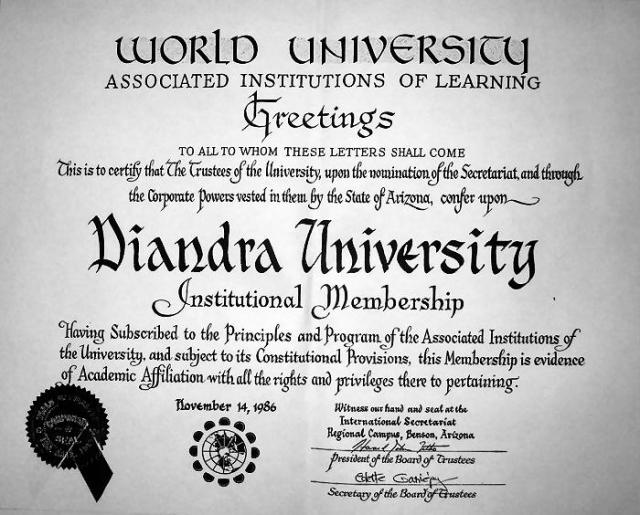
In 1981, Ambrosini established the Accademia Superiore di Studi di Scienze Naturali e Psicobiofisiche Prof. Ambrosini – Diandra University (Deed 7-2-81 N°17942/3382) which was registered as a nonprofit association under Italian law. There were further registrations in Brazil, Spain and California, USA.

The Diandra University became affiliated with the World University, Arizona, USA, in 1986.

The Diandra University was also affiliated to the Parthasarathy International Cultural Academy in Madras, India. It offered a Masters degree in collaboration with the Centro de Altos Estudio en Ceremonial de Buenos Aires “General don Manuel Belgrano”, Argentina, as well as a PhD program in social (humanitarian) service and a diploma in criminology.

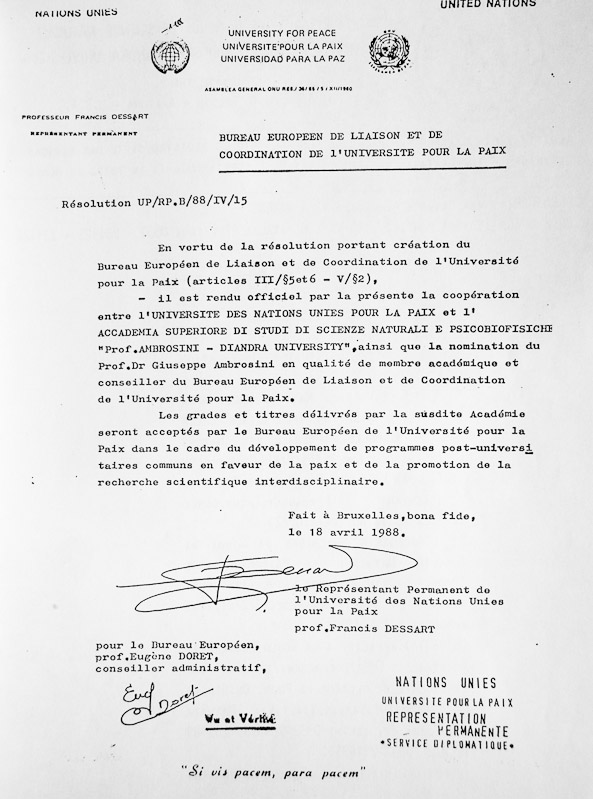
In 1988, a treaty of recognition was signed between the European Bureau of the United Nations University for Peace (whose main campus is in Costa Rica) and the Diandra University. This provided that the University for Peace would accept the degrees issued by the Diandra University.

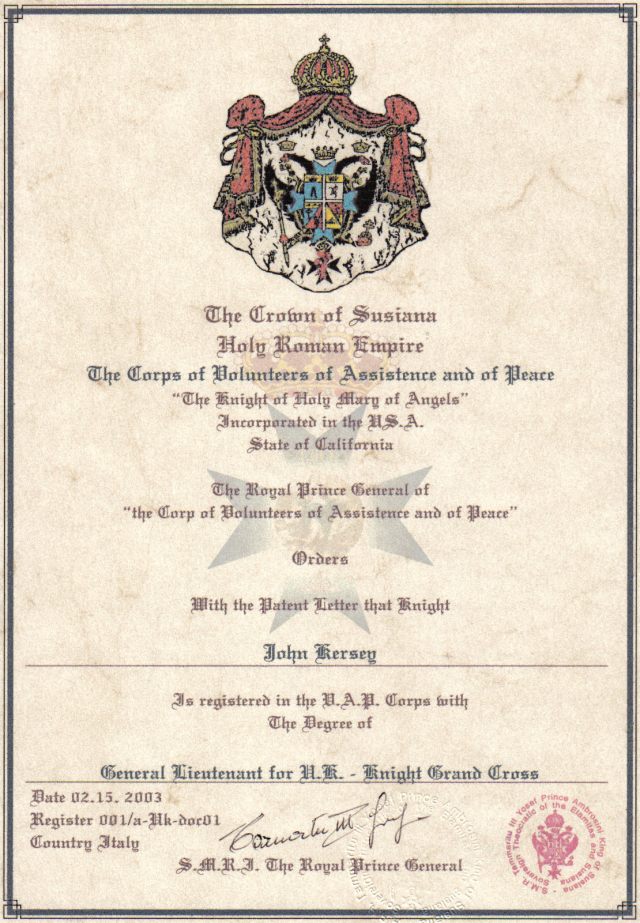
In 2003, in my capacity as Secretary-General of the Institute of Arts and Letters, London, I wrote to inform Ambrosini of the decision of that body to elect him to their Fellowship. Following our correspondence, Ambrosini appointed me to the rank of Knight Grand Cross in his Corps of Volunteers of Assistance and of Peace “The Knights of Holy Mary of Angels”.

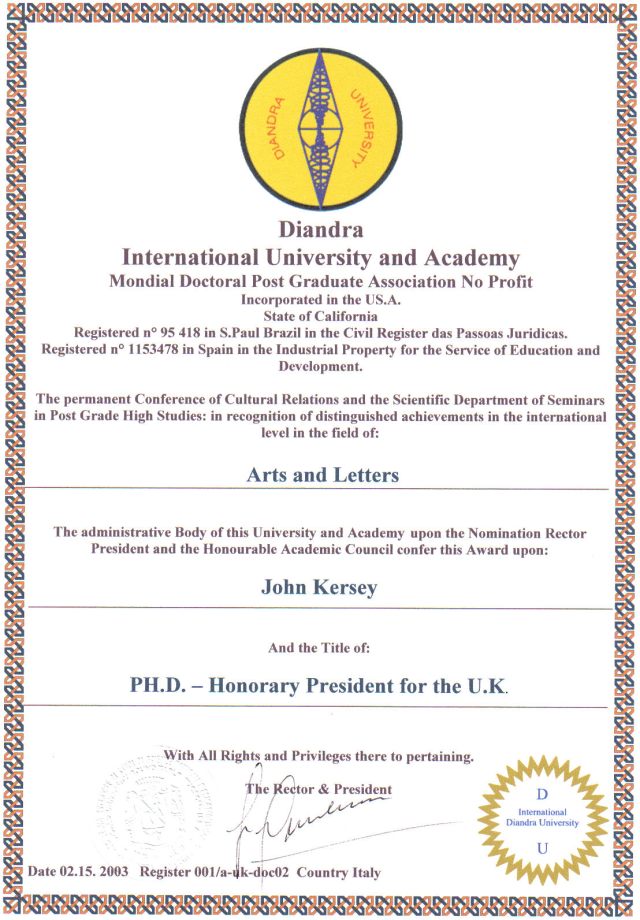
I was also awarded an honorary PhD of the Diandra University and appointed as its Honorary President for the UK.

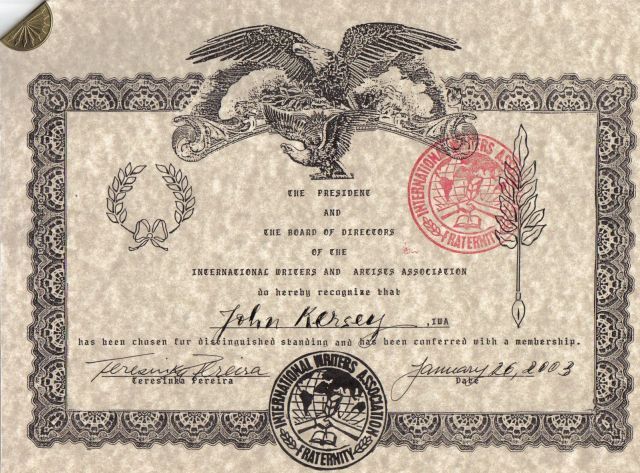
Honours and awards: Membership of the International Writers’ Association, Ohio

The International Writers’ Association, based in Ohio, USA, was founded in 1978 by Teresinka Pereira, who was Professor Emerita of Languages at Bluffton College, Ohio, and a published poet. The IWA was founded to promote the goal of understanding, friendship and literature/art exchange across the continents. It promoted creative and critical thinking in literature and art, and defended reason, science, freedom of inquiry and ethical alternatives.

The membership extended to around 1,350 persons in 125 different countries, and included Nobel Peace Prize laureate Rigoberto Menchu, former President of Brazil Dr Fernando Henrique Cardoso, former President of Cuba Fidel Castro and Professor Noam Chomsky.

I was admitted as a member of the IWA in 2003.


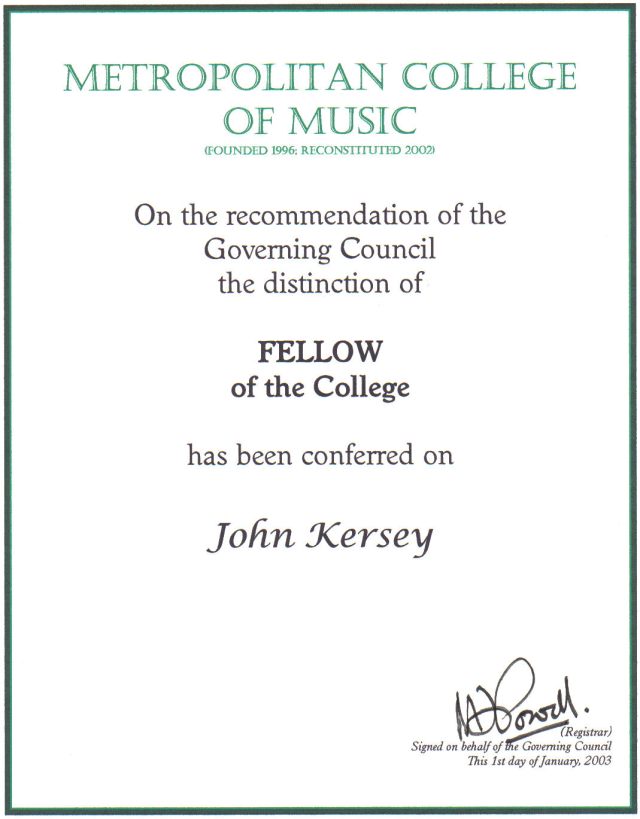
Honours and awards: Fellow of the Metropolitan College of Music

The Metropolitan College of Music was founded in 1996 and re-constituted in 2002. Following its re-constitution, it awarded the diploma of Fellow only. This was awarded to persons considered worthy of the award by the Governing Council of the College. It was not an “honorary” award; recipients became full Fellows of the College, usually in recognition of service to music. Fellows, after a period of one year from their own election, could recommend candidates to Council for consideration. In exceptional circumstances Council might, through the Registrar, consider nominations from non-members of the College.

The College subsequently changed its name to the Metropolitan College of Musicians. I was admitted as a Fellow and then served as a Member of Governing Council between 2003 and its closure in 2015. Although serious differences had emerged between members of Council in 2005, the College continued to function for a decade subsequently. I was strongly opposed to its closure, believing that the College fulfilled a distinctive role for musicians, but was outvoted.

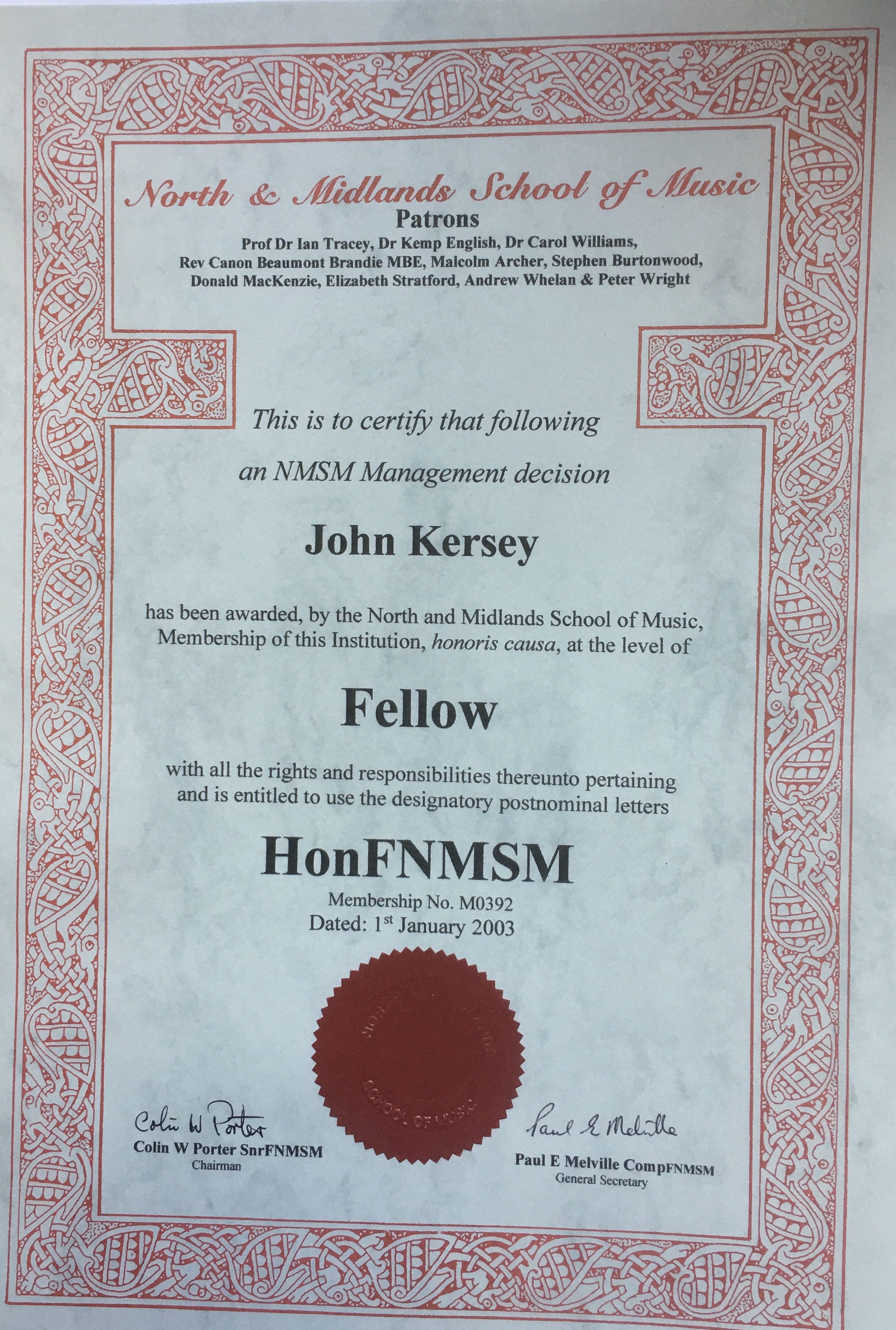
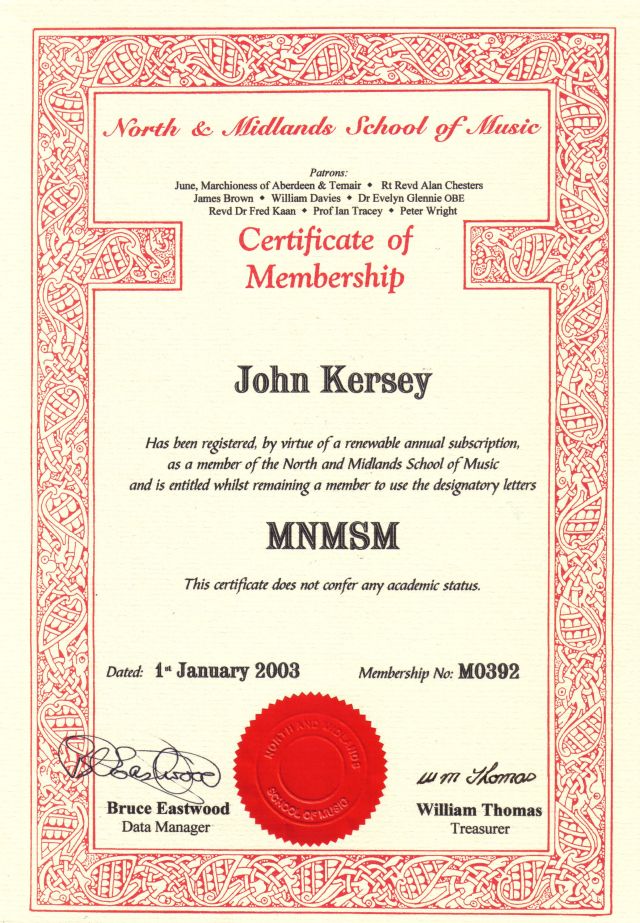
Honours and awards: Honorary Fellowship of the North and Midlands School of Music

The Lancashire School of Music was founded in 1986 by the well-known organist of the Blackpool Tower Ballroom, Reginald Dixon, and soon established itself as an examining body within Lancashire. Its original purpose was to encourage young keyboard musicians. The LSM was run by Dixon from Blackpool and then from Manchester where premises were purchased. There was a strong emphasis on encouraging players of the electronic home organ. Upon Dixon’s death the LSM was carried on by John Dickinson until his own death in 1990. Dickinson introduced a graded examination scheme that was recognised by the then Department for Education and Science. There was also a wide range of diploma awards, which were made largely on the basis of accreditation of prior learning.

Upon the death of Dickinson the LSM fell into abeyance. Although restarting it was discussed, it was eventually felt that the desired aims and objectives would be better served by a new institution. Consequently the North and Midlands School of Music (NMSM) opened in 1993, in which Dr Colin Parsons, the late James Holt, Neil Shepherd, and the late Michael Howard were the leading forces.

Today the NMSM is active as an examining body, differing radically from other colleges in that it does not prescribe a set syllabus for its awards, instead allowing candidates a great deal of flexibility in the way they choose to present themselves for examination. Admission at member level is possible without examination. The NMSM also encourages musical performance through occasional concerts and recitals. The Thomas Memorial Fund, which assists young performers from disadvantaged backgrounds with the costs of NMSM examination fees, is administered by the School. The School’s membership has been reported to stand at around 300.

In 1999 the NMSM incorporated the Association of Church Musicians (which had been founded under the patronage of the late Sir John Gielgud) and the London Academy of Music. Since 2001, it has had a close relationship with the Australian Society of Musicology and Composition.

The NMSM has a number of distinguished patrons, including Professor Ian Tracey, Evelyn Glennie and Peter Wright. In 2008, Dr Colin Parsons, now Principal Emeritus, was awarded the MBE for his services to the School.

In 2003, I was awarded an Honorary Fellowship by the NMSM.

Honours and awards: Honorary Fellow of the Central Academy of Music

The Central Academy of Music was founded as an examining board in 1985 by Dr Donald Heath and the late Ray Turnecliffe in order to encourage the playing of the electronic keyboard. It was a company limited by guarantee in the United Kingdom. The Academy offered Grades 1 to 9 initially, and later on diplomas were introduced. At that time no other college offered examinations in electronic keyboard. Subsequently, the Academy also offered examinations in piano and electronic organ, and had centres throughout the UK and Ireland leading to a busy programme of examining throughout the year.

CAM syllabuses were wide-ranging and flexible, and the Academy’s friendly but rigorous approach won a loyal following in the popular organ world and beyond.

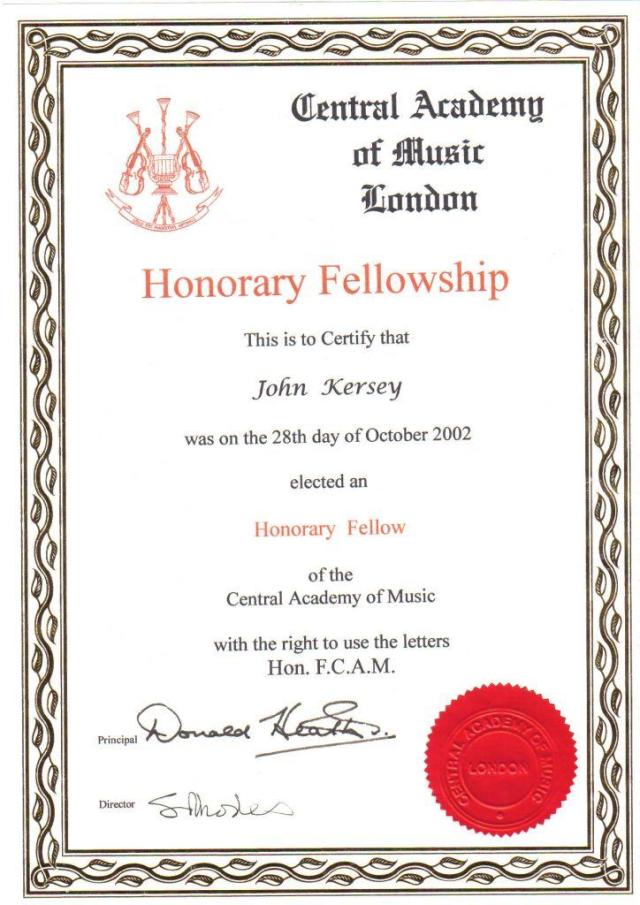
I was appointed as an examiner for the Academy by Dr Heath, and subsequently examined for graded examinations at their centres in Ipswich and Wolverhampton. In 2002, the Academy awarded me an Honorary Fellowship.

Honours and awards: Friedrich Silcher Medal in Bronze of the Chorgruppe Aartal of the Dill-Sängerbund of the Hessischer Sängerbund, Germany

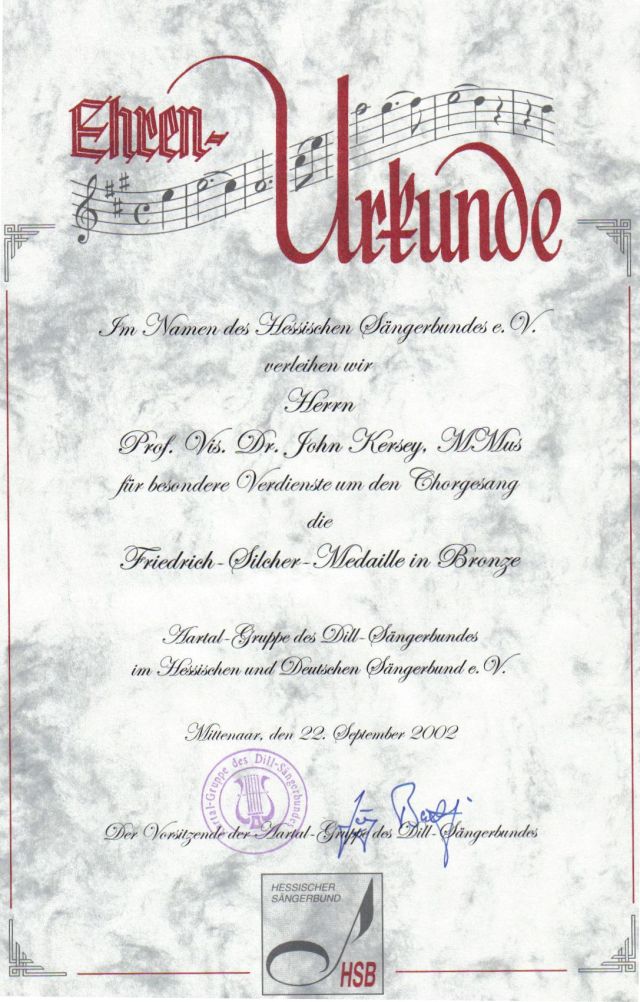
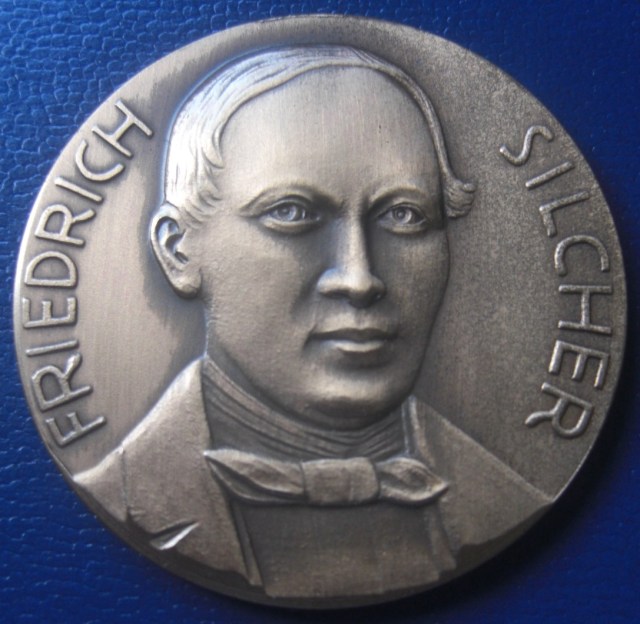
I have been awarded the Friedrich Silcher Medal in Bronze of the Chorgruppe Aartal of the Dill-Sängerbund of the Hessischer Sängerbund, Hessen, Germany. The medal recognizes activities of special merit towards choral singing.

The Hessischer Sängerbund is an association of over 70,000 choral singers and over 2,200 choirs in the Hesse region.

Honours and awards: Parthasarathy International Cultural Academy, Madras, India

The Parthasarathy Cultural Academy was founded in the year 1968 by the late Professor Ramaswamy Ramanujam of the University of Madras, with the aims of establishing world peace and developing brotherhood in mankind, protecting basic human rights, identifying and properly honouring the eminent personalities who serve mankind and liberating people from poverty.

Since the death of Prof. Ramanujam, the activities of the Academy have continued under his daughter Dr R. Mangai Begum.

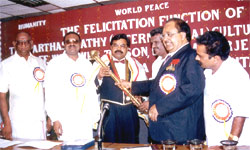
PICA presentation ceremony in Madras

To implement these services, special educational activities were started. These included awareness camps, group discussions of service-minded people, debates and various cultural activities that could bring service institutions together, each of which were organized all over India. PCA organised several processions, fastings and protests to protect human rights and get justice for the affected people/community. Programmes were organised to liberate the people from blind faith. Steps were taken to uplift the people from below the poverty line, to create equality between rich and poor and to develop the economic status of the poor.

PCA has strived throughout to establish peace and harmony in society. It has worked to bring the feelings of oneness between religions and different faiths. Prof. Ramaswamy was a strong believer in the creed, ‘There is only one caste, i.e. humanity and one religion that is One God”. The sincere services of PCA attracted the attention of educationalists, industrialists and eminent personalities from Tamil Nadu as well as elsewhere in India to involve themselves with PCA activities. This helped PCA to extend its services to solve the problems of the common public, to promote educational activities, to encourage self employment, to protect human rights, to guide and counsel the people in need and much more. These programs created an awakening among the people and brought the Founder, Prof. Ramanujam, to attention all over the world. In consequence he received several honorary doctorates and chivalric awards.

International Service Organisations and Voluntary Organisations came forward to recognize Parthasarathy Cultural Academy as an International Service Organization. Reflecting this international focus, Parthasarathy Cultural Academy changed its name to Parthasarathy International Cultural Academy in 1980. Parthasarathy Cultural Academy has honoured dignitaries by awarding them their highest award of ‘Ratna’. It also acts as a publishing imprint and has published several devotional and spiritual works of its founder.

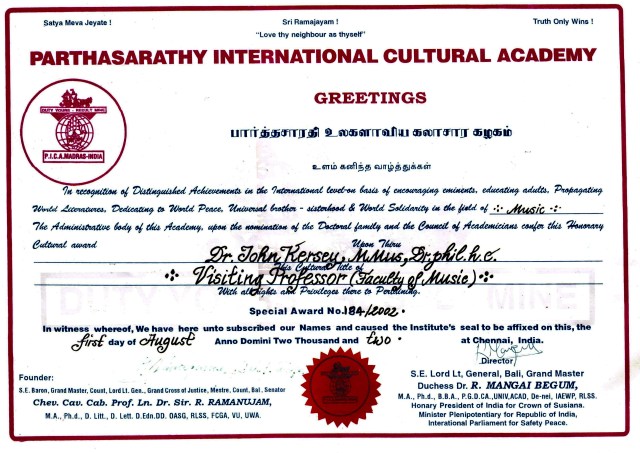
In 2002, I was nominated by the Academy’s Delegate for Europe, Dr Helmut Bräundle-Falkensee, for the award of an Honorary Visiting Professorship.

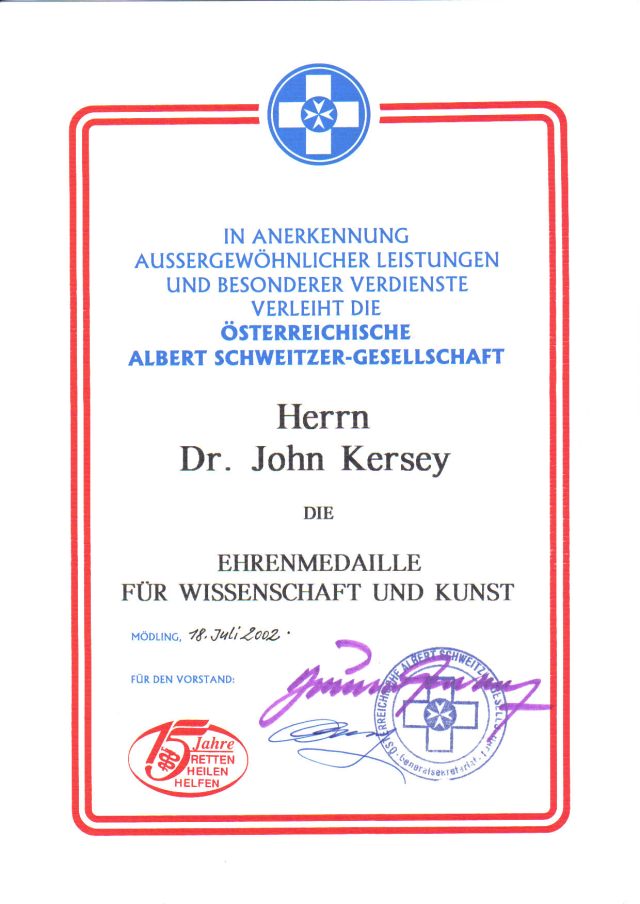
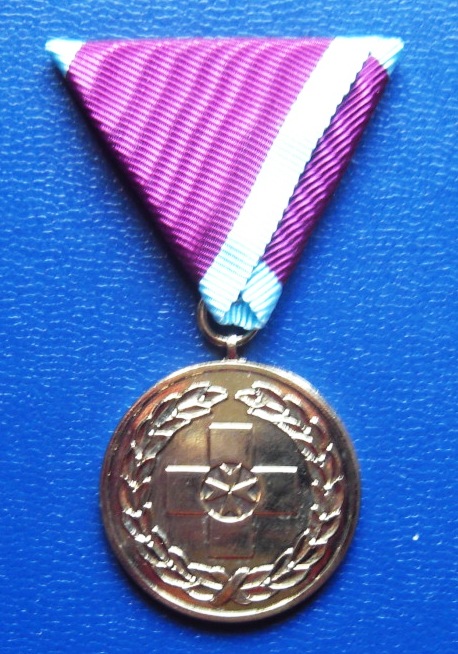
Honours and awards: Medal of Honour for Science and Art, Austrian Albert Schweitzer Society

In October 1984, a number of committed Christians, including Helmut and Johanna Bräundle-Falkensee, Josef Gamperl, Elisabeth Gräfin Polzer-Hoditz and Olga Leitinger, decided to found the Austrian Albert Schweitzer Society (ÖASG) as a Christian-humanitarian, non-profit and non-political aid organization. In February 1985 it was registered as an association in Austria. By decision of April 15, 1991 (GZ 63.337/23-5-2/91) the awards of the ÖASG were certified by the Federal Ministry of Defense for the general wearing permit for the uniform of the Austrian army. By letter dated April 28, 1995 (12.410/1365-II/13/95), the Ministry of the Interior expressly permitted the appearance and shape of the uniform, distinctions and badges of the ÖASG. Over the years, a worldwide organization developed from a relief organization to support the Albert Schweitzer Primeval Forest Hospital in Lambarene (Gabon). The ÖASG today has around 500 members around the world and is a member of the United Nations Global Compact.

In 2002 I was successfully nominated by the founder of the ÖASG, the late Helmut Bräundle-Falkensee, for the award of the Medal of Honour for Science and Art of the ÖASG. Three awards of this medal were made each year, presented at ceremonies in Brussels or Vienna.

Honours and awards: Honorary Fellowship in Music of ICMA

It may justly be said that ICMA (Independent Contemporary Music Awards) was one of the first examining bodies to take seriously the concept of examinations combining both classical and popular music, through the grades to diploma level, a concept that has since been widely adopted by the “traditional” institutions. They were the first to offer an options list of supporting tests for practical examinations, and candidates are able to offer alternative pieces for approval to play at the examination.

ICMA is notable for its highly flexible approach to examining, arranging times at the candidate’s convenience and conducting the examination in surroundings familiar to the candidate. It has a substantial and loyal following throughout the UK.

In addition to its principal work of examining, ICMA offers an advice line, a regular newsletter and endeavours to organise both formal and informal social events for students and teachers.

As well as its main office in Witney, Oxfordshire, ICMA has also maintained a base in Scotland.

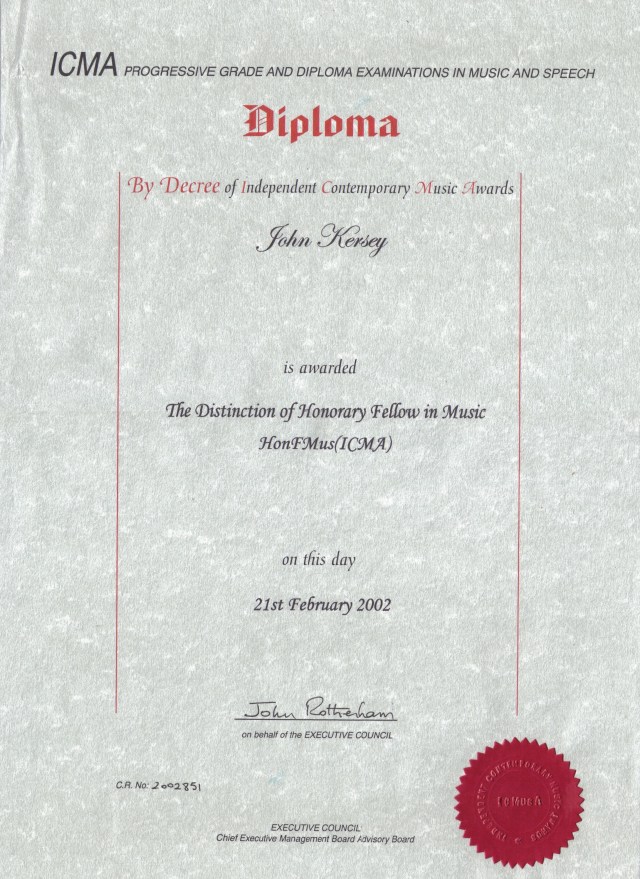
I was awarded an Honorary Fellowship in Music by ICMA in 2002.