Honours and awards: Honorary Fellowship of the Three Counties School of Music

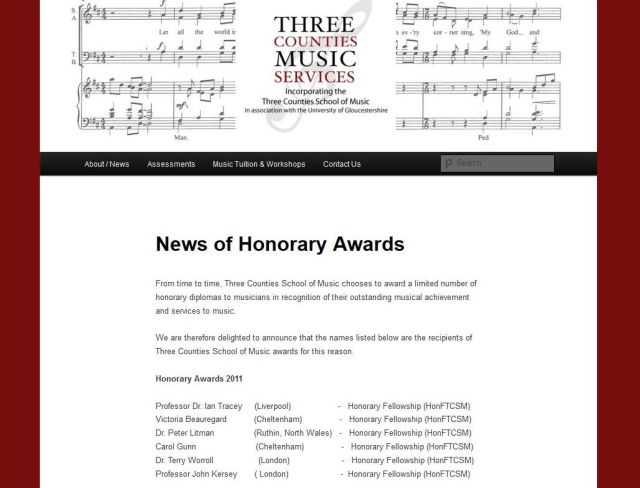
The Three Counties School of Music has awarded me an Honorary Fellowship in recognition of my “services to music and outstanding musical achievements both at national and international level.”

The School, which is in association with the University of Gloucestershire, was founded in 2010 to provide quality, accessible and affordable music education for people of all age groups, who wish to focus on a variety of styles of music performance or composition, with less formal but equally rigorous assessments than traditional examination boards. I previously advised on the School’s initial stages and assessment structures.

Honours and awards: Fellow in Performance of the Australian Society of Musicology and Composition

The Australian Society of Musicology and Composition promotes and rewards the study and growth of all musically-related subjects throughout the world. Whilst the principal emphasis is on Musicology and Composition, all disciplines including performance are included and encouraged. It is governed by a Council of leading Australian composers, musicologists and music educationalists.

The Society is an examining body and offers the diplomas of Licenciate, Associate and Fellow. There is considerable flexibility regarding choice of repertoire. Candidates may enter from anywhere within Australia, or from overseas.

In 2011, the Society awarded its Fellowship in Performance to me following my nomination by a member of Council. The Society does not confer honorary awards but states that “Fellowship may be conferred without examination in exceptional cases to persons whose standing or record of achievement is considered by an examiner to make examination unnecessary or inappropriate.” The citation for the award reads in part “your contribution to the music world, both in performance and teaching, is exemplary.”

Honours and awards: Georgia Lieutenant Colonel, Aide de Camp Governor’s Staff

An honorary military commission is considered by some to be the American equivalent of being knighted. The honorary title of Colonel is conferred by some states in the United States of America. The origins of the titular colonelcy can be traced back to colonial and antebellum times when men of the landed gentry were given the title for financing the local militia without actual expectations of command. This practice can actually be traced back to the English Renaissance when a colonelcy was purchased by a lord or prominent gentleman but the actual command would fall to a lieutenant colonel, who would deputize for the proprietor. It has come to be associated in popular culture with the image of the aristocratic Southern gentleman, not least because of one of the most famous Kentucky Colonels, Harland D. Sanders.

The State of Georgia, under the provisions of the Official Code of Georgia Annotated 38-2-111, commissions individuals into the Governor’s personal staff with the rank of Lieutenant Colonel. The commission is active from the commencement of the Governor’s term of office until that term expires – in my case, under Governor Nathan Deal, between 2011 and 2019.

Honours and awards: Fellowship honoris causa of the Victoria College of Music

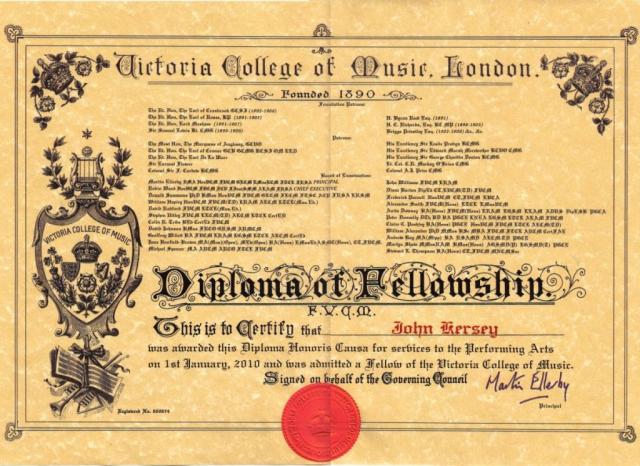
The Victoria College of Music has awarded a Fellowship honoris causa to me in recognition of services to the Performing Arts.

The Victoria College of Music was established in 1890 and specialises in external examinations in music and speech subjects in Centres throughout the United Kingdom and in some countries overseas. Its qualifications and syllabuses are approved for use in schools under the Education Reform Act 1988.

The Victoria College of Music is nowadays active only as an examining body; however, earlier in its foundation it had performed many of the other functions of a conservatoire. Its founding Principal was Dr J.H. Lewis, who remained in charge of the VCM for thirty-four years. From its outset the mission of the VCM has been extremely broadly-based, so that, as well as examining in all musical disciplines, it also examines in Bible reading and in a range of speech and drama subjects, currently including Shakespeare, mime, Group Discussion and Business English, and interview technique.

Although the local grades 1 to 8 of the VCM are intended to be comparable in standard with the equivalently-named examinations of other examination boards, special attention is given to the early grades. Grades 1 and 2 are supplemented by Grades 1A and 2A, thus offering particular encouragement to young children. The College is also active in enabling candidates with a disability to take its examinations. There is a Grade 9 examination, which provides a bridge to the diploma of AVCM, as well as a series of medal awards. The College of Violinists, incorporated into the VCM, is no longer active as an independent body, although its diplomas are still used by the VCM as senior honorary awards.

The College maintains the London Music Press, which is the in-house publisher of music for its examinations, and keeps in touch with teachers via its newsletter “College Noticeboard”. A widespread network of local secretaries is used to administer its examinations, which are usually held twice a year. The certificate design used for diplomas is identical to that first established in 1890.

Honours and awards: Honorary Fellowship of the National College of Music

The National College of Music has awarded an Honorary Fellowship to me in recognition of services to music.

The National College of Music and Arts, London, was established in 1894 by the Moss family and friends and incorporated in 1898. A number of eminent musicians, aristocrats and other distinguished people of the day were persuaded to become Founder Patrons.

As a result of the wish of Mr William J. Moss, the senior member of the family, for the College to remain in the hands of the founders for as long as possible, a company was established entitled The Musical Reform Association in order to secure this objective. The design of the unusually large certificates of the NCM continues to follow the pattern established by Mr William J. Moss.

Until the Second World War the College operated from premises in London and established many centres throughout the country for the conduct of external examinations. During the war, the College lost its London building and since then has concentrated upon the work of examining, carrying out this activity not only within the UK but also increasingly overseas.

The position of General Secretary was held successively by Messrs Harold and Noel Moss and then by Mr Noel Moss’s widow Violet until she was well into her eighties. The current management of the College is in the hands of its College Council, which meets a number of times each year in order to formulate policy.

In 1994 the NCM celebrated its centenary with a concert and service of thanksgiving in the Archway Central Hall in London. That year also saw the recognition of the College’s diplomas by what is now the Qualifications and Curriculum Authority.

The ethos of the NCM is firmly towards the creation of the well-rounded musician, and the College encourages the enjoyment of the candidates’ studies in both music and speech subjects. A very wide range of syllabuses is offered, covering all major disciplines at Grades 1-8, Medal and Diploma examinations. Diplomas are available by examination, composition and thesis.

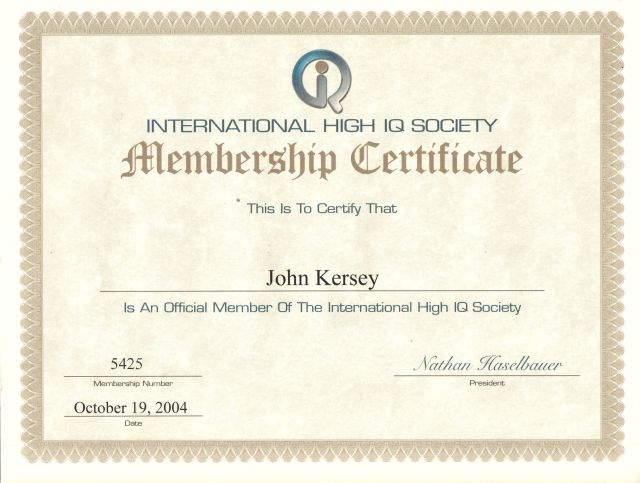
Member of the International High IQ Society

The International High IQ Society is a high IQ society which was founded in 2000 in New York by the late Nathan Haselbauer. Under his leadership it became the second largest high IQ society in the world. Membership in the International High IQ Society is open to persons who have an IQ in the top five percent of the world population, assessed by passing the IHIQS admissions test or other qualifying IQ test.

Honours and awards: Fellow of the Society of Antiquaries of Scotland

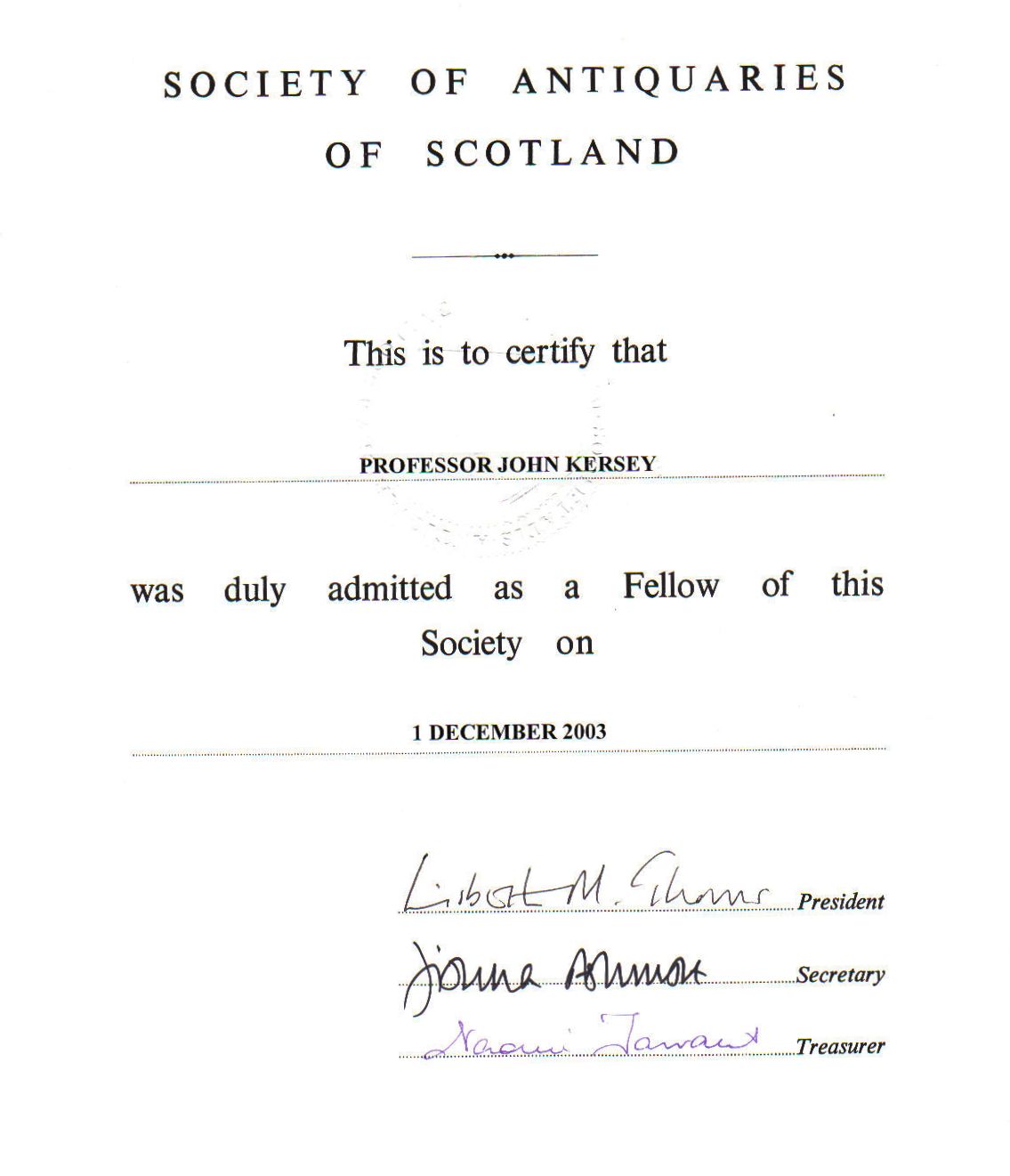
I was a Fellow of the Society of Antiquaries of Scotland between December 2003 and July 2018.

FSA Scot

At the time of my election, the Fellowship was described as “the mark of the established scholar”. The Fellowship was based on election with Fellows required to remit an annual subscription to maintain their status.

After fourteen years as a Fellow, I resigned from the Society in July 2018.

Honours and awards: Honorary Fellowship of the Central Institute London, Fellowship of the Academic Society of London

The Central Institute London was originally founded in 1989. In a bid to attract new members, the constitution and format of the Institute was changed at the end of 1999. CIL became a non-examining social body, retaining some elements of a learned society, concerned with academic dress, ceremonial and related issues. It advised several bodies on the design of academic dress and succeeded in raising awareness of its areas of interest.
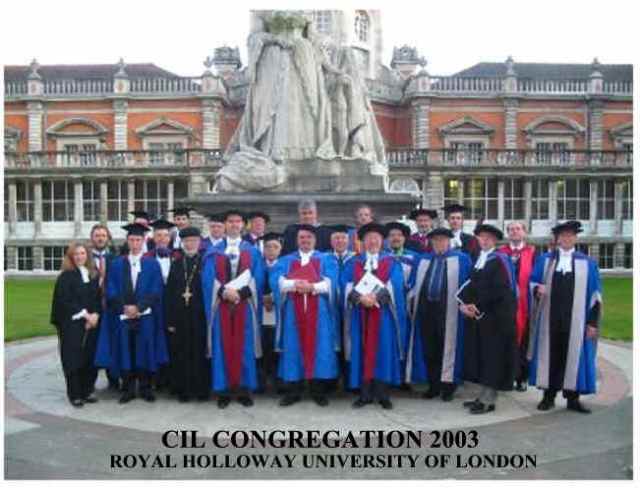
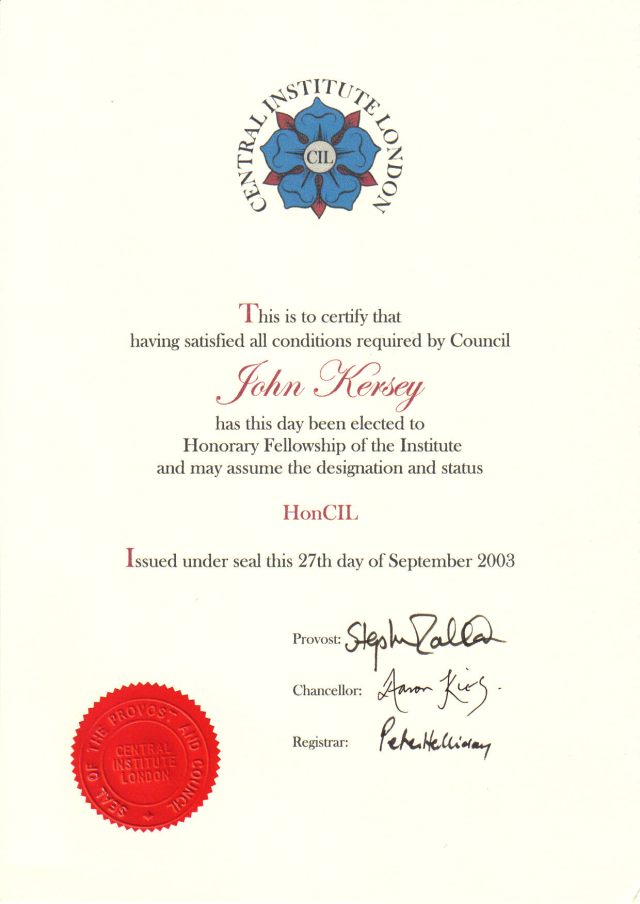
The Institute elected applicants to membership at one of several levels. The level of membership was assessed by Council based upon the applicant’s CV and a supporting letter of application.

The Institute held three successful Congregations, the last of which, including the Sir John Gielgud Memorial Lecture, took place at the chapel of Royal Holloway, University of London, on 1 November 2003. On that occasion, I was admitted to Honorary Fellowship of the Institute.

I am in the back row, second from right.

In May 2005, the Council of CIL announced that the Institute would cease its activities, citing a decline in membership. This was in my view regrettable, since CIL fulfilled a unique niche in its fields of interest. CIL wore its (considerable) learning lightly. It encouraged members to enjoy academic dress and ceremonial without becoming stuffy or overly tied to the academic establishment in its approach.

On 1 November 2000, Andrew McConnell, quondam Registrar of the CIL, had established the Academic Society of London, which was described as being in the style of the ancient Academies of Rome, as an intellectual centre where scientific, literary and artistic culture mingled side by side together for the greater achievement of mankind, providing the context for the ‘Renaissance man’.

The aims of the Society were: (1) to provide and foster the opportunity for an open dialogue across all disciplines of academia (2) To foster and encourage a more combined interdisciplinary approach to research and study (3) To reconsider academic credentials and achievements within a framework of ‘connoisseurship’ as encouraged by the philosophy of Elliot Eisner.

On 1 June 2000, the ASL was incorporated by simple charter into the CIL. It consisted of Members, who were admitted without prerequisites, and Fellows, who were diplomates, graduates or otherwise professionally qualified. The ASL survived the dissolution of the CIL in 2005 and was run by a Council of three members for some years, now electing solely to the Fellowship by invitation only. I was elected an Honorary Fellow of the Academic Society of London in June 2008, shortly before it too was dissolved.

Honours and awards: Honorary Doctor of Music from Ansted University

Ansted University was founded in 1999 and chartered in the British Virgin Islands as a private international university. From the outset its focus was on the delivery of education on a nonprofit basis via distance learning. Ansted is an acronym standing for A Noble System of Technology for Educational Development.

The University was supported by the Ansted Foundation, whose focus was on supporting Ansted University financially in the area of project development funding including campus set-up funding, grant programmes for research studies and publications.

The Foundation and the University subscribed to the following aims:

  • Activities that increase mutual understanding and tolerance for diversity
  • Activities that sustain the vitality of artistic traditions in changing contexts
  • Activities that aim to preserve, document or increase public access to tangible and intangible culture
  • Activities that address common problems requiring international cooperation etc.
  • To promote World Peace through cultivating of Social Responsibility practice
  • To promote centres of excellence and knowledge corridors and entrepreneurship in education, training and research

The University established Ansted University Asia Regional Service Center in Penang, Malaysia. This office co-ordinated Ansted activities internationally under the leadership of Professor Roger Haw. The University grew through making agreements and affiliations with other universities and professional bodies internationally. Although it was a private body, its commitment to quality was recognized to the point that its graduates were accepted for further study at several accredited universities in the USA. It also partnered with the World University Roundtable in Arizona, USA, which was how I came to become involved with its work.

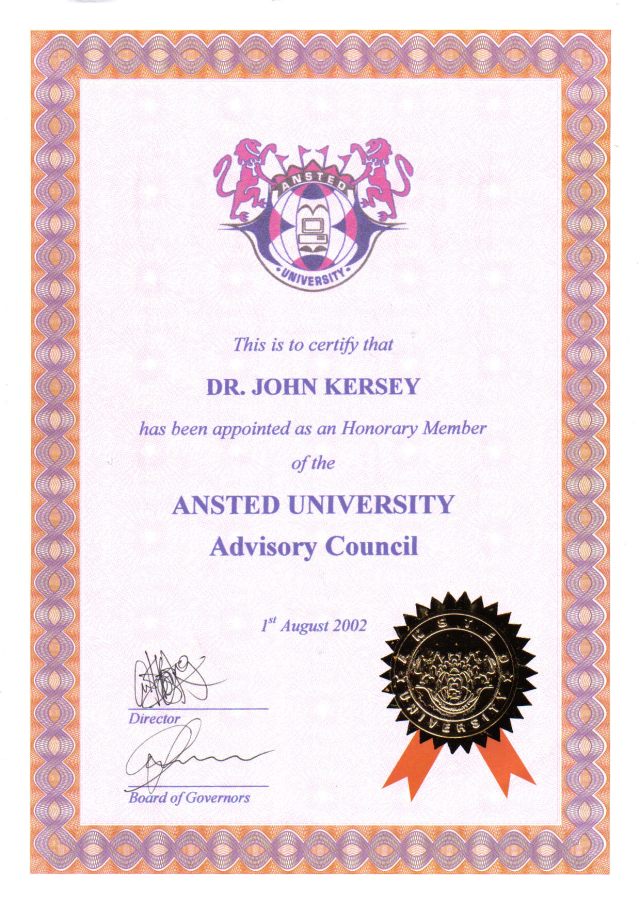
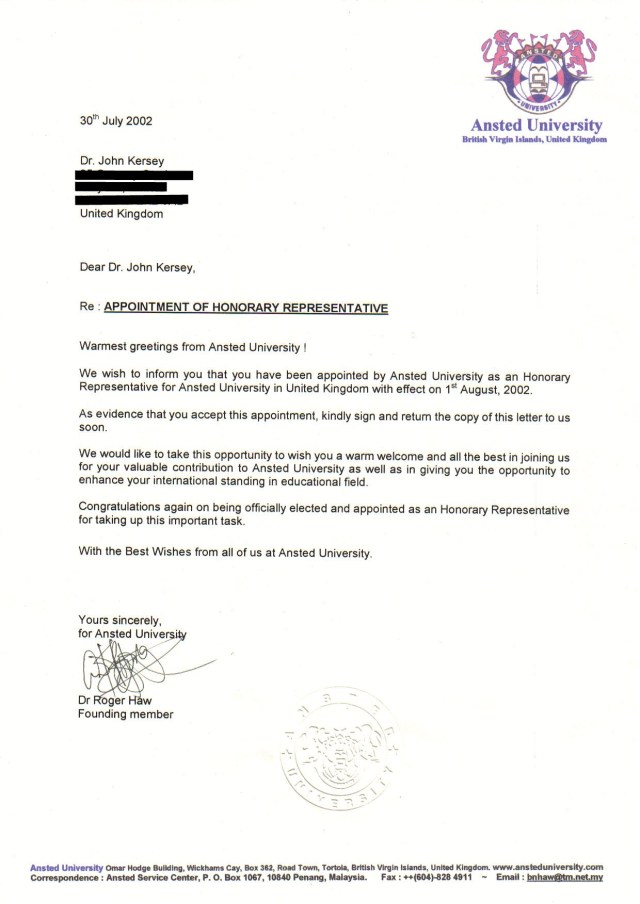
Between 2002 and 2007, I served as Honorary Representative for the UK and as an Honorary Member of Advisory Council for the University.

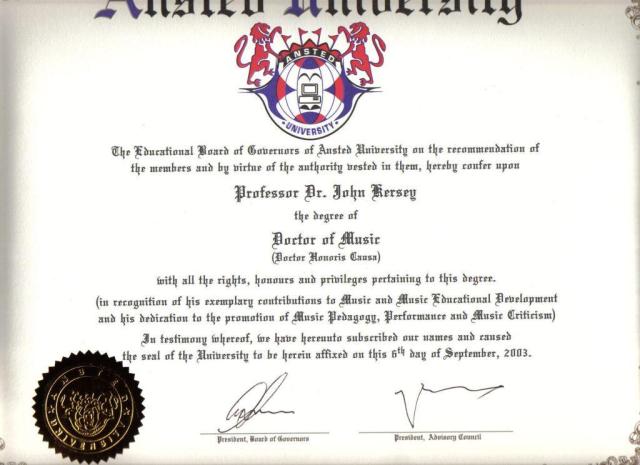
In 2003, the University announced that it wished to confer on me the honorary degree of Doctor of Music, and that this would be done at its convocation ceremony in my hometown of London, UK. I was a member of the organizing committee for this event, which took place at the North Campus of London Metropolitan University. Professor David Crowther of London Metropolitan University also held a professorship at Ansted University and served as chairman of the organizing committee. At the ceremony, my musical setting of the Ansted anthem was also performed.

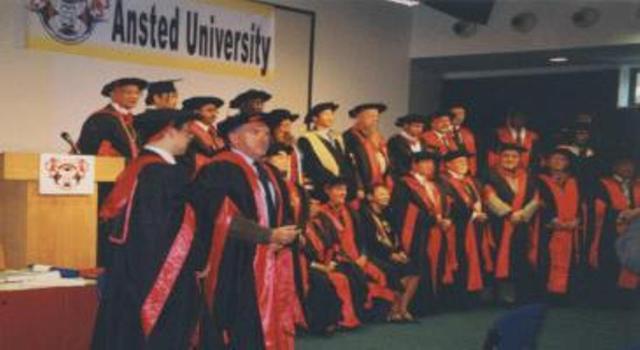
The honorands at the convocation. I am in the front row, first on the left (with my back to the camera).

The citation for the award read “in recognition of his exemplary contributions to Music and Music Educational Development and his dedication to the promotion of Music Pedagogy, Performance and Music Criticism”.

In my address to the Convocation, I expressed some thoughts about the progress that had been made in education by institutions such as Ansted University,

“No longer is the educative process invariably seen as an externality to be imposed upon the individual, but increasingly as a holistic experience that draws upon the many facets of human potential and that has direct and absolute relevance to the world of employment. In every field of learning we are seeing a greater concentration on the essentials of professional practice, the “tools of the trade”, so to speak, which might be conceived as formulating a set of flexible competences that will adapt and grow through the career of an individual. Thus we can more truly today than ever before speak of education as a means to the empowerment of the whole person; an intellectual and professional liberation from otherwise restricted horizons.

An important part of this revolution is one that is particularly close to my own heart, which is the process by which significant competencies and knowledge acquired outside a formal educational setting are now capable of being converted into academic credit for mid-career individuals, who are thus now able to achieve academic recognition for those core elements of skills and learning that have brought about their existing professional success. This life-changing opportunity represents an important shift in the way we perceive learning; no longer does learning undertaken outside the classroom necessarily have a lesser value than that undertaken within it, nor does learning stop at the point of course completion. Indeed, since one of the elements of providing individuals with the “tools of their trade” is teaching them how to continue learning and developing, it would be rather disappointing if that learning and development concluded as they walked out of their University!

It is the furtherance of these things, as well as the constant need to widen educational participation, that has contributed to the evolution of the new methodologies of distance learning, which are now accepted as mainstream within progressive educational communities, and which have begun to create a global marketplace in educational terms, with all the implications of diversity and increased consumer choice that this brings with it. Many of those involved in education have talked about the creation of a society where lifelong learning takes place. In Britain today, that’s starting to happen, and for many of us, it is not a moment too soon.”

When I established Claremont University of Arts (Seychelles) very much on the principles cited in my address above, Ansted University signed a wide-ranging Memorandum of Understanding with the new institution.

However, the focus of Ansted University had now shifted from a generalist institution to one whose profile was increasingly dominated by the fashionable topic of Corporate Social Responsibility. While I was generally in sympathy with CSR, it was not an area of my expertise, nor something that I wanted to pursue in depth. As a result, I became less involved with the University and did not renew my appointments as representative and council member when they expired in 2007. The University’s website became defunct in 2022, when it is assumed to have closed.

Honours and awards: Order of St Cornelius the Centurion

The Order of St Cornelius the Centurion was a religious and chivalric order of ecumenical and international membership within the Anglican Independent Communion, a Continuing Anglican church. The mission of the Order was expressed in prayer and service to others. The Order counted over 700 members and had close links with the Legion of Frontiersmen-IOC, the Sovereign Military Order of The Temple of Jerusalem, the Imperial Ethiopian Order of Saint Mary of Zion, and the Order of Saint Stanislas.

The Order was led by a Lord Abbot, the late Dr Colin Tatem (1946-2006). Dr Tatem was born on the Turks and Caicos Islands and lived for much of his life in the Bahamas. He was variously a college professor, a journalist, and a lecturer at a Boys’ Correctional Facility. He was consecrated as an Abbot for the Order of St Cornelius by the late Archbishop Peter Compton-Caputo of the Anglican Independent Communion. Archbishop Peter’s widow, Deaconess Catherine Compton-Caputo, served as Dr Tatem’s Special Assistant for Community Outreach in the Order.

Latterly, Dr Tatem’s son Christopher, who was also ordained and served as Prior of the Order, established the St Cornelius Abbey in Newark, New Jersey, USA.

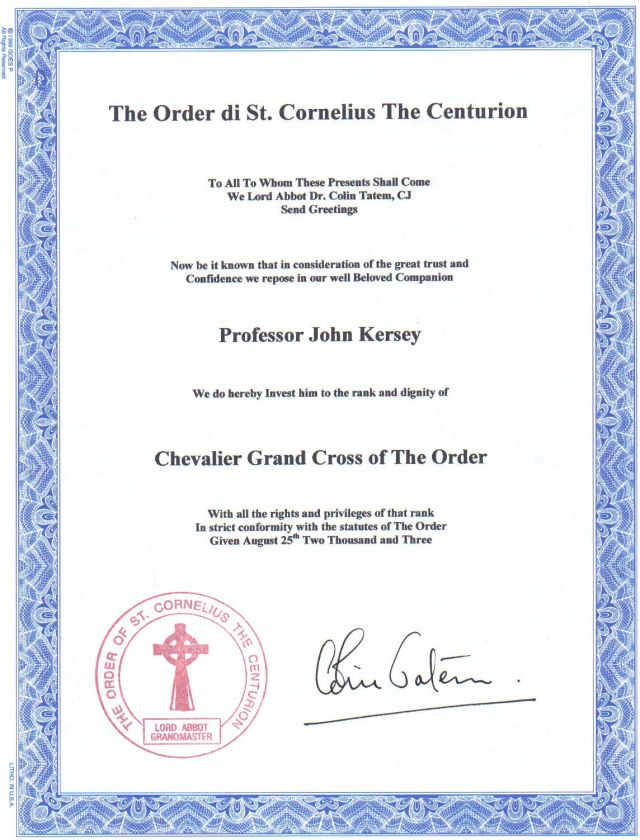
In 2003, the Order of St Cornelius the Centurion admitted me as a Chevalier Grand Cross.


Honours and awards: Fellowship of the Faculty of Liturgical Musicians

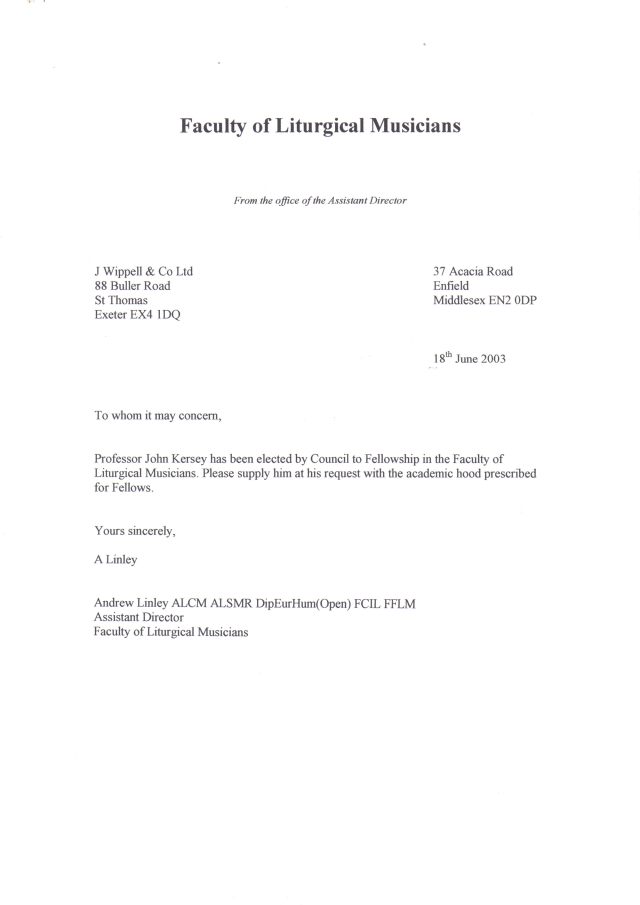
Originally founded as a subsidiary society of the Central Institute London in 2001, the Faculty of Liturgical Musicians was independently administered from 2003. Fellowship of the FLM was originally open only to existing members of the CIL who held a musical qualification; after 2003, the CIL restriction was lifted and all who were musically qualified were permitted to apply, with the Faculty defined as “an independent learned society composed of church musicians and other persons interested in liturgical music.” There were no fees payable for membership.

As of 2004, the aims of the FLM were defined as follows:

“a.) To promote the highest standards in the performance of liturgical music.
b.) To raise awareness of the richness and diversity of liturgical music and its associated heritage.
c.) To encourage liturgical musicians to share their skills and experiences, making liturgical music accessible to a wider audience.
d.) To preserve the heritage of liturgical music.
e.) To give formal recognition to the achievements of its members.”

According to its Constitution, “Those elected Fellows shall either hold a higher-level qualification in, or substantially in, music, for example, a degree, or a music college diploma at any level, or have several years’ experience as a church musician of demonstrable ability.”

The Director of the FLM, Stephen R. Crosbie, was organist and choirmaster of Kirkcudbright Parish Church, Dumfries.


Honours and awards: Honorary Fellowship of the Academy of St Cecilia

The Academy of St Cecilia was founded in 1999 as a learned and social society with a particular interest in Early Music, loosely interpreted as music before 1825. It has included a number of distinguished figures in the field of Early Music amongst its Honorary Fellows, and has enjoyed the association of patrons who include James Bowman, Monica Huggett, Naji Hakim, Professor Reinhard Strohm and Sir Peter Maxwell Davies. The Master of the Academy, the late Mark Frusher Johnson, was a teacher of music and a singer with professional choirs.

The Academy elected to its Fellowship all with an interest in early music. Honorary Fellowship was reserved for heads, officers and staff of musical organisations, universities, examining bodies etc. who were considered to have made a significant contribution to early music.

The activities of the Academy centred upon the UK, but in latter years, in response to a continuing growth in membership, Regional Representatives were appointed for Australia and Canada. In the UK, the Academy’s twice yearly General Meetings were initially held in London’s historic Church of St Margaret, Lothbury, where the formal business of the Academy was followed by musical entertainment of a high standard including vocal and organ recitals, choral concerts and illustrated lectures. Subsequently, the Academy developed a closer association with the Roman Catholic Church, and organized workshops on plainchant as well as several meetings at the London Oratory School.

The Academy formerly produced an annual newsletter, Vox, which included articles written by members and relevant items of interest. It also maintained an Early Music Advisory Panel consisting of Honorary Fellows, who were available to answer specialist questions in that area.

The Academy was less active in the second decade of the new century, and with Mark Johnson’s death in 2018 it appears to have ceased activity.

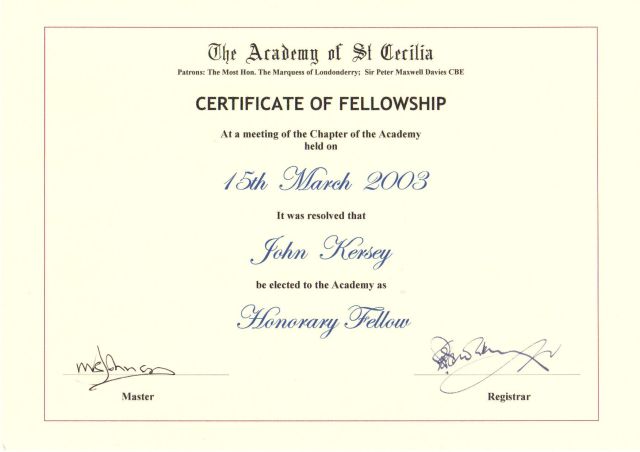
I was elected an Honorary Fellow of the Academy in 2003.

Honours and awards: Royal House of Susiana

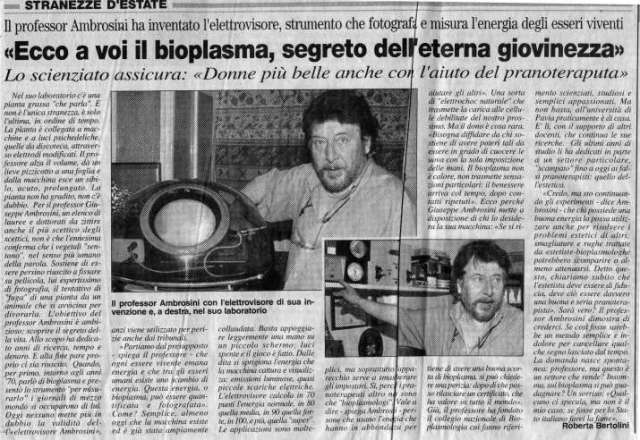
Giuseppe Ambrosini was an Italian scientist and expert in alternative medicine, who published widely and often appeared on television and in the newspapers discussing his ideas. Born in Varese in 1936, he undertook most of his studies in Rome and obtained a professorship in zoology. In science, his chief area of expertise was in the study of rodents, particularly the chinchilla, and he published a number of books on the genetic selection and breeding of chinchillas in captivity. He also worked on the subject of animal communication, and published a book on communication in cats.

From the 1970s onwards, he became increasingly interested in alternative medicine and parapsychology. Ambrosini’s research concentrated on one main question: when natural healers such as Reiki practitioners raise or place their hands on a subject, what actually happens? The scientific answer is “nothing”, and yet the subject often claims to undergo some form of transformative experience during or after such an encounter – which some assert amounts to healing. Ambrosini asserted that what was transferred from the healer to the subject in a successful healing session was an essence that he called bioplasma, which he identified as a life force capable of effecting rejuvenation. He devised and patented a number of machines (including the elettrovisore) and systems that aimed to provide evidence of the transmission of bioplasma and these were enthusiastically discussed in the press and presented at several public trials.

Ambrosini’s interests ranged widely, and he also made contributions to the areas of anthropology and criminology. He made over 300 appearances on national and regional television, and devised and presented a 200 episode series on art called Arte, civiltà dei popoli. Of an aristocratic family, he also took a great interest in chivalry and nobility, and received many ranks and appointments in international Orders. In 2003, he was honoured by His Royal and Imperial Highness Prince Pascal I Bandeira Moreira, Chief and Head of the Name and Arms of the House of Great Gothia (whose House was recognized by decree of the deposed Ottoman Sultan Abdul Hamid II of 1 May 1910), and elevated to the ranks of Theocratic King of Elam and King of Susiana. Ambrosini, who took the regnal title of Tammaritu III Yosef I, went on to establish several dynastic Orders.

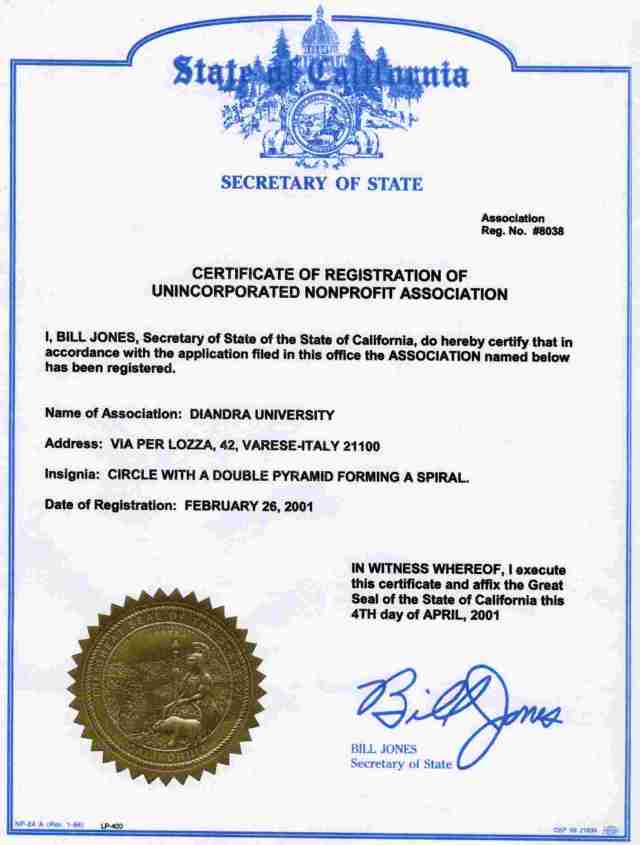
In 1981, Ambrosini established the Accademia Superiore di Studi di Scienze Naturali e Psicobiofisiche Prof. Ambrosini – Diandra University (Deed 7-2-81 N°17942/3382) which was registered as a nonprofit association under Italian law. There were further registrations in Brazil, Spain and California, USA.

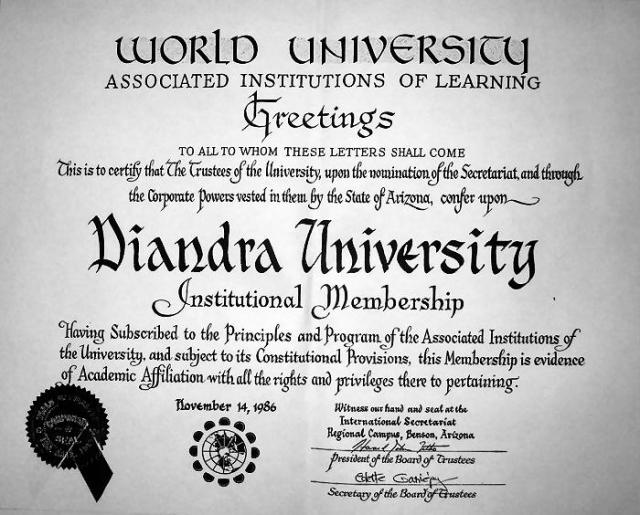
The Diandra University became affiliated with the World University, Arizona, USA, in 1986.

The Diandra University was also affiliated to the Parthasarathy International Cultural Academy in Madras, India. It offered a Masters degree in collaboration with the Centro de Altos Estudio en Ceremonial de Buenos Aires “General don Manuel Belgrano”, Argentina, as well as a PhD program in social (humanitarian) service and a diploma in criminology.

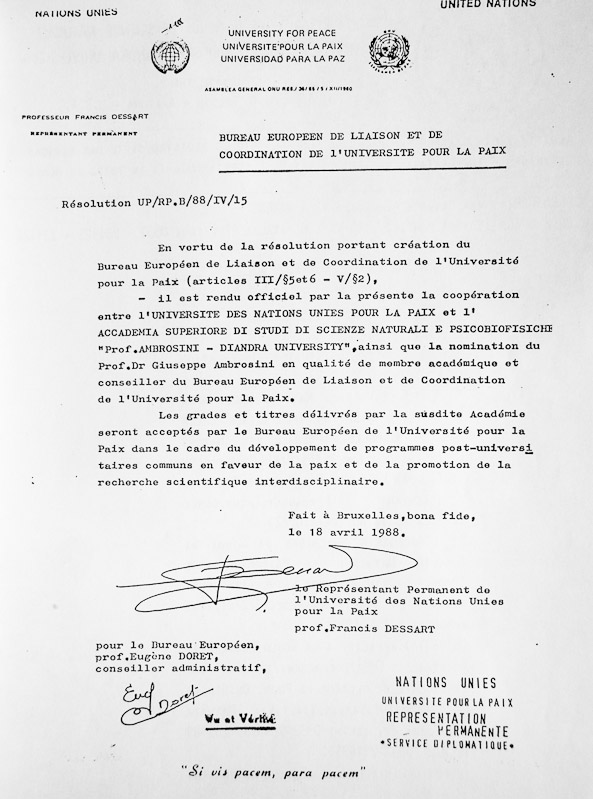
In 1988, a treaty of recognition was signed between the European Bureau of the United Nations University for Peace (whose main campus is in Costa Rica) and the Diandra University. This provided that the University for Peace would accept the degrees issued by the Diandra University.

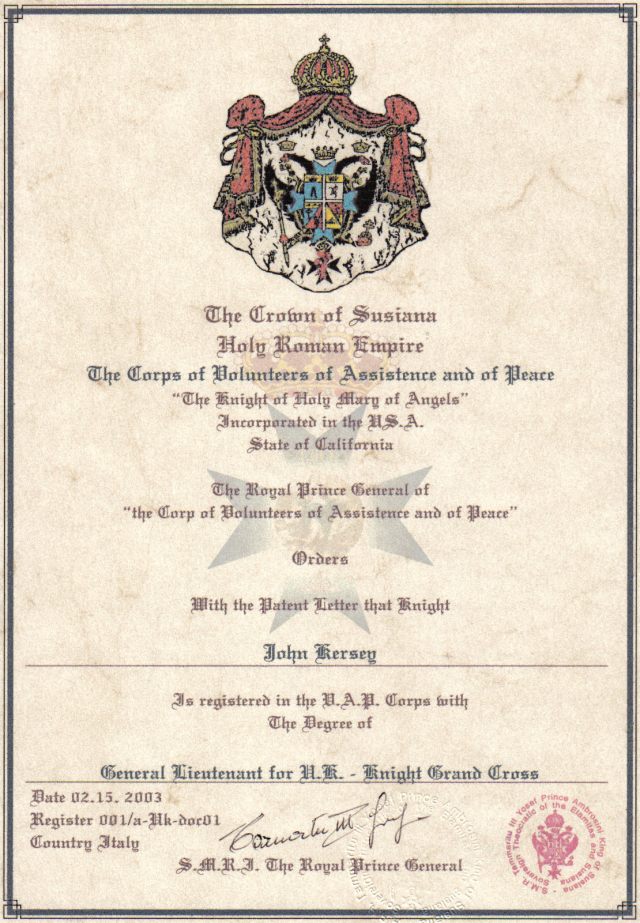
In 2003, in my capacity as Secretary-General of the Institute of Arts and Letters, London, I wrote to inform Ambrosini of the decision of that body to elect him to their Fellowship. Following our correspondence, Ambrosini appointed me to the rank of Knight Grand Cross in his Corps of Volunteers of Assistance and of Peace “The Knights of Holy Mary of Angels”.

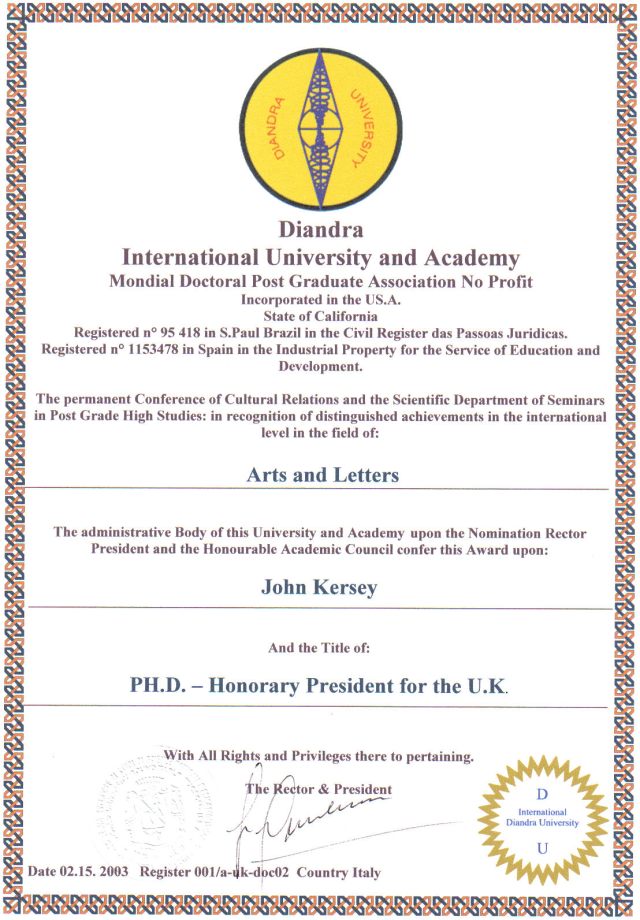
I was also awarded an honorary PhD of the Diandra University and appointed as its Honorary President for the UK.

Honours and awards: Membership of the International Writers’ Association, Ohio

The International Writers’ Association, based in Ohio, USA, was founded in 1978 by Teresinka Pereira, who was Professor Emerita of Languages at Bluffton College, Ohio, and a published poet. The IWA was founded to promote the goal of understanding, friendship and literature/art exchange across the continents. It promoted creative and critical thinking in literature and art, and defended reason, science, freedom of inquiry and ethical alternatives.

The membership extended to around 1,350 persons in 125 different countries, and included Nobel Peace Prize laureate Rigoberto Menchu, former President of Brazil Dr Fernando Henrique Cardoso, former President of Cuba Fidel Castro and Professor Noam Chomsky.

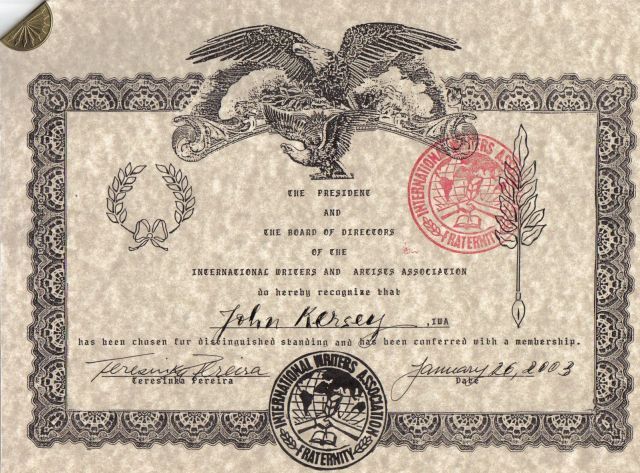
I was admitted as a member of the IWA in 2003.


Honours and awards: Fellow of the Metropolitan College of Music

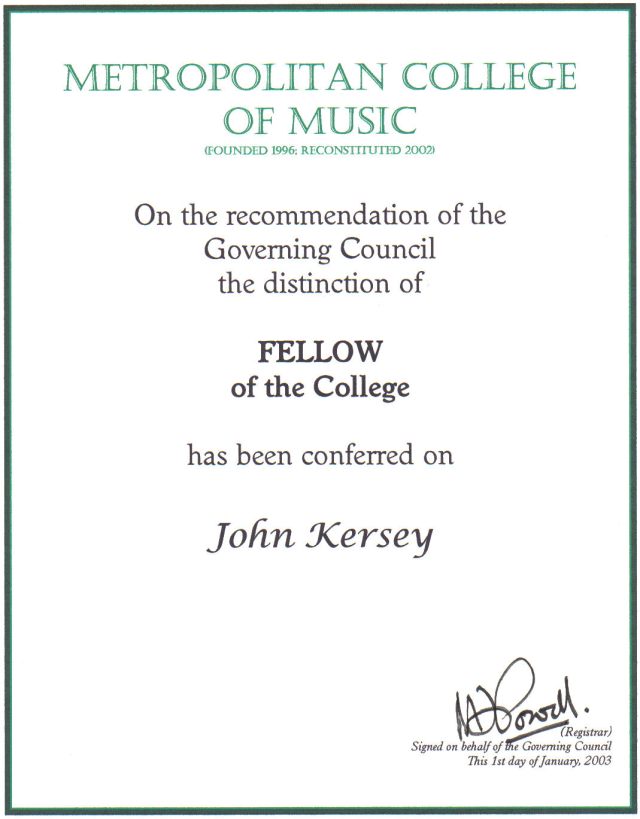
The Metropolitan College of Music was founded in 1996 and re-constituted in 2002. Following its re-constitution, it awarded the diploma of Fellow only. This was awarded to persons considered worthy of the award by the Governing Council of the College. It was not an “honorary” award; recipients became full Fellows of the College, usually in recognition of service to music. Fellows, after a period of one year from their own election, could recommend candidates to Council for consideration. In exceptional circumstances Council might, through the Registrar, consider nominations from non-members of the College.

The College subsequently changed its name to the Metropolitan College of Musicians. I was admitted as a Fellow and then served as a Member of Governing Council between 2003 and its closure in 2015. Although serious differences had emerged between members of Council in 2005, the College continued to function for a decade subsequently. I was strongly opposed to its closure, believing that the College fulfilled a distinctive role for musicians, but was outvoted.

Honours and awards: Honorary Fellowship of the North and Midlands School of Music

The Lancashire School of Music was founded in 1986 by the well-known organist of the Blackpool Tower Ballroom, Reginald Dixon, and soon established itself as an examining body within Lancashire. Its original purpose was to encourage young keyboard musicians. The LSM was run by Dixon from Blackpool and then from Manchester where premises were purchased. There was a strong emphasis on encouraging players of the electronic home organ. Upon Dixon’s death the LSM was carried on by John Dickinson until his own death in 1990. Dickinson introduced a graded examination scheme that was recognised by the then Department for Education and Science. There was also a wide range of diploma awards, which were made largely on the basis of accreditation of prior learning.

Upon the death of Dickinson the LSM fell into abeyance. Although restarting it was discussed, it was eventually felt that the desired aims and objectives would be better served by a new institution. Consequently the North and Midlands School of Music (NMSM) opened in 1993, in which Dr Colin Parsons, the late James Holt, Neil Shepherd, and the late Michael Howard were the leading forces.

Today the NMSM is active as an examining body, differing radically from other colleges in that it does not prescribe a set syllabus for its awards, instead allowing candidates a great deal of flexibility in the way they choose to present themselves for examination. Admission at member level is possible without examination. The NMSM also encourages musical performance through occasional concerts and recitals. The Thomas Memorial Fund, which assists young performers from disadvantaged backgrounds with the costs of NMSM examination fees, is administered by the School. The School’s membership has been reported to stand at around 300.

In 1999 the NMSM incorporated the Association of Church Musicians (which had been founded under the patronage of the late Sir John Gielgud) and the London Academy of Music. Since 2001, it has had a close relationship with the Australian Society of Musicology and Composition.

The NMSM has a number of distinguished patrons, including Professor Ian Tracey, Evelyn Glennie and Peter Wright. In 2008, Dr Colin Parsons, now Principal Emeritus, was awarded the MBE for his services to the School.

In 2003, I was awarded an Honorary Fellowship by the NMSM.

Honours and awards: Honorary Fellow of the Central Academy of Music

The Central Academy of Music was founded as an examining board in 1985 by Dr Donald Heath and the late Ray Turnecliffe in order to encourage the playing of the electronic keyboard. It was a company limited by guarantee in the United Kingdom. The Academy offered Grades 1 to 9 initially, and later on diplomas were introduced. At that time no other college offered examinations in electronic keyboard. Subsequently, the Academy also offered examinations in piano and electronic organ, and had centres throughout the UK and Ireland leading to a busy programme of examining throughout the year.

CAM syllabuses were wide-ranging and flexible, and the Academy’s friendly but rigorous approach won a loyal following in the popular organ world and beyond.

I was appointed as an examiner for the Academy by Dr Heath, and subsequently examined for graded examinations at their centres in Ipswich and Wolverhampton. In 2002, the Academy awarded me an Honorary Fellowship.

Honours and awards: Friedrich Silcher Medal in Bronze of the Chorgruppe Aartal of the Dill-Sängerbund of the Hessischer Sängerbund, Germany

I have been awarded the Friedrich Silcher Medal in Bronze of the Chorgruppe Aartal of the Dill-Sängerbund of the Hessischer Sängerbund, Hessen, Germany. The medal recognizes activities of special merit towards choral singing.

The Hessischer Sängerbund is an association of over 70,000 choral singers and over 2,200 choirs in the Hesse region.

Honours and awards: Parthasarathy International Cultural Academy, Madras, India

The Parthasarathy Cultural Academy was founded in the year 1968 by the late Professor Ramaswamy Ramanujam of the University of Madras, with the aims of establishing world peace and developing brotherhood in mankind, protecting basic human rights, identifying and properly honouring the eminent personalities who serve mankind and liberating people from poverty.

Since the death of Prof. Ramanujam, the activities of the Academy have continued under his daughter Dr R. Mangai Begum.

PICA presentation ceremony in Madras

To implement these services, special educational activities were started. These included awareness camps, group discussions of service-minded people, debates and various cultural activities that could bring service institutions together, each of which were organized all over India. PCA organised several processions, fastings and protests to protect human rights and get justice for the affected people/community. Programmes were organised to liberate the people from blind faith. Steps were taken to uplift the people from below the poverty line, to create equality between rich and poor and to develop the economic status of the poor.

PCA has strived throughout to establish peace and harmony in society. It has worked to bring the feelings of oneness between religions and different faiths. Prof. Ramaswamy was a strong believer in the creed, ‘There is only one caste, i.e. humanity and one religion that is One God”. The sincere services of PCA attracted the attention of educationalists, industrialists and eminent personalities from Tamil Nadu as well as elsewhere in India to involve themselves with PCA activities. This helped PCA to extend its services to solve the problems of the common public, to promote educational activities, to encourage self employment, to protect human rights, to guide and counsel the people in need and much more. These programs created an awakening among the people and brought the Founder, Prof. Ramanujam, to attention all over the world. In consequence he received several honorary doctorates and chivalric awards.

International Service Organisations and Voluntary Organisations came forward to recognize Parthasarathy Cultural Academy as an International Service Organization. Reflecting this international focus, Parthasarathy Cultural Academy changed its name to Parthasarathy International Cultural Academy in 1980. Parthasarathy Cultural Academy has honoured dignitaries by awarding them their highest award of ‘Ratna’. It also acts as a publishing imprint and has published several devotional and spiritual works of its founder.

In 2002, I was nominated by the Academy’s Delegate for Europe, Dr Helmut Bräundle-Falkensee, for the award of an Honorary Visiting Professorship.