“We in Britain are entering a dangerous social condition in which the direct expression of opinions that conflict – or merely seem to conflict – with a narrow set of orthodoxies is instantly punished by a band of self-appointed vigilantes.” – Sir Roger Scruton
I wish to state the following in rebuttal of a defamatory article published online in 2017 by one Johnny Vedmore. The allegations put forth in the article are wholly untrue and I will address them in turn below.
My alleged “fake online diploma”
I have never procured any such thing: the Doctor of Education degree that I was awarded by St Regis University, Liberia (for which I paid the fees stated on their website, just as most university students pay fees) was fully earned, not bought. I have written extensively about my experience and views concerning St Regis University, Liberia, and its closure by the government of the United States following Operation Gold Seal. I have made it clear in my article that my dealings with SRU as a student were pursued with integrity and I do not regret my support for SRU. I have known schools with problems similar to SRU overcome those problems and turn around with the right management. I have also known schools that today are very much an established part of the educational mainstream that did not look so very different from SRU during the 1980s and 1990s. It is a tragedy that SRU’s potential was never truly realized.
I have never been contacted on any matter by the FBI or other American law enforcement authorities and therefore I was not contacted at any stage of the investigatory or pre-trial process by anyone connected with Operation Gold Seal. Had I been contacted, I would of course have co-operated fully with any investigation and offered any assistance that I could have provided. None of the vast number of court papers that I have seen (in the course of my own research) identify me or any of my business concerns, which were always fully separate from those of SRU, so I can only doubt the veracity of whatever documents Mr Vedmore claims to have seen.
What is true is that I have consistently advocated for non-traditional distance education for more than twenty years. In my professional practice, I have provided expert opinion on both traditional and non-traditional credentials from all over the world. I have founded and administered several non-traditional institutions myself, and served on the faculties and boards of others. In my exploration of distance education, I have sought quality and distinctive provision among schools that are not part of the mainstream sector, and on quite a few occasions I have found it.
All of my other doctorates are genuine, legally issued credentials, and the status of each one is explained in detail in this website. Three of my doctorates were issued by governmentally accredited universities listed in the International Association of Universities/UNESCO World Handbook of Universities.
The Traditional Britain Group and my supposedly “far-right” views
I remain a Vice-President of the Traditional Britain Group. I look forward to continuing to serve the TBG and am proud of what it has achieved. My speeches to the TBG, available on this website in both video and transcript, with the videos also on YouTube, show my style as hardly being that of the populist rabble-rouser: I am not, as Mr Vedmore has maliciously asserted, a “hate-filled demagogue”. I do believe there is a need to focus on the problems in our society and their negative effects, and I am happy to widen the debate about them.
It is certainly not the case that I “care only for the English”. I have spent the entirety of my student years and subsequent career in international environments, have studied and worked at foreign universities and with people from all over the world, and have devoted considerable effort to educational projects in Africa. Some indication of my international involvement might be gained from the fact that I have been recognized for my work by four governors of states of the USA and President Barack Obama, who awarded me the President’s Lifetime Achievement Award for Volunteer Service. I hold several honours of a chiefly nature from Africa, and have also received several of similar rank from South-East Asia, including from an Islamic sultanate.
I have never spoken publicly on the issue of climate change. I believe strongly that all have an imperative to care for the natural environment, and find a number of themes in “green” politics with which I agree.
The charge that I am “obviously homophobic” is absurd and baseless. My friends and family members include people who are homosexual. I have worked as a musician, a teacher and a clergyman alongside colleagues who are gay and lesbian without difficulty. As a former officer of the Libertarian Alliance, I argued in a number of papers and blog posts against state interference in matters of sexual choice and expression that are properly the business of the individual. What I have certainly steadfastly opposed is the political use of minority gender and sexual identities as part of the ideology of leftist identity politics and postmodernism. But I also believe that those who disapprove of homosexuality or of aspects of its practice, whether for religious or other reasons, should be free to say so openly. In religious matters, there is a distinction between the doctrinal and the pastoral. I do not interpret the Christian doctrinal position on homosexuality as being other than disapproving, but equally I believe that our pastoral approach to those who are homosexual should be inclusive and supportive.
The alleged “fake” company
I established Marquess Educational Consultants, Ltd., in 2005 to undertake educational work, including both consultancy and the provision of distance education. I was the sole director of the company. The existence of this company can easily be confirmed with Companies House using their WebCheck service which includes records for dissolved companies. Mr Vedmore’s statement that Marquess Educational Consultants, Ltd. “was never a registered company in the UK” is completely false. I should add that since I was a director of Marquess Educational Consultants, Ltd., from its foundation in 2005, my personal information was on record at Companies House from that date onward. I would hardly have been seeking to keep my name off records in which it had already appeared for several years.
Certificate of incorporation for Marquess Educational Consultants, Ltd., issued by Companies House
Companies House WebCheck public listing for Marquess Educational Consultants, Ltd.
Initial register of Marquess Educational Consultants, Ltd., showing me as the sole director
My alleged “crimes”
I wish to refute in the strongest terms the comments made by Mr Vedmore that I have ever been a party to an allegation of fraud. Mr Vedmore’s accusation that I have made “a false representation with the intention of making a personal gain, causing a loss to someone else or exposing someone else to the risk of a loss” is an outrageous falsehood manufactured by him seemingly for the sole reason of sensationalism and to attack my integrity. I have never been arrested or questioned in respect of allegations of fraud by any authority either in the United Kingdom or overseas. Regarding my educational work, I have on several occasions had contact with the Department for Education and Skills and its predecessors, and have always been scrupulous to ensure that my institutions are maintained in compliance with relevant laws in the United Kingdom. Regarding the Traditional Britain Group, Mr Vedmore’s comments were clearly aimed at my colleagues in the hope that his lie that I have “risked exposing” the TBG to loss would be followed by my dismissal as they took fright, which of course has not happened.
My office as a bishop and my title of professor are both recognized by H.M. Passport Office and appear as official observations in my passport. I am not “pretending” to be anything that I am not. As to whether I am a “paragon of virtue” that is for others to judge: as a Christian I am certainly not seeking to portray myself in such a way. If my life contains moments of both achievement and recognition, I see no reason to cut myself down to size – even if others seem to want to do so.
I have never been convicted of any criminal offence whatsoever, and in my former career as a teacher was required to hold a full clearance from the predecessor agency of the Disclosure and Barring Service. There are therefore no “safeguarding issues at stake” as is vexatiously alleged.
Conclusions
The major failure of Mr Vedmore’s article seems to me to lie in its lack of humanity. Mr Vedmore has never met me, does not know me, and knows nothing about me other than what little he has managed to glean from the internet. He has not even managed to get the facts straight as shown above. Rather than subject my ideas to robust criticism and debate, which I would welcome, his choice instead is the crude path of libel and personal attack. Even in the heat of political debate, the act of dehumanizing one’s opponent is the mark of the extremist. Unlike Mr Vedmore, I do not demonize others, and indeed I know from personal experience that friendships can form even across the widest of ideological divisions.
I note that Mr Vedmore, in a particularly nasty and mean-spirited previous article, has taken it upon himself to accuse Theresa May’s dead father, on the most absurdly tendentious of grounds, of being a paedophile. He has also previously come to the attention of the blogger Richard Bartholomew, who has written “There’s no point arguing with this sort of author (and those promoting the garbage on Twitter): they don’t give a damn about what’s true or not…All they care about is…weaponizing a concocted claim for some reason or another, usually to do with politics.” Lastly, and perhaps most directly, I recall the words of Dr Andrew Joyce, writing at The Occidental Observer, who has said of the proper approach to such activists, “Our priority is winning cultural influence and political power, not confronting small numbers of social effluent.”
I am grateful to the person who has brought this article to my attention. If anyone has any further information regarding the dissemination of libellous accusations against me, I would appreciate it if they would send them to me (I will preserve their anonymity if they request it.) This will enable me to take the necessary action against those doing so by the appropriate legal means. To date, my solicitors have issued three sets of libel proceedings against individuals who have republished the article online, all of which have been settled out of court in my favour.
I have contributed a preface to the book “La rivolta dei “Boxers” nella Cina dal 1899 al 1901” by Prof. Dr. Luca Scotto Tella de’ Douglas di Castel di Ripa, published by Aracne Editrice in Rome. I am also one of the dedicatees of the book.
The Rebellion of the “Boxers” (boxers, specifically Chinese Boxing practitioners of the Kung Fu Wu Shu), or more correctly the Yihetuan Movement, was the culmination of the nineteenth century Chinese resistance to Western Colonialism and to foreign and Christian influences in China. Foreign colonialism was not the only trigger for the violence that broke out in Shandong and the plains of Northern China, but it was certainly one of the main causes of resentment. After being defeated in several wars, China was forced to allow the incursion of Western culture and influence through unequal treaties. Christian Missionaries, an extension of their Western governments, often disrespected the Chinese people and constantly provoked them. In 1897–98, Shandong Province was hit first by drought and subsequently by floods. Threatened by hunger, the farmers were forced to flee to the cities, however the Missionaries fed only those who converted (the so-called “Rice Christians”). In November 1897, a group of gunmen killed two German Missionaries in what became known as the “Juye incident”.
The book is of 760 pages. It is available from Amazon and other booksellers.
I have contributed a preface to the book “L’Ordine Equestre del Santo Sepolcro di Gerusalemme” by Prof. Dr. Luca Scotto Tella de’ Douglas di Castel di Ripa in collaboration with Maurizio Cancelli, published by Aracne Editrice in Rome.
The Equestrian Order of the Holy Sepulchre of Jerusalem (in Latin: Ordo Equestris Sancti Sepulcri Hierosolymitani, OESSH), also called the Order of the Holy Sepulchre or of the Knights of the Holy Sepulchre, is a Roman Catholic Knightly Order placed under the protection of the Holy See. Its main mission is to “support the Christian presence in the Holy Land”. According to ancient tradition, the Knights had the power to create other Knights, thus obtaining even the privilege of making even those Knights who were not nobles from birth become nobles. In addition, the acquisition of nobility also came from belonging to the Order. Among the privileges of the Order, registered by its Guardian in 1553 and approved by subsequent Popes, were included some of the greatest granted to any Order. Among these we should remember the ancient papal tradition, never repealed, which gives the Knights of the Equestrian Order of the Holy Sepulcher of Jerusalem the title, granted by the Holy Father as Head of the Vatican State, of Count Palatine “Comes Palatii” (ad personam) of the Sacred Lateran Palace. The Order takes precedence in ceremonies and Apostolic Palaces over any other Religious-Chivalric Order and, according to experts and historians, in the hierarchy of the Pontifical Orders it would come immediately after the Order of the Golden Spur (currently quiescent), according to the ancient custom, although this rule is currently under discussion.
This study of the Order is undertaken from a perspective independent of the Vatican, and considers the Order in its historic, religious and nobiliary context.
The book is of 860 pages. It is available from Amazon and other booksellers.
I have been appointed a Royal Fellow of the Royal Academy of Aristocracy and Branch-Governor for Europe of the Academy.
The Royal Academy of Aristocracy is an institution of the Kingdom of Bunyoro-Kitara (Uganda) designed to bring together the aristocrats of the world. Each appointment is made subject to the approval of the Royal Commission of Royalty and Nobility of the Bunyoro-Kitara Kingdom.
I have been honoured to receive appointment as a Knight Grand Cross in the Most Honourable Order of Omukama Chwa II Kabalega in the Kingdom of Bunyoro-Kitara. Bunyoro-Kitara is one of the constituent kingdoms of Uganda and the Sovereign, Grand Master and Protector of the Order is the reigning Omukama of Bunyoro-Kitara, H.M. Rukirabasaija Agutamba Solomon Gafabusa Iguru I.
HM The Omukama (King) of Bunyoro-Kitara Kingdom and the Bunyoro-Kitara Kingdom were restored by the Amendment [No. 8] Act – Statute No. 8, Article 118 (1)- of 1993 enacted by the Parliament of Uganda and officially recognized and protected by the Constitution of the Republic of Uganda by Chapter IV. –Article 37.-, Chapter XVI. -Article 246. (1) – (6)- of 1995 and by the Amendment [No. 2] Act -schedule V. -Article 178.8- of 2005 and by the Acts Supplement [No. 4] -Act 6. of 2011.
The Order was founded in 2010 and commemorates the present Omukama’s grandfather, the last absolute ruler of Bunyoro-Kitara.
I have been honoured with an appointment as a Senator, Senior Fellow and Member of the Academic Council of the Royal Scientific Senate for Humanity, Health and Development Affairs of the Kingdom of Bunyoro-Kitara (Uganda).
The Royal Office of Orders, Honours and Awards Affairs of the Kingdom of Bunyoro-Kitara (Uganda) has officially recognized the Royal House Polanie-Patrikios, of which I am head. Consequently, the titles and honours of the Royal House Polanie-Patrikios are fully recognized and may be used officially in the Kingdom of Bunyoro-Kitara.
I have been honoured with appointments as Royal Patron and Council Member of the Heraldry Society of Africa. The Society is registered as a non-governmental organization (NGO) in The City of Hoima, Bunyoro-Kitara Kingdom (Republic of Uganda), no. 220498.
I have contributed a preface to the book “Attacco alla Massoneria” by Prof. Dr. Luca Scotto Tella de’ Douglas di Castel di Ripa, published by Aracne Editrice in Rome.
This powerful monographic text on Freemasonry and its enemy, Anti-Freemasonry, is not only the umpteenth valuable cultural and didactic work of the author, well known and appreciated for his detailed, painstaking, exquisitely interdisciplinary and multidisciplinary research (for example, his latest book, on the Kamikaze, Vento Divino, was published by Aracne in January 2019) but also represents an encyclopedic and university-level publication of a unique scientific and academic importance, of international and world caliber, since such a monumental study on Freemasonry, richly illustrated and enriched both by many footnotes, and by a large and highly accurate Masonic, religious, philosophical, spiritual and numerological glossary-dictionary, was never created, much less conceived before now. The topic is treated as usual across the board and so as to allow even those who are not already experts in the field – Freemason, esotericist, Gnostic or professor of History of Religions – to understand this ancient initiatory path, with a core of Solomonic and Hiramitic wisdom and with sapiential, mystical and initiatory contributions from the greatest and most ancient civilizations of our planet. This theme is still unfortunately unknown and misunderstood to most, so much so that the Free Masonry, or Freemasonry, or Royal Art, in the collective imagination, in Europe and especially in Italy, has always been wrongly connected to Satanism, thanks to the totally fictional books invented by Léo Taxil (1854–1907), to the underworld, and even to organized crime, while in reality the greatest philosophers, religious, statesmen, scientists, artists, musicians, captains of industry and philanthropists of history have been Masons. Freemasonry has been and is, in the history of humanity, similar to the sun in that everyone has enjoyed its salutary and life-giving effects (even unwittingly) and whose rays have shone and still shine refracting on every side. Nobody knows how to penetrate its sacred origin, because it is divine, to discover its luminous process and its intimate essence.
With interviews with Lidia Reghini di Pontremoli, Davide Scaranari, Ilenia Mastroscusa, Agostino Mario Cannataro; a Glossary, a Masonic Dictionary and multiple culturally useful curiosities.
The book is of 1,656 pages published in two volumes. It is available from Amazon and other booksellers.
I was greatly honoured recently to be elected a Fellow of the College of Violinists “for services to the International Private Education Sector”. The College of Violinists was founded in 1890 and has been administered by the Victoria College of Music since 1962. I was elected a Fellow honoris causa of the Victoria College of Music for services to the Performing Arts in 2010.
Today, the Fellowship of the College of Violinists is the highest honorary award of the Victoria College of Music, and is awarded to both violinists and non-violinists for services to the arts. It is awarded rarely and requires the unanimous agreement of Executive Council.
For several years I was a council member and Director of Cultural Affairs of the former Libertarian Alliance, until its dissolution in June 2017. I continue to identify with many aspects of paleolibertarianism and with the Libertarian Alliance as that body was latterly constituted. However, the following quotation summarizes where I stand today regarding libertarianism in more general terms, particularly given the considerable changes in the British libertarian movement during the past decade:
“I was very much an ardent libertarian, free-market doctrinaire. But gradually I came to realize that those around me with similar views were very much unlike me personally. They were plebean populists. No appreciation for elitism, social hierarchy, and culture and tradition. They wanted to elevate the lowest among us through the medium of unregulated markets. I began to abhor this philosophy and no longer associate myself with it. I have come to appreciate that I am an elitist, through and through.”
The link in the paragraph above is to Sir Roger Scruton’s address “In Defense of Elitism”, the most significant passage of which is the following,
“A culture that is based in knowledge and in the distinction between real knowledge and mere opinion…[is] there because it’s been bequeathed to us by people who made sacrifices in order that it should occur. And we I think should learn to honour those sacrifices and to do our part in passing on these institutions and traditions in our turn. That doesn’t mean that we have to accept everything about them. We have to, on the contrary, make our own living contributions to them. And they have to be amended in lots of ways. But I think, above all, we have to keep alive the collective memory of what we are as a people. That doesn’t reduce to merely what the majority of people presently happen to want.”
These general observations serve as a postscript to my autobiographical series entitled Life in the Church.
I am sometimes asked how my office as a bishop in the smaller churches differs from that of bishops in the larger, mainstream denominations. Clearly there is a difference in the numbers concerned, both in respect of clergy and laity. That makes the bishop a more immediate and accessible figure in the smaller church, and also means that the bishop can undertake more in the way of a presbyteral ministry. Bureaucracy is generally more streamlined internally, but no less so in respect of conformity to external laws and requirements, which can involve multiple jurisdictions and require some degree of legislative expertise and linguistic dexterity.
A smaller church will inevitably bear the imprint of the bishop who leads it. In the modern age of centralized, committee-run churches, this is unusual, as is the directly hierarchical structure in which the presiding bishop has the final say on all matters. The model that works best in this situation is that of the benevolent dictator, but it is crucial that in exercising authority, the bishop is aware of the implications of his decisions on the church as a whole. He may have the ultimate responsibility before God, but he would be foolish not to listen to his clergy and laity. I have been surprised over the years how many outside my churches have wrongly assumed that the policy of my churches is merely a direct reflection of my own views. In fact, policy is carefully crafted bearing in mind the significance of tradition, external requirements (such as legislation), the need for accountability and the nature of the body of active clergy and laity as it may be constituted from time to time. My role is to integrate these factors and to consider, after prayer and reflection, how they may be best expressed in practice.
Probably the biggest point of similarity with the larger churches is in dealing with the clergy and the challenges they face. These raise familiar and universal themes, but within a structure such as the Catholicate of the West where the clergy are all non-stipendiary, there is the additional factor that the connexion between the clergy and their church is more readily frangible; there are many competing denominations, and where church buildings are not owned centrally, they can move jurisdiction with the clergyman in question. This tends to produce a pressure for smaller churches to advance their clergy irrespective of pastoral necessity, in order not to lose them to other churches where they might find such advancement more readily. I have always taken the view that this pressure is to be resisted. Holy Orders are conferred for the Church, not for the individual benefit of the person concerned, and it means considerably more to be a priest in a well-run church than it does to be a bishop in those jurisdictions where the episcopate is indiscriminately conferred. With most smaller churches being “top heavy”, what is actually needed is more deacons and priests, more lay ministers, and of course, more laity.
The experience of working with others within small religious bodies tends to heighten differences that would be more readily absorbed within a larger organization. When the group of clergy is small, there is a risk of dominance of the more extrovert personalities at the expense of others, and where there is a clash of ideologies or personalities it will become more readily apparent at an early stage. Over the years, I have been privileged to work with some outstandingly gifted clergy, who have been every bit the equal of those to be found in the larger churches. Notwithstanding this, there have been occasions when it has been necessary to admit that the paths of clergy have diverged to an incompatible extent from the nature of our church, and occasions where working relationships have sadly broken down. Wherever possible, my duty is to assure stability and to manage change in a way that is organic and that offers reassurance as to the way ahead.
There are inevitable difficulties in relations with members of other churches who have a prejudiced view of our traditions and practices. The smaller churches have not proved immune from the scandals of abuse that have affected the mainstream communions, and so there is a particular need for vigilance in respect of the selection of ordinands and others who may be placed in positions of trust. On a more subjective level, there are issues where I take a particular position in view of some of the more justified criticisms that have been levelled at the smaller churches over the years. I have always insisted that candidates for admission to the clergy be of graduate standing and undergo background checks (including in some cases psychological testing by a qualified professional). Those convicted of criminal offences are not eligible for admission to the clergy. I require of the clergy that they conduct a purposeful and visible ministry in the community, or follow a contemplative vocation guided by a Rule of Life.
More generally, I try to avoid “hard edges” in theological interpretation, mindful that it is the pastoral application of theology that is at the heart of Christian ministry. I have also always taken a studied disinterest in the minutiae of liturgy, ceremonial, and ecclesiastical robes, having too often seen these things lead clergy down the wrong paths and away from our proper priorities. I hold, in the words of Mar Georgius of Glastonbury, that “the most spiritual people are usually the most natural”.
Regarding the question of titles, I believe that these should serve a practical purpose within the body concerned, and be integral to the preservation of its distinctive ethos. Often, those who object to titles are objecting primarily to the hierarchy that they signify, and yet hierarchy is fundamental to the nature and governance of all the churches that I lead today, having been inherited by me as a living tradition and continued accordingly. I do not interpret Christianity as supporting egalitarianism, and neither did the overwhelming majority of Christians prior to the second half of the twentieth-century.
I am a firm believer that integrity in the episcopal office is best served by a thorough knowledge both of the Church and her mission and of oneself. The diversity of character among those called to the episcopacy is considerable; some are obvious saints, some are of a monastic mien, some are parish priests writ large, while others are sadly clearly more at home with administrative responsibilities than with people. My own approach is to be and give of myself as much as I can, and through this, to try to lead people to Jesus by my own, inevitably flawed, example. Key to my approach is to try to meet people at the point they have reached on their spiritual journey.
The Anglican tradition of “muscular Christianity” has a certain appeal for me, and points towards a degree of unstuffiness in which the Christian way becomes the natural context for our values and behaviour, integrated indelibly into the archetypal English character and the history of our nation. I also identify with the concept of the guardian of multiple traditions, maintaining and preserving these in good order so that in due course they will survive me. Although these are sober and sometimes weighty responsibilities, I try to remain as grounded as possible and not take myself too seriously, which is an easy task with three young children.
In 2018, I was faced with a challenging combination of circumstances. With our third child now expected, my family had outgrown San Luigi House and needed a bigger home. Moreover, having elderly family members living on the other side of the country, we no longer wished to make marathon train journeys to see them. Added to this, the AEC had continued to grow overseas, but had dwindled in Great Britain to the point where I was now the only remaining clergyman in major orders. With the exception of my own family, the remaining laity were, through age and geographical disparity, no longer in a position to form a viable worshipping community.
In such circumstances, a public chapel could no longer easily be sustained, and when we moved to Shropshire in December 2018, it was with an awareness that the provision of congregational worship in Great Britain would no longer be a priority. Even in far larger and better-resourced churches than ours, the decline in congregational worship was endemic. For all that our vision of the church is built upon the worshipping community, it proved necessary for us to reconsider how and where ministry can take place when people are no longer turning to the church as they have done in the past. Our immediate solution was in various forms of voluntary service in the community and in the preservation of the distinctive history, tradition and identity of our communion through curation of its archives, the preparation of further book and article publications, and the maintenance of its detailed and informative website. Through all of this, we continued to support our overseas parishes and missions through practical assistance and in prayer. In time, we would develop a more substantial view of the mission of an inner church dedicated to the contemplative tradition.
During 2019, I was particularly pleased when a group of Brazilian clergy joined the Byelorussian Patriarchate, having previously been part of the related Belarusian jurisdiction of the American World Patriarchates (which was now issued a Perpetual Charter in the Catholicate of the West). The creation of the Brazilian Exarchate under Dom Nagui Zayat brought about a new headquarters for our mission there in the form of the Cathedral of St George and St Sebastian in Rio de Janeiro.
The new year and the challenges of the coronavirus pandemic brought a much-needed opportunity to re-think the structure and organization of our missions going forward. The outcome of this was that the Abbey-Principality of San Luigi became the parent body for all jurisdictions, and the Catholicate of the West was established as the ecumenical organization within the Abbey-Principality under which they would be gathered.
The most visible blows dealt to us by the pandemic were the deaths of Dom Nagui Zayat from complications of Covid-19 and the death of the wife of one of our senior priests in Scandinavia as a result of a reaction to the Covid-19 vaccine.
Following the death of Dom Nagui, the Synod of the Byelorussian Patriarchate elected Dom Bartholomews his successor as Exarch. Unfortunately, the Cathedral in Rio de Janeiro was claimed by Dom Nagui’s family as their personal property and consequently became unavailable for worship. Fortunately, alternative premises were soon found and a new Cathedral of St George and St Expedite established in Águas Lindas do Goiás, and it was not long before the Patriarchate was once more engaged in a productive mission among some of Brazil’s poorest citizens, also expanding further overseas.
In Holy Week of 2023, the decision was taken to bring a formal end to the Patriarchate’s remaining missions and congregational outreach, returning it to its pre-2015 role as a purely dynastic ekklesia, and to transfer its clergy and laity to the Apostolic Episcopal Church and the Order of Antioch where their missions would be better served.
Between October 2021 and November 2022, I also took on responsibility for the oversight of a number of parishes and missions in Spain and Latin America under the aegis of the Apostolic Episcopal Church. These parishes followed the Use of Sarum, a rite with a long tradition within the Catholicate of the West, and had previously been organized under a Continuing Anglican ministry.
During this time, we had seen very welcome growth in the membership of the Order of Corporate Reunion, in which I serve as Prelate and Rector Pro-Provincial of Canterbury, and the roll of the Order now stands at well over one hundred members. The Order has been associated with the Apostolic Episcopal Church for over ninety years, with the AEC described as “the only concret result of the vision of a uniate church, once created by abbé Portal and Lord Halifax, and that has its ideological root in The Order of
Corporate Reunion.” (Bertil Persson: The Order of Corporate Reunion, Solna, St Ephrem’s Institute, 2000, p. 30).
The Order of Corporate Reunion is dedicated to ecumenical unity between Catholics and Anglicans, a cause which has long been close to my heart. In August 2023, the Order was granted a Federal service mark for its name in the United States, affirming its position as the only legitimate legal successor of the 1874 foundation.
Throughout my ministry, I have also maintained a supplementary ministerial status with the Universal Life Church in California, USA. I have written on my experiences with the ULC here.
As a postscript to this series, I have included some general observations drawing on my experiences of exercising the episcopate in the smaller churches, which can be read here.
The late Dom Klaus Schlapps OPR (1959-2013) was responsible for the revival of the Order of Port Royal (OPR) and the foundation of its Abbey of St Severin in Germany where he and other men served as Cistercian monks. In 2004, the Order became a part of the Union of Utrecht of the Old Catholic Churches, and Dom Klaus was recognized as a bishop of the Union of Utrecht, sharing a number of the Apostolic lineages that I had myself received at my consecration in 2008. However, the modernist direction of the Union did not sit well with the theology of the Order, and in 2010 it became independent once more, establishing its own synod, the Christ Catholic Church in Germany. This was in 2012 accepted as the German administration of the Nordic Catholic Church under the Union of Scranton. Sister communities were established in the USA, Haiti and Cameroon, the latter two of which were under the protection of Anglican bishops. Dom Klaus was appointed an Honorary Canon of St Michael’s Anglican Cathedral, Cameroon, in 2008. He was German Superintendent of the International Council of Community Churches.
A Cistercian monk’s life is necessarily one dominated by silence, but each day, Dom Klaus and I would set aside time to communicate via an online messaging application. I was struck by the high priority that he gave to this contact, amid the stringent demands of his monastic life and the administration of the monastery. He became both a friend and a mentor.
Dom Klaus was strongly involved in chivalry and was of the same mind as me regarding the sacred nature of kingship and the existence of noble prerogatives within the historic Churches. He held senior office in branches of the Order of St John and the Order of St Lazarus, and was also expert in the nobiliary and chivalric traditions of Africa. When, prompted by my contact with some of its few surviving members, I raised with him the possibility of the revival of the Abbey-Principality of San Luigi, whose headship had been vacant since the death of the seventh Prince-Abbot, Edmond II, in 1998, he became one of the major architects of the revival. San Luigi was briefly an independent monastic state in the Fezzan during 1883-84, and had then passed through a succession of bishops in France and the USA, with notable connexions with European and African royalty. In 1962, King Peter II of Yugoslavia gave official recognition to Prince-Abbot Edmond II, also granting to him Royal Yugoslav honours. Notably, Prince-Abbot Edmond II had also been a bishop of the Apostolic Episcopal Church.
Another important friendship that developed at this period was with Prince Kermit Poling de Polanie-Patrikios. He was a direct descendant of Russian, Polish, European and Byzantine kings, held a number of hereditary titles of nobility, and was head of the Royal House Polanie-Patrikios, which had been established in 1970 when he was elected by the Orthodox Patriarch of Belarus as the candidate for a proposed Belarusian monarchical restoration. Moreover, having been consecrated bishop by Mar Basilius Abdullah III (Dr William Bernard Crow), he was now the only living bishop of the Apostolate of the Holy Wisdom, one of the leading jurisdictions of its time to combine Orthodoxy with esoteric study. He had spent his career in ministerial service, having served in the pastorate of the United Methodist Church, and was now living in retirement in West Virginia. His connexions in the church, nobility and chivalry ranged very widely. Importantly, he had been a good friend of Prince-Abbot Edmond II of San Luigi, and was honoured by him both through senior rank in the San Luigi Orders and with a dukedom.
With Dom Klaus’s and Prince Kermit’s help, it was established that the Supreme Council of San Luigi was the responsible body for electing a successor to the last Prince-Abbot, who had died without nominating an heir, and the present representation of Supreme Council in descent from that body as it had stood in 1998 was traced in detail. Following this work, new appointments were made to the Supreme Council by its President and I was asked by the Supreme Council to accept election to the vacant Prince-Abbacy. I duly became the eighth Prince-Abbot of San Luigi with the regnal name Edmond III on 25 August 2011.
After my election, application for recognition was then made to H.M. the Omukama (King) of Bunyoro-Kitara. Bunyoro-Kitara is today one of the constituent kingdoms of Uganda, with its monarch recognized under the Constitution, but when the monks of San Luigi arrived there in 1885, it was an absolute monarchy under Omukama Chwa II Kabalega. The Omukama had granted to the Prince-Abbot the title of Mukungu, translated as Prince-Governor, in perpetuity, and our application to the present Omukama, who is the grandson of Omukama Chwa II Kabalega, was therefore to recognize the succession to this title. On 25 January 2012, His Majesty responded to our petition by issuing Letters Patent accordingly.
Moreover, H.M. the Omukama graciously consented to become a Royal Patron of the dependent chivalric Orders of San Luigi, the Order of the Crown of Thorns and the Order of the Lion and the Black Cross, and issued new Royal Charters for both Orders. This placed these Orders under the patronage and protection of a reigning monarch.
The work of re-establishing San Luigi would take up many hours of research, writing and administration. From the outset, I took the view that the membership of the San Luigi Orders would be highly selective and that we would take as our model the dynastic Orders of the European former ruling houses. Equally, I was determined that the membership would not be restricted to the wealthy or well-connected. As had always been the case in the past, we looked to merit wherever it was to be found, without distinction of class or background. As part of the administration a Charitable Trust for San Luigi was established in the United Kingdom. A permanent chapel for San Luigi was also established by the membership in France. Prince Kermit became a Royal Patron, and Dom Klaus oversaw the Grand Priory for Continental Europe.
The church tradition of San Luigi was extremely rich, including its Benedictine Roman Catholic foundation, the ecclesiastical jurisdiction of San Luigi itself (re-established by a bishop of the Melkite Greek Catholic Church in 1945), and the Order of Antioch, a religious order which had been established in 1928 by the Western extensions of the Syrian Orthodox Patriarchate. Two past Prince-Abbots had also been Anglican clergymen. New appointments of clergy were made, but as with the Orders, this was done selectively rather than with a view to building up numbers.
On 3 November 2012, Dom Klaus in his capacity as Grand Prior of the Confraternitas Oecumenica Sancti Sepulcri Hierosolymitani (Ecumenical Brotherhood of the Holy Grave of Jerusalem, or COSSH) erected a Prefectory of Great Britain under my leadership. The COSSH is an ecumenical fraternity open to men and women that draws inspiration from the “pilgrims to Jerusalem from the chivalric Brotherhood of the Holy Land in Haarlem” founded in 1394. It was revived in 1996 and Dom Klaus was elected Grand Prior in 2009. In May 2012, I received the Gold Cross of Merit of the COSSH, and in October 2012 I was appointed as a Brother of COSSH honoris causa.
The sudden death of Dom Klaus in January 2013 prevented many of our plans from coming to fruition, and it became necessary in a number of cases to take decisive action in order to preserve the organizations he had led. Accordingly, I exercised the sovereign prerogative of San Luigi in order to ensure that his representation of the Johannine and Lazarite Orders could continue, and worked with the Revd. Christian Kliver, who as Prefect of Bavaria was now the only other remaining senior officer of the COSSH, to ensure that the COSSH was not suppressed as was the intention of some others.
In July 2014, Archbishop Francis C. Spataro appointed me as his co-adjutor with right of succession to the Primacy of the Apostolic Episcopal Church.
Archbishop Spataro subsequently announced that he would retire as AEC Primate on 5 February 2015, his seventy-ninth birthday, and I duly succeeded him the following day. As an urgent priority, I promulgated canons for the AEC after a long period of rule by decree, and worked to re-activate fully the historical, jurisdictional and canonical legacy of the AEC, most particularly in its role as the successor of the Catholicate of the West. This was ultimately the fulfilment of the commission I had received in respect of the Ancient Catholic Church in 2008 and the Apostolic ordination I had received within the communion of the AEC in 2006. The AEC’s corporate nonprofit status had been unclear for some years, and in order to resolve this and manage its affairs effectively, I established a nonprofit religious Corporation Sole for the Primate and Presiding Bishop of the AEC under the special legislative provision that exists for such corporate entities in Hawaii.
To my surprise, after many years of the friendliest contact, Bertil Persson opposed my election to the Primacy, proposing that he should resume that office instead. A power struggle ensued for some months, in which (despite severe provocation and threats) I refused to criticize my opponents or descend to their level. Likewise, Archbishop Spataro was steadfast and unflinching in his support for me. The Persson camp, which consisted of Persson and a young bishop who he had recently consecrated, was implacably opposed to a canonical or hierarchical organization for the AEC, despite this being the original historical basis of the church, and also rejected anything that represented the legacy of Mar Georgius of Glastonbury. It was further apparent that, for them, these issues had become deeply politicized, and that they favoured a progressive theology of the style of the contemporary Vatican rather than my traditionalist Catholic and esoteric outlook. It was necessary to quash the dissenters firmly, and after much forebearance, rejected attempts at dialogue, and an abortive attempt at schism, they were excommunicated by the AEC.
It was also my duty to conduct a thorough review of the serving clergy and the state of the various intercommunions that had been entered into over the years. I came to the conclusion that the extremely wide scope of the ecumenical developments in the AEC during the primacy of Bertil Persson (1986-98) had taken the AEC into a position where its core identity was in danger of being lost. Following the work of Archbishop Spataro, I therefore re-emphasised the Continuing Anglican and Orthodox core identity of the AEC, while making clear its openness to diverse intellectual traditions including the esoteric.
On my accession to the Primacy, I was awarded the honorary degree of Doctor of Sacred Theology by the AEC.
On 1 March, Prince Kermit adopted me as his successor in all his honours, and on 31 March he died, whereupon I succeeded him as Ecclesiast of the Byelorussian Patriarchate of St Andrew the First-Called Apostle and as head of the Apostolate of the Holy Wisdom.
I moved from London to Norfolk in September 2015, and took up residence at what was to become San Luigi House. This was a magnificent Victorian home that was the subject of an extensive and painstaking restoration by the previous owner and myself. It became the headquarters for San Luigi and the AEC.
Among the outbuildings was a former store that I converted into a fully-fledged chapel. I embarked on the project intending that this would serve not only as a domestic chapel for the worship of my young family and myself, but that it would form a focal point for San Luigi and AEC members in Great Britain. The resulting Vilatte Chapel was duly registered with the civil authorities as a place of worship.
On 1 August 2016, Archbishop Peter Paul Brennan, Universal Primate of the Order of Corporate Reunion, died. Archbishop Brennan had been a friend for many years and we would meet on his regular visits to London. He was one of the rare breed of clergymen who had the ability to work both within conservative and liberal church traditions, and sought throughout to bring about unity and to find common ground between groups of Christians. He appointed no successor, and following a period of transition the AEC reasserted its own historic representation of the Order of Corporate Reunion (which dates from 1933). Subsequently, the OCR would be re-organized under the AEC and the Catholicate of the West and incorporated once more in its homeland of England. This also marked a revival of its founding mission as a religious society to bring about unity between Anglicans and Roman Catholics. This mission grew internationally to include both clerical and lay members on several continents.
In 2017, I was also awarded the degree of Doctor of Letters, jure dignitatis, by the Western Orthodox University, which since 1977 has been an integral part of the AEC. Since the degree-granting authority of the University was not only secular (it having been chartered in the Commonwealth of Dominica) but depended upon the Presiding Bishop of the AEC in his office as Catholicos of the West, I had to sign my own certificate. I had previously received the degrees of Doctor of Divinity, Doctor of Canon Law and Bachelor of Letters of the Western Orthodox University during 2015, as well as being formally admitted to its Fellowship. The degrees were awarded in consequence of my having incorporated degrees conferred by other institutions according to the University’s Regulations on such matters.
The AEC has always remained an intentionally small communion, with something of the character of a church society, but under my Primacy I was delighted to see fresh growth with new missions joining us in Scandinavia and in Latin America. I was also particularly pleased to sign an intercommunion agreement between the AEC and the Patriarchate of Bunyoro-Kitara. In Great Britain, I had dialogue with several clergy of the Church of England who were concerned about developments in that communion, and one of our clergy was also accepted to minister in the Free Church of England in parallel with his AEC responsibilities.
Against this, there was the continual difficulty that both clergy and laity were predominantly of the older generation, and one of my duties was to deal with a steady flow of retirements and obituaries. Past experience in the LCAC and EADM had shown that the younger generation rarely stays the course in the smaller communions. This highlights, of course, the considerable challenges of undertaking this kind of independent, self-reliant ministry, but it also speaks of a generation that has either rejected institutional and formal religion, or that regards the larger communions as fulfilling adequately the need for such.
Following my ordination and consecration by Dom Phillip Kemp, the church which I co-led experienced a period of growth and development. The new name The Liberal Rite was adopted with effect from 1 January 2007 and reflected our position as part of the Liberal Catholic movement, consisting of churches that used the Liturgy or Rite of the Liberal Catholic Church.
The word “liberal” means different things to different people. I am liberal in some aspects, particularly in my pastoral approach and in my openness to the study of esoteric teachings, but conservative in others, such as the essentials of orthodox theology and my preference for a hierarchical church organization. Others draw the line in different ways. I also believe that liberalism in the context of the Liberal Catholic movement should signify adherence to a positive set of precepts rather than an absence of theological principles and organization.
In many respects, the Liberal Catholic Church from which the Liberal Catholic movement descends is highly conservative. The liturgy is formal, ceremonial in nature and differs little from the pre-Vatican II Tridentine Mass (hence the attraction of the Liberal Catholic Church to a number of Traditional Catholics). The church is administered hierarchically and according to a corpus of canon law, policies and regulations. Its emphasis is sacerdotal rather than evangelical, and it is oriented towards the contemplative and mystic. It has never laid great emphasis on numbers of parishes or followers, and is more concerned with reaching those who have a particular calling to follow its distinctive charism.
What is certainly liberal, however, is the freedom of individual interpretation that is permitted. For many years, this was wholly unrestricted, and in some cases came to embrace a good deal of syncretism and Eastern teachings, but in more recent years more orthodox official Summaries of Doctrine or lists of Teachings have been adopted by some Liberal Catholics. For those who, like the founders of the LCC, had come from a background of Roman dogma and unquestioning constraint, interpretative freedom must have seemed revolutionary. From an Anglican perspective like my own, it was a much more natural approach to faith, in which the intellect is welcomed and the spiritual journey of the individual emphasised. However, during my time, I saw a number of people come into the Liberal Catholic movement whose background was not necessarily in the LCC or its related churches, but instead in theological and liturgical liberalism, with its opposition to traditionalism, hierarchy and formality. This approach was not in line with my own, and indeed it was a major reason why I had left the Church of England.
The principal causes of division between the different churches of the Liberal Catholic movement are long-standing and as seemingly intractable as the other principal obstacles to ecumenical reunion. Firstly, there is controversy as to the importance of Theosophy and its teachings. It should be stated that there has never been an official relationship between the original LCC or any of the churches of the Liberal Catholic movement and the Theosophical Society, and indeed the Theosophical Society early on issued a statement dissociating itself from the LCC. The fact remains, however, that the founding clergy and many other members of the LCC have also been members of the TS, and this has led to a number of Theosophical ideas entering into some Liberal Catholic jurisdictions. Principal among these are belief in the Ascended Masters, compulsory vegetarianism and abstention from alcohol and tobacco. A strong connexion between the LCC and Co-Freemasonry is also evident. In the modern era, there have been further divisions concerning the ordination of women.
The position of The Liberal Rite was that it did not endorse Theosophy or any other esoteric school, holding that it was for the individual to determine to what extent they accepted such views. Nor did it prescribe vegetarianism or teetotalism. It also followed the practice of the non-Theosophical Liberal Catholic churches in ordaining women to the major orders. While I had not been part of the vigorous opposition from Anglo-Catholicism to the ordination of women in the Church of England, neither did I agree with the “progressive” view in favour of the matter that had its origins in egalitarian politics. Instead, influenced by Metropolitan Kallistos Ware’s comments on the female diaconate, the practice of the Greek Orthodox Church and a number of the esoteric churches, and ultimately by the Eglise Gnostique of Doinel, I took the view that the ordination of women was a parallel but separate ministry to that of the ordination of men, with its own distinctive character and charism. Some years later, I would come to see this view as excessively idealistic. The fact was that where the ordination of women was being advocated, it was being done in the name of egalitarianism rather than with reference to any origins in orthodox theology and church history, and it was being used to undermine the traditional values that I wished to support.
Having made positive contact with other Liberal Catholic groups, including The Young Rite on the Continent, The Liberal Rite also had a good working relationship with the Apostolic Episcopal Church and the Ancient Catholic Church as two jurisdictions with similar approaches and aims. Our worship continued to be based in London, but, reflecting both perceived need and our resources and interests, had moved from a general congregational outreach to a more specialized mission that would of its nature be of interest to a smaller group of people.
On 15 August 2007, I was the principal consecrator for two bishops at the former Well Chapel at Witnesham, Suffolk. Assisted by Andrew Linley and Old Catholic bishop Michael Skelly, I consecrated priests Charles Mugleston and Alistair Bate, who had both previously been members of other Liberal Catholic churches. Charles was responsible for the community of the Well Chapel and in secular life is a professional actor. He worked tirelessly to try to achieve reunion between the churches of the Liberal Catholic movement and remains in communion with my church today. After some years during which he served as a bishop in my jurisdictions, Alistair ceased to be in communion on 31 May 2011.
During the earlier part of 2008, I was much occupied with the complex ecclesiastical and legal aftermath of the loss of the Cathedral Church of the Good Shepherd in Clapton to the Ancient Catholic Church, which I have written about elsewhere. The eventual outcome was that the Ancient Catholic Church merged with The Liberal Rite to create the new Liberal Catholic Apostolic Church, which I led as its first Metropolitan Primate.
In August 2008, I returned to the Well Chapel when Bishop Charles Mugleston ordained Sr. Magdalena Stebbing to the priesthood.
With the death of Archbishop George Boyer in the same year, the Apostolic Episcopal Church (AEC) elected me to succeed him as their Archbishop of Great Britain; I was also appointed as Bishop and Rector Pro-Provincial of Canterbury in the Order of Corporate Reunion.
The AEC required me to undergo subconditional consecration, this being necessary since the AEC was a Continuing Anglican body and maintained the Anglican practice of having a minimum of three bishops consecrate rather than allowing for consecrations to take place solus by a single bishop (as is more commonly accepted by Rome). This took place on 23 November 2008 in the beautiful Arts and Crafts setting of Golder’s Green Unitarian Church. The principal consecrator was Archbishop Bertil Persson, Primate Emeritus of the AEC, assisted by Archbishop Paget E.J. Mack of the AEC (acting as Commissary of the Primate, Archbishop Francis C. Spataro) and Archbishop-Primate Phillip Lewis of the Ethiopian Coptic Orthodox Church of North and South America and Europe. Other bishops were present, including Andrew Linley and Alistair Bate of the LCAC and Leila Boyer of the Church of the Ascension. During the service, I was enthroned as Archbishop of Great Britain in the AEC and confirmed in my positions within the LCAC and the Ancient Catholic Church. As well as the outer aspect of the ceremony, there was also an inner aspect, in which all the bishops present gave each other additional commissioning.
This consecration conferred upon me the Apostolic Succession through the Anglican Communion (Philippine Independent Church) and Old Catholic Union of Utrecht successsions. The validity of the orders of the Apostolic Episcopal Church had been confirmed by the Bishop of London in the Church of England during the 1980s when several AEC clergy were incardinated into the Church of England.
Archbishop Bertil Persson signs the major consecration certificate above during the ceremony
Inevitably some reorganization of my responsibilities became necessary, and I retired as Metropolitan Primate of the LCAC in January 2009. There were already tensions in the LCAC between those clergy who were, in line with the Liberal Catholic movement, traditionalists who were open to esotericism, and those clergy who saw the phrase “liberal catholic” as signifying a commitment to liberal theology and practice within a broadly Roman context. On September 26, 2009, Adrian Glover was consecrated bishop for the LCAC at Golder’s Green Unitarian Church and he would eventually succeed to its primacy. The principal consecrator was Andrew Linley, and the assistant consecrators were Alistair Bate, Charles Mugleston and myself.
On Easter Day, 2010, I established a new ekklesia within the Apostolic Episcopal Church called the Ecclesia Apostolica Divinorum Mysteriorum (EADM; Apostolic Church of the Divine Mysteries), in which I was designated by the name Tau Eleutherius. This reflected a number of lessons learned from the way the LCAC had developed. EADM positioned itself as a reformed Liberal Catholic rite in the contemplative tradition. The strands that were of particular importance in its identity were a pre-Nicene Western Rite Orthodoxy and Traditionalist Catholicism emphasising Johannine spirituality, and an openness to esotericism, including the traditions of the Eglise Gnostique, Rosicrucianism and the Wisdom Traditions. EADM was hierarchically and formally governed by a Council of Three operating under a corpus of canon law, and had soon come to include all of the esoterically-minded clergy of the LCAC. As well as activity in London, there was an active parish in Edinburgh and other missions in Europe and the Americas.
On 19 June 2010, EADM chartered the Companions of the Cross and Passion, an order of men following the Passionist charism. In July 2010, EADM provided a charter and constitution for the new Mission Episcopate of Ss. Francis and Clare, and the necessary mandates for the consecration of its two bishops, Br. Thomas and Sr. Magdalena Stebbing. This was to be an independent body whose ministry would be carried out chiefly in the United States. On 14 August, these bishops were consecrated at Newington Green Unitarian Church by Alistair Bate assisted by myself, Andrew Linley, Adrian Glover and Louise Lombard, bishop of The Young Rite.
The impetus of EADM was sound, but it did not succeed in achieving stability. This was largely due to the divergent personalities involved, some of whom were not committed to living within a disciplined and ordered canonical community. As 2011 progressed, the majority of EADM’s clergy defected in order to form a new church that would be more in line with the looser and less accountable norms of the independent sacramental movement. This set in place a process of complete reorganization that saw EADM emerge with its purpose and mission intact, but occupying a more specialized role and with a significantly lower profile compared to the other aspects of my ministry.
Around this time I was completing the research for my biographies of Arnold Harris Mathew and Joseph René Vilatte. These built on a much more extensive earlier book that traced the history of the smaller sacramental churches from the nineteenth-century to the present day. The archival holdings of my jurisdiction were continuing to expand, with many gifts of historic papers and church publications that were often rare and ephemeral. My book on Mathew had been expanded from my doctoral thesis at the Universidad Empresarial de Costa Rica, and I was pleased some years later to see it extensively referenced in further doctoral work at a British university.
Meantime, several events happened that would set the tone for my life in the church during its next phase. The first was my election to the vacant Prince-Abbacy of San Luigi, and the second was the beginning of my friendships with the late Dom Klaus Schlapps and Prince Kermit de Polanie-Patrikios.
As a result of the issues that had arisen concerning Illtyd Thomas (see previous post), it was decided that Andrew Linley and I should undergo subconditional ordination to all the major orders as a cautionary measure.
Dom Phillip Kemp OSB(csr) was Primate of the Old Catholic Church of Great Britain, which had been founded in 1968. He was for twelve years employed at the Department of Work and Pensions, where he rose to become a manager. He then became a learning and development officer, and latterly Regional Manager, for the public service trades union Unison. An able chef, he served for eight years in the Territorial Army Catering Support Regiment, Royal Logistics Corps, and was promoted from the ranks to Second Lieutenant in 1992. Further promotion to Captain followed before he left the T.A. in 1998. Although he had not pursued university education after leaving school, he studied later in life with the Open University.
Phillip Kemp was consecrated by Aelred Peter Distin, then Primate of the Old Catholic Church of Great Britain, as Titular Bishop of Elmham on 6 June 2004 and appointed additionally as Co-Adjutor Metropolitan. He was a professed member of the Benedictine Community of St. Romuald. On 13 September 2004 Distin formally retired as Metropolitan Archbishop of the OCCGB in favour of Kemp. Under Kemp, the OCCGB was regularized and registered as a charity. Undergoing several changes of name, it was known at the time of our ordination and consecration as the Independent Catholic Alliance and latterly was called the Traditional Catholic Orthodox Church.
The services that took place on 11 November 2006 took up an entire day. The venue was the Oratory of the Holy Spirit in Enfield, north London, which was then the principal house-chapel of our church. All services used the Roman Pontifical. The services were open to the public and were attended by laity. Dom Phillip ordained us conditionally to the diaconate and priesthood and then consecrated us to the episcopate. We then at Dom Phillip’s request conditionally consecrated him to the episcopate, and I then conditionally ordained Dom Simon Scruton of the OCCGB to the priesthood.
When Dom Phillip died at the early age of 46 in 2012, the Administrator of the Old Catholic Church of Great Britain requested that I, as the senior of the two bishops consecrated by him, should succeed him as Primate and Titular Archbishop of Elmham.
A number of factors led me to leave the Church of England, the church of my birth and in which I had undertaken lay work as a musician for some twelve years. My background was in the Diocese of Edmonton under the late Bishop Brian Masters. Some of the parishes there, including one where I worked for several years, used the full Roman Rite, and in general there was a strong legacy of High Tory working-class Anglo-Catholicism. When Bishop Brian died in 1998, it was effectively the end of an era. The Times published what I and many others considered a mean-spirited obituary, and my letter protesting at this was duly published by that newspaper in reply.
Having first felt a call to ordination in my teenage years, I now found myself revisiting the idea of non-stipendiary ministry to be pursued alongside my teaching and other work. The response to my enquiries was not encouraging, however, and I was left with the firm impression that someone of my traditionalist theological and political views would not be welcome in the present-day Church of England. This seemed to me to be the case even were I to remain a layman, as liberal evangelicalism enjoyed its ascendancy. Ultimately, I came to feel that it was as much the case that the Church of England had left me as the other way around. Many in a similar position crossed the Tiber; I however found myself unable to accept either of the Vatican Councils in conscience, and regarded the second as an open door to the modernism to which I was opposed. I was also becoming increasingly interested in Christian Esotericism and wanted the freedom to explore this tradition. Under the circumstances, I concluded that it was preferable to serve within a smaller communion where my viewpoint would have a chance of accommodation, rather than a larger one where I would be a marginal figure at best. At this point, initially through common interests in other areas, I came to meet some members of the Society of the Divine Spirit.
The Society was a small autocephalous group of Christians that had first formed in South London in 1999. First called the British Liberal Free Church, and later renamed the Society of the Divine Spirit (SDS), the inspiration for this foundation was the work of Revd. J.M. Lloyd Thomas and the Society of Free Catholics earlier in the twentieth-century, with the aim of combining the intellectual freedom of the Free Church tradition with gently Catholic worship. The Society of Free Christians was also formed in 1999 as a ministerial organisation working in parallel with SDS.
Ministerial training in the Society of the Divine Spirit ensued, and resulted in my receiving my licence. For some years, our worship took place in the side chapel of Bloomsbury Baptist Church and the chapel of Wimbledon YMCA, and the community eventually came to be led by three co-equal ministers including myself. A number of liturgies were specially written for our church by the ministers, and resulted in beautiful and moving celebrations.
Subsequent developments saw the evolution of SDS into the English Liberal Free Church (ELFC), a stronger sacramental emphasis to our worship and a more formal administration, in which I served as Chancellor. In 2006, several major changes took place. The longest-serving of our ministers, the Revd. Stephen Callander-Grant, decided to leave ELFC in order to exercise a specifically Unitarian ministry. The other two ministers, the Revd. Andrew Linley and myself, with the support of the laity, decided to seek Holy Orders in the historic Apostolic Succession in order that we might bring sacramental validity to our community.
There was a strong synergy between our approach to theology and church practice and that of the Liberal Catholic Church. The Liberal Catholic Church was formed in 1916 by British Old Catholic clergy who were seeking a church that was historically rooted, liturgically and structurally traditionalist, while also being open to freedom of interpretation, including that provided by esotericism. Later developments in the LCC had led to the existence of a Liberal Catholic movement consisting of a number of different churches. These churches maintained a similar ecclesiology deriving from their common origin, but differed on such matters of practice as the emphasis given to Theosophy, compulsory vegetarianism and abstention from alcohol and tobacco.
In addition to those churches that described themselves as Liberal Catholic, we also became aware of the Apostolic Episcopal Church, which had been founded in the United States in 1925 as a Continuing Anglican and Orthodox body, but that had also had extensive contact with bishops from the esoteric tradition, notably the late Archbishop George Boyer who was then its senior representative in Great Britain. We also came to know the Ancient Catholic Church, then based at the Cathedral Church of the Good Shepherd in Clapton, London, which had been canonically established in 1950 under the aegis of the British archbishop of the Apostolic Episcopal Church, and which had taken a path very similar to that of Liberal Catholicism. The esoteric teachings of John Sebastian Marlow Ward, a bishop of the Catholicate of the West, were also an important discovery, and I formed a friendship with his son Bishop John Cuffe of the Orthodox Catholic Church in Australia that endures to this day.
From this came the overriding concept which has remained with me throughout my ministry, of an orthodox and traditionalist theology and practice within a formal and hierarchically-structured communion that is also intellectually open to other currents, including esotericism. My models in this came to be the bishops Arthur Wolfort Brooks, William Bernard Crow, Harold Percival Nicholson, J.S.M. Ward and, at least in the earlier part of his ministry, Hugh George de Willmott Newman. The connexion between all of these bishops was the Apostolic Episcopal Church and the Catholicate of the West which the AEC eventually absorbed.
Although we explored the option of uniting our work with another church through discussion with several bishops, our conclusion was that our jurisdiction had developed its own particular character and that its independence should be maintained. In particular, we did not find that all of the smaller sacramental churches shared our ideas as to the nature and direction of our mission. Nevertheless, it must be said that few of the churches that we encountered corresponded to the Anglican stereotype of uneducated wandering bishops obsessed with extreme ritualism and exaggerated titles, and it was obvious that a number were patently sincere and engaged in laudable work in the community. Our aim was therefore to find a bishop who would be prepared, through ordination in the Apostolic Succession, to bestow valid sacraments upon our communion.
It was certainly not the case that I regarded the prospect of becoming a bishop as desirable per se. But within a traditionalist church hierarchy, there is no viable alternative to episcopally-based organization. Only a bishop can ordain and confirm, and if a church is to be fully autocephalous, it must have its own bishops to ensure its succession and survival. It was with this duty in mind, therefore, that it was accepted that we would need to be consecrated to the episcopate.
The late Thomas Illtyd Thomas was Primate of the Celtic Catholic Church, which was then in communion with the Apostolic Episcopal Church, and had while living in Canada in 1986 served as Assistant Bishop in the Liberal Catholic Diocese of Niagara. Consequently, he represented two of the significant strands with which we wished to unite our heritage. He had been consecrated bishop by the Primate of the Holy Celtic Church, Archbishop Anthony Walter John Williams, in 1979, and in 1985 was subconditionally consecrated by Archbishop Bertil Persson of the Apostolic Episcopal Church, also receiving the Cross of Merit of St Martin the Evangelist from that church. Illtyd Thomas had undertaken many ordinations and episcopal consecrations, and we were interested to note that two of the men who had been consecrated by him also held active office in the Church of England.
Cardinal Hume, then Archbishop of Westminster, with Illtyd Thomas and the wife of one of the deacons of the Celtic Catholic Church
At the time we contacted Illtyd Thomas, he was eighty-nine years old. He was mentally acute and physically vigorous but greatly limited by arthritis and a leg injury. His study contained an extensive library of books on theology and ministry, and although he was clearly self-taught, he was both widely read and knowledgeable. He produced the church magazine, The Visitor, without interruption for twenty-five years, and this enjoyed a wide circulation among members and friends of his church. It was printed for him by a clergyman of the Church in Wales.
Before agreeing to ordain us, Illtyd Thomas examined us thoroughly in theology and ministry, and took a keen interest in understanding the nature and work of our denomination. At the conclusion of his enquiries he not only agreed that we had met the standards required for ordination and consecration, but expressed enthusiasm about our ministry and candidacy for Holy Orders.
The Celtic Catholic Church (in conjunction with the Religious Society of the Good Shepherd in Austria under Bishop Viktor Schoonbroodt) had in 1985 established its own seminary, St David Œcumenical Institute of Divinity. This conferred degrees after the manner of Lambeth degrees, on the basis of the achievement of the candidate, and without charging fees (thus being exempt from the restrictions of the Education Reform Act 1988). As will be seen, the wording of the degree certificate also commends the graduate’s moral character and social status. The Institute decided to confer on me the degree of Sacræ Theologiæ Professor (Doctor of Divinity) as a mark of recognition.
The remainder of our discussions with Illtyd Thomas centred on the history of the smaller churches in England, and I was interested to hear his memories of such figures as Archbishop Geoffrey Peter Paget-King and Archbishop Williams. He also kindly gave us some books, vestments and archival documents that he no longer needed.
While our relationship with Illtyd Thomas was at all times civil and friendly, we had a number of reservations that led us to maintain our distance. Illtyd Thomas was a widower with three adult children, and lived alone (except for his Jack Russell terrier Simon) in a three-bedroom house in London’s Muswell Hill. He operated what was in effect an open house policy at his home, and invited anyone in need of ministry to call at any time. It seemed to us, however, that a number of those who took advantage of his hospitality were in fact unsavoury characters who were exploiting his goodwill, and that he was too naïve to see this. It came as no surprise when he reported to us that some of his regular house guests had stolen money from him and engaged in drunken misbehaviour. Unfortunately, any advice to dissociate himself from these individuals was clearly unwelcome.
The Celtic Catholic Church, like our own, was a small house-church and community ministry movement that would hire church buildings from other denominations for major services. It was Illtyd Thomas’s and our wish that the ordinations should take place in a local church, but it quickly became clear that his age and lack of mobility would not make this possible. We therefore agreed that they would instead take place in his house chapel dedicated to St David. The resulting ceremonies were modest and homely in style (and none the worse for being so), but thanks to the input of a knowledgeable liturgist, every care was taken to ensure that they were conducted to the highest standard. They were open to the public, and lay representatives were present. Concerning the episcopal consecration, Illtyd Thomas acted solus rather than being assisted by other bishops, a practice also seen in several other British Old Catholic churches.
Before we proceeded to ordination, we were conditionally baptised and confirmed by Illtyd Thomas. We were then ordained to the Sacred Diaconate on 10 June 2006:
On 8 July 2006 we were ordained to the Sacred Priesthood:
On 8 July 2006, we were elected to the Episcopal Order:
In order to ensure that there was no misunderstanding on certain points, a statement was signed by Illtyd Thomas before our episcopal consecration. This would prove a prudent measure in light of subsequent events.
On 29 July 2006 we were consecrated to the Sacred Episcopate:
A summary of some key points is given below:
1. When we made contact with Illtyd Thomas in 2006, we did so as an existing church (the English Liberal Free Church) which was jointly led by the Revd. Andrew Linley and myself.
2. At no point during my preparation for ordination to the diaconate and priesthood and consecration to the episcopate were either of us under any Oath of Canonical Obedience to Illtyd Thomas.
3. At no time did we ever sign any Instrument of Canonical Obedience to Illtyd Thomas or any other document to similar effect.
4. It was made clear from the outset and understood clearly throughout the entire process of preparation for Holy Orders that Andrew Linley and I had come to Illtyd Thomas as clergy of an independent and fully autocephalous church; as a result, we remained autocephalous before, during and after the ceremonies of ordination and consecration. The sole purpose of these ceremonies was to transmit the Apostolic Succession for the benefit of our church.
5. No payment of money or any benefit in kind was ever made to Illtyd Thomas by us in connection with my ordination and consecration, nor did he ever request the same.
The following photograph and announcement would appear in the magazine of the Celtic Catholic Church, The Visitor, in September 2006, demonstrating its official endorsement of the consecration:
Following my ordination, contact with a former police officer and further contacts with fellow clergy provided me with compelling evidence that showed that Illtyd Thomas had been wholly untruthful with us regarding the details of some of his ordinations, the nature of his associations with others (including individuals with serious criminal convictions), and his own past history, which included a criminal conviction for theft. This information was shared by us with other jurisdictions, including the Apostolic Episcopal Church, and caused us to discontinue our contact with Illtyd Thomas. As a cautionary measure, it was agreed that we would undergo ordination and consecration to all the major orders sub conditione, which took place at the hands of a Traditional Catholic bishop that November.
During the following year, the elderly and vulnerable Illtyd Thomas came under the malign influence of several individuals, including a convicted felon, who sought to use him for their own purposes. Documents have since been posted online by these individuals that they allege were written by Illtyd Thomas, and that purport to be “instruments of laicisation” directed at us and at a bishop of another jurisdiction who was also ordained and consecrated by Illtyd Thomas. It should be added that no contact was ever received by us from Illtyd Thomas directly regarding these matters, nor were enquiries directed to him in their aftermath acknowledged.
We note that Illtyd Thomas habitually took care in the preparation of official documentation, which was generally printed or typed on headed paper and that bore his official seals. Examples are provided on this page. He was not accustomed in our experience to issuing official documents by scrawling them in pencil on scraps of notepaper, not least because his arthritis made it difficult and painful to write. Even if they were to be authentic, the legitimacy of the circumstances in which these documents were procured would be highly questionable.
No bishop can laicize a person who is not a member of his church, and any act or purported act of this kind by Illtyd Thomas would be canonically null and void. The purpose of such behaviour is, of course, to sow discord and to attempt to create doubt. Fortunately, no doubt as to the facts of the case exists, as is clearly demonstrated by the evidence above.
The position of the Apostolic Episcopal Church is as follows:
A bishop of another jurisdiction who was affected by these actions performed a solemn excommunication of Illtyd Thomas on 1 March 2007. While this was undertaken outside the Apostolic Episcopal Church, it was done with the support of the Apostolic Episcopal Church and has consequently been recognized as effective within the Apostolic Episcopal Church by decision of Metropolitan Synod.
The intercommunion that existed between the Apostolic Episcopal Church and the Celtic Catholic Church has been repudiated.
Holy Orders that were conferred by Illtyd Thomas continue to be regarded as valid in principle by the Apostolic Episcopal Church, although a careful examination on a case-by-case basis is necessary in light of the above facts.
I have contributed a preface to the book “Vento Divino” by Prof. Dr. Luca Scotto Tella de’ Douglas di Castel di Ripa, published by Aracne Editrice in Rome.
The volume is a comprehensive study of kamikaze pilots and their missions.The topic is treated across the board, also from an interdisciplinary and multidisciplinary perspective: origin of the term, birth, training and personal values, businesses, testimonials, the touching farewell letters of the young pilots, the museums dedicated to them, thecards of the airplanes and vehicles used by both the Japanese and the Allied sides, the semantic restatements. It forms a short and fascinating historical parenthesis that closes the end of the Second World War.Furthermore, the author treats with detail not only the airplane pilots, but also the land and sea suicide bombers, piloting both explosive motorboats – small boats and mini-submarines, pocket-sized, with the explosive warhead and the so-called slow-running torpedoes, dear to the raiders of the Navy, modified for suicide missions.
The book consists of some 808 pages and is available via Amazon and many other booksellers.
What has gone wrong with our education system? These days more than ever there are profound concerns among the public as to what pupils and students are being taught, and as to the influence of particular political and other ideologies upon both the nature of their studies and the manner in which schools and universities deliver them. In my talk today, I am going to deal with some of these problems and explain some of their roots. In doing so, I will point out some potential solutions. Before any of this, I want to be clear that the reason why these matters are of such concern is because education, above almost anything else, is of crucial importance in establishing our society’s values and in setting the tone for the culture of our nation. We ignore it at our peril. It is one of the most difficult nettles for politicians to grasp, but it is of crucial importance that they do so.
Let us start with the political dimension. Our education system is not run by the government, but primarily by the teaching unions. The prospect of a Secretary of State for Education who is prepared to oppose the teaching unions, to tell them that their comfortable Guardian-reading left-wing shibboleths are harming their charges and selling their pupils short, makes the average teacher’s blood run cold. The only Education Secretary in recent years who dared to take on such a mission was Michael Gove, and I believe the reason he did so was because his own background was one where he had risen from poverty. It was not necessary to explain to him how much education mattered or what difference it made to the life chances of those who received it. He knew those things at first hand, and he also knew that he was facing a wall of left-wing opposition in an attempt to introduce reform and to correct some of the worst excesses of the school system. He called that opposition, consisting of the teaching unions, university education departments, council education officers and myriad more left-wing institutions, “the blob”. Under his tenure, the blob was pushed back and despite its boiling resentment, and voodoo dolls of Michael Gove – made in Brighton – selling like hot cakes, it was contained. Gove’s most important analysis of the problem was when he said that left-wing ideology meant that schools “shouldn’t be doing anything so old-fashioned as passing on knowledge, requiring children to work hard, or immersing them in anything like dates in history or times tables in mathematics. These ideologues may have been inspired by generous ideals but the result of their approach has been countless children condemned to a prison house of ignorance.” His plans were radical and rigorous. At one point, they included the abandonment of the GCSE exam and its replacement by a new version of its more rigorous predecessor, the O level, alongside less academic qualifications for less able students, the scrapping of the National Curriculum and the creation of a single exam board in place of the various competing bodies that currently exist.
But politicians are limited by the constraints of the practical. A small but reliable majority in the House of Commons is enough to enable some degree of authority to be wielded. A shrinking and then non-existent majority is a mandate for nothing but the drift of presiding over the status quo. What we have now, in respect of education, is a government that is nominally in charge, but in reality has very limited power. It has withdrawn from the blob, and has let the blob have its own way. Gove could not survive after two of the main teaching unions had passed votes of no confidence in him, 100 academics had signed a letter criticising him for placing too much emphasis on the memorisation of facts and rules, and another 200 prominent figures had issued a further letter criticising his reforms as posing enormous and negative risks to children.
A stronger government, and a stronger Prime Minister, would have backed him, but the political cost had become too high. Gove had become isolated, and it seems to me that he was also being undermined by his own civil servants. His family were receiving death threats from Leftists which his wife described as “vicious and aggressive”. This was the price of a reform that could, if successful, have transformed our education system for a generation. We should salute the considerable courage needed to advance a vision for education that almost nobody actually working in education agreed with. But above all, Gove’s achievement was to say that education did not belong to those who work in it. Rather, it belongs to the pupils who are being educated and whose futures are being decided in consequence. It is their interests which are neglected at the expense of appeasing the education lobby.
Governments with small majorities cannot go to war with the teaching unions. More than that, the Conservative Party knows that if it is to win a majority at the next election it will not do so by appealing to those of us on the Right. We do not meet sufficiently the demographic or numerical targets they need to achieve. In order for them to win, they must persuade people who currently vote Labour to vote Conservative, and the only way they can do that is to appear to be sufficiently soft on areas that Labour traditionally regards as its own – education being a prime example. If the Conservative Party is seen to be opposed to the majority of teachers, it will not only lose their votes but those of many other Labour voters for whom education is a key issue and for whom teachers are put on a pedestal in the same way as those who work in the NHS.
This is why we have seen, particularly over the last few years during which we have had a minority Conservative administration, a veritable tide of damaging nonsense in our schools and universities. We have seen the erosion of their traditional commitment to free speech, with “no platform” policies and crude, intolerant protest silencing voices that do not conform to Leftist orthodoxy. We have seen the rise of grievance studies and the balkanization that results from minority groups being encouraged to seek not merely equality, but dominance. We have seen, in short, the Left in its own ideological bubble, secure on its home turf, playing fast and loose with our young people’s futures and seeking to bring its own ideology to bear not least because traditional education and traditional values have now become the preserve, as the Left would see it, of the “nasty party”. But above all, the issues are these: Trump and Brexit have been two of the most damaging blows the mainstream Left has ever received in recent generations. They have responded to these reversals by uniting and becoming better organized. The Labour Party under Jeremy Corbyn certainly does not appeal to Blairites but it does have a huge appeal to grass roots left-wing Labour supporters who will give him money, time and energy. This is why education, which is seen by the Left as its own territory, has become emboldened in its embrace of lunatic Marxism. They are dealing with a government too weak to oppose them and they are preparing for a time that they believe will come quickly when the Labour Party will be in power again. Against this, the Right is in disarray and the intellectual Right is largely absent. These are things our enemies note and take advantage of.
Let us now consider some of these matters in practice. Until 1990, homosexuality was classified as a mental illness by the World Health Organization in its International Standard Classification of Diseases and Related Problems. That reclassification is, broadly speaking, the point at which attitudes towards homosexuality in respect of British public life began to change profoundly. Now consider that the same organization declassified gender dysphoria, including transsexualism, in March this year. The classification or declassification decisions are not made on an empirical basis, as they would be if we were, for example, discussing human disease. They are made on the basis of a consensus view from psychiatrists, particularly American psychiatrists, and the declassification decisions have also taken into account the lobbying efforts of groups representing homosexuals and individuals with gender dysphoria who object to the classification of their traits as mental conditions and wish them instead to be seen as entirely normal. There is too high an element of subjectivity in these decisions for them to be free from political and other biases, and yet such is the deference to expert culture and such is the decline in educational standards in our age, that people with a very legitimate say in how these traits should be regarded in and by society – in other words the general public – are not consulted and their views are unheard, the political consensus across all the major parties being simply to accept expert opinion unquestioningly. To take a Gove-like stand – to reject expert opinion and instead take a wider view with the good of our young people at the forefront – is seen as far too costly a move.
Between 1988 and 2003 in England and Wales, Section 28 of the Local Government Act 1986, applying to all maintained schools, provided that a local authority “shall not intentionally promote homosexuality or publish material with the intention of promoting homosexuality” or “promote the teaching in any maintained school of the acceptability of homosexuality as a pretended family relationship.” The intention behind this legislation was not to persecute homosexuals, but rather to emphasise the following aspects: that childhood and young adulthood are times when pupils should be free from any form of promotion of homosexuality, and that homosexual relationships are inferior to heterosexual relationships in respect of the upbringing of a family. The background to the legislation was the result of a number of Labour councils, notably the GLC, giving substantial public funding to a number of gay and lesbian groups. Perhaps some of us will remember a book that was reported in 1986 as being in use in a school library called Jenny lives with Eric and Martin, which depicted a young girl living with her father and his homosexual partner and which was held by a number of newspapers to be a work of homosexual propaganda.
Against this background, the Labour Party, at that point strongly controlled by the unions which had formed an alliance with a number of homosexual groups, had passed a resolution at the 1985 conference that would criminalize discrimination against homosexual and bisexual people. During the 1987 election campaign, according to the Conservative Party, Labour wanted a number of books that not only promoted homosexuality but described, in a manner to be understood by young children, the mechanics of homosexual activity, to be used in schools. Dame Jill Knight of the Conservative Party and the Monday Club, one of the leading lights behind Section 28, said “I was contacted by parents who strongly objected to their children at school being encouraged into homosexuality and being taught that a normal family with mummy and daddy was outdated. To add insult to their injury, they were infuriated that it was their money, paid over as council tax, which was being used for this. This all happened after pressure from the Gay Liberation Front. At that time I took the trouble to refer to their manifesto, which clearly stated: “We fight for something more than reform. We must aim for the abolition of the family”.
So here we are in 2018 and it would appear that the problems of thirty years ago have come back with a vengeance. Of course the tone was set by then-leader of the Conservative Party David Cameron in 2009 when, as reported by The Independent, he apologised for Section 28 and hoped that the Conservatives would give Britain its first gay Prime Minister. Now, we are told that forty secondary schools have banned girls from wearing skirts lest this offend pupils who identify as transgender. Toilets have become either unisex or open to pupils to choose whichever gender they identify with. The government’s former mental health tsar has told headteachers they should only use gender-neutral language when addressing pupils, and at least one school, Altrincham Grammar School for Girls, has, despite its name, made this compulsory for its staff. “Drag queen story hour” is now a thing in primary schools. Indeed, since 2011, lesson plans have been available from the Training and Development Agency for Schools in maths, science, geography and design and technology to encourage teaching about homosexuality and transsexualism to children as young as four as part of “LGBT History Month”. And parents are being told that if they object to their children identifying as another gender, then they will be reported to Social Services! Truly the movement for the abolition of the family is well advanced.
All of this points to one thing: the calculated and intentional sexualization of our children. A traditional view was that matters of sexuality and gender dysphoria certainly affected young people of school age, and that those young people needed to be treated with understanding and support, but that it was not until a good way into adult life that one could arrive at a maturity of judgement necessary to know oneself and one’s nature fully, and to reconcile that knowledge with one’s chosen moral and cultural framework in terms of how that knowledge would find expression. It is generally forgotten in these debates that people may have instincts and deep emotions which they choose for whatever reason not to act upon, and people may not wish to identify with any particular label or cultural movement that deems itself their spokesperson. The prevailing culture of the aggressive promotion of minority rights is allied to a view that these are not private matters for the home and bedroom and for friends and confidants, but that they are matters of public and political discourse in which any repression is unhealthy and any expression of identification with the trendy cause is to be celebrated and acted upon, even when those actions have unwanted, and in the case of surgery for transsexuals, severe medical consequences. I must say the prospect of gender reassignment for children, even for those before puberty, is of great concern. Nothing makes these people happier, it seems, than when a young person makes a declaration of allegiance to their cause. We may speculate, of course, as to why these particular causes would put so much energy into promoting themselves to children.
If we look back to some examples from the last century, same-sex relationships, often platonic, sometimes not, were commonly reported among young people being educated in single-sex environments, as well as intense emotional feelings towards teachers of the same sex. Consider Evelyn Waugh, who had several homosexual relationships while at Oxford, but in adult life, and according to his biographers entirely as a result of his choice and inclination, married twice and had seven children. People are complex and childhood and young adulthood are times of transition and discovery. People who have homosexual experiences do not always choose to repeat them, and may come to the conclusion that they are not, in fact, to be a part of their mature sexual identity. We should never force our young people into making decisions about their identity and preferences that they may subsequently regret, and that may lead them to much greater anguish and distress than if we were to use that saying from my time, “it’s probably just a phase he’s going through”. Whether or not it actually turns out to be a phase, the point is that it should be allowed to be a phase and not something that defines them permanently in their own view or in the view of others. Once that definition of one’s identity has occurred, something will be lost if it is abandoned. The aim of politicised minority groups is to create a culture whereby those who put themselves outside them, particularly those who might come to oppose them, have a lot to lose as a result.
Of course within the Left’s adoption of postmodernism, such fixed ideas about personal identity are cast aside. The traditionalist understands personal identity to be rooted in one’s racial heritage, genetic stock and a culture which perpetuates enduring values discovered anew by each generation. Traditionalism teaches that childhood and adulthood are different, and that adulthood is characterized by maturity, duty and purpose. Postmodernism, on the other hand, holds that identity is essentially a construct to be adopted or discarded at will. Nothing in the postmodern view of identity endures, and nothing is necessarily preferable to anything else. You may, and some people do, say you are a woman for five days of the week and a man for the other two. And if the Left are in power, they will take you seriously. Because of this weakness concerning identity, this view relegates adults to perpetual children. It teaches that there is no need to grow up, to take responsibility or to assume any form of duty towards others. If one wishes to change one’s identity or cast off responsibility then the state will take up the slack.
We should be clear that what is going on in our schools is effectively the promotion of minority sexual and gender positions, and that this is being done not through any explicit legislation but through a creeping political correctness; a commitment to equality and diversity that actually means that the majority is deliberately hindered and inconvenienced for the sake of the minority. This of course is explicitly Marxist; the majority is held to be the oppressor and the minority cause justified because of its perceived victim status. Even when the apparent victim is deliberately advanced by being given special treatment, that does not mean they can ever stop being seen as the victim or being oppressed. This in turn is allied to the creation of a myth surrounding the supposed utopia of equality and diversity that is being created; that it is under constant threat, and that it can only survive if a safe space is created whereby any expressions of dissent or criticism are censored and designated as “hate speech”. The reality is that the threat is of a rather different nature – it is the threat that the shibboleths of equality and diversity will be shown to be absurd and counter-productive if subjected to rigorous critique. Truly, the emperor has no clothes.
This Marxist viewpoint in turn gives rise to the poison of identity politics and to what has been referred to as grievance studies. It originates in our universities and it runs riot in the humanities and in education. The recent expose by three academics shows this for exactly what it is. They created fake, but achingly trendy, research papers and submitted these to leading peer-reviewed academic journals in the humanities. At the point where the hoax was revealed, they had had seven papers accepted and several further papers likely to be accepted. Among those published were papers suggesting that men should be trained in the same manner as dogs, that white male college students should be punished for historical slavery by asking them to sit in silence in the floor in chains during class and to be expected to learn from the discomfort, and that superintelligent artificial intelligence should be programmed with feminist and leftist nonsense before being permitted to rule the world. Each paper was chosen to be deliberately absurd, and yet its absurdity was merely an exaggeration of a genuine leftist concept.
In their essay explaining their hoax, the three academics make some trenchant comments. I was particularly taken by this, “This problem is most easily summarized as an overarching…belief that many common features of experience and society are socially constructed. These constructions are seen as being nearly entirely dependent upon power dynamics between groups of people, often dictated by sex, race, or sexual or gender identification. All kinds of things accepted as having a basis in reality due to evidence are instead believed to have been created by the intentional and unintentional machinations of powerful groups in order to maintain power over marginalized ones. This worldview produces a moral imperative to dismantle these constructions. Common “social constructions” viewed as intrinsically “problematic” and thus claimed to be in need of dismantling include (amongst others) the understanding that there are cognitive and psychological differences between men and women which could explain, at least partially, why they make different choices in relation to things like work, sex, and family life, and that Western liberal cultural norms which grant women and the LGBT equal rights are ethically superior in this regard to non-Western religious or cultural ones that do not.”
In brief, what they point out is that what is now going on in the humanities is an attempt to replace scientific theory with critical theory in the name of so-called “social justice”. It is an attempt to smear science and the scientific method as sexist and racist and to abandon any impartial pursuit of truth in favour of grievance-based identity politics. Likewise, the Western philosophical tradition is rejected because this also emphasises rigour and reason over solipsism and superstition. We might very well see in this the opposition to Michael Gove’s emphasis on facts and rules over what his opponents wanted instead – “understanding”. Of course what is meant by “understanding” is something much more easily manipulated to political ends than facts and rules. But what is for sure is that this movement against science and rational thought is deeply dishonest. It is concerned with setting up imagined conflict in society that is then used to fire others up with the powerful emotions caused by believing that they are not themselves responsible for their misfortunes but that they can blame them on their sex, gender, race or other protected characteristic. In turn, this is then exploited to take advantage of middle-class liberal guilt, and there is little that is more easily manipulated than that. The peer review system in academia has long been defended as a means of ensuring reliability in research, but at least in the humanities it was always in danger of becoming an echo-chamber filled with ideological conformity.
This is not a problem, however, that is confined to academia. It has a direct influence on society as a whole, because these ideas inevitably leak out and gain wider currency, which is exactly what academics intend them to do – they are, after all, charged with educating the next generation. When we look at television advertising at the moment we might believe that the government had issued the advertising industry with a directive that every advertisement must contain at least one member of an ethnic minority, preferably a couple of mixed race, or a homosexual couple, or people with a visible disability. No such directive exists. Nor has this been in response to particular campaigns by minority groups, or particular complaints about given advertising campaigns.
What has happened is that corporations have realised that their audience is one that is led by these trends that have begun in academia, then been extended through the media, and that now require promotion as politically correct social norms. They are terrified that deviation from those norms will lead to them being accused of being homophobic, racist, transphobic or whatever other made-up term is current with the Left today. They are, indeed, so terrified of this that they will prioritise the avoidance of any perceived bigotry even over appeal to their target audience, thus defeating the prime objective of advertising in the first place. We are told that when surveyed by The Times, half of the advertisers said they were no longer using white people in their adverts because they “no longer represented modern society”. What has happened to the advertisers is the same as what these academics want to do to our young people. They are not responding to actual racism but to “perceived” racism. In other words, they are promoting ideology, not responding to fact. And in doing so, they are perpetuating a monstrous and grievously offensive falsehood, which is that to be white, to be male or female, and to be heterosexual, must be irrevocably racist, homophobic and transphobic, and, while those people must forever do penance for the fact, they can never atone for it.
There is a further aspect to this that might give us all pause for thought. Our schools no longer allow transgressions to be forgotten, as they were in my day, or dismissed as the excesses of youth. Nowadays, every punishment and every failure is recorded permanently in a form that travels with the pupil from childhood through to their university years. This is Orwellian, but moreover it is likely to be a precursor for something much more sinister. Communist China is already introducing a computerised Social Credit System, and this has nothing to do with Major C.H. Douglas or distributist economics. China’s social credit means that every citizen has a computerized publicly-available reputation score based on their credit score and so-called trustworthiness, which is generated from their social behaviour. The Chinese government says violations of the social order will be punished by a lower score. This score is then used, at present, to determine whether a person is allowed access to such things as good school places for their children, travel outside the country, access to credit and even fast internet speeds. One important criterion for China is ideological conformity. If you challenge the prevailing orthodoxy, you lose points on your credit score. What China wants, and I do not think it is so different from the Left over here, is for all of the behaviour of its citizens, online and offline, to be monitored and controlled so that people compete with each other according to indices of virtue. In literal terms, the more you conform to the politically correct ideal, the higher your social credit score becomes, and it is your score that will determine access to almost everything you need in life. In the kind of society that leftist academia in Britain is promoting, violation of the safe space and opposition to social justice will make one into a technologically updated version of the Soviet non-person. This is what the future holds.
What can then be done? The weakness of opposition to these matters is above all seen in a lack of intellectual firepower among those in power and their lack of the necessary courage to challenge so-called experts whose expertise has been gained within an ideological bubble. The humanities and the social sciences have become rotten to the core with this ideological cant. Anyone who speaks out against it is no-platformed and it has become, as Sir Roger Scruton has long pointed out, impossible to pursue a career as a conservative intellectual in this country. The only reason why it has remained a possibility in the United States, incidentally, is because of the strength of traditional Christian institutions within their education system. If we look to the churches to exert a similar influence in this country we will look in vain.
If we are to combat this movement in our schools nothing short of radical action will suffice. It may, indeed, take a boycott of the maintained school system before government takes notice. In the meantime, concerted parental pressure must be applied to ensure that our children are educated in a fit and proper manner, and not subjected to Leftist indoctrination when they are at a formative age. If the headteacher’s day is spent dealing with correspondence and angry representations from parents, and the governors and local education authority with complaints about the school’s lack of action, this will create a problem that will need to be addressed. The only reason this is being imposed upon our schools in this way, is that those imposing it believe they can get away with it. But a school can only work on the basis of consent. It covenants with its pupils and with its parents and it must learn that a necessary part of that covenant is treating their views with respect even when those views are not the same as those of the teaching staff or leadership team. And above all, the political bias in our education system must be countered. Already, we have all but driven men out of primary teaching for fear that they be labelled paedophiles for wanting to work with young children. An all-female school is not a healthy environment for young boys to be educated in. More significantly, it is now near-impossible for people of conservative political views to become teachers or lecturers. There is an ideological conformity imposed not just in training but in practice, and it has already done great damage to the culture of our nation. Unless we have the will and the means to fight it, it will soon be too late.


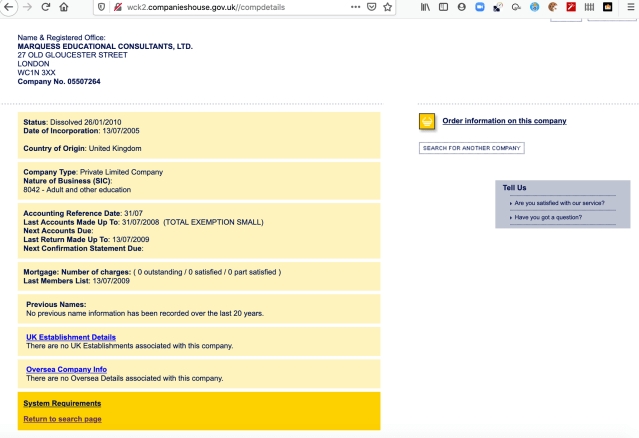


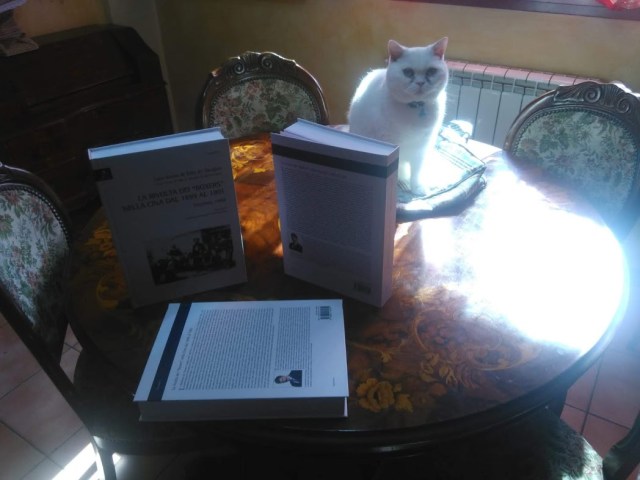


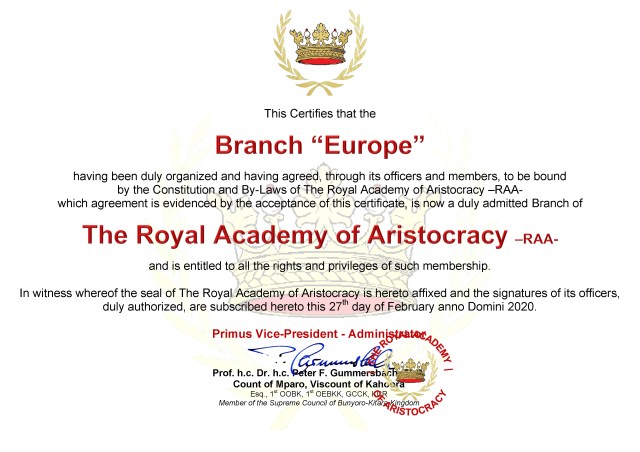
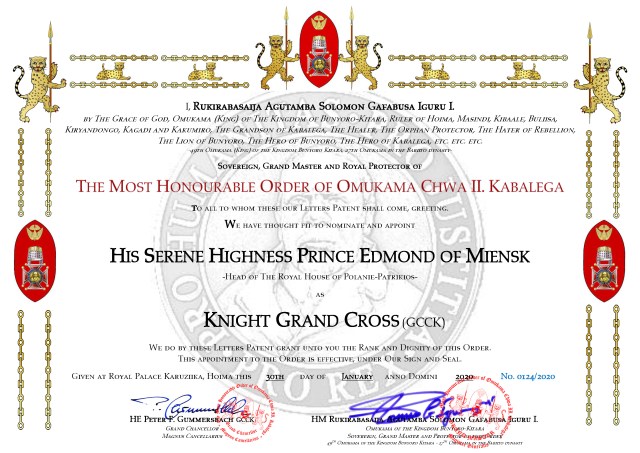


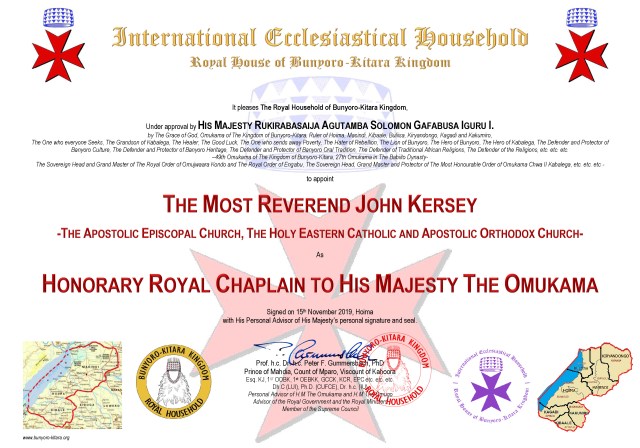

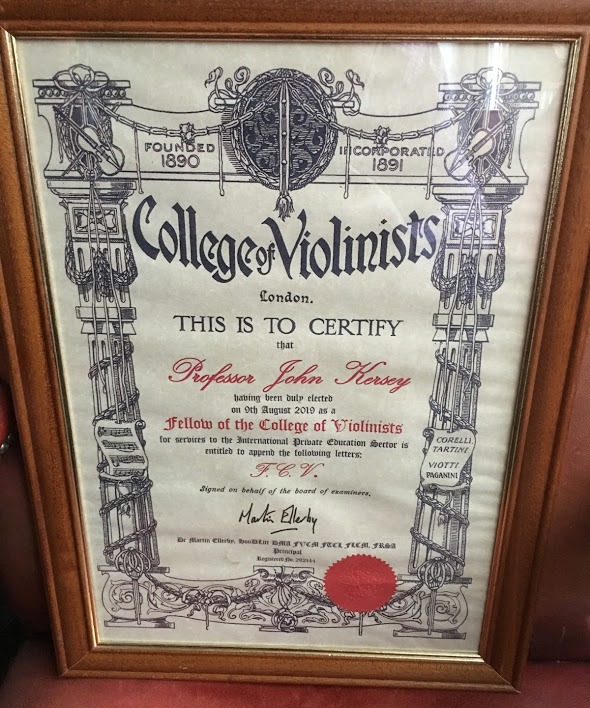
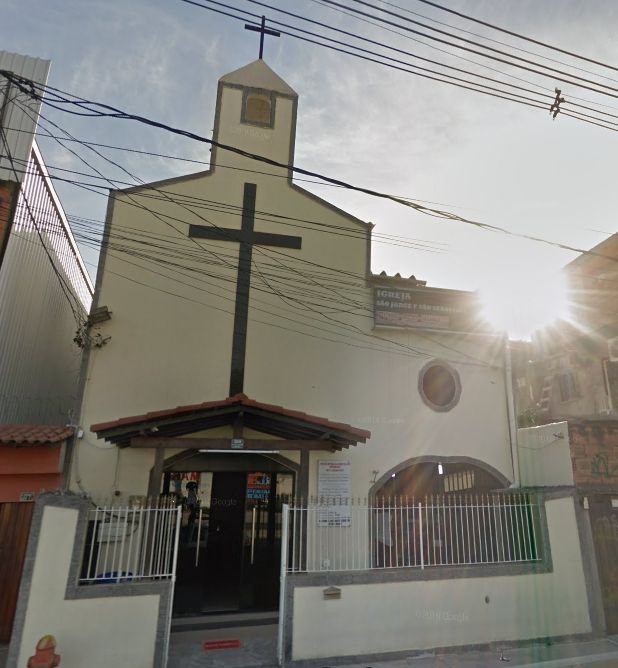

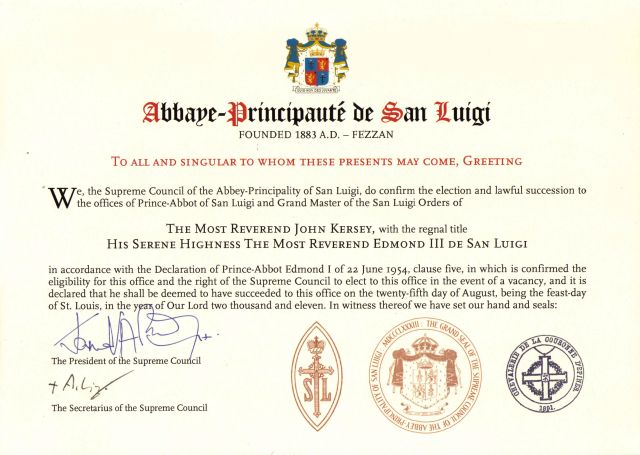

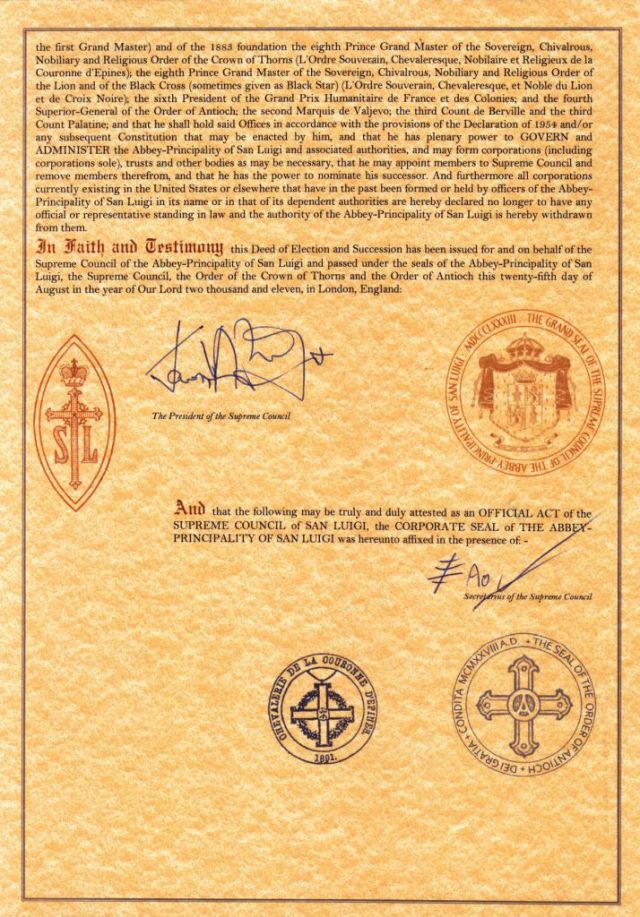


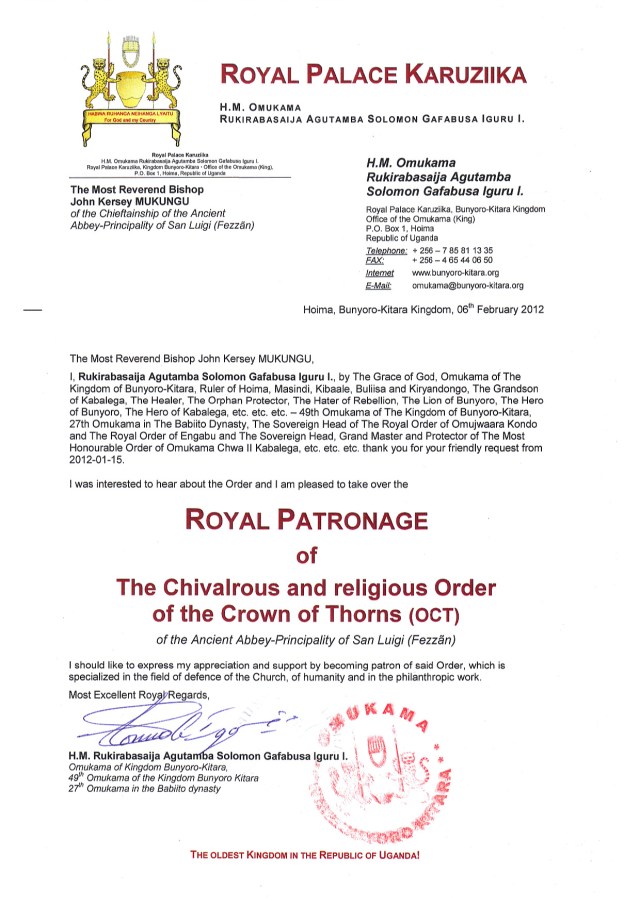
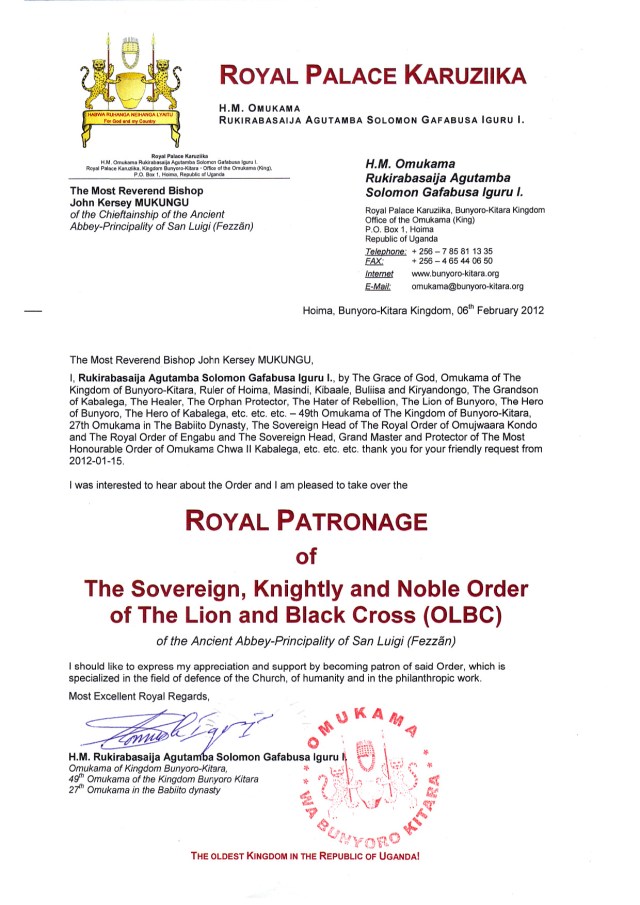

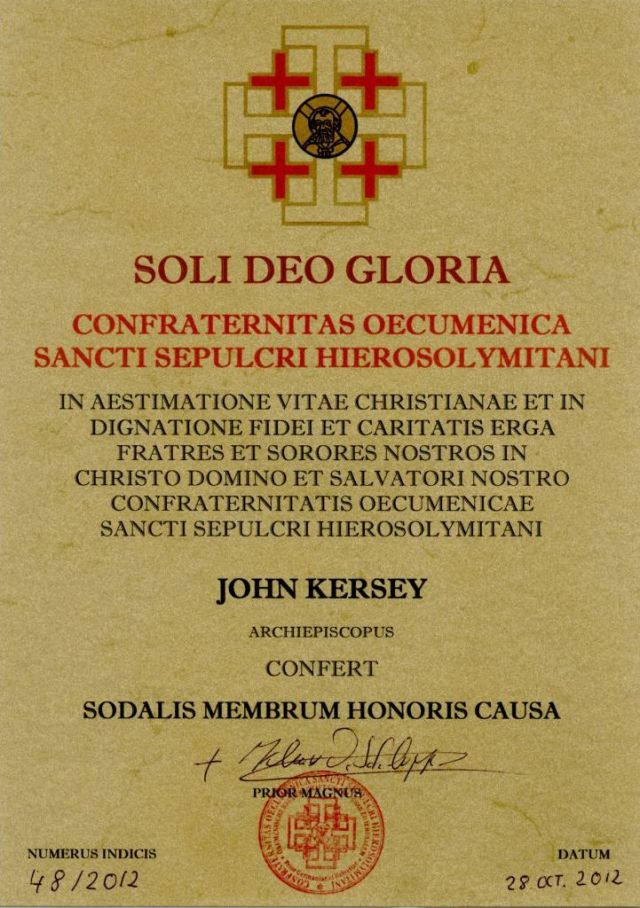
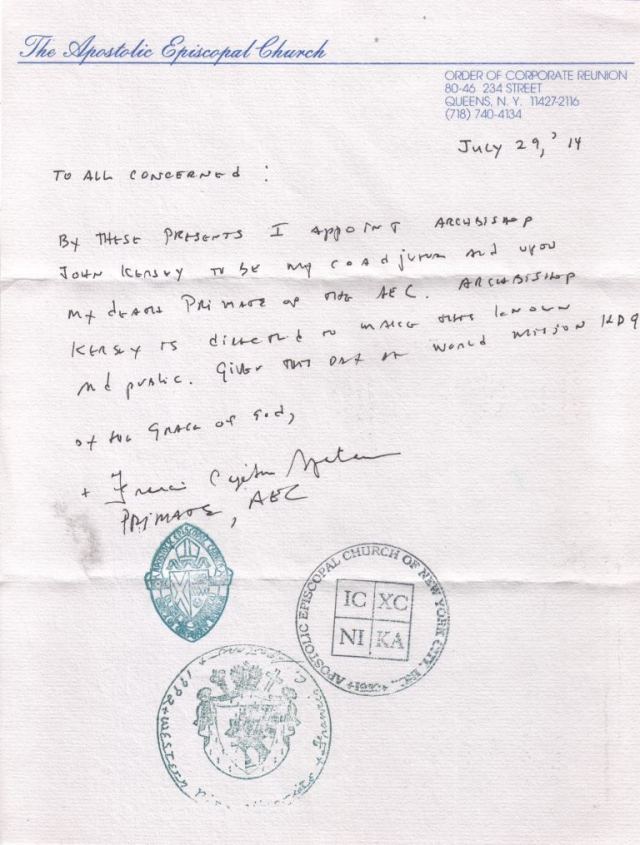
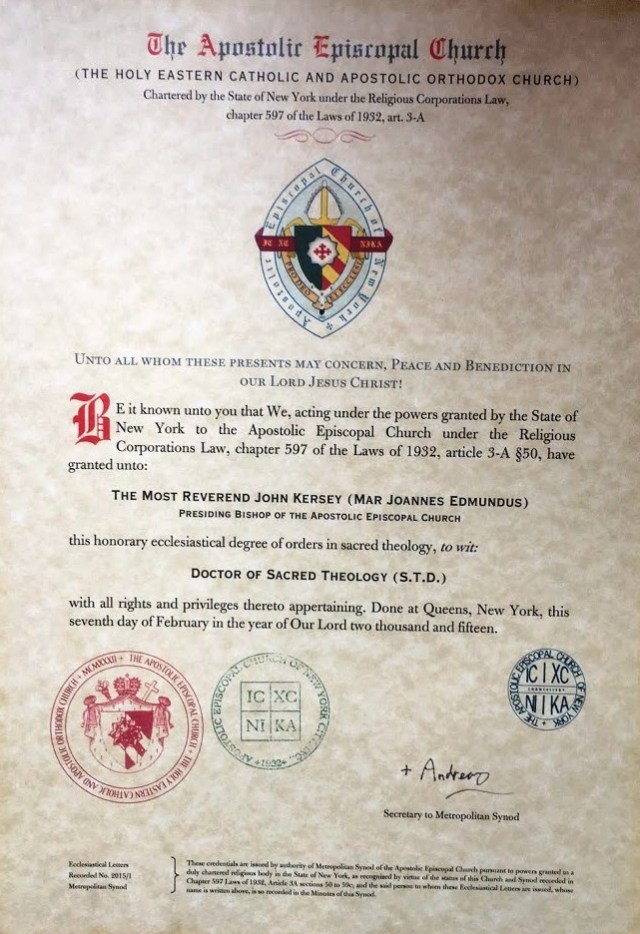
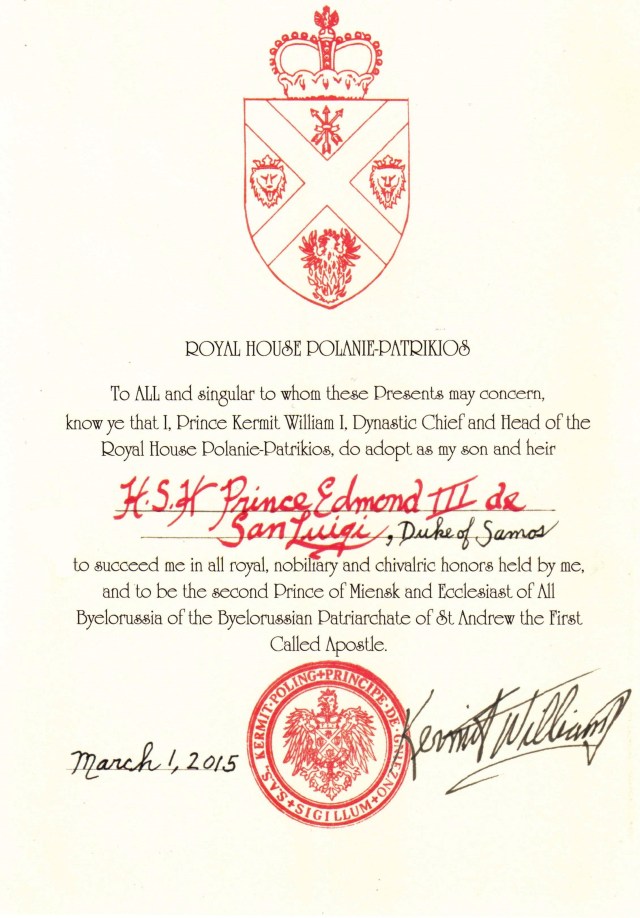
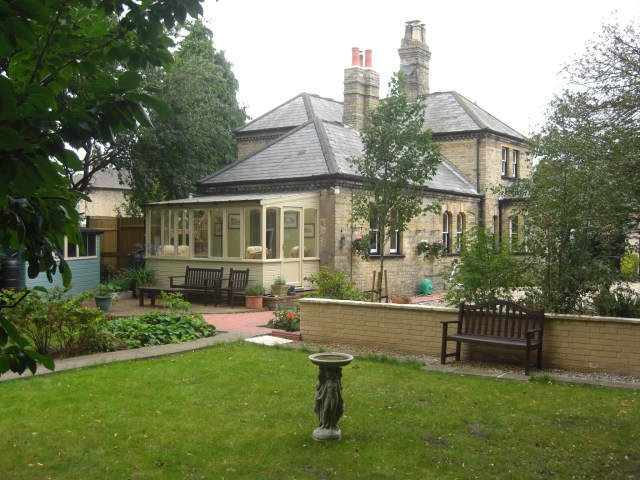
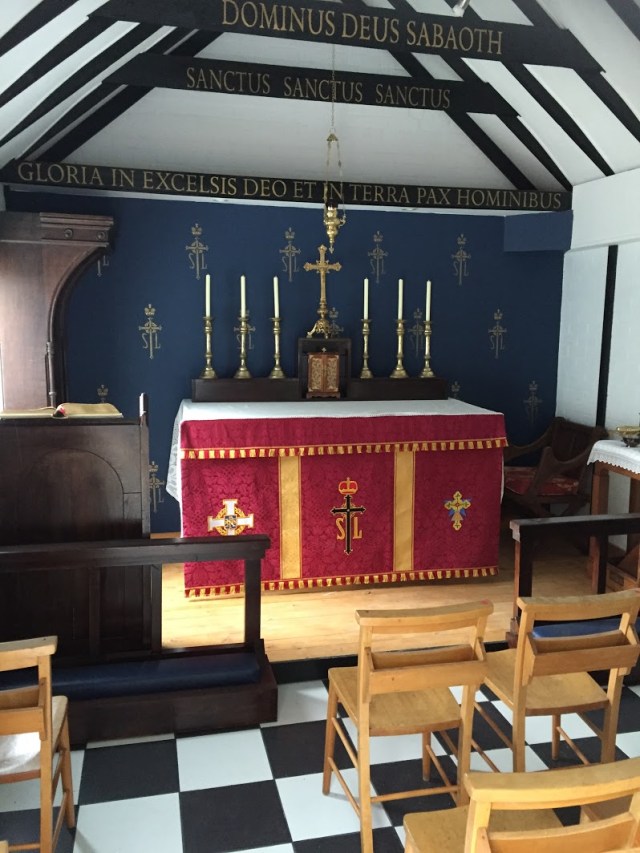

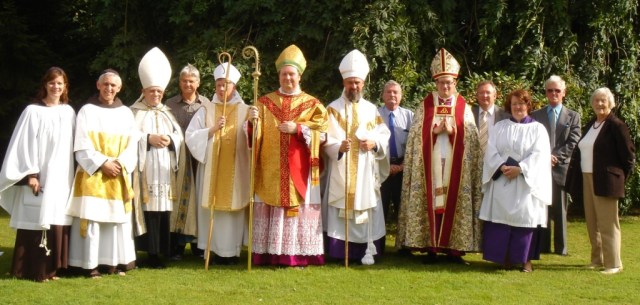


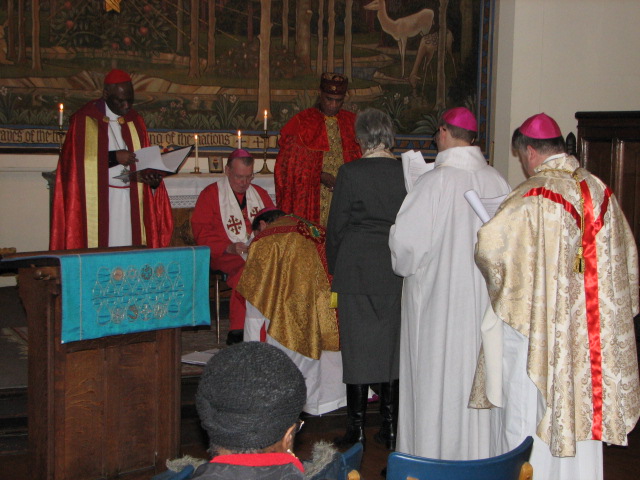

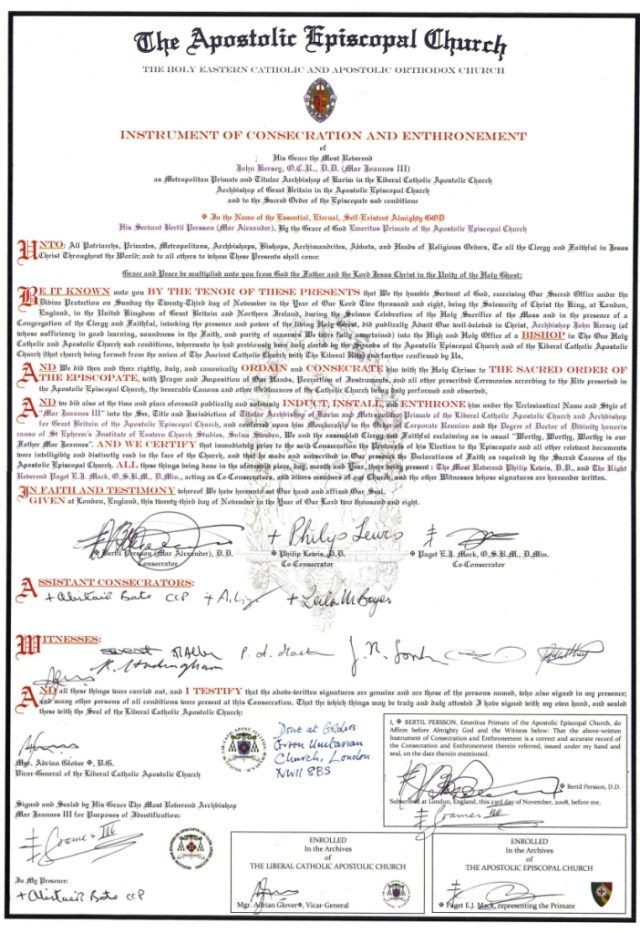
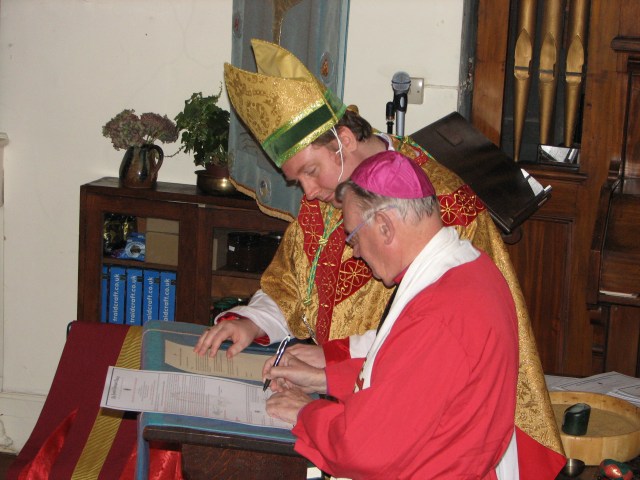


 Dom Phillip Kemp OSB(csr) was Primate of the Old Catholic Church of Great Britain, which had been founded in 1968. He was for twelve years employed at the Department of Work and Pensions, where he rose to become a manager. He then became a learning and development officer, and latterly Regional Manager, for the public service trades union Unison. An able chef, he served for eight years in the Territorial Army Catering Support Regiment, Royal Logistics Corps, and was promoted from the ranks to Second Lieutenant in 1992. Further promotion to Captain followed before he left the T.A. in 1998. Although he had not pursued university education after leaving school, he studied later in life with the Open University.
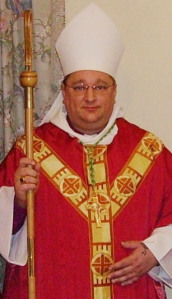


 The Society was a small autocephalous group of Christians that had first formed in South London in 1999. First called the British Liberal Free Church, and later renamed the Society of the Divine Spirit (SDS), the inspiration for this foundation was the work of Revd. J.M. Lloyd Thomas and the Society of Free Catholics earlier in the twentieth-century, with the aim of combining the intellectual freedom of the Free Church tradition with gently Catholic worship. The Society of Free Christians was also formed in 1999 as a ministerial organisation working in parallel with SDS.


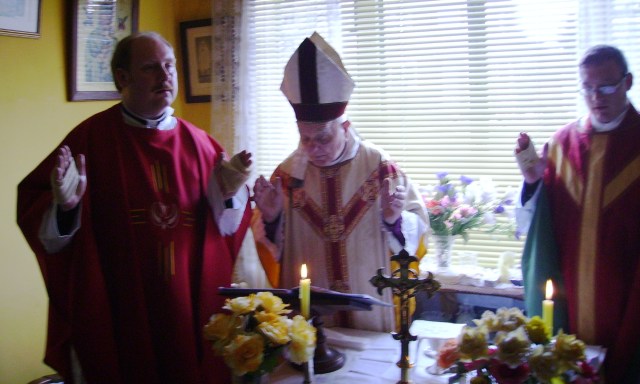


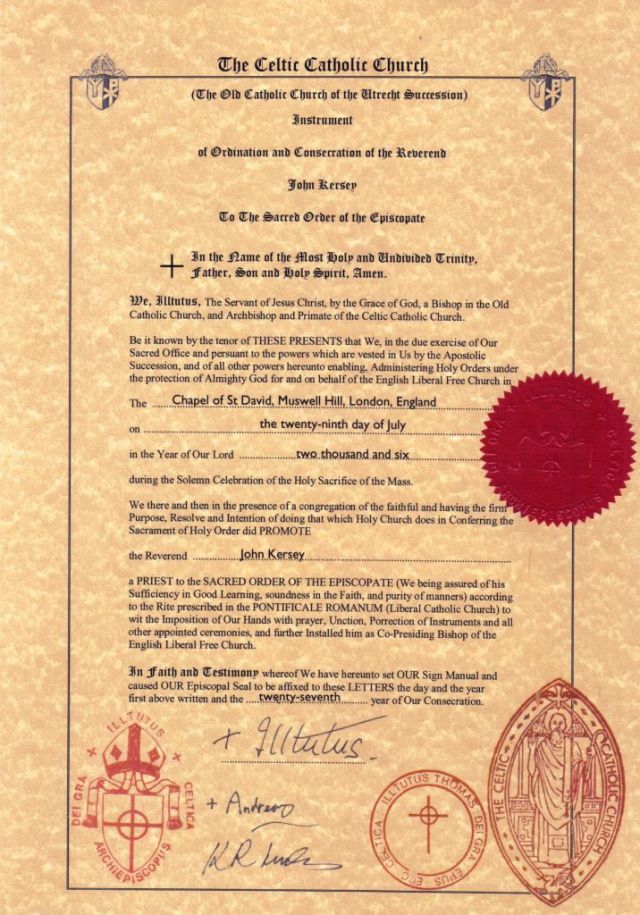


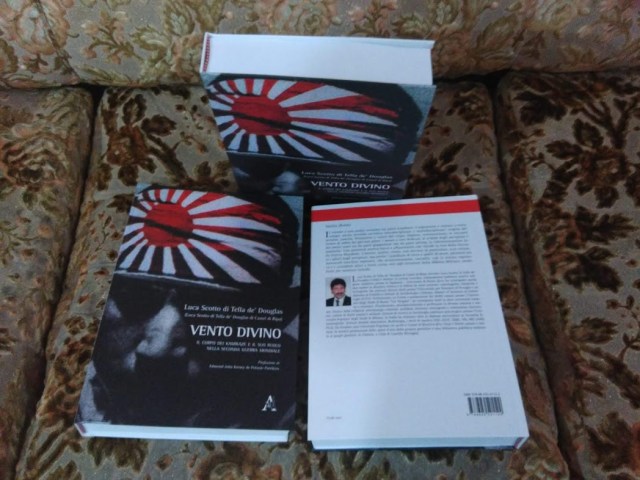
 Professor John Kersey