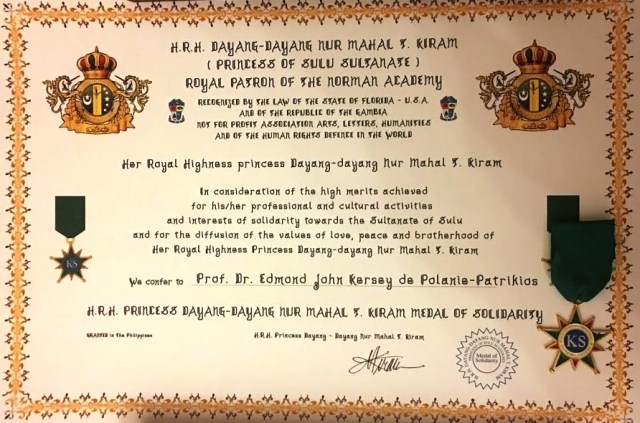
Honours and awards: Imperial House of Tommassini-Leopardi of Constantinople (Justinian and Heraclian Dynasties)

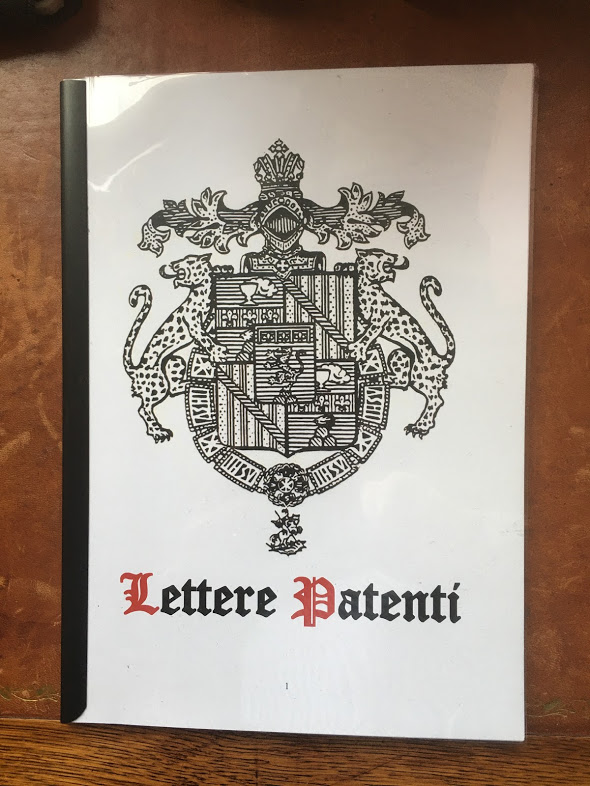
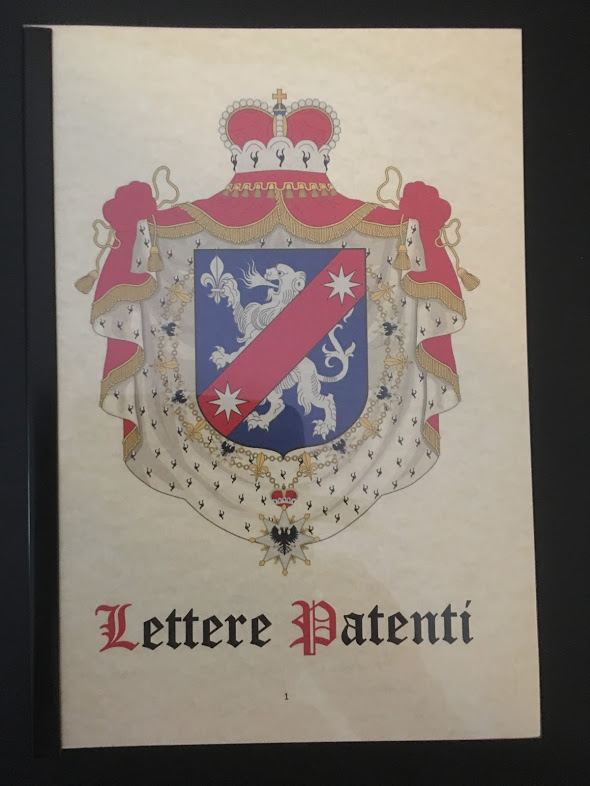
H.I.R.H. Prince don Ezra Annibale Foscari Widmann Rezzonico, Head of the Imperial House of Leopardi of Constantinople, has conferred several honours upon me.

H.I.R.H. Prince don Ezra Annibale Foscari Widmann Rezzonico

I have received the titles of Prince of Hierapolis, Duke of Mardin, Count of Pontus, and Byzantine Patrician and Count Palatine of the Justinian-Heraclian Dynasty of Tomasi (subsequently Tomassini)-Paternò Leopardi of Constantinople. I am an Honorary Cousin, Peer and Privy Counsellor of Prince don Ezra. I am also a Knight Grand Cross of Justice with Collar of all the present and future Orders of the Dynasty, currently the Ordine Imperiale della Corona Eracliana di Costantinopoli, the Ordine della Guardia d’Onore di Santa Sofia, and the Ordine Imperiale Costantiniano di San Giorgio.

Prince don Ezra has graciously accepted a number of honours conferred by me in my capacity as Head of the Royal House Polanie-Patrikios. Several other members of his family, including his immediate predecessor, were senior members of the San Luigi Orders.

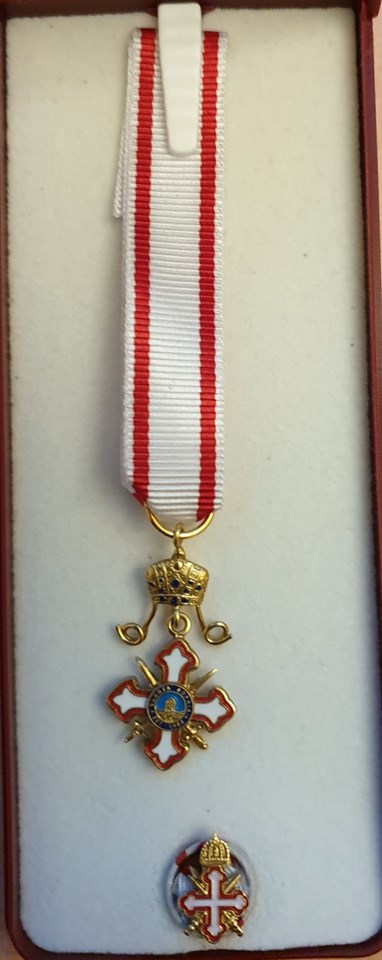
Miniature and lapel pin of the Ordine della Guardia d’Onore di Santa Sofia

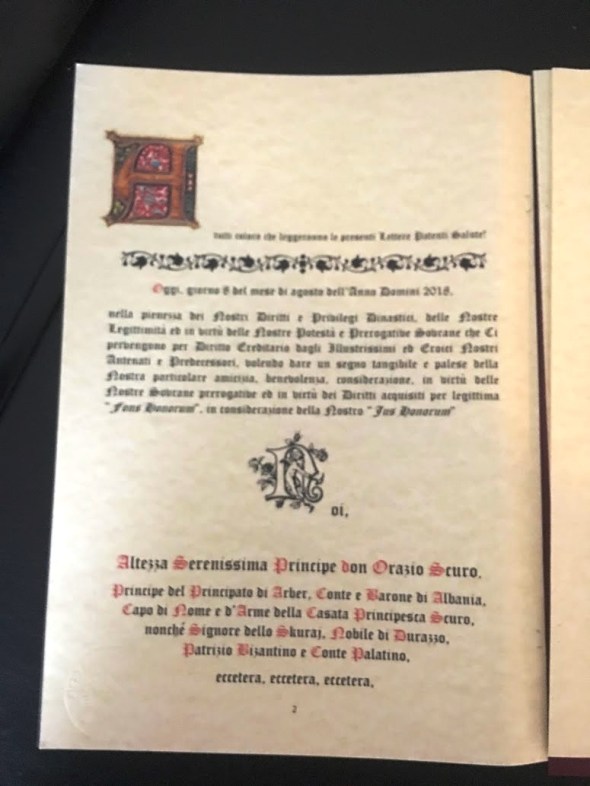
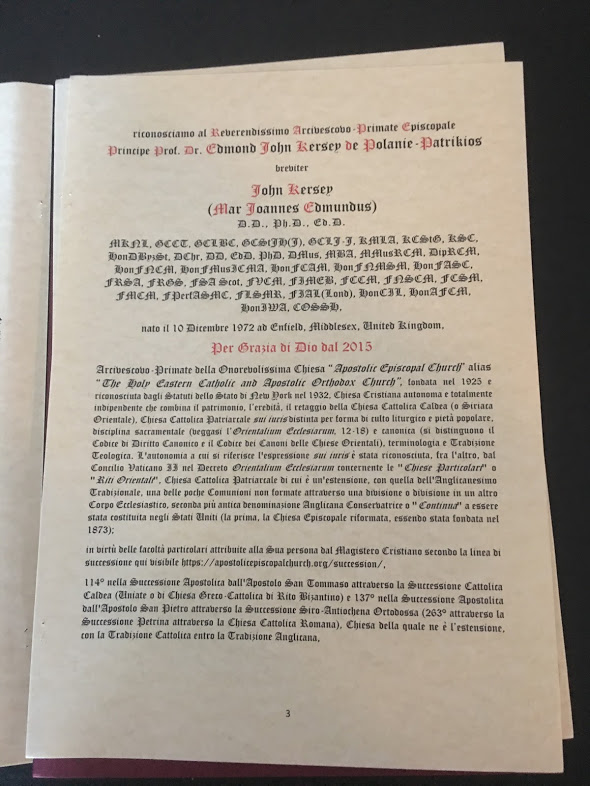
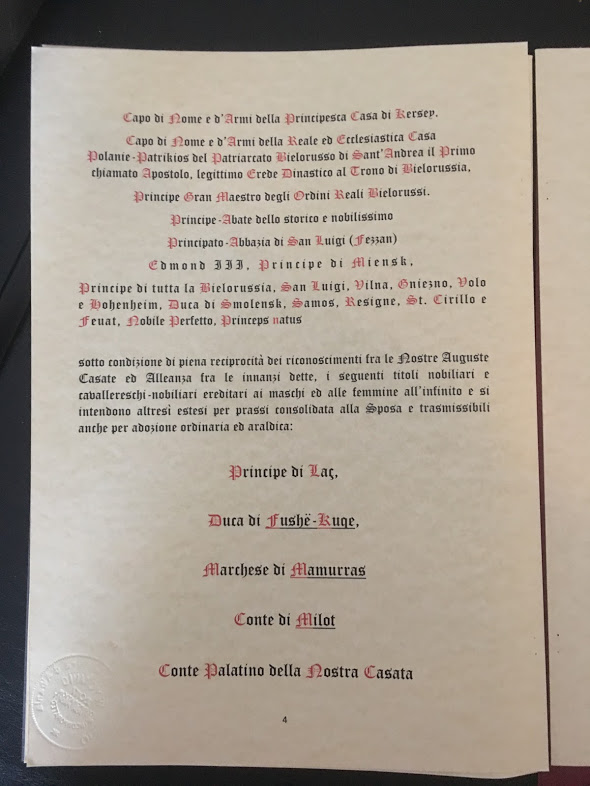
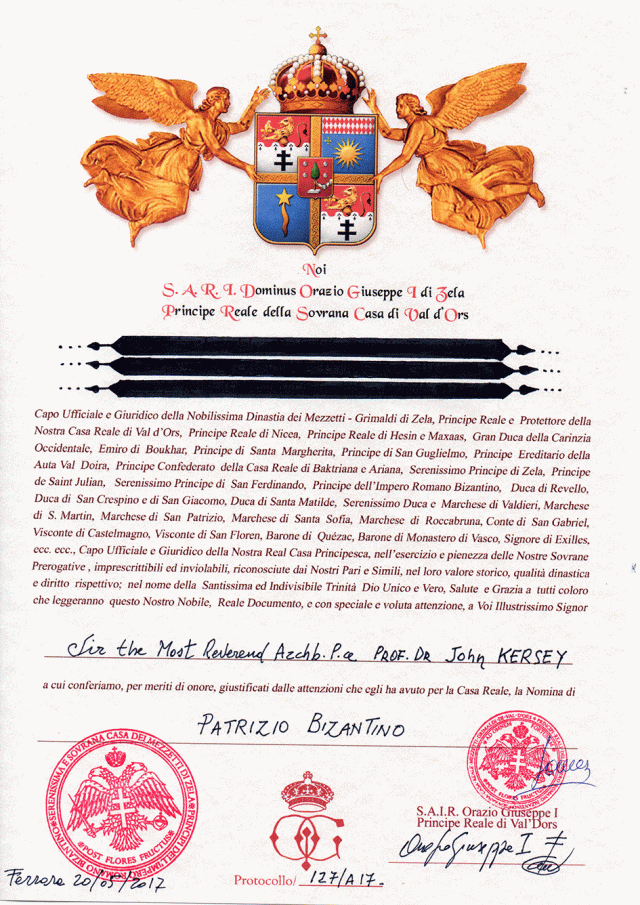
Honours and awards: Princely House of Scuro

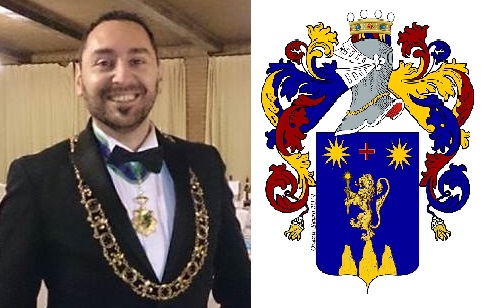
H.S.H. Prince Orazio Scuro, hereditary Prince of Arbër and Count and Baron of Albania etc., has bestowed several honours upon me.

H.S.H. Prince Orazio Scuro

I have received the titles of Prince of Laç, Duke of Fushë-Kuqe, Marquis of Mamurras, Count of Milot, and Count Palatine of the Princely House of Scuro, and am an Honorary Cousin, Peer and Privy Counsellor of Prince Orazio. I am also Knight Grand Cross of Justice with Collar of the Order of the Eagle of Albania, and serve as Prior and High Protector of this Order.

Insignia of the Order of the Eagle of Albania

Prince Orazio has graciously accepted a number of honours conferred by me in my capacity as the head of the Royal House Polanie-Patrikios.

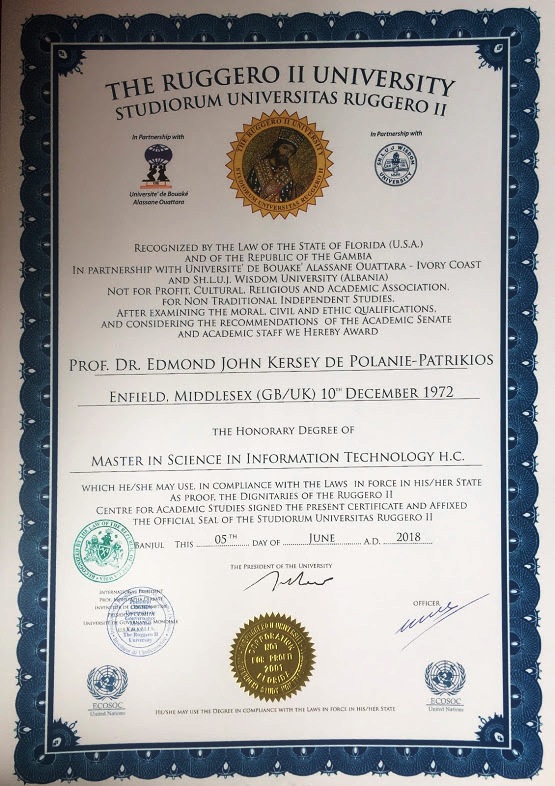
Honours and awards: Associate Professor in Music and Honorary Master of Science from the Ruggero II University, The Gambia

The Ruggero II University (Studiorum Universitas Ruggero II) is a free and independent university incorporated in the State of Florida, USA, since 2001. On 29 April 2003, it was recognized by the Government of the Republic of the Gambia as a Moral Entity of Public Utility, with a degree of incorporation no. 246/2003 issued by the Ministry of Justice. The University has an agreement of partnership with the government-accredited Université Alassane Ouattara (formerly Université de Bouaké), Ivory Coast.

I have been honoured by the University with an appointment as Associate Professor in Music and the honorary degree of Master of Science in Information Technology.

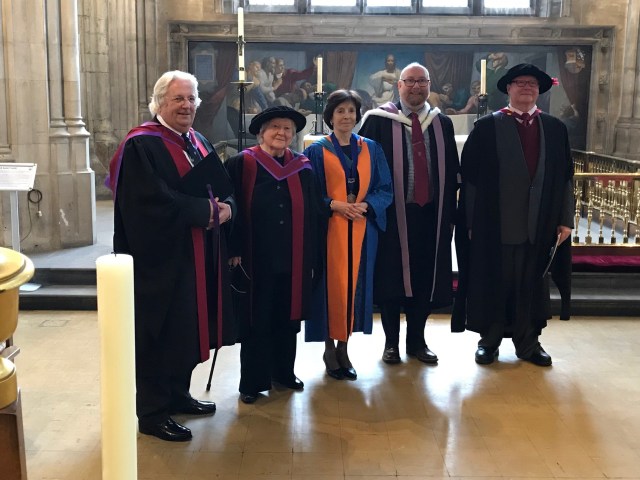
Honours and awards: Honorary Fellowship of the Guild of Musicians and Singers


With other Honorary Fellows at the ceremony at All Hallows-by-the-Tower, London.

The presentation ceremony

The Guild of Musicians and Singers was established in 1993 by the late Dennis Puxty. He established as a guiding principle of the Guild that it should draw its membership equally from professional and amateur musicians, allowing through its meetings the productive discourse that characterizes a learned society. Other leading members have included Masters of the Guild Dr David Bell, late organist to Herbert von Karajan, and Dr Maurice Merrell, chairman of the organ builders Bishop and Son.

The Guild has held twice-yearly meetings in central London, latterly at All Hallows by the Tower, which have been committed to celebrating a high standard of musical performance throughout. Programmes have included recitals on both the church and theatre organs and concerts by chamber and brass ensembles. I have given two piano recitals for the Guild, in 2004 and 2014. Illustrated lectures and talks have also been an important feature of the Guild’s activities.

The Guild is not an examining body but has admitted candidates to membership as Associates (now discontinued), Licentiates or Fellows based on their musical achievements. I was elected a Fellow in 2001.

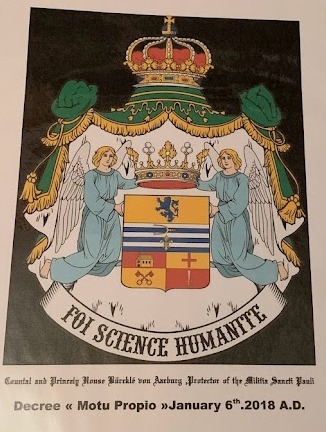
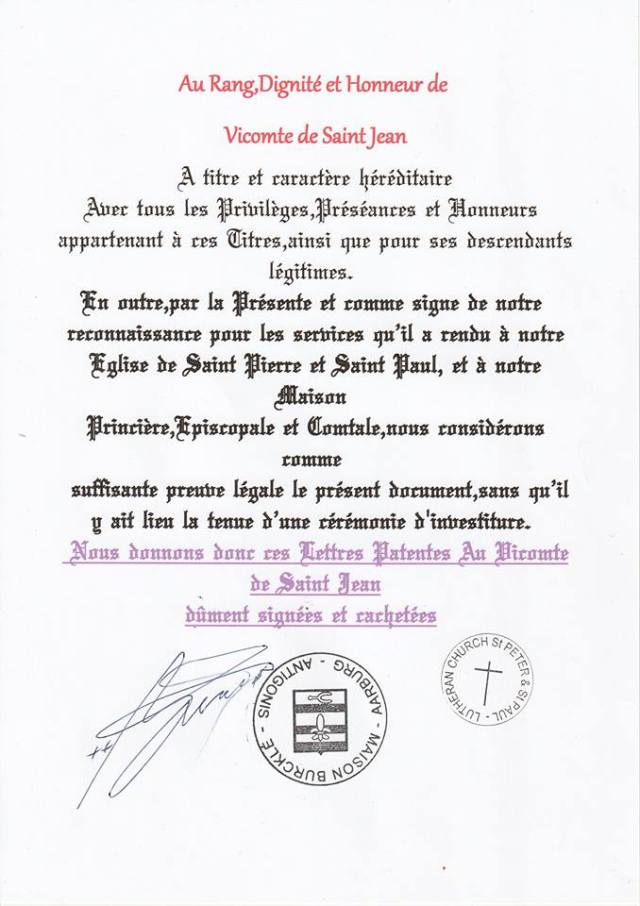
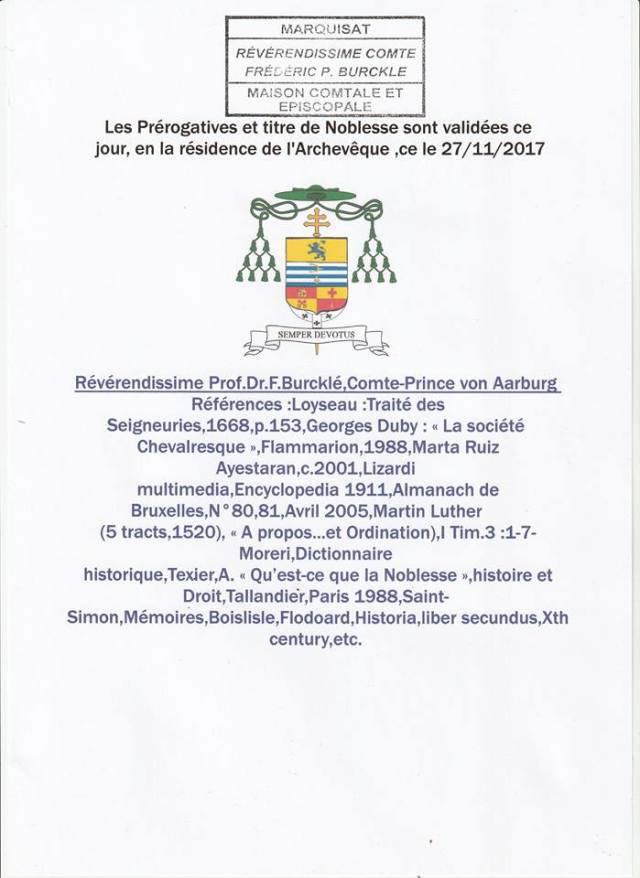
Honours and awards: Vicomte de St Jean and Grand Cross of the Militia Sancti Pauli from the House of Burckle von Aarburg

Archbishop Frederick Burcklé von Aarburg has conferred the title of Vicomte de St Jean upon me, as well as the Grand Cross of the Militia Sancti Pauli under his aegis. Archbishop Burcklé resides in France where he is head of the Church of St Peter and St Paul, which is a Lutheran denomination. He also holds a number of titles of nobility of high rank, and has established a number of agreements of co-operation between his institutions and those under my aegis.

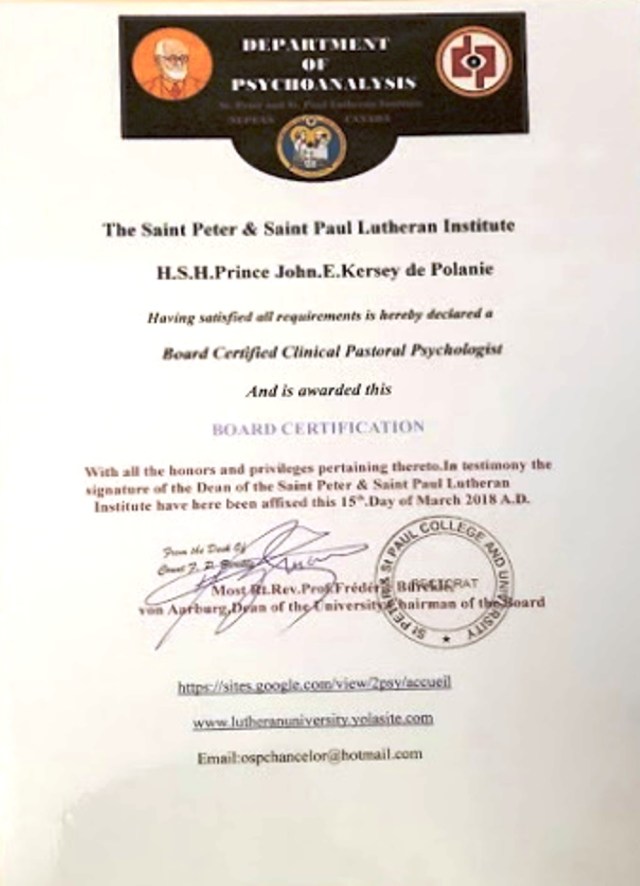
The Department of Psychoanalysis of the Saint Peter and Saint Paul Lutheran Institute, which is registered in France under Archbishop Frederick Burcklé, has declared me to be a Board Certified Clinical Pastoral Psychologist, based on my experience in pastoral psychology, which particularly focuses on the methods and teachings of Jung and R.D. Laing.

Piano recital in Chingford

Comments from members of the audience:

“The D minor sonata was so beautifully played and in particular the crucial bars 143 – 148 and 153 – 158 in the first movement, which present much difficulty for we mere mortals in trying to convey the ghostly and spiritually contemplative atmosphere intended by the composer, were hauntingly beautiful. I have always felt the difficulty with these passages is more to do with the artist’s ability to empathise perfectly with Beethoven’s emotions than with technique; I felt your communion with Beethoven was at its height in those bars. You told me it was this sonata which set you on the road – at the age of nine, I think; certainly your special connection and affinity with it shone through. Your performance of the Hammerklavier was a tour-de force and your control, especially in the last movement, was astonishing. What a work that is! And what a challenge! Again, I’ve not heard this sonata played better than I did yesterday. We could not stop talking about it on the way home.”

“I was mesmerised by your magnificent playing on Saturday afternoon at Chingford.. I leaned closer to the keyboard because I could hardly believe what was happening! What a stupendous mind Beethoven must have had to write that fugue in the last Movement of the Hammerklavier and what a formidable technique and musical understanding you John must have to play it! Bravo and congratulations. I so enjoyed all three sonatas and  was especially captivated by the last lyrical and beautiful movement of the Tempest.”

Private universities in Costa Rica – some observations on legal status and international comparability

According to a newspaper article published in 2012, “Costa Rica’s educational system is continually highlighted as one of the best in Latin America and it continues to produce quality graduates that are rapidly absorbed by private companies and state institutions.” (Tom Rosenberger, “A look at Costa Rica’s University, College, and School System“, Costa Rica Star, 2 May 2012)

Costa Rica is one of a number of Central American countries to have established a relatively large private university sector. As of 2017, the Ministerio de Educación Pública (MEP) included 54 private universities in its list of officially recognized institutions. This compares with a total number of universities in Costa Rica of 64, including 5 public universities and 5 international private universities. It can therefore be seen that the overwhelming majority of Costa Rican universities are private, although the public universities are all large institutions and some of the private universities are small. Since 2000, around 50% of Costa Rican students attend private universities and 50% attend public universities (Source: OECD, “Reviews of National Policies for Education: Education in Costa Rica”, 2017, p.5). Since at least the end of the last century, Costa Rican private universities have also sought to recruit students abroad, targeting both the Hispanic community in the USA and, increasingly, English speaking students seeking to study via distance learning.

Universities in Costa Rica enjoy a high level of autonomy under the Constitution, and this autonomy is more generous for public universities. The public universities are self-governing under the umbrella of the National Council of Rectors (CONARE), which is the principal higher education representative body in Costa Rica. 38 out of the 54 private universities are members of CONARE.

The proposal to permit the official functioning and approval of private universities in Costa Rica was brought forward by CONARE, and given effect by CONARE at its Session on 31 October 1979. By Law No. 6693 of November 27, 1981, published in the Official Gazette, No. 243, dated December 21, 1981, the Consejo Nacional de Enseñanza Superior Universitaria Privada (National Council of Private Higher Education) (CONESUP) was created. Therefore under this law, CONESUP became the statutory government body in charge of regulating and supervising private universities. It is illegal for a private university to operate or enrol students without first having received CONESUP approval. CONESUP’s council includes the Minister of Public Education, and representatives from CONARE, private universities and community colleges, and the Ministry of National Planning and Economic Policy.

The approval process of a new private university in Costa Rica includes a review of the proposed institution’s facilities, faculty, programmes and establishment, in which the Organic Law of the university (the statutes and regulations by which it exercises its functions) is an important component. CONESUP inspects private universities to ensure that basic standards are maintained. Institutional approval by CONESUP can be suspended or revoked altogether in the event of infringement of its protocols. CONESUP approval is available both to traditional campus-based universities and also to universities that offer education via correspondence or distance learning online. All programmes that are to be offered by a private university in Costa Rica must undergo programmatic approval by CONESUP.

Notwithstanding this, and the strengthening of CONESUP’s authority in 2000 and 2005 respectively, the degree of autonomy extended to private universities in Law No. 6693-81 is still high. Article 8 of that law establishes that “once its operation has been authorized, the private university shall have total liberty to develop its academic activities and curriculum as well as its study plans and programs…” Article 9 of the same body of law determines that “within the terms of this law, the private universities as institutions of superior education shall enjoy total liberty with regard to the curriculum, scientific research and the diffusion of culture…” [Source: Official translation of document from Spanish to English by Dora O. De Guillén, Official Translator of the Ministry of Foreign Affairs of the Republic of Costa Rica, authenticated by stamp of the Ministry of Foreign Affairs].

In 1999, Costa Rica established the Sistema Nacional de Acreditación de la Educación Superior (National System of Accreditation) (SINAES). SINAES is a voluntary accreditation body for both public and private university degree programmes. SINAES accredits only programmes, not institutions. As of 2015, only 12% (140 out of 1,165) of the degree programmes that are offered legally in Costa Rica have been accredited by SINAES, with 9% of private university and 15% of public university programmes being so accredited. In the Costa Rican civil service, preferential treatment is given to holders of SINAES-accredited degrees. Elsewhere, the value of SINAES accreditation is determined by the market, and its low take-up suggests that for the majority of Costa Rican universities and their students, it is not seen as significant.

The degrees that a private university may grant are established in principle under its Organic Law and Regulations which are part of its foundation documents. For example, the Organic Law and Regulations of the Universidad Empresarial de Costa Rica, a private university approved by CONESUP since 5 November 1997, states in its first chapter:

“Article 45: The University shall grant the degrees Bachelor, Graduate Degree (Licenciatura), Master, Professional Specialization and Doctor. Article 46: In order to obtain the academic degree of Bachelor, it is required to have passed a minimum of 120 credits and a maximum of 144, for the Graduate Degree 30 to 36 additional credits of those required for the Bachelor’s degree need to have been passed when the career includes such degree. Otherwise, the student must pass a minimum of 150 and a maximum of 180 credits. For the Master’s degree, a minimum of 180 and a maximum of 192 or 60 to 72 additional credits of those required for the Bachelor’s degree must have been passed. For the Doctor’s degree, a minimum of 100 credits and a maximum of 120 additional credits of those required for the Bachelor’s degree need to have been passed. For the Professional Specialization, the necessary credits are not defined but ¡t is required to possess the academic Graduate Degree (Licenciatura).” [Source: Official translation of document from Spanish to English by Dora O. De Guillén, Official Translator of the Ministry of Foreign Affairs of the Republic of Costa Rica, authenticated by stamp of the Ministry of Foreign Affairs].

It is important to clarify that CONESUP’s approval of degree programmes extends only to those programmes which are offered in Costa Rica itself. The question of internationally-offered programmes and those offered in collaboration between private Costa Rican universities and overseas universities was dealt with by CONESUP in its official Circular Number 270-98-CONESUP of April 28, 1998. In that document, CONESUP states “In cases where the academic offer is being developed outside of the national territory CONESUP does not have any authority whatsoever.” [Source: Official translation of document from Spanish to English by Dora O. De Guillén, Official Translator of the Ministry of Foreign Affairs of the Republic of Costa Rica, authenticated by stamp of the Ministry of Foreign Affairs]. Therefore such programmes are not eligible for CONESUP programmatic approval. The degrees that result from them are still, however, issued in Costa Rica under the legal authority bestowed on the universities by virtue of their foundation and the law on the granting of degrees.

Comparability considerations

In the majority of countries of the world, government agencies are responsible for the accreditation and approval processes of private higher education providers. Costa Rica conforms to this pattern. The unusual features in the Costa Rican system are firstly that the numerical majority of universities are private rather than public, and secondly that the regulatory system allows a high degree of freedom to all universities, mandating basic standards as compulsory under the law, and offering a further voluntary programmatic accreditation scheme for those who wish to participate in it.

The low take-up of the SINAES scheme even among the public universities means that while a SINAES-accredited degree can be taken to be accredited under a quality scheme that meets international standards, a non-SINAES-accredited degree cannot be dismissed out of hand without dismissing the vast majority of Costa Rican degrees, both public and private. Nor would it be reasonable to refer to non-SINAES-accredited degrees as “unaccredited” in a general sense, since such degrees not only are part of a governmental regulatory framework but are issued in full accordance with Costa Rican law and have full validity as such within that country.

In determining the comparability of such awards, it is necessary to have reference to reliable and established international sources that deal with the recognition of international credentials. One of the most useful of these sources is the European Area of Recognition Manual, published by a consortium consisting of a number of national recognition bodies from European Union member states.

The first question to ask is whether a private Costa Rican university can meet the definition of a recognized institution established by the Manual. This definition is set out as follows:

“Recognition refers to the official status granted by national legislation. Higher education is governed by national legislation in most countries. Laws on higher education lay down the framework for the system as a whole, stipulate general criteria that have to be met, define policies and procedures that should be in place and bestow official, degree-granting authority on institutions, both public and private. Institutions that fulfil the requirements set in national legislation and have official degree-granting authority are considered to be recognised, though a different term may be used.” (p.21)

In Costa Rica, private universities are granted official status by national legislation. CONESUP as a mandated government body under such national legislation approves private universities and bestows official degree-granting authority through this act of approval. Therefore, a private Costa Rican university meets the definition of a recognized institution.

Next, we should consider the more complex matter of whether such institutions can be considered both recognized and accredited. Here the Manual states the following:

Recognition/accreditation of an institution and recognition/accreditation of a programme.

Generally qualifications awarded by recognised institutions are considered to be recognised. However, in some countries recognition/accreditation of a programme is separate from the recognition/accreditation of an institution. In other words, it is possible for recognised institutions to offer programmes that are not officially recognised and for non-recognised institutions to offer recognised programmes.” (ibid.)

We have established that Costa Rican private universities are recognized institutions, and therefore the presumption in the first sentence above applies, that “qualifications awarded by recognised institutions are considered to be recognised”. Notwithstanding this, we should also consider the rest of the paragraph. It is not possible for institutions that are not officially recognized to offer recognized programmes in Costa Rica, and therefore this provision does not apply. But programmatic accreditation does exist in Costa Rica. In the case of private university programmes offered within Costa Rican territory, this takes the form of compulsory approval by CONESUP either with or without additional voluntary accreditation by SINAES. For such programmes offered outside Costa Rican territory, the option of programmatic approval/accreditation is not available.

In order to interpret this correctly, we should consider the matter in context. The legal status of the degree awarded is exactly the same, whether it is accredited by SINAES or not, and whether (for private institutions) the programme is internally delivered and thus CONESUP-approved, or externally delivered and thus ineligible for CONESUP approval. All are Costa Rican degrees issued by government-recognized universities.

Moreover, degrees issued by Costa Rican public universities that are not accredited by SINAES are routinely considered to be equivalent to accredited degrees from other countries; indeed, as the article quoted in our opening paragraph maintains, Costa Rica’s system of education is “continually highlighted as one of the best in Latin America”. And the Manual states, “No distinction should be made between qualifications or periods of study earned at private versus public institutions, as long as the private institution is recognised and/or accredited by competent authorities.” (p. 22).

The Manual offers an example of how to treat a degree from an institution that is recognized but where there is no accreditation system implemented. Note that while SINAES is extant in Costa Rica, its purely voluntary nature means that it is not “implemented” in the sense the Manual uses that term, since it defines accreditation as effectively a compulsory process (p. 21).

Example 2

An applicant seeks recognition of his master degree in law. This qualification was awarded by a recognised higher education institution listed on the website of the Ministry of Education. Since an accreditation system was not implemented in the country where the degree was obtained, neither the institution nor the programme was accredited. Both the institution and the programme were established in line with the national legislation on higher education. In this case the competent recognition authority should trust that the awarded qualification represents an accepted level of education and recognise it accordingly.” (p. 22)

Therefore, the basis of recognition in this case should be the recognized status of the university, where both institutions and programmes are established in line with the national legislation on higher education. That will be the case with all Costa Rican university degrees, both public and private, that are awarded by recognized universities.

Having established that such awards are recognized, the exact equivalency of any award will then depend upon a precise analysis, and the comparison of its requirements and contents to recognized awards in the system of education to which comparability is sought.

Key Sources

Note

Previously, this article stated that all Costa Rican universities were listed in the International Association of Universities/UNESCO World Higher Education Handbook (now Database). This was the case up to mid-2021, when the policy of that database changed to include only SINAES-accredited institutions. As of December 2021, this has created a significant anomaly, whereby a number of private institutions are authorized by CONESUP to operate as universities (and are listed as such on the CONESUP website) but have been delisted by the Database regardless of their legal status as government-authorized universities and the still-voluntary nature of SINAES accreditation. It is difficult to see the change in policy in respect of the Database as other than politically-motivated.

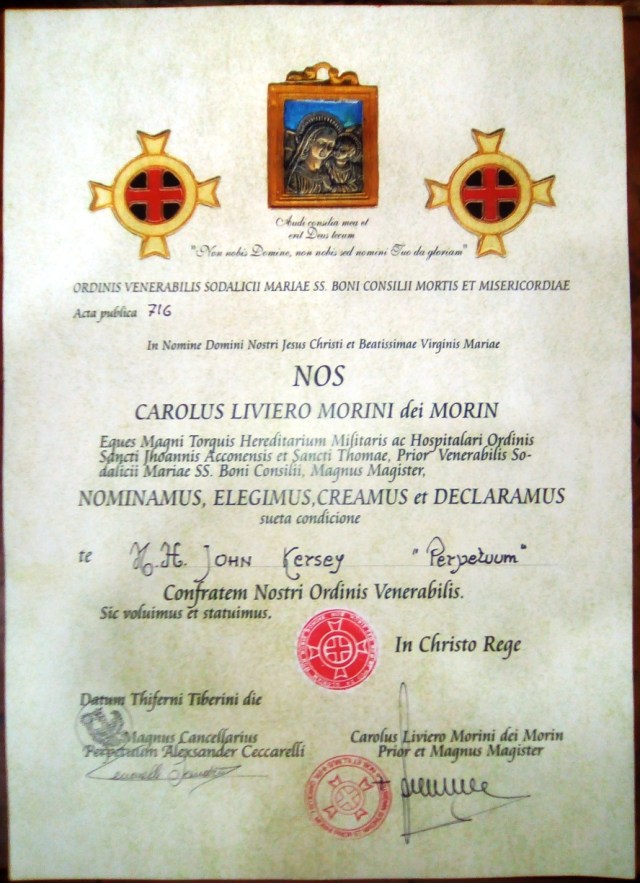
Honours and awards: Perpetuum of the Ordine Venerabile della Venerabile Confraternita di Maria Ss.ma del Buonconsiglio della Buona Morte e Misericordia, Italy

The Venerabile Confraternita (o Compagnia) detta del Buonconsiglio di Città di Castello and the OR.VEN. – Ordine Venerabile della Venerabile Confraternita di Maria Ss.ma del Buonconsiglio della Buona Morte e Misericordia, Città di Castello, Italy (Order of the Venerable Confraternity (or Company), known as of (Our Lady of) Good Counsel of Good Death and Mercy of Città di Castello) is a chivalric and Christian brotherhood that can trace its origins to the last years of the first millennium (990-999 A.D.) and in its present form dates to 1230, making it probably the oldest religious brotherhood in continuous existence today. The Order is based at Città di Castello (Province of Perugia) where it has its own Magistral Church, and is governed by a Grand Prior (Grand Master). I have had the honour to be appointed a Perpetuum (Grand Cross) of the Order, its highest rank.

>>Further information (in Italian)
>>More information
>>History
>>Photographs of the Order
>>The Magistral Church of the Order
>>The Magistral Church (further information)
>>Statutes of the Order
>>Press article on the Order (in Italian)

Honours and awards: Knightly Order of St George the Martyr and Honorary Colonel in the Hungarian National Guard

The Order of St George traces its history to its foundation as a knightly fraternity in 1326 by King Károly Róbert of Hungary. In post-communist Hungary, chivalric traditions were revived, and in 1989, the Ceremony in St Stephen’s Basilica, Budapest to install the first Grand Master in modern times – Dr Frederick Khaler, the senior judge of Hungary – was attended by the President’s representative, the Cardinal Primate and the senior Protestant bishop, as well as numerous politicians. The Order was swiftly to become established in Hungary with many prominent members.

Several branches of the Order developed from its 1989 revival, of which the International Knightly Order of St George attained prominence under the Grand Mastership of General János vitez Karaszy-Kulin from 2000 onwards, with Dr Khaler serving as a Deputy Grand Master.
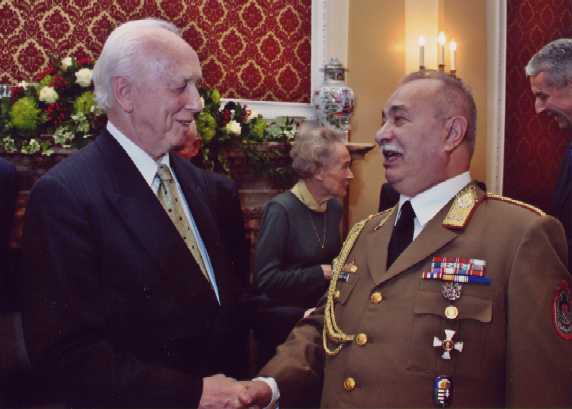
General vitez János Karaszy-Kulin (right) with President of Hungary Ferenc Mádl

General vitez János Karaszy-Kulin was one of the most highly-decorated officers in the Hungarian armed forces, and was revered as one of the heroes of the Second World War and of the 1956 uprising, in which his valour earned him the highest military distinctions. It also earned him a death sentence under the Communist régime and forty years in exile under an assumed name in England.

Upon the fall of communism he was able to resume his rightful place and was promoted to the rank of Major General of the Hungarian Air Force. He was received by the Hungarian President and named a Hero of the Hungarian People. He held many chivalric distinctions and was a Knight Grand Cross and Grand Officer of Merit of the Military and Hospitaller Order of St Lazarus (Paris Obedience) and a Knight of the Order of the Vitez.

The Order defined its aims as to assist the needy, both mentally and materially, and to uphold the Chivalric Code of Prowess, Justice, Loyalty, Defense, Courage, Faith and Humility. Members were charged with the continuation of the traditions instituted by the medieval Order. They must provide a charitable service to humanity, support the underprivileged, hospitals, hospices, orphanages, homes for the elderly and other worthy institutions. They must reward the services rendered to humanity in all fields of human achievement.

This was reflected in an energetic programme of charitable work. In the war-torn areas of Croatia, Romania, Bosnia, Kosovo, Czechoslovakia and Hungary the Order shipped on a regular basis 220 tons of second-hand clothing, bedding, food, hospital equipment including X-ray machines, and other medical equipment to a value of US$15 million to the aid of the needy in Eastern Europe.

The principal project of the first decade of the twenty-first century was the reconstruction and furnishing of a derelict building as a home for the elderly in Nyírgelse in the north-east of Hungary. The Hungarian Government pledged to match donations made by the Order in the ratio of 2:1. A special appeal was organized under the patronage of Rt Hon Lord Taylor of Blackburn, who was a Grand Cross of the Order of St George, and the £20,000 needed to complete the project was raised within two years. As a result, the St George’s Home was completed on schedule and opened by the Grand Master and his wife, Colonel Dame Iris, on 20 August 2002. It provided accommodation to a modern standard for sixteen elderly people in need, as well as housing a day centre, which served the wider community of older people in this deprived area.

The Order under General János Karaszy-Kulin had as its Spiritual Protector the Bishop of Rochester, Dr Michael Nazir-Ali, and held its annual investiture in Rochester Cathedral. A representative of the Hungarian Embassy usually attended in an official capacity. As well as Hungary and the United Kingdom, the Order established priories in Poland, the Netherlands, Serbia, and Canada. György Keller, the Grand Prior of Hungary and Deputy Grand Master was also Major-General and Vice-President of the Hungarian National Guard, bringing about a close connection between the Hungarian National Guard and the Order.

The Hungarian National Guard (Magyar Köztársaság Nemzetör Gárda), under the command of the late General Professor Béla Király, was the historic Hungarian reserve force, originally founded in 1848, that mobilised against the Soviet invaders in 1956. General János Karaszy-Kulin was Commander-in-Chief of the Hungarian National Guard (Overseas), and a number of senior members of the Order of St George received honorary military rank in the Hungarian National Guard as a result.

I met General János Karaszy-Kulin through our common involvement with the Central School of Religion, of which he was an honorand and Fellow. We quickly developed a friendship and I visited him and his wife Dame Iris on a number of occasions at his home in Rochester. He appointed me to an honorary commission of Major in the Hungarian National Guard in 2002.

At the General’s invitation, I was admitted as a Knight of the Order of St George at the investiture in Rochester Cathedral in 2003.

At the investiture in 2004, I was promoted to Knight Commander.

I was awarded the Medal of the Anniversary of the 1956 Revolution of the Hungarian National Guard by the General in the same year.

In addition, I received the Grand Star of the Hungarian National Guard, its highest honour, which was awarded with the approval of the Hungarian Ministry of Defence. This was presented by the General at the dinner following the Order’s investiture at the King’s School Rochester. It carries the postnominal letters MKNL (the postnominal MKN signifies a member of the Hungarian National Guard, and the addition of the L represents the Grand Star).
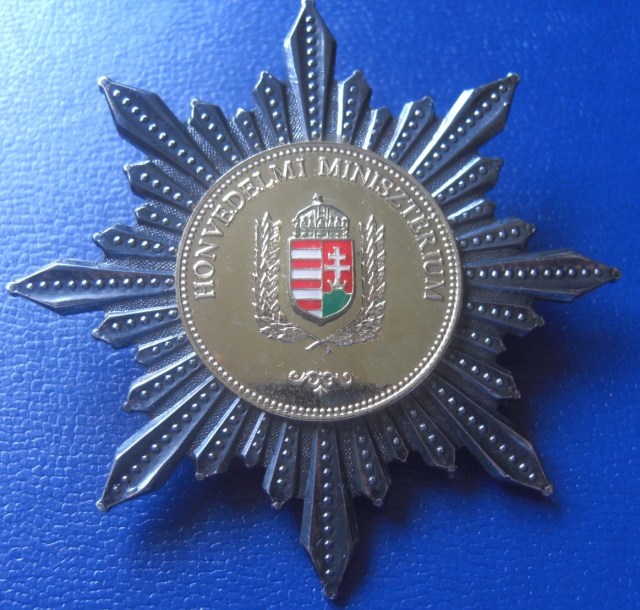
In 2005, I was promoted by the General to the honorary rank of Colonel in the Hungarian National Guard.

The General repeatedly asked me to become involved in the government of the Order of St George, but I declined his offers. The Order had been registered as a charity in England and Wales, but the committee nature of charitable governance did not sit well with the General, whose leadership style was that of military command. Several unsuccessful appointments to senior positions had resulted in the breakdown not only of working relationships but also of personal friendships. I considered it vital that I should preserve my friendship with the General, and avoid being led into any situation of potential conflict.

Moreover, the Order was, in those days, comprised of an extremely interesting and varied group of people, meaning that the investitures and other events were not merely ceremonial occasions but also social gatherings of great warmth and fellowship. Ken Martin, who was a Deputy Grand Master, became a good friend and I regularly visited him at his home in Cambridge. He was Dean of a leading sixth-form college there, and at their annual Advent service of Nine Lessons and Carols (which was held in the chapel of St John’s College), the General and several senior members of the Order were regularly among the guests. I greatly enjoyed this occasion, which was always well-organized and musically of a high standard.

When I was involved in the foundation of Claremont International University (Seychelles) the General and Dame Iris graciously agreed to serve as joint Chancellors and were strongly supportive of the University’s aims and ethos. The General was also appointed a Fellow of the Institute of Arts and Letters (London) and made a number of successful nominations to the Fellowship.

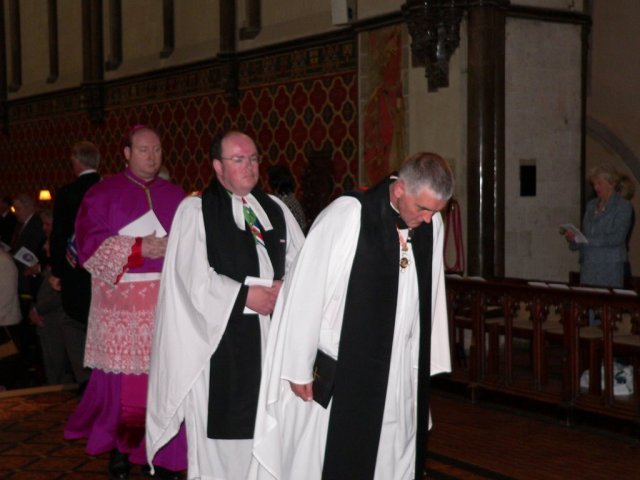
The General was happy to hear of my ordination and episcopal consecration, and at the investiture at Rochester Cathedral in 2007, I was invited to join the other clergy in the sanctuary.
In October 2008, the General, who had been in poor health for some years, died. At his memorial service in Rochester Cathedral, my obituary for him was read by his son. In one of our last meetings, he had discussed his plans and wishes for the future of the Order, and also said that he wished to promote me to Grand Cross.

It was not long before the Order was plunged into a period of conflict and strife. At the conclusion of this, two bodies emerged tracing their common origin to the Order as it had been constituted under the General. Both are registered charities and endeavour to continue the Order’s aims and charitable mission.

The duly elected Grand Master, Tadeusz Kaczor, who had been the Order’s Grand Prior of Poland, presided over what became known as the Knightly Order of St George the Martyr, whose English representation was based in Cambridge and which had priories in Hungary and other countries in Europe. At its investiture held at Great St Mary’s in 2017, I was promoted to Grand Cross of the Order.

A few years later, there was a further split in the branch of the Order to which I belonged which coincided with the retirement of the Grand Master. My late friend Professor Frederick Trowman-Rose had been one of the six protectors of the original Order on its revival in Hungary (before an acrimonious parting with the General), and had expressed the view to me that “the honourable path is via the original Order” which he continued to maintain in the United Kingdom. My rank in the Order was recognized by him and eventually this would remain my sole affiliation to the Order after its final split. His deputy had died in 2019 and the Professor himself died in 2023, and so far as I am aware I am now the only living member of the representation of the original Order in the United Kingdom.