I have been delighted to have received Honorary Associateship of the Faculty of Church Music of the Central School of Religion.
The Faculty of Church Music was originally formed as a diploma-awarding body in order to provide the Free Churches with an alternative to the Guild of Church Musicians. The first President (from 1957) was the Rt. Revd. G.F.B. Morris, who was a Bishop of the Church of England in South Africa and a leading evangelical. The founding Honorary Secretary and Executive Officer was Dr Douglas Geary, who in 1967 became President of the Central School of Religion. A few years after this the FCM was absorbed into the CSR, where its diploma programmes continue alongside the degrees in Church Music that were introduced in 1980. The current Director of the FCM, Dr Andrew Padmore, was formerly Organist of Belfast Cathedral.
The awards of the original grades of Associate and Fellow were made after examination; this was changed in 1958 to a system of accreditation of prior learning and experience and this method of award has continued ever since, supplemented by teaching and coursework. The award systems were revised in about 1997. A scheme of examinations for lay readers and their counterparts in the Free Churches has also been operated, leading to the former Bronze and current Silver and Gold Medals of the FCM in the Spoken Word and to the AFCM and LFCM in the same discipline.
The Society of Church Musicians was formed along similar lines to the FCM circa 1970 and merged with the FCM in 1980. This merger saw the FCM introduce a greater level of support and teaching in theoretical aspects of church music.
I was presented with the diploma of my award by Dr Mark Gretason, President of the Faculty, in a short ceremony at the Church of All Hallows by the Tower in London.
An honorary military commission is considered by some to be the American equivalent of being knighted. The honorary title of Colonel is conferred by some states in the United States of America. The origins of the titular colonelcy can be traced back to colonial and antebellum times when men of the landed gentry were given the title for financing the local militia without actual expectations of command. This practice can actually be traced back to the English Renaissance when a colonelcy was purchased by a lord or prominent gentleman but the actual command would fall to a lieutenant colonel, who would deputize for the proprietor. It has come to be associated in popular culture with the image of the aristocratic Southern gentleman, not least because of one of the most famous Kentucky Colonels, Harland D. Sanders.
Some states bestow other military commissions. The highest honour of the State of Nebraska is that of Nebraska Admiral (or in full, Admiral of the Great Navy of the State of Nebraska), bestowed personally by the Governor of Nebraska. The title is deliberately tongue-in-cheek; Nebraska is landlocked, and the diploma makes humorous reference to the command of tadpoles and goldfish. The Great Navy of the State of Nebraska was created in 1931 when the Acting Governor appointed twenty or so prominent Nebraskans as Nebraska Admirals. Today, recipients are considered to qualify on the basis that they have “contributed in some way to the state, promote the Good Life in Nebraska, and warrant recognition as determined by the Governor”.
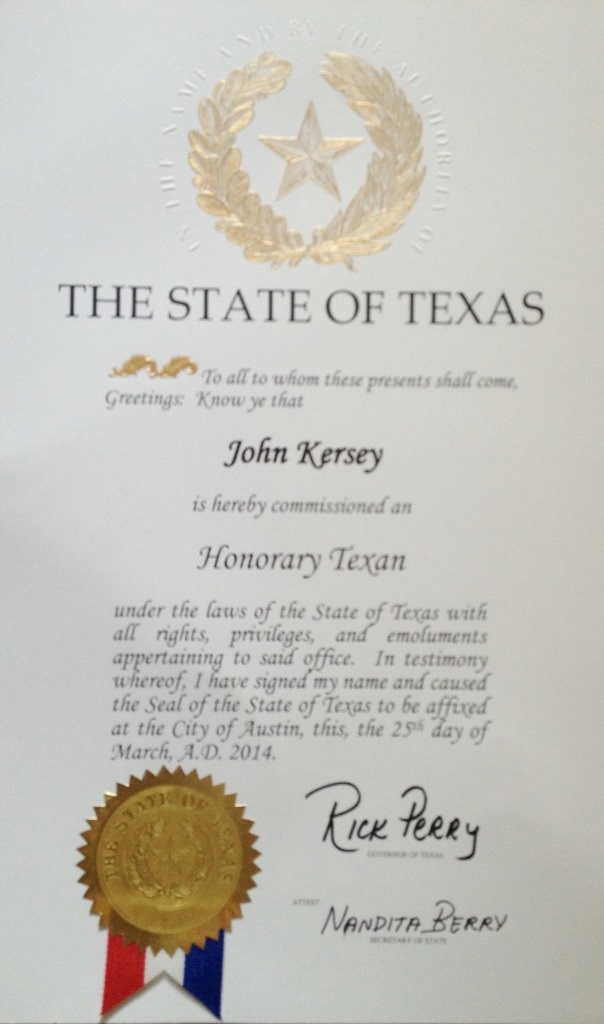
Since the 1930s, the Governor of Texas has bestowed the honour of Honorary Texan upon any person who, in his or her opinion, is worthy of the qualities of the Lone Star State but has not had the good fortune to be counted among its citizens.
The award of Honorary Texan has frequently been bestowed by the Governor on foreign visitors to Texas and for foreigners who have provided assistance to Texas businesses doing business in a foreign country. Another category of recipients is children of native Texans when those children have been born outside the boundaries of Texas. While the honour is understood no longer to be bestowed on foreign nationals today, two notable British recipients in the past few decades have been Lord Hague of Richmond (in 1999, when leader of the Conservative Party; he was quoted as saying “I might be persuaded to wear the boots, but I’m certainly not going to wear the hat”) and musician Phil Collins (in 2015).
I was delighted to be commissioned an Honorary Texan in 2014.
On the 8th March the Traditional Britain Group will be hosting a half day event, titled ‘Traditional Britain Seminars 2014’ at a prestigious club in central London from 1pm until 6pm, followed by an evening social until late.
Was Enoch Powell Right? – Seminar led by John Kersey
In today’s society it has become politically unacceptable to state that Enoch Powell was right – with the inevitable assumption that what he was right about was mass immigration, and that his Birmingham speech of 20 April 1968 was not merely a critique of the government policy of the day but a prediction of the conditions that such a policy was creating for his constituents and for the next generation. Significantly, Powell, a long-time critic of the United States, feared quite specifically that Britain was emulating the American problems of racial tension and lack of social cohesion that had culminated in the assassination of Martin Luther King earlier the same month as his speech.
Forty years on from that historic speech, how much of what Powell feared has come to pass? Mass immigration, particularly during the post-1997 period, has vastly exceeded the levels of 1968, and it is beyond dispute that areas of Britain have been profoundly changed as a result. One of Powell’s chief criticisms of immigrant populations was that although many thousands wanted to integrate into British society, the majority did not. Are such phenomena as home-grown Islamic terrorism part of the legacy he described?
As Powell was clear, mass immigration has been brought about with no overt consent from the populace, and indeed has been considered by many to be contrary to the interests of the settled population. Under New Labour, according to Lord Mandelson in 2013, “We sent out search parties to get them to come… and made it hard for Britons to get work.” Yet when Labour supporter Gillian Duffy told then-Prime Minister Gordon Brown that she was concerned about immigration from Eastern Europe, his response was to dismiss her as a “bigoted woman”.
There has been a concerted refusal by the mainstream political parties to address the views of their constituents on immigration, resulting in the electoral rise of the BNP and of UKIP, both campaigning on anti-immigration platforms, and even prompting some reforms to the immigration system under the Coalition government. But is any of this enough? What should our response be today both to continuing immigration to Britain and to those who are now here? Powell advocated voluntary repatriation on generous terms, but would such a remedy be even remotely practical, even if it were politically acceptable today? Can any alternative strategy be formulated that is both effective and politically acceptable? Can the Britons of today find a way to live together, or is cultural or even political separation of some sort inevitable?
In what will doubtless be a wide-ranging seminar, we will consider these and other issues from a traditional conservative viewpoint and endeavour to get to the roots of why this issue has proved so intractable that the most common response it receives from the establishment is censorship.
I have been honoured by the Ordine Militare e Religioso dei Cavalieri di Cristo (Religious and Military Order of the Knights of Christ, abbreviated as OMRCC) in Italy. The OMRCC is a modern Order inspired by the historic Templar tradition, and is organized as a Public Association of the Faithful of the Roman Catholic Church. It is an active charitable body with numerous humanitarian projects worldwide and welcomes donations from those wishing to support its work.
The Grand Vicar International of the OMRCC, H.E. Frà Federico Righi, has been admitted as a Knight Officer of the Order of the Crown of Thorns under my Grand Mastership.
I have been awarded Honorary Brotherhood in the OMRCC and Academic Membership “ad honorem” in the associated Accademia Templare di San Bernardo da Chiaravalle, which has been established for the purpose of historical research into the Templar tradition and St. Bernard of Clairvaux.
The connexion with modern Templars today reflects the legendary foundation of the Order of the Crown of Thorns as a continuation of the Templar legacy, as well as the ecclesiastical succession of the Prince-Abbot from Bernard Fabré-Palaprat, founder of the Ordre du Templein 1804, which is commemorated in the Ecclesia Apostolica Divinorum Mysteriorum within the Abbey-Principality of San Luigi.
I have been honoured with the Grosses Verdienstkreuz in Silber from the Freundeskreis Hoch- und Deutschmeister, Mannheim/Baden, Germany. The Freundeskreis Hoch- und Deutschmeister commemorates the military tradition of the Deutschmeistern, who were established as a regiment by treaty of the Emperor Leopold I and the Grand Master of the Teutonic Order in 1696. Thereafter the military tradition of the Hoch- und Deutschmeistern is distinguished by numerous battle honours.
From the end of the nineteenth-century, former members of the regiment and related organizations formed a German confederation of associations under the protection of the Grand Master of the Teutonic Order. From 1986, this umbrella organization has been headquartered in Vienna. It includes German members, belonging to the federal government, who meet on St George’s Day each year at Bad Mergentheim. Since 1993, the Freundeskreis Hoch- und Deutschmeister Mannheim/Baden has been among their number, becoming a member of the central Vienna organization from 2010 onwards.
The Tennessee Squire Association was established in February 1956 by the famous Jack Daniel Distillery in Lynchburg, Tennessee.
Following World War II, the demand for Jack Daniel’s whiskey was higher than production could keep up with and their first National Sales Manager, Winton Smith, was looking for a way to keep customers around the country happy while supplies were low. He decided that loyal fans who had written the Distillery saying they could not get any Jack Daniel’s whiskey would instead receive a plot of land, a square inch of unrecorded property on the Distillery’s grounds. This would make them part owners, or Squires, and the first members inducted into the Tennessee Squire Association.
Today, the Tennessee Squire Association is an exclusive club, with many prominent members from the worlds of government, business and entertainment. To become a member, you must be nominated by an existing Squire. By tradition, however, each Squire can only nominate one member in his or her lifetime (thank you, Zackary). There is a secret room reserved for Squires at the Lynchburg Distillery, and not even the tour guides are allowed to mention it.
Ownership of a square inch of the Distillery land is generally unproblematic. From time to time, others request to graze their cattle on it, and occasionally there is trouble with skunks or possums. By and large, however, peace reigns.
The honour of Tennessee Squire is probably one of the more unusual distinctions around today. It goes without saying that it is the more valued because the quality of the product it commemorates remains second to none.
I was a Member of the Royal Society of Musicians between February 2014 and November 2018. Membership was by election and payment of an annual subscription.
In 2018, the Society announced its intention to impose a Code of Conduct upon its members. I felt that this was contrary to the spirit of the Society and would hardly have been something of which a free spirit like Handel would have approved. Specifically, the proposed Code intended not to tolerate discrimination on the grounds of “level of intellectual or professional achievement”, which I found absurd given that in my view achievement should be the foundation of any society devoted to the practice of a profession and that elected its members from that profession.
Elsewhere, the Code proposed to give the Board of Governors the sole power to discipline or expel a member who had “acted in a way which is in conflict with the interests of the Society”. I had previously seen similar measures to this used elsewhere as an unsubtle means of quelling dissent in the ranks. Like other changes in the Society such as the unexpected sale of its historic headquarters, much seemed to be being implemented in a “top-down” manner that was not in my view the way that such an institution should be run. In my view, members of a professional society should be responsible for its major executive decisions by democratic vote, rather than most of the power resting with a less accountable elite.
I resigned from membership of the Society in November 2018.
An honorary military commission is considered by some to be the American equivalent of being knighted. The honorary title of Colonel is conferred by some states in the United States of America. The origins of the titular colonelcy can be traced back to colonial and antebellum times when men of the landed gentry were given the title for financing the local militia without actual expectations of command. This practice can actually be traced back to the English Renaissance when a colonelcy was purchased by a lord or prominent gentleman but the actual command would fall to a lieutenant colonel, who would deputize for the proprietor. It has come to be associated in popular culture with the image of the aristocratic Southern gentleman, not least because of one of the most famous Kentucky Colonels, Harland D. Sanders.
Today, Kentucky Colonel is the highest title of honour bestowed by the Commonwealth of Kentucky, USA. Commissions for Kentucky colonels are given by the governor and the secretary of state to individuals in recognition of noteworthy accomplishments, contributions, and outstanding service to community, state, or the nation. The Governor of Kentucky bestows the honor of a colonel’s commission, through the issuance of letters patent. The commission is a legal act of the Office of the Governor and lifetime appointment. At the time I received my commission in 2014, it was only possible for a person to be nominated for the honour by an existing Kentucky Colonel.
Franz von Holstein (1826-78): Piano Sonata in C minor, op. 28
John Kersey, piano
RDR CD102
Total time: 76 minutes 54 seconds
Franz von Holstein (1826-78): Piano Sonata in C minor, op. 28
1. Allegro con brio, un poco maestoso (9’58”) 2. Andante (7’35”) 3. Allegro appassionato (8’43”)
Otto Klauwell (1851-1917): Drei Stücke in Kanonform, op. 38:
4. Praeludium (2’43”) 5. Scherzo (1’13”) 6. Romanze (2’30”)
7. Variations in D minor, op. 22 (10’36”)
Hans Seeling (1828-62):
8. Impromptu, op. 8 no. 1 (1’42”) 9. Romance, op. 8 no. 2 (6’18”)
Wilhelm Speidel (1826-99): Suite (quasi Sonata), op.111:
10. Praeludium (2’24”) 11. Andante espressivo (3’03”) 12. Scherzo (3’27”) 13. Marcia funebre (9’41”) 14. Finale (6’30”)
Our thanks to Klaus Zehnder-Tischendorf for supplying scores of these rare works.
Franz von Holstein was destined for an army career at the insistence of his father, but during his officer training he composed the opera ‘Zwei Nächte in Venedig’ as well as songs and ballads, and for a time, encouraged by his friendship with Griepenkerl, continued to compose in the free time allowed by his military duties. By 1853 he was free to pursue a musical career, and came to Leipzig where he studied with Moritz Hauptmann and, as a pianist, with Plaidy and Ignaz Moscheles. He then lived for a time in Rome, Berlin and Paris before becoming manager of the Leipzig Bach-Gesellschaft. Although chiefly known as a composer of songs, he was also responsible for several operas, orchestral works and chamber music, and wrote a significant amount of poetry. During his last six years he suffered with stomach cancer, and it was his wish that a bequest should establish a fund for impecunious musicians at the Leipzig Conservatoire. His Piano Sonata is a major composition of some ambition and achievement, with a clear influence of Schumann and Brahms evident.
Wilhelm Speidel is best remembered today as founder of the Stuttgart Music School. His father was a singer and composer and it was by him that his early musical talent was first nurtured. At Munich, he became a composition pupil of Ignaz Lachner and studied piano with Christian Wanner. After spending 1846-7 as a private teacher in Alsace, he returned to Munich, where he taught, also undertaking a tour throughout Germany as a pianist. He was known as an interpreter of Beethoven, who is also a major influence on his compositions. At Ulm, he founded and conducted the Liedertafel, and became active as a choral conductor. In 1857 he moved to Stuttgart where, together with Lebert, Stark, Faisst and others the Stuttgart Music School, today the Hochschule für Musik und Darstellende Kunst in Stuttgart. Here he taught and conducted the Stuttgart Liederkranz; his pupils included the American composer Edgar Stillman Kelley. However, after a quarrel with Lebert in 1874 he resigned his post and started his own conservatoire. He accepted reinstatement at the Music School upon Lebert’s death in 1885. Speidel composed in almost every form and was chiefly known in his lifetime as a composer of songs and choral music, adopting the popular idioms of German folk song.
Hans Seeling was born and studied in Prague, and suffered from delicate health from an early age. In 1852 he made his first public appearance as a pianist, in Italy, and then toured the Orient in 1856, followed by concerts in Germany. In 1859 he came to Paris. The lung condition from which he was suffering worsened and he returned to his native town, where he died. Seeling’s youth means that his compositions, all of which are for piano, are relatively few in number, but merited comparison with Chopin and Henselt in his time.
Let us compare and contrast the following quotations. Firstly, from 2007:
“The Rt Rev Graham Dow, Bishop of Carlisle, argued that the floods are not just a result of a lack of respect for the planet, but also a judgment on society’s moral decadence.
“This is a strong and definite judgment because the world has been arrogant in going its own way,” he said. “We are reaping the consequences of our moral degradation, as well as the environmental damage that we have caused.”
The bishop, who is a leading evangelical, said that people should heed the stories of the Bible, which described the downfall of the Roman empire as a result of its immorality.
“We are in serious moral trouble because every type of lifestyle is now regarded as legitimate,” he said.
“In the Bible, institutional power is referred to as ‘the beast’, which sets itself up to control people and their morals. Our government has been playing the role of God in saying that people are free to act as they want,” he said, adding that the introduction of recent pro-gay laws highlighted its determination to undermine marriage.
“The sexual orientation regulations [which give greater rights to gays] are part of a general scene of permissiveness. We are in a situation where we are liable for God’s judgment, which is intended to call us to repentance.”
He expressed his sympathy for those who have been hit by the weather, but said that the problem with “environmental judgment is that it is indiscriminate”.[1]
This is the publicly expressed view of a (now retired) bishop of the Church of England, indeed of a “leading evangelical” and thus of a representative of a movement that now accounts for a very major part of our national church.
Our second quotation is much more recent, and comes from David Silvester, who left the Conservatives for UKIP in protest at same-sex unions becoming law. In a letter to his local paper, Mr Silvester is reported as saying,
“The scriptures make it abundantly clear that a Christian nation that abandons its faith and acts contrary to the Gospel (and in naked breach of a coronation oath) will be beset by natural disasters such as storms, disease, pestilence and war.”
He added: “I wrote to David Cameron in April 2012 to warn him that disasters would accompany the passage of his same-sex marriage bill.
“But he went ahead despite a 600,000-signature petition by concerned Christians and more than half of his own parliamentary party saying that he should not do so.
“It is his fault that large swathes of the nation have been afflicted by storms and floods.”
He went on to say that no man, however powerful “can mess with Almighty God with impunity and get away with it”.[2]
It would be difficult, I think, to get a cigarette paper between these two views. Yet their expression has had serious consequences for Mr Silvester, who has just been suspended as a UKIP councillor for giving a media interview about his religious views contrary to the instructions of the party hierarchy, who would clearly have preferred that he had kept quiet about them.
Interestingly, the Rev. Colin Coward, who we are told represents Anglican group Changing Attitude, said: “I don’t know where David worships, but clearly it’s in a sect, a church which is not mainstream in its Christian practice and teaching.” One wonders whether Mr Coward has encountered Anglican evangelicals previously, or indeed the Baptist Church, to which Mr Silvester belongs and which has a long history of representation in our country. If he has not, then he is in for something of a surprise.
For these views that have been quoted are supported by the overwhelming majority of those who have called themselves Christians throughout history. It is not the view that homosexuality is wrong, or that environmental disaster may be God’s judgement upon man, that is not “mainstream”. It is the contrary view; a view that is all too recently formulated and that has relied for its proselytisation not upon the pulpit but upon aggressive lobbying and the dead hand of legislation.
Clearly the Left depends for its dominance upon rewriting history; their view must be seen as mainstream, other views must be discredited, and so on and so forth in the best traditions of Gramsci and the other architects of political correctness. But the real story here is how far UKIP has fallen in terms of loyalty to those that it once needed and which it can now jettison as it gains a broader base of support.
At one point, UKIP was being heralded as a home for traditional conservatives (not a few of whom hold to an evangelical interpretation of the Christian faith) and as a party of libertarian values, central of which, surely, must be a commitment to free speech and the free expression of religious (or indeed non-religious) views. In its bid to become “mainstream”, as previously discussed here, it has increasingly come to see its core supporters as an embarrassment; libertarianism is played down and traditional conservatism is muted at best. As UKIP woos Labour voters and as its leading lights scent the whiff of real power, the compromises have started to tell.
Now we are told that if you have “extremist, barmy or nasty” views, according to the article, UKIP’s new vetting system for candidates will weed you out and consign you to the rubbish-heap. It remains to be seen where that will leave the evangelical Christians among its ranks.
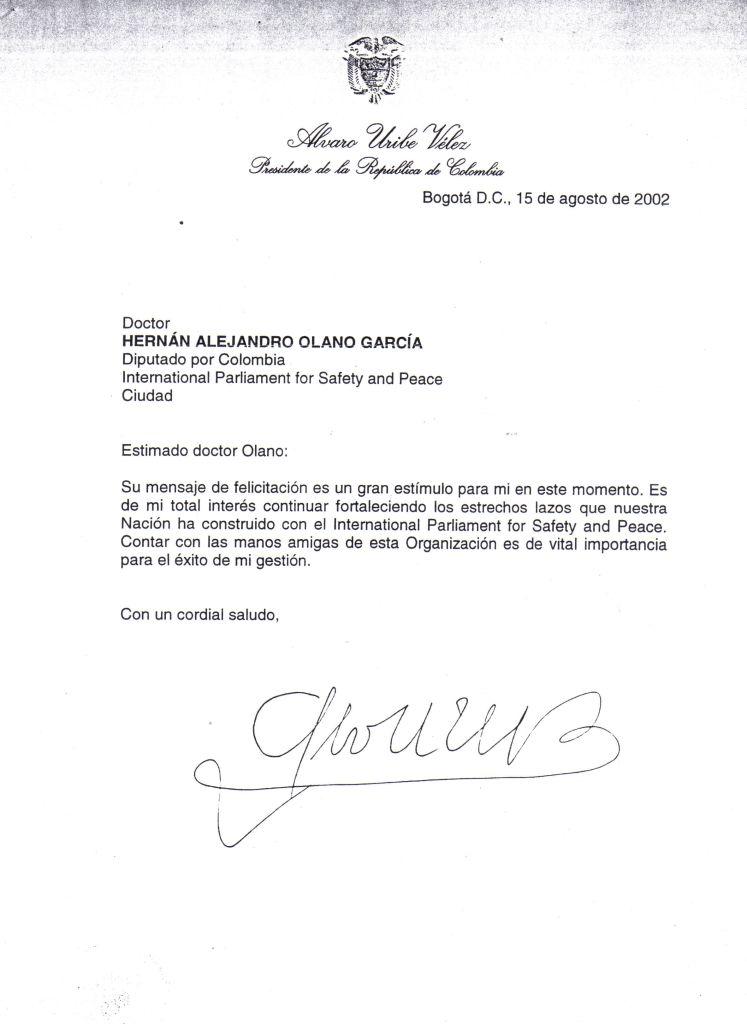
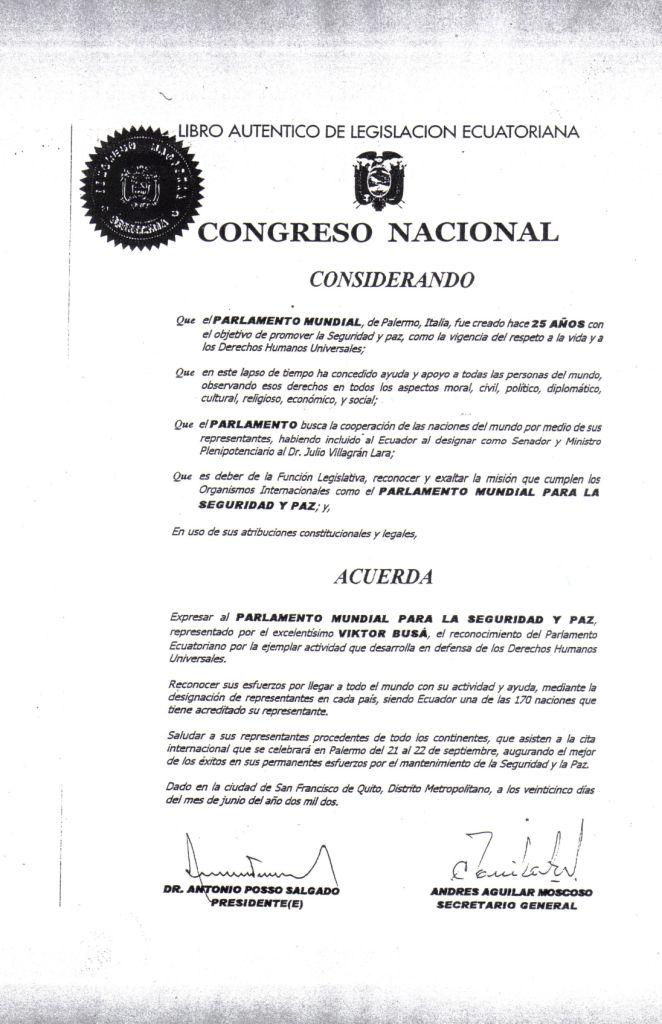
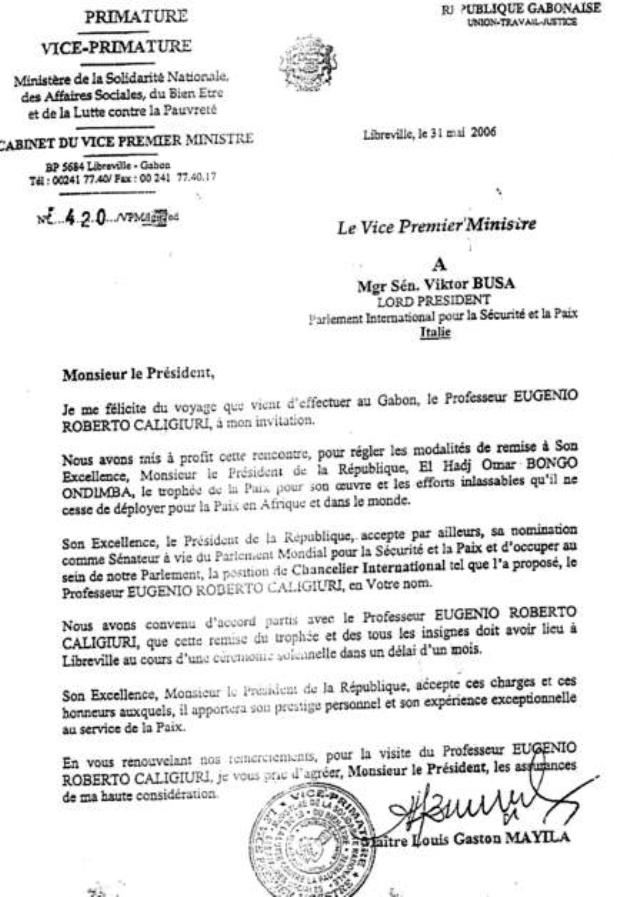
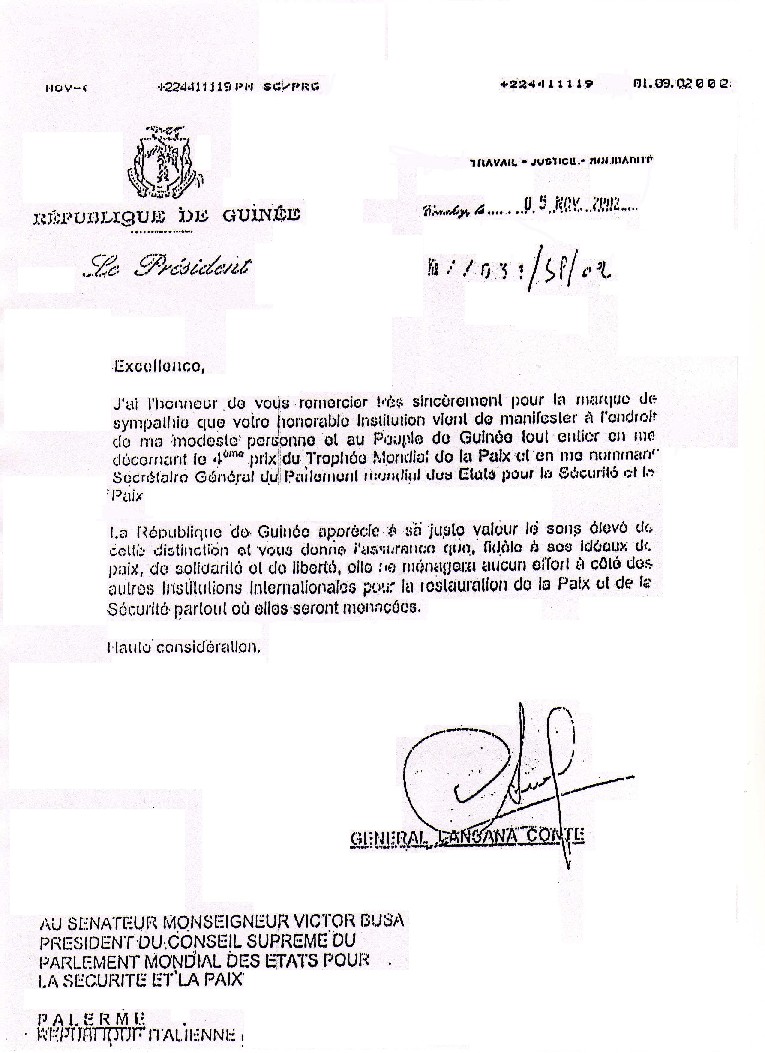
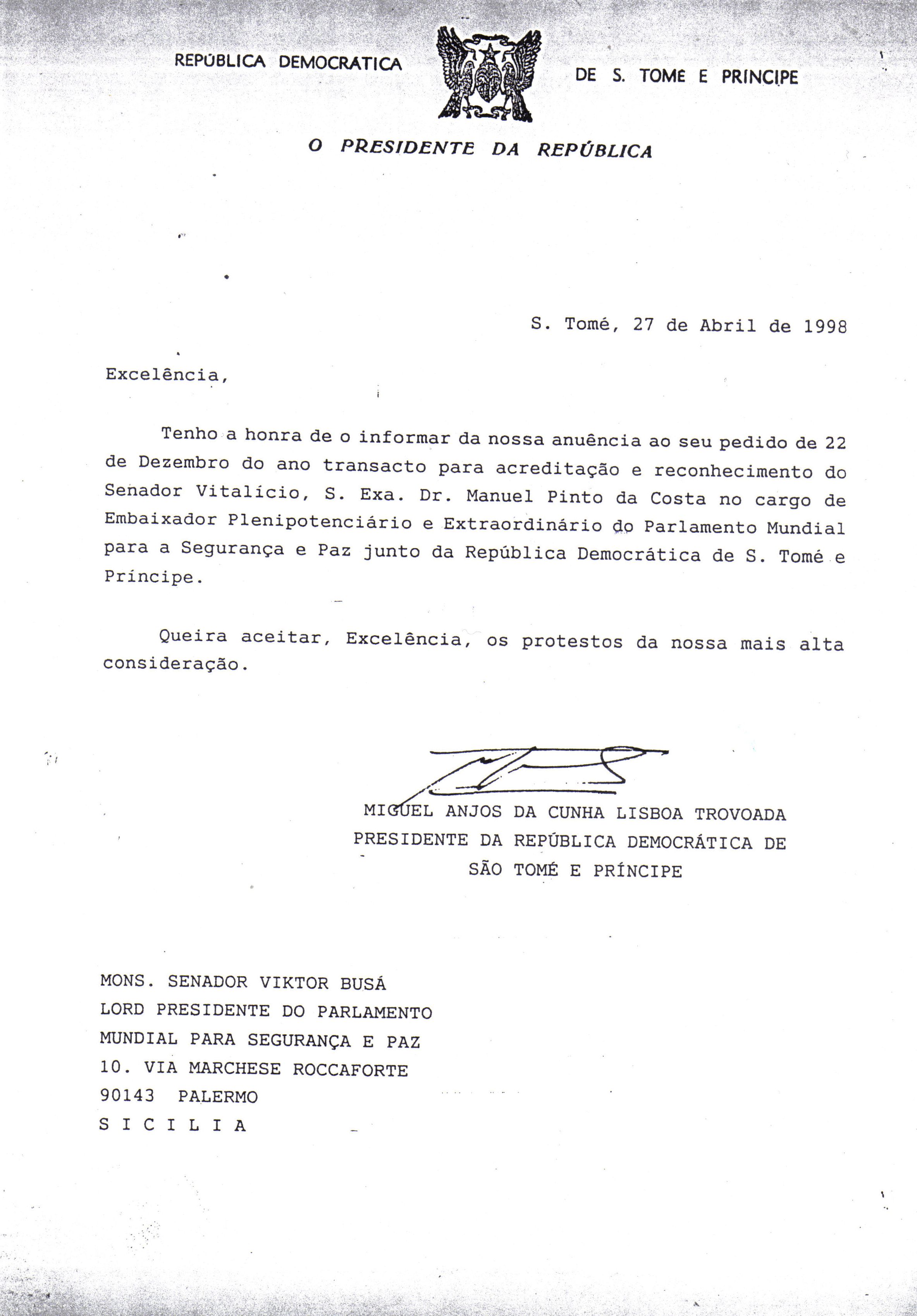
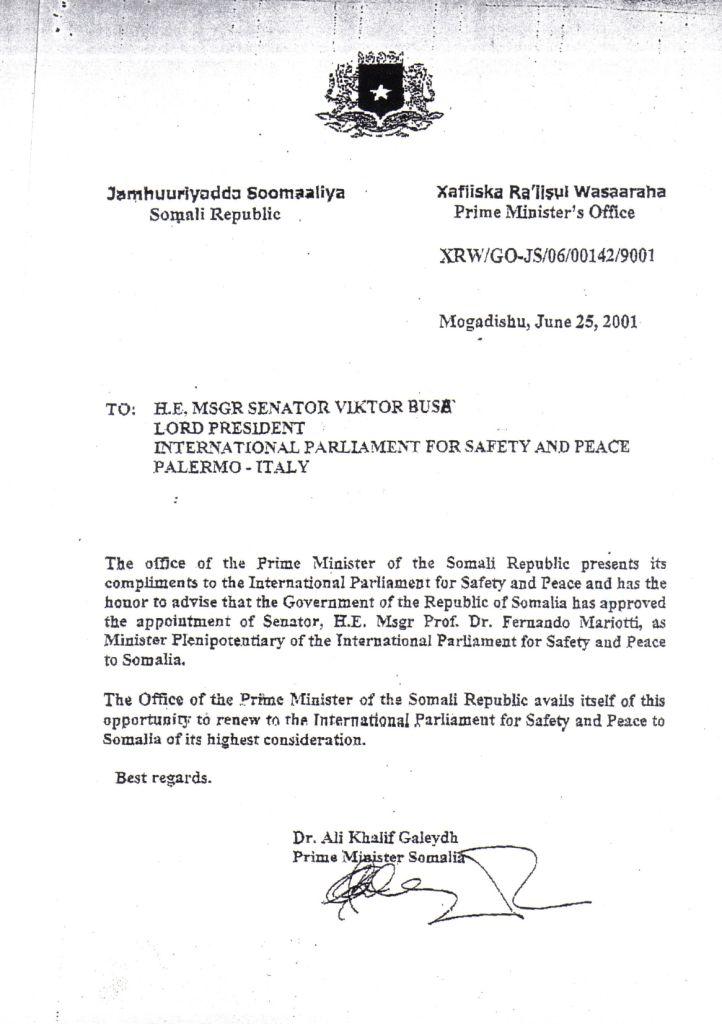
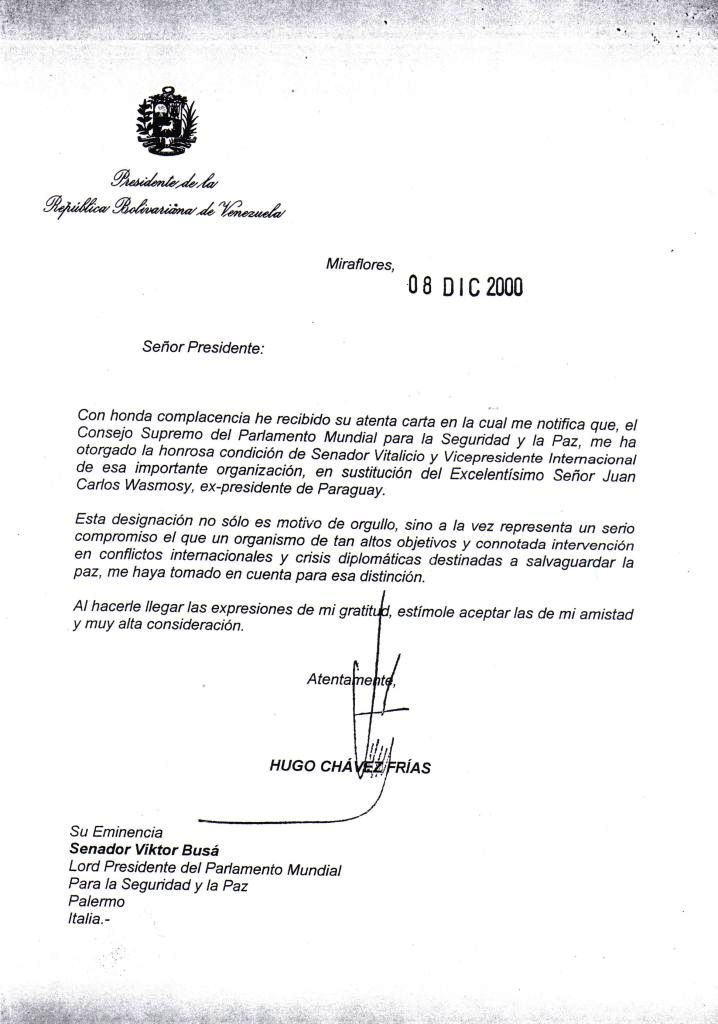
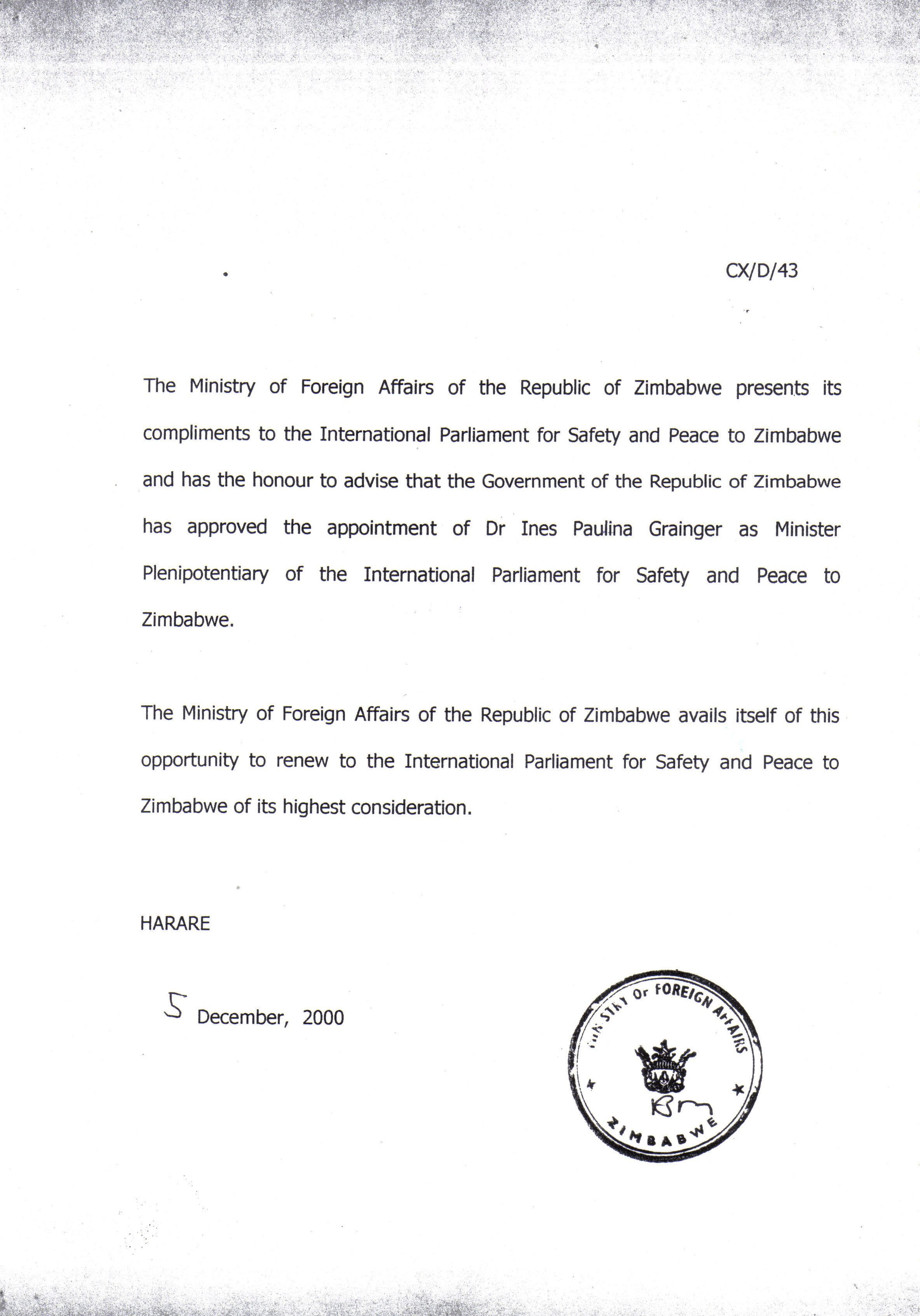
The International States Parliament for Safety and Peace (ISPSP) was founded in December 15, 1975 by a letter of the Constitution of the International Legislative Assembly. It was juridically recognized by the International Law and the first nations to recognize it were the United States and Italy. It was a parallel organization to the United Nations and, like the United Nations, had representative ambassadors from all nations. The headquarters of the ISPSP was in Italy. The Lord President of the Parliament was the late Archbishop Viktor Busa, President of the Council of the States. In 2005, he received the Grand Cross of the Order of Independence of Equatorial Guinea and also the Decoration of Diplomatic and Humanistic Merit “Mahatma Gandhi”. Msgr. Viktor Busa was in 2007 appointed as Vice President of the Council of State Security and of the Committee of World Culture and Sports (DUMA), as well as Expert Counselor in Problems of National Security of Russia.
Msgr. Viktor Busa was an activist devoted to the cause of peace, defense of life, and human rights. He was engaged in the struggle for these causes for almost 30 years, without a break, since the creation of the ISPSP. His visionary dream for peace in the world and respect for human beings makes his life really remarkable. Two years after the creation of the ISPSP, his partner and co-founder of the ISPSP and its first General Secretary, Archbishop Makarios III (President of Cyprus), died. Msgr. Viktor Busa went ahead alone, as the chair of the ISPSP, until Dr. Spyros Kyprianou (then new President of the Republic of Cyprus) was elected Vice President International of ISPSP. Working together with his new partner, he created the Assembly of the Parliament, and in 1987, signed a convention with President Rodrigo Carazo, at the University of Peace of the United Nations, in Costa Rica.
After looking for the concurrence of all of the nations in the world, through their representative governments, the Parliament counted some 400 senators, 800 deputies, ambassadors and ministers, who contributed, like their President and General Secretary, with their volunteer work, to the cause of peace.
The work of the delegates and ministers of the ISPSP towards peace and enforcement of the respect for life and human rights included rendering help and support to all of the people of the world, observing the right of safety and peace in all aspects: moral, political, diplomatic, cultural, religious, economic and social. This was provided free of charge to the governments. ISPSP organized commissions to send to the country in need, with the participation of volunteer ministers and parliamentary diplomats, who travelled and worked free of charge in order to resolve conflicts and help to re-establish security and peace. Following the re-establishment of safety and peace, the ISPSP presented, as an incentive, Peace Trophies to the head of the places or countries where the commission worked.
Some recipients of the ISPSP Peace Trophy 1989 – Mikhail Gorbachev, President of the USSR
1990 – Mobuto Sese Seko, President of Zaire
1995 – Nelson Mandela, President of South Africa
1995 – Carlos Menem, President of Argentina
2002 – Lansana Conté, President of Guinea
2004 – Teodoro Obiang Nguema Mbasogo, President of Equatorial Guinea
2004 – Hugo Chavez, President of Venezuela
2006 – Omar Bongo Omdimba, President of Gabon
The work of the agents of the ISPSP paid off with good results in many places. Once a year, there was a congress of the ISPSP, where Delegates presented their reports. Victorious interventions were worked out and reported from the Diplomatic Crisis between Turkey and Cyprus; the crisis between Somalia and. Ethiopia; between Iran and Iraq, Ecuador and Peru, and the conflict in Uganda. The ISPSP also made a contribution of diplomatic intervention in wars of several countries and places, as in the Middle East, in the civil war in Sri Lanka, in the countries of the former Yugoslavia, in Rwanda, Congo, Angola and Mozambique. Diplomats from the ISPSP worked in South Africa, Moldavia, Russia and Chechenya. In support of the United Nations, Msgr. Busa and the ISPSP participated in the Conferences of Addis Ababa and Vienna.
As observers, the ISPSP sent diplomats to the general elections in Congo. The democratization of the Republic of Congo started in 1990. In this process, Archbishop Viktor Busa cooperated with the Congolese government in order to give the people assurance of security and to admit the need for immediate peace. ISPSP organized a local sub-division with several Congolese members of different categories, notable jurists, high functionaries, ministries, etc. to negotiate peace with aggressors from the borders of DRC. When the aggression intensified, Archbishop Busa himself organized a series of international conferences, in order to gather international support. This contributed to the acceleration of the United Nations’ resolution in sending in the “Blue Berets” and in assisting in the reconstruction of the nation. There is evidence of recognition from the authorities of several countries, who sent to Msgr. Busa their letters, memoranda, and other tokens of their gratitude for the Parliament services.
In 1985, Archbishop Viktor Busa personally got involved with the creation of the World Organization of the Indigenous and Aborigines Peoples. Several ministers of the ISPSP worked at the front of the Andean Movement for re-culture of the Inca countries. The movement started in Arequipa, Peru and in Cusco, where several ISPSP volunteer diplomats worked directly with the Inca natives in order to achieve a new interpretation of the past history of Peru, including the Inca past. It was a wonderful movement with the creation of schools, workshops, festivals, etc.
In December 2004, the representative of the ISPSP in Chennai, state of Tamil Nadu in India, activated a force of 400 volunteers to assist the “Tsunami” victims. All of the ISPSP representatives all over the world contributed financially to help the people who suffered because of the underwater earthquake in South Asia.
(The information above is adapted from an article by former ISPSP Senator Teresinka Pereira)
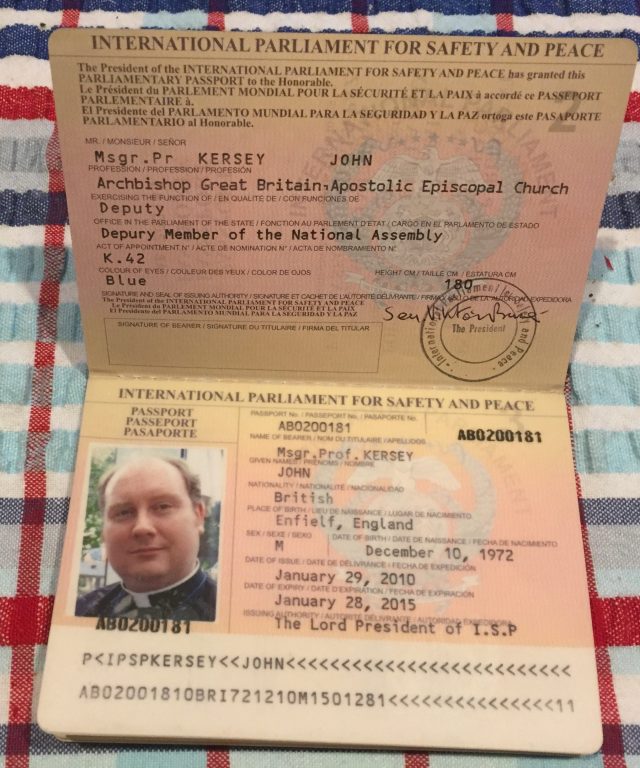
Several nations gave official diplomatic recognition to the ISPSP and its representatives, who were issued with diplomatic passports.
Archbishop Viktor Busa was the Patriarch of Byelorussia in the American World Patriarchs, in communion with the Apostolic Episcopal Church, and episcopally consecrated my adoptive father, Prince Kermit of Miensk. After his death, several of his clergy, who were mostly based in Brazil, joined the Byelorussian Patriarchate of St Andrew the First-Called Apostle which I inherited from Prince Kermit.
Archbishop Busa received many honours and was granted various noble prerogatives. The full explanation of these sometimes complex authorities is outside the scope of this article, though it would provide a fascinating study in its own right. Some sources incorrectly state that the ISPSP was responsible for granting titles of nobility. Archbishop Busa granted some titles of nobility in exercise of his prerogatives, but these were done in his personal capacity as a fons honorum, not by the ISPSP. Likewise, some sources claim that the offices and passports of the ISPSP were available for money. During my decade-long involvement with the ISPSP, I was never asked for any donation or payment of money for anything. I did, however, quickly become aware that fraudsters had produced imitations of the ISPSP’s passports, official documents and website, and were profiting from these.
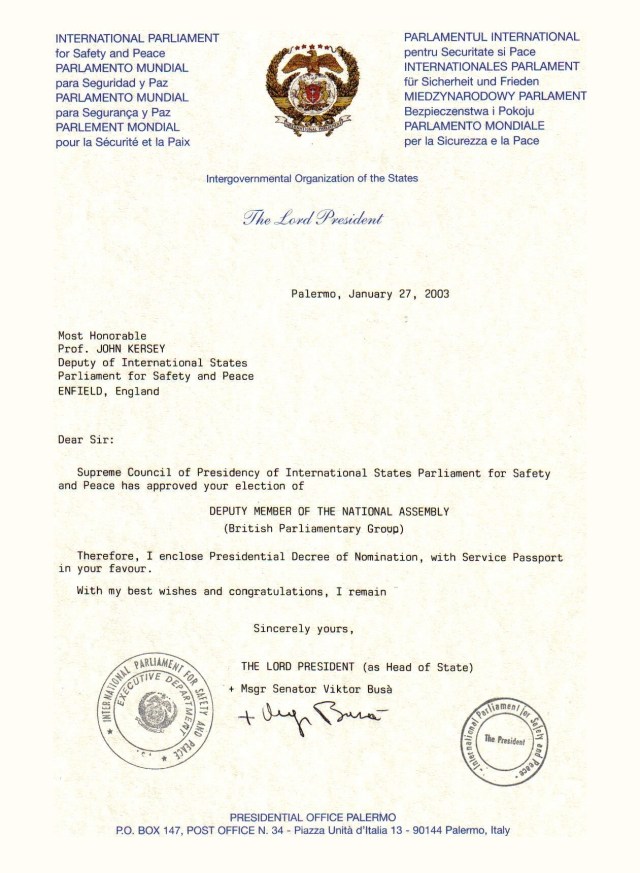
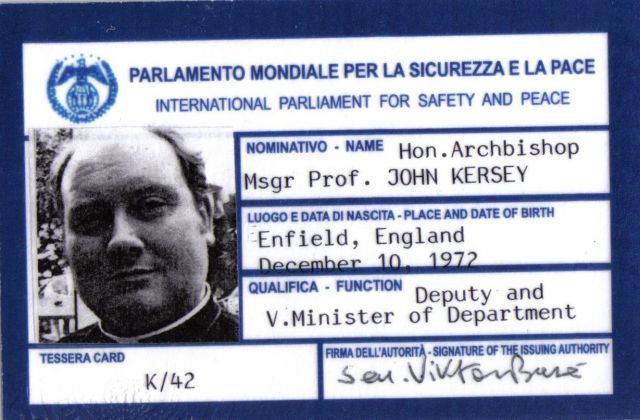
In 2003, I was appointed as a Deputy Member of the Parliamentary Assembly of the ISPSP for Great Britain.
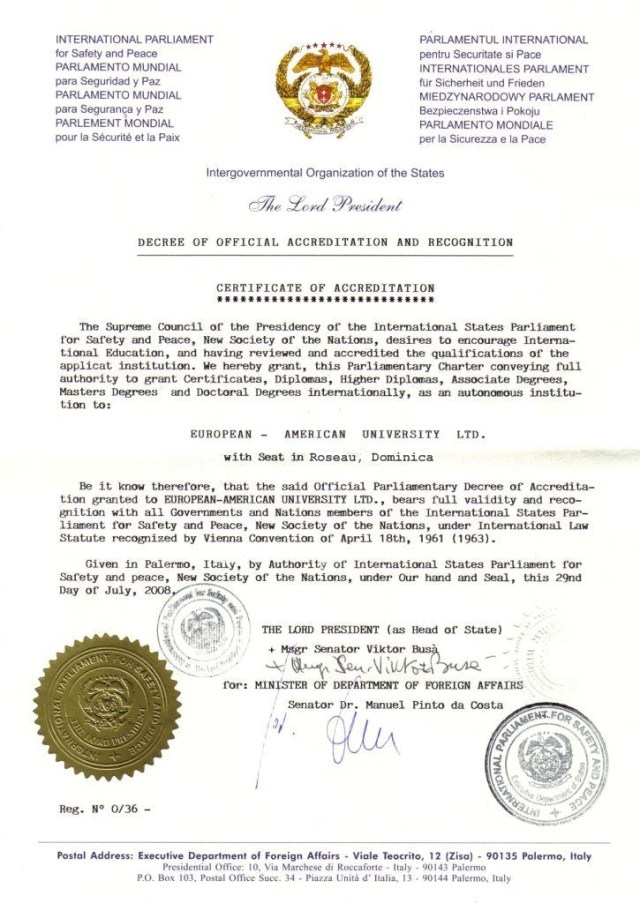
The ISPSP had a significant interest in the support of educational projects, and showed itself willing to support non-traditional education. In 2008, it issued a Parliamentary Charter and Decree of Accreditation and Recognition to European-American University (Dominica) which was under my presidency.
My ISPSP passport issued in January 2010
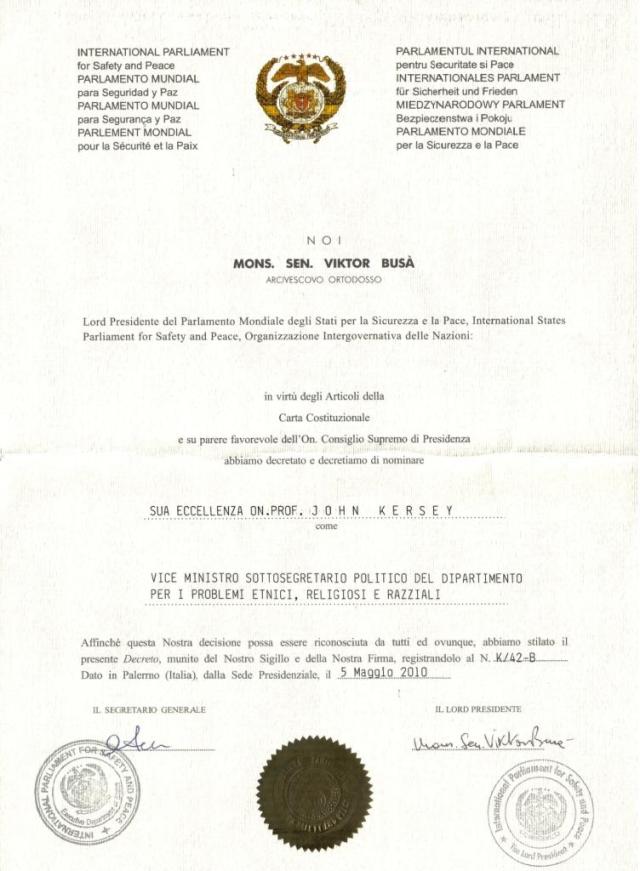
In May 2010, I was promoted within ISPSP to the position of Vice Minister Political Undersecretary of the Department for Problems of Ethnicity, Race and Religion.
During this period, I worked closely with a friend who was a senior official in the ISPSP and we discussed the steps necessary to put the Parliament on a stronger footing, to realise the immense unrealized potential that it had, and to address some of the problems and criticisms it had faced. In our analysis, the major issue was not Archbishop Busa himself, who was a somewhat unworldly man utterly dedicated to the ISPSP, but rather that some of those who had attached themselves to the ISPSP and to Archbishop Busa had not had the best interests of the Parliament at heart. There were problems with fraudsters, damaging internal conflicts, and even a fake country that had managed to work its way in. Our work was therefore to clean things up. In this mission, we made progress, but we also made enemies.
I had advised the ISPSP regarding the withdrawal of its accreditation from several “educational” institutions that in my view did not meet an acceptable standard, and to form a proper committee for the exercise of its educational functions with published standards. My advice had been well received by Archbishop Busa and was being acted upon. This did not make me popular in certain quarters and the operators of the institutions in question were not slow to exert their influence on Archbishop Busa in an attempt to get rid of me.
There was also increasing factionalism as some Italian members of ISPSP came to see non-Italians as hostile parties and to oppose their involvement in ISPSP affairs. Amid all of this, Archbishop Busa was growing older and more frail. The Italians intended to control the succession and were determined to oust any rivals.
In November 2010, I received several communications, purporting to act in the name of the Parliament, that were couched in insulting and threatening terms. My letter to Archbishop Busa protesting at this treatment included the following passage:
For several years now I have worked together with Ambassador H.E. Dr ——– ——— to seek to address the issue of the International Parliament accrediting unsuitable organisations, and the negative publicity that has resulted from those associations. I have investigated these matters and provided advice which I understand Dr. —- has passed to you and you have then acted upon. Without my advice the Parliament would still have been accrediting the degree mill Weston Reserve University, the International University of Fundamental Studies with its expired government license, and several other “institutions” which are little more than diploma mills operating on the edges of the law and which have seriously damaged the reputation of the Parliament…
I believe we are entitled to expect courtesy and respect in the light of my expertise which has been placed freely at your service, not the defamatory accusations and threats made by Signor ——–.
I believe that the present developments risk serious and potentially devastating consequences for the International Parliament. We cannot stand by while Signor ——- threatens us and seeks to harm those who have been unquestioning supporters of the International Parliament, not to mention our students, graduates and faculty. It is further obvious both from Signor ———’s refusal to respond to my request that he provide proof of his authority, and his communications with Dr. —— that we have seen and enclose, that he is not prepared to commit to a co-operative working relationship with his Parliamentary colleagues, and intends to destroy the progress we have made in the past years.
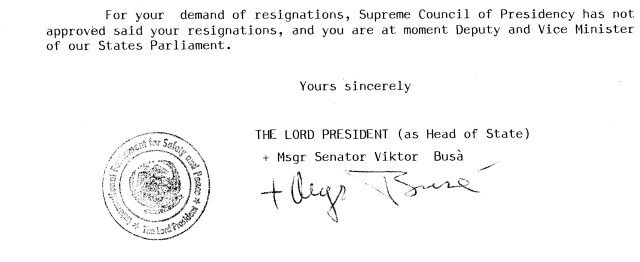
In protest at the situation, I withdrew European-American University from all connection with the ISPSP and resigned from all the offices I held personally. The response that I received from Archbishop Busa on 19 November was confused and contradictory; it at once gave support to my opponents, but also stated that Supreme Council of the Presidency had refused to accept my resignations.
Archbishop Busa died in 2013 and the ISPSP did not survive him. The immediate aftermath became mired in legal conflict, with the succession to Archbishop Busa being impossible to determine. For my part, whatever claims may be made, I do not recognize any organization as being the legitimate continuation of the ISPSP today.
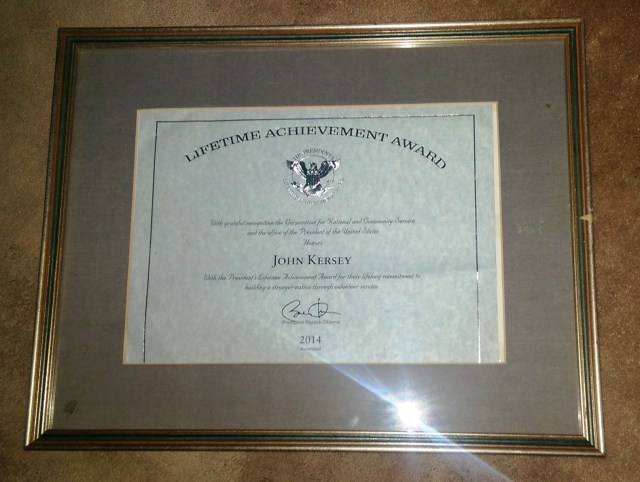
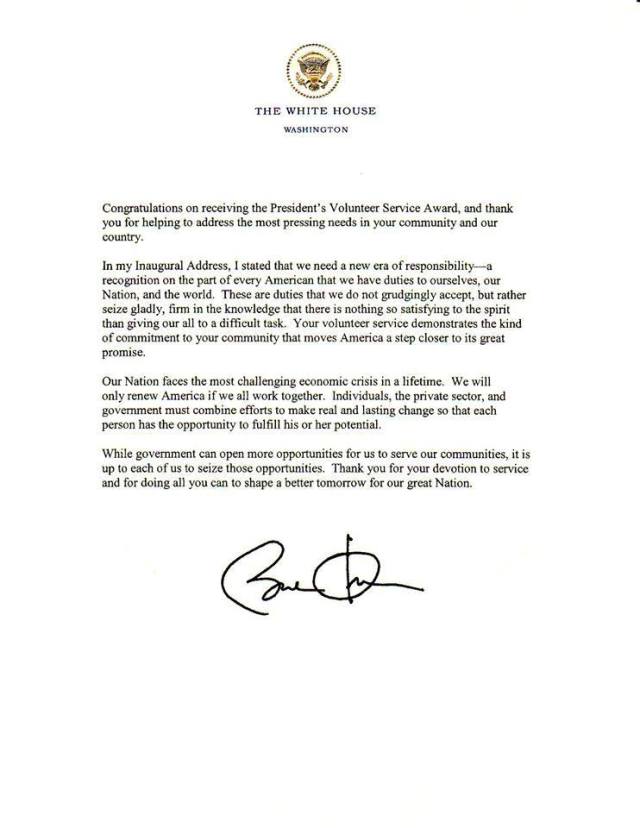
The President’s Volunteer Service Award was established by Executive Order of President George W. Bush in 2003. The award was established to honour volunteers that give hundreds of hours per year helping others through the President’s Council on Service and Civic Participation. The award can be granted to individuals, families and organizations. Depending on the amount of service hours completed, individuals can receive the Bronze, Silver, Gold, and/or the President’s Lifetime Achievement Award (now referred to as the Call to Service award). The President’s Lifetime Achievement Award is the most prestigious, and it has been awarded sparingly. Awardees may receive a personalized certificate, an official pin, medallion, and/or a congratulatory letter from the President depending on the award earned.
In 2014, I was surprised and greatly honoured to receive the President’s Lifetime Achievement Award from President Barack Obama.
Previously I have written on the Freemen-on-the-Land and Lawful Rebellion movements. These movements are based on a number of interpretations of law that maintain, in general terms, that it is possible for the individual to challenge given legal provisions on the basis that they use a particular form of words, issue given documents that are said to have contractual enforceability under law, or withdraw actual or implied consent from what is, or what is claimed to be, a contract with the state or agencies acting on its behalf.
Dr Gabb and I are in agreement that these points, whatever their merits – and argument is sharply divided as to whether there is merit to them – are not a magic formula that, when deployed in the face of the state, will result in capitulation on its part. The state rests upon a basis of coercion, and its judicial branch is just that; a branch of the state designed to do what the state bids. It is misguided to believe that the law can be used against the state; the law exists for the benefit of the state and will not be interpreted in such a way as to threaten its fundamentals.
However, it does seem that Freeman techniques may have some significant results when deployed in practice, and that these results may not be entirely undesirable. What they amount to is a campaign of civil disobedience, and such a campaign may prove effective in frustrating aspects of the administration of law and making its operation both more costly and more time-consuming.
An article from the Irish Independent published this October tells us that,
“There have been more than 100 cases in the last year in which borrowers have used versions of Freemen arguments to resist possession by receivers and banks.
The Freemen claim, amongst other things, that they don’t recognise the authority of the courts.
Borrowers have also sought to evade judgment or eviction by claims that they have transferred their mortgages to secret trusts, claiming they can’t be evicted from their homes or business premises.
[Barrister Rossa] Fanning said that while every case must be heard and determined carefully on its own merits, the prevalence of lay litigants defending proceedings on the basis that High Court judges are not properly appointed and don’t have jurisdiction to hear cases – on the basis of “Freeman of the land” theories of law – is a serious challenge facing our legal system.”[1]
One hundred cases in a year would indeed appear to be a serious challenge. It does not ultimately matter that Freeman language and ideas are the chosen vehicle. The defendants could just as well be resting their claims upon any theory designed to frustrate the proceedings. It may well be that some of their actions are fruitless or even counter-productive. It certainly seems to be the case that some of them are using this as a means to evade contractual obligations that they have properly entered into. But Mr Fanning seems to have grasped the effect that they are achieving,
“These arguments constitute a threat to law and order in this society because they are being advanced by people who, being realistic about matters, are engaged in a campaign aimed at the wholesale tearing up of contractual obligations without any legal basis to support same”.
Governance, even by the most brutal of tyrants, is ultimately dependent upon one thing: popular consent. Rule by repression may be sustainable for a decade or so, but it is inherently unstable. History is full of the downfall of dictators and indeed of unpopular absolute monarchs at the hands of popular uprisings of various kinds. It is true that our many-headed hydra of a state is not as easily removed. But it is equally true that its rule depends upon consent and co-operation by the population at large. If that consent is removed in a few cases, there will be little effect other than the repression of the individuals involved. If it is removed in many cases, then the effect is more likely to be that of making the business of governance difficult and, in time, impossible.
I would not want it to be thought that I am inciting our readers to embark upon a campaign of lawbreaking. Rather, I would invite them to consider a number of factors before reaching their own conclusions. The first is the systematic misuse of our legal code for political ends. I have long believed that our membership of the European Union, so far as it involves the surrender of Britain’s sovereignty, is illegal. I find it fascinating that during the years that I and others have been saying so, we have been treated as voices in the wilderness. Now, however, we have a former Lord Chief Justice suggesting that there is no consensus as to whether European Court of Human Rights rulings are actually binding on the United Kingdom, as it has been widely assumed in the past that they are[2]. If they are not binding, as I believe they never were, then it follows that the copious additional legislation passed by Parliament in the belief that it was following obligations incurred by subsidiarity to the European Union has also wrongly been seen as binding, where in fact it was optional. The implications of this perception, were it to take hold among the population, could well be truly seismic. I do not doubt that there would be those who would try nevertheless to enforce such erroneously-passed laws, but I do not believe that such an enforcement could command any form of legitimacy, nor do I believe that it should receive popular consent.
That brings me on to the next factor, which is that our laws rest upon both a literal basis, that is to say their place as a part of the code of law per se, and a moral basis, the latter dependent upon consent. In the Irish cases, there is a popular perception that the use of the law by mortgage companies against individuals who have suffered hardship as a result of the financial crisis is unjust and immoral, and should be resisted through the withdrawal of consent. Meanwhile, in England and Wales, not so long ago, a number of offences were removed from the statute book; in some cases because they conflicted with later legislation, but in others because they had simply fallen into desuetude – the law had ceased to be observed to the point where it was futile to maintain it. The latter position is an eloquent argument against absolutism in legal matters. A further argument has been the increasing use of the law during the past few decades as a means of petty regulation of matters that are the subject of legitimate moral and ethical interpretation; in other words those laws that seek to enshrine explicitly political ideas, such as egalitarianism, and to suppress opposition to those ideas.
Clearly, there are proper limits to these arguments. I am not about to suggest, along with some of those from the far Left, that there is a moral case for the mass murder of one’s political opponents, or for the theft and redistribution of goods. Nevertheless, it is our government that has felt free to engineer the murder of thousands through its foreign expeditionary wars, and that continues to perpetrate the latter crime through the tax system. It can, I believe, be convincingly argued that our government has conclusively lost what moral authority it might once have had.
Moreover, it seems to me that while it is possible to enter into detailed argument as to the lawfulness of this or that legislative provision, or the right to enter into Lawful Rebellion under Magna Carta, or whether statute law is applicable in this or that instance, such argument leads ultimately to the same ends: consent can either be given or withdrawn to governance, and either way, consequences will ensue.
My point is that as principled libertarians, we should be ensuring that our resolution in the year ahead is to fully and consciously exercise our consent, to be aware of when and how we are giving consent, and to be prepared to withhold consent when not to do so would conflict with our ethical beliefs and involve consequences which we are prepared to accept. We may, and I would argue that as libertarians we should, hold that the government of the United Kingdom, as presently constituted, is both illegal and illegitimate, and further that it is immoral. It follows that we should consider carefully how we should engage with such an entity, on what terms and with what reservations.
We do not need to embrace the Freeman philosophy or even accept its legitimacy to see the value of even a relatively blunt instrument – a form of filibuster if you will – in the withdrawal of consent. It may be that the hundred Irish cases will ultimately be unsuccessful. Alternatively, it may be that they are the beginning of something interesting. Certainly, there are areas where the possibility of the exercise or informed withdrawal of consent may involve little cost to the individual but may have considerable effect if adopted on a wide scale. A number of our readers, for example, believe that the BBC should be abolished. The easiest way to achieve this aim is to participate in those groups that aim to resist, and in time to abolish the television licensing scheme by which the BBC is funded. Further information is provided at this website[3]. Increasingly, the subcontracting of petty legal enforcement of various kinds to private companies involves the citizen in the acceptance of contractual terms of various kinds, sometimes without explicit consent being provided. In certain cases, it may be that it is profitable to establish whether that contract is valid or whether there is a basis upon which it may be contested.
But these are only basic illustrations of what can form a much deeper challenge to the assumptions that underly the consent between state and individual. If we take as a resolution the phrase Question everything! for the coming year we may be in a position where we gain a greater understanding and benefit from that process as a result.
It will be seen that the Principles of the Traditional Britain Group are in close accord with my address to the 2013 Traditional Britain Group Conference, “Preserving the substance of a nation“. They represent a way forward that summarizes my standpoint on political strategy for the Right.
Existing strategies have not been successful and must be abandoned. If we aim to see the restoration of traditional conservatism in this country we cannot rely on upon the existing mechanisms, its national politics and its institutions to serve that purpose.
The moral belief in egalitarianism as the highest good must be utterly opposed. We must unite in a total opposition to liberalism, Marxism, egalitarianism and the view of man as homo economicus. It is the belief in egalitarianism that has castrated discussion and silenced great minds – it is egalitarianism that has prevented the computation of a much needed Traditionalist perspective during this crisis. What we need is a reason to feel righteous, a reason to feel that we are good moral people, whilst putting forward a radical and futuristic argument for Tradition. Only then will we be able to do so openly, with real conviction, and without fear. For that we need a moral critique of egalitarianism – we must discredit the pursuit of equality.
We must be united by a core commitment to Tradition, not to detail. We must unite, not behind policy proposals and political detail, but rather the eternal truths of European and British Tradition: kinship, family, duty, faith, uniqueness, hierarchy, community, sovereignty, authority, nation, identity, liberty, justice, truth, beauty, and excellence.
We must be honest and courageous. We must be fundamentally life-affirming, we must learn to love the struggle, we must take risks, and we must live Tradition. We must be consistently and courageously traditionalist and conservative in our behaviour and communications. We must embrace abstract and moral ideas – the morality of an ideal trumps empirical reality. We must reject all euphemism and hypocrisy. Most importantly we must build new moral, economic and cultural support networks that will arm people with the ideas, and courage, to speak and fight freely.
We must abandon the defence of lost institutions, of style over substance. The majority of current institutions are no longer conservative in any meaningful sense. Attempts to influence existing institutions – including political parties – have utterly failed, and where conservatives remain they are ineffectual. We must redefine the rules, overturn the tables, and be radical and Traditional. We must create something worth fighting for – something good!
Conservatives cannot counter our enemies effectively within these institutions. So called conservatives who operate within the existing system utterly fail to achieve any substantial change – because they constantly compromise, they are hypocrites and they attempt to ‘play the game.’ When an individual does stand up he is quickly cowed by social, economic and sometimes legal pressure.
We must create a large local support networks and a professional national vanguard. We must create a new traditional conservative counter establishment– providing local support networks that will allow us to ruthlessly attack egalitarianism, and what it represents, openly and honestly. This must be a loose grassroots movement, supported by a unified professional, intellectual, highly organised national vanguard.
We must promote and nurture a traditionalist culture. It is only through the life and values of a community that we can allow the individual to experience what would otherwise be an intellectual abstraction. We need to use what opportunities remain to us to organize and to work together with common aims to preserve and restore traditional conservative values, through institutions such as the Traditional Britain Group and through building others that will nurture and promote the culture of the Right both locally and nationally for generations to come.
This support network must be a flexible ‘wide church’ whilst detail or policy differences should be set aside. The support network must be a wide, open, church – consisting of conservatives, traditionalists, radicals, libertarians and others that wish to support us. Consequently local activities and direction must be decided by local members. Whilst its members are welcome to join any group they wish this support network must be non-partisan and non-sectarian. Members are not obliged to cease other activities and are encouraged to continue with their own political activities and groups. We must permit individuals to hold divergent opinions on detail, rise above ego, and lend our backing to a diverse array of individuals within our support network.
Preserving the substance of a nation: the role of a traditional conservative counter-establishment
The Traditional Britain Group describes itself as a traditional conservative organization that is concerned with radical thinking. I want to outline each of these elements for you today and then to consider where their combination might lead us.
Let us begin with conservatism. In defining what it is to be conservative, I want to turn to the definition proposed by Michael Oakeshott in his 1991 essay “On being conservative”. He says, “To be conservative, then, is to prefer the familiar to the unknown, to prefer the tried to the untried, fact to mystery, the actual to the possible, the limited to the unbound, the near to the distant, the sufficient to the superabundant, the convenient to the perfect, present laughter to utopian bliss. Familiar relationships and loyalties will be preferred to the allure of the more profitable attachments; to acquire and to enlarge will be less important than to keep, to cultivate and to enjoy; the grief of loss will be more acute than the excitement of novelty and promise.”
At the root of this definition of conservatism is an extremely guarded attitude to change, precisely because change has unpredictable, and sometimes unmeasurable effects. We should therefore be very careful not to assume that where we propose change we can predict its outcome. Indeed one of our chief criticisms of the Left is that its commitment to an agenda of constant, radical change is both destructive and ill-thought-out. It is against the natural order of things, and indeed seeks to subvert and destroy that natural order by promoting its opposites.
And yet this definition of conservatism also brings about problems. Let us imagine that the Conservative Party adopted the Oakshottian approach in the coming election. If they are then asked “What will you do if we vote for you?” their response might be “We will take such measures as are necessary to preserve and protect the enduring traditions and way of life of the English people. Other than that, we will do nothing.” I would vote for them, but I do not think they would win. And that this is such a long way away from the present position of the Conservative Party should serve as a warning to us that all is not as it should be.
It is because the Left has forced an agenda of perpetual change upon our political system that the Conservative Party and other parties with conservative roots have felt compelled to abandon this traditional conservative definition of the purpose and nature of government and instead commit themselves to relentless action regardless of the legitimacy and need for such. During the 1980s, neoconservatism developed as the outcome of an attempt to apply Left-wing models of ideology and change to core conservative ideas. Because ideology and traditional conservatism are opposed, what this produces is a hybrid of limited conservative principle and a Leftist commitment to so-called progress and constant change. Neoconservatism wins a popular mandate by accepting the Left’s rules and playing the Left’s game, but it is a complete misconstrual of conservatism, because constant change can never bring about conservative ends. If a conservative government were to behave in a truly conservative way, the first thing it would do on gaining power would be to reverse much of the legislation of the past twenty years and secure our immediate withdrawal from the European Union. We should be clear that if we do not find that the present-day Conservative Party is advocating that this is what should happen, we must conclude that it is because it is no longer conservative in any true sense of that word.
The reality is that the Conservative Party today is a mixture of several strands – of which the most prominent are neoconservative and centrist (that is to say left-wing) conservative. These are in what appears to be a permanent ascendancy, despite some dissonance with both the Parliamentary party and the grass roots. They are in the ascendancy for one reason and one reason only – because to engage with modern politics involves both the acceptance of change and a commitment to continuous change, which is incompatible with traditional conservatism, and it is by nature ideological. It has become impossible for anyone in mainstream politics to say that he or she is reactionary or traditionalist, or that if given power they will reverse the measures of the previous government. They must instead embrace the ideology of change and in doing so, they will cease to profess the substance of traditional conservatism and retain only, at best, its style.
Even though I have identified these ideological strands in the make-up of the present-day Conservative Party, it does not follow that the Party today is ideologically-driven in the same way as the politics of thirty years ago. Under the late Baroness Thatcher, and indeed under the Leader of the Opposition Lord Kinnock, it was abundantly clear what the two main parties stood for. Each had an openly-stated position on the major issues that was the product of clear, if not always consistent, thought, and that could be seen as the outcome of underlying core principles. It was not difficult to know what it was to be conservative during those years. Yet now, if we ask what the Conservative Party stands for, it is almost impossible to know in direct terms. Even those who thought we knew it well find that on a number of issues it is entirely a stranger to us. Who would have thought that it would be a Conservative Prime Minister who would describe as his proudest achievement the destruction of marriage? And indeed, on this and numerous other issues, the positions of the Conservative and Labour Parties are essentially interchangeable. They both support egalitarianism. They both allow the United States to dictate our foreign policy. They both support mass immigration and multiculturalism. They will not reverse a single piece of legislation passed by the previous government, however much they claimed to oppose it at the time.
There is one very simple reason why this is so: it is because the major issues are being decided not at Westminster but instead in Brussels and for that matter in Washington. Britain is reaping the harvest of its international ambitions. It has a seat at the top tables but it has discovered that there is no such thing as a free lunch. The real powers that be, and in particular the European Union, have a very clear ideology that we are now being forced to implement. This ideology is explicitly socialist and it is committed to the destruction of the nation state. It prevents Britain from maintaining control of her borders and it forces upon us the loss of our independence. Every aspect of public and increasingly of private life, from our courts to our armed forces to our businesses to our increasingly circumscribed freedom of speech is subject to European Union directives. A very significant amount of Parliamentary time and money is devoted to the implementation of European law into our nation’s system. And none of this has any significant mandate from the British people.
Is there an alternative for Britain? Can we step back from the brink and regain our identity and control over our country once more? We are told that to do so would be to become “little England”, to become irrelevant on the international stage, to condemn ourselves to second class status. I want to say to you today that to be British is never to be second-class. If the choice is between a globalist outlook in which others pull the strings or the destiny of our island race in which we provide for ourselves and are the masters of our fate, I would certainly choose the latter. Let us look at how we might get there.
The first and most obvious difficulty we face is that our politics has become the problem. Our political class does very well indeed out of Brussels. It is also increasingly divorced from the mainstream of the society it claims to represent. Gone are the days when it was expected that a Member of Parliament would have proved him or herself in the real world before entering politics. These days, the pathway into politics promotes politics itself as a career, leading to the concept of the “professional politician”. Doubtless in a few years’ time there will be a Politicians’ Academy designed to give its members spurious letters after their name in a bid to give them equal status with the other professions. That will be the logical continuation of a process that has already all but eliminated individual judgement from politics and rendered the MP effectively a party placeman, subordinate not to the historic institution that is the British nation and its culture but instead the artificial collective that is pan-European socialism. Certainly there are occasional Parliamentary rebels, but their rebellion is within carefully-chosen limits and rarely if ever at the cost of their careers.
Our politics operates within a system that has been defined as the Overton Window. The Overton Window is a concept that describes those ideas that are acceptable in politics today. To be outside the window is to be outside the limits of what our establishment considers acceptable or is prepared to discuss. To illustrate this clearly, I want to quote from “Whatever Happened to Reason” by Roger Scruton. Professor Scruton tells us, “”If you study the opinions that prevail in modern academies, you will discover that they are of two kinds: those that emerge from the constant questioning of traditional values, and those that emerge from the attempt to prevent any questioning of the liberal alternatives. All of the following beliefs are effectively forbidden on the normal American campus: (1) The belief in the superiority of Western culture; (2) The belief that there might be morally relevant distinctions between sexes, cultures, and religions; (3) The belief in good taste, whether in literature, music, art, friendship, or behaviour; and (4) The belief in traditional sexual mores. You can entertain those beliefs, but it is dangerous to confess to them, still more dangerous to defend them, lest you be held guilty of “hate speech”—in other words, of judging some group of human beings adversely. Yet the hostility to these beliefs is not founded on reason and is never subjected to rational justification. The postmodern university has not defeated reason but replaced it with a new kind of faith—a faith without authority and without transcendence, a faith all the more tenacious in that it does not recognize itself as such.”
Scruton, who is surely our most distinguished conservative thinker today, is talking about the American universities, but his remarks are equally applicable both to our universities and to our public life in general. And what is significant is that the ideas that form the modern taboos that he describes were historically part of our mainstream. Specifically, they are conservative ideas, advanced by generations of significant conservative politicians and thinkers. This clearly exposes, then, that what the modern establishment has done is explicitly political. The establishment, including the Conservative Party, has accepted the agenda and ideology of the Left and has abandoned, indeed declared war on, its own heritage and ideas. They have sold their birthright for a mess of pottage, and they have done it in the pursuit of short-term power and personal gain. They have made their party into one to which the likes of the late Enoch Powell would not give the time of day.
Some would say that we should now aim to turn the clock back and that a change of government can achieve this. True reactionary reversion is almost unknown in politics, and will almost invariably be achieved at the cost of much bloodshed. Indeed the only example that comes to mind in modern times is the Iranian revolution of 1979. Much more common is a change of style that attempts to fool us into believing that we have seen a change of substance, but that really represents a compromise between two extremes. The restoration of the monarchy in 1660 is one such example of this false continuity. We must accept that when change occurs, it is not easily reversible. This proves that the conservative is entirely right to regard change with suspicion and to fear losing what we have managed to maintain, because that is exactly what change brings about. We in Britain have not succeeded hitherto in turning the clock back in public life, and I suggest it is unlikely that we can easily succeed in doing so in the future.
What of UKIP? So far as a traditionalist or reactionary conservatism is concerned, UKIP has at various points shown a willingness to embrace some of the positions that are outside the Overton Window and to bridge the wide gap that now exists between the views of the people and the political class.
However, the seeking of political power involves a long series of compromises, and the first series of compromises is usually that which is required to make life easier for those who would like to become our elected representatives. Those who look to UKIP for their career prospects want ultimately to fit in, not to stand out. They as much as anyone else in politics want to be appointed to quangos and non-executive directorships, to make the gradual transition from green leather benches to red leather benches, and to regain the place many see as rightly theirs as part of the governing class.
I suspect a number of them look to the elected representatives of the British National Party – some of whom have had great difficulty in their professional and personal lives as a result of their political activity – as a grim warning, and fear that they, too, will face ostracization and opprobrium unless their party becomes “acceptable”. It is difficult to imagine Nick Griffin being offered the rewards of elder statesmanship as time goes by, however electorally successful he or his party may be.
Indeed, the recent treatment of Greece’s Golden Dawn is a reminder that being democratically elected means nothing if your ideas do not fit within the Overton Window. The state is ultimately the monopolist of power, and those who stand against it, including those who attempt to infiltrate it, will find that it is prepared to destroy anything that constitutes serious opposition.
The question is then how much the individual is prepared to risk in a conflict that is likely to be destructive to him or herself, and whose gains are likely to be limited and may be purely temporary. It is not surprising that some would-be politicians look at the task ahead and decide that it is not worth the sacrifice. After all, those who play the game enrich themselves and others in the process. They are held up as the success stories of this world. If they are troubled by the occasional pang of conscience it is easily dismissed as dyspepsia.
The reality, though, is that the political system can never act as an agent for its own self-destruction. To be part of that system is to accept its metacontext. It is to accept a situation where some degree of change is possible, and that this may even bring about an element of beneficial result, but the only change that is permitted is that which does not fundamentally threaten the system itself. The state exists to perpetuate itself. Dismantling its ideology and its power is contrary to the vested interests of both politicians themselves and of the vast hordes of public sector and state-extension private sector employees whose future depends on continued state extension.
When the state eventually faces significant and fundamental change, it will come from outside the political class, not from within it. It may well be that a UKIP or even a Conservative-led government would withdraw the UK from membership of the European Union. But the most likely result of that on present showing would simply be that we would be exchanging foreign-made legislation for a very similar set of equally undesirable home-made legislation, as likely as not heavily influenced by exactly the same ideology and vested interests as the European Union currently promotes. In truth, politics is the last element in fundamental social change that must begin at the grass roots if it is to succeed. To try to implement such change from the top down is to embrace tyranny, since it involves rule without the prerequisite of widespread consent. It may well be that, recognizing that this change is far from imminent, UKIP are simply politicians accepting political reality, which is hardly an unfamiliar spectacle.
Our politics may be the most visible problem in the fabric of our society, but it is not the only one. Over many years, our institutions have been systematically captured by the ideology of the Left. They have all become, to a greater or lesser extent, infected by the change agenda. They are expected to move forwards, to embrace progress, to be modern and to be interconnected with other institutions that share these values. It is anathema to be old-fashioned, to resist change, to conserve, or to be independent or critical of developments in other parallel institutions. Most institutions adapt to the status quo and do not challenge it. Indeed, they judge their success by their ability to adapt and to respond to popular taste. In doing this, institutions are required to sign up to an ideological agenda. In theory, it could be that this agenda might be neoconservative. But here is the central problem. Neoconservatism is a deeply incomplete philosophy. When the Left accuse neoconservatives of philistinism and a disregard for culture, they are right. Neoconservatives have confined their attention to areas where they believe they are on safe ground – defence, economics, foreign and home affairs. They have created a yawning chasm where their cultural values should be, which is why both Tony Blair and David Cameron are correctly classified as neoconservatives even though they have led different parties. But there is no vacuum. Instead, the chasm has been very ably filled by the Left, which has created a hegemony in certain areas of our society that is seemingly unbreakable. It is now common to hear politicians of the Conservative Party embracing the cultural values of the Left. Fundamentally culture is not important to them except as relaxation, as aural wallpaper or as a shared experience with their peers. They do not realize that unless the Right can advance its own cultural values and successfully combat those of the Left, it will never offer a complete solution to the problems of this country.
As soon as we start to talk in depth about the cultural values of the Right, we are faced with the relentless onslaught against those values that began among Marxist thinkers and has become a key element of the post-1945 consensus. For Leftists such as Adorno and Horkheimer, Rightist culture was a symptom of what they, in the Left’s favourite quasi-psychoanalytic jargon, called the “authoritarian personality”. They convinced many that there was a direct line between Rightist culture and Nazism, and they ensured that any who associated with that culture could conveniently be dismissed with the label “far-right”. Their cultural struggle required that traditional conservatism could only be defeated by setting a directly opposing force against it in a culture war. This process also declared war on the cultural values of the White working class where those values supported Traditionalism. Teenage rebellion was not invented by the Left, but it was the Left who would cynically exploit it and ally it to the agenda of constant change, and ensure that pop music and pop culture became the repository for Leftist values. Youth became the focus for the Left because it was the group in society most susceptible to being sold change as a way of life. Meanwhile, the idea of a hierarchical society was remorselessly attacked by the Left both culturally and economically, resulting in the ascent of shallow materialism and the deification of fashion and the modern. Traditional morality and social views became the new taboos; opposition to them, notably in the recent promotion of homosexual civil marriage, has become an essential badge of the political elite.
Today, the Leftist hegemony is reinforced by an audit culture that claims to provide accountability but actually serves as a means of control. Genuine independence is impossible under such a system because all the truly significant decision-making is centralized and takes place far above the level of those at the coalface; frequently in the implementation of some European Union socialist diktat. Our schools and universities exemplify this climate. When I tell people that English universities used to regulate themselves, and that separation from the control of government was a key element of their independence, I receive looks of amazement. The professions have been key driving forces in audit culture. The purpose of a profession is to act as a gatekeeper; not so much to keep people in as to keep undesirables out. The result is ever-growing layers of standardization, accreditation and assessment. The culture of professional management tends to uphold the view that centralization and systemization is preferable to a traditionalist, human-scale way of doing things. Any organization that embraces professionalism will suppress its traditionalist and individualist elements, and rather than resisting it, will adapt to the prevailing system.
A major reason why people have accepted this regulatory culture is because they have been systematically intellectually disempowered. Gone are the days of the rounded education, the gentleman amateur and the Renaissance man as concepts at the heart of our society. The encouragement of micro-specialism is the Left’s way of reinforcing the role of the expert. In academia, post-war structures such as peer review, scientific method and departmental collegiality mean that a hegemony is reinforced and that those who would challenge it are firmly excluded. The global warming fiasco exemplifies this very clearly. Entire areas, such as sociology and cultural studies, have emerged that consist almost entirely of the study of Left-wing thought, and the ascent of postmodernism has ensured the dominance of the Left across the arts and humanities. Meanwhile, those who educate themselves on a topic find that their opinion is discredited as supposedly unqualified, not because of any deficiency in their expertise, but because they speak from outside the academy. A certain amount of dissent is, of course, tolerated within the establishment – just as it was in the Soviet Union. But if anyone transgresses too far against the sacred cows of political correctness, he or she is hung out to dry and the establishment closes ranks. Some choose to be Rightist dissidents within Leftist institutions and are granted some degree of toleration in consequence. But this is a lonely and often bitter calling. Roger Scruton has talked eloquently about the decade he spent within mainstream English academia. His dissidence achieved little in the way of change; in the end it simply wore him down.
Because the Left has comprehensively captured our institutions, we cannot simply expect a change of government to bring about improvement. Nor can we adhere to a nation that may call itself by an old name while completely changing its substance. In place of a political adherence to the nation as it stands, we must substitute adherence to the core values that support the nation as traditional conservatives understand it. If we do not, then we fall into the very trap that the Left has set for us, and find ourselves supporting the remnants of style rather than substance.
In the culture war we need, first of all, to acknowledge that we have not so much lost as failed to put up much of a fight to begin with. Now, we would need a revolution in the prevailing culture of this country before we could see genuine results. We need, in short, to rebuild our nation from the ground up, not the top down. Most public sector employees are so ideologically committed to a Leftist agenda that they will bring this country to a halt with a general strike before they will accept the defeat of their ideology. Unfortunately, we cannot simply dispense with them; if we do we will be in a position where we cannot govern. The European Union will not go away without exacting as heavy a price as it can for our withdrawal. And although there are worthy traditionalist conservatives in several political parties, politics is about power, and there is no prospect that a traditionalist conservative government will be formed in the foreseeable future. In fact, electoral politics is the icing on the cake in terms of what needs to be done in this country. Unless there is a fundamental appeal to hearts and minds that leads to the widespread embrace of traditional conservatism among the populace, it will not have the broad platform that it needs to build a power base. And the reality is that change from within is a near impossibility. The Left has secured such a stranglehold not only on our institutions but their supporting, multi-layered framework that a fundamental reversion in their character would require complete control of both institutions and framework to succeed. So we are back at the grass roots, and it is there that the counter-establishment must start.
There is a parallel in the position that the Catholic Church has found herself in since the modernist disasters of the First and Second Vatican Councils. In both cases, these events have prompted resistance groups which have, in the case of those reacting to the First Vatican Council with whom I myself have association, lasted for well over a century now. Bishop Richard Williamson, who represents the resistance to the Second Vatican Council, has said “It seems that, today, God wants a loose network of independent pockets of Catholic Resistance, gathered around the Mass, freely contacting one another, but with no structure of false obedience.” Let us widen his reference to those whose adherence is to Tradition, of whatever religious background, and then we have a model for a counter-establishment; one that does not enter into the inevitable fissuring of large institutions but that instead centres each nexus upon a central and perhaps specialized principle, working co-operatively with others when necessary, but concentrating upon a local and grass roots cultural restoration that can establish the proper foundations upon which a return to order can be built.
We should be aware that it is hard to build traditionalist conservative institutions that will last. The law and its myriad regulations enforce Leftist principle and restrict what can be done. Moreover, the democracy and openness that is forced on our institutions by law is a gift to those who would destroy those institutions. The Left for years has practised entryism. Neoconservatives have done the same more recently. Unless there is not only a large caucus of traditional conservatives but a continual supply of new people with a similar commitment to these ideas, and a means of excluding those who do not share them, the institution will be diluted and in time will be absorbed into the mainstream. We must learn from the Left. For one hundred and fifty years, institutions such as the unions, the co-operative movement and the working mens’ clubs sustained and supported the Left. Thousands of men and women, their names now forgotten, pounded the pavements in the cause of socialism, propagating their creed in the workplace, at leisure, in homes and schools. From these actions, each on its own barely significant, grew the present inculcation of the Left into the fabric of our society.
We on the Right had no such support network. We too often disdained proselytization among the masses, and were too often divided among ourselves. It is only through the life and values of a community that we can allow the individual to experience what would otherwise be an intellectual abstraction. We need to use what opportunities remain to us within the law to organize and to work together with common aims to preserve and restore traditional conservative values, through institutions such as the Traditional Britain Group and through building others that will nurture and promote the culture of the Right both locally and nationally for generations to come. Above all, we need those who have wealth to establish permanent foundations that will embody and perpetuate the ideals they believe in, and we need to ensure that Traditionalists have large families and strong support networks.
I have already offered a definition of conservatism. It is also important that we should define what we mean by traditionalism in this context. Tradition is not simply a collection of yesterday’s bad habits. Nor is it the enshrining of yesterday’s solutions to today’s problems. Rather, it is the discovery and enshrining of the perennial principles that lie behind conservatism. It is a return to a set of values that would have been familiar to our distant ancestors, that are part of the warp and weft of British history. It is indigenous to the British because it is part of our folk memory; it is literally in our genes. It is, perhaps, most visible as a disposition rather than a doctrine. It is a form of thought, of making decisions, that is the outcome of a settled and mature temperament seeking continuity not only between past and present, but between past and future. I have only to say these things for it to be obvious that this genuine traditionalism is at the very heart of true conservatism.
Importantly, traditionalism is becoming a subject of growing interest for a number of able writers and thinkers across Europe and in the United States. These developments suggest that there is the possibility that there may one day be a form of genuine European integration on the basis of our shared origins and common culture, rather than the false integration offered by the European Union.
Strategically, we need to assert our rights as vociferously as do many minority groups in this country. We must do so without shame, without apology and without fearing the inevitable condemnation both of the Left and of neoconservatives. The mainstream media are largely creatures of the Left or of the Quisling Right. The internet has proved a godsend largely because its reach is out of all proportion to its costs. I am greatly encouraged by the spread of Traditionalist ideas on the internet and by the number of young people who, perhaps in response to being force-fed a constant diet of socialism and egalitarianism, are discovering those ideas and actively debating them. At the end of the day, the rebuilding of our nation starts with its most fundamental units: its individuals and families. It begins with the reinforcement of inner principle that leads to knowledge and the development of consciousness – as Julius Evola terms it, inner awakening. Only when we are able to work these ideas out in ourselves to the point where we ourselves are living a free life can we then begin the essential process of passing those values on to others. Our mission is one of resistance, and our planning must be for the long term – towards an ultimate aim that is beyond the lives of many of us, and that will live on in others. There will eventually come a point where the present society will show its weakness openly and where public dissent will spill over. What will be needed then will be those who can channel that dissent and provide solutions to it that have at their root the most fundamental values of our civilization. That will be our moment, and we must be ready for it.
I have been honoured by the Polish Collegium Heraldicum Concordiae. The CHC was founded in 2009 to promote traditional and conservative values within society.
The Medal “Pro Probitas” was instituted in 2010 and is awarded in three classes: gold, silver and bronze. It is awarded to those who have promoted conservative values. The obverse design of the medal depicts Adam Jerzy Czartoryski (1770-1861), while the reverse bears a quotation “CONVENIT DIMICARE PRO LEGIBUS, PRO LIBERTATE, PRO PATRIA” (it is fitting to fight in defense of rights, freedoms and country) taken from “Tusculan Disputations” by Marcus Tullius Cicero. The ribbon depicts the national colours of Poland and of France.
I have received the Medal “Pro Probitas” in gold (Class I) which is the highest award of the CHC.
Additionally, I have received the CHC Medal commemorating the hundredth anniversary of the birth of the late Archduke Otto von Hapsburg. The reverse of the medal depicts a quotation from Vergil, “Semper honoris nomenque laudesque manebunt tuum” (Your honour, name and glory will remain forever)
The chairman of the CHC is Dr Norbert Wojtewicz, who is a Knight Officer of the Order of the Crown of Thorns. Dr Wojtewicz, who earned his first two degrees from the Papal Theological Faculty in Wroclaw and his PhD from the University of Wroclaw, is the former Keeper of the Laws of the Association of Polish Monarchists. Among his many chivalric offices, he is Grand Herald and member of the Grand Chapter of the Order of Saint Stanislaus, and is author of the official history of the Order. He is photographed below with the late Prince-Bishop Juliusz Nowina-Sokolnicki, Grand Master of the Order of Saint Stanislaus, who was briefly Assistant Bishop to me in my capacity as Archbishop of Great Britain in the Apostolic Episcopal Church.
The International Music Examinations Board (IMEB) was founded in Australia in 1998 in response to many requests from teachers of music, speech, drama and theatre arts looking for an alternative examination system.
IMEB examinations are perceived to be more flexible and user-friendly than some other examination systems. All examiners are highly qualified and experienced teachers and therefore have a good understanding of the problems faced by both teachers and students.
Being an international board of examiners, IMEB delegates can be found around the globe, such as in Hong Kong, Dubai and Indonesia.
In 2013, I was nominated for the award of a Fellowship in Music Performance honoris causa by IMEB. The citation reads “in recognition of his outstanding contribution to Music and Education in the community.” The award was made in conjunction with the former Australian International Conservatorium of Music.



 A CD recording of this recital is now available from Romantic Discoveries Recordings.
 Recital at the 41st General Meeting of the Guild of Musicians and Singers, 17 May 2014