New CD published – Piano Music of Walter Niemann volume 7

A new CD recording has been issued by Romantic Discoveries Recordings.

Piano Music of Walter Niemann volume 7
Piano Sonata no. 6, op. 98 no. 1 • Piano Sonata no. 7, op. 98 no. 2 • Sonatina “Voices of Autumn”, op. 103 • Deutsche Ländler und Reigen, op. 26 (includes first recordings)
John Kersey, piano
RDR CD117

Total time: 68 minutes 6 seconds

1. Piano Sonata no. 6 in D major, op. 98 no. 1 (18:42)
i. Un poco Allegretto ii. Larghetto alla Barcarola – In schwüler Mittagstille auf dem Wasser zu singen iii. Moderato ed amabile

2. Piano Sonata no. 7 in E minor, op. 98 no. 2 (14:55)
i. Molto moderato ed espressivo ii. Andantino con Variazioni

3. Sonatina “Stimmen des Herbstes”, op. 103 (10:48)
i. Un poco Andantino ii. Fughetta. Un poco Andante tranquillo e malinconico iii. Molto sostenuto e tranquillo (after “The Fall of the Leafe” by Martin Peerson (c.1571-1650) and the Dies Irae)

4. German Country Dances, op. 26 (23:34)
i. At Boppard on the Rhine ii. Idyl by the Lake of Constance iii. Vienna of Old iv. Suabian Highland Dance v. Slow Tyrolienne vi. In Sleswic-Holstein vii. Bavarian Country-Wake viii. In the Thuringian Forest ix. Westfalian Rustic Dance x. In the Black Forest

Our thanks go to Nicolo Figowy and Steffen Herrmann for their generous loan of scores.

Walter Niemann was regarded in 1927 as “the most important living piano composer who knows how to make music from the piano in a subtle and colorful way, although he often enters the field of salon music” (H. Abert, Illustrated Music Lexicon). This most sensitive and introverted master of the piano devoted his life to composition and musical scholarship, also performing his music in concerts and radio broadcasts. Niemann’s vast output for the piano is only now starting to become more widely known. Although his style is generally unashamedly conservative, he was one of the very few German composers to explore Impressionism in music, and this also reflected a fascination with the Far East. Elsewhere, Niemann’s imagination takes us from much Baroque recreation to large-scale epic sonatas, Schumannesque miniatures and even the exploration of early jazz styles. His understanding of the capabilities of the piano was complete, and his works include both collections for young pianists and mature works that exploit the full range of pianistic effect and make significant demands on the performer.

New CD published – Piano Music of Walter Niemann volume 6

A new CD recording has been issued by Romantic Discoveries Recordings.

Piano Music of Walter Niemann volume 6
Impressions, op. 112 • Rokoko Suite, op. 148 • Eine kleine Wassermusik, op. 32 • Ein Bergidyll, op. 100 (includes first recordings)
John Kersey, piano
RDR CD116

Total time: 67 minutes 40 seconds

1. Impressionen, six pieces for piano, op. 112 (36:24)
i. Morning Voices ii. Estival Melancholy iii. The Hour of Dusk iv. Love’s Plainting (Grief and Death of Tiny Tse-Fung) v. Carillon (Legend in the manner of an old Dutch Carillon) vi. Gardens in Spring
Introductory Remarks:
‘The “Impressions”, inspirations conceived from Nature or from incidents of human life, originate partly in poems of the German leader of Impressionism, Stefan George, partly in those of Else Bergmann, a poetess belonging to George’s sphere. In character and colouring these “Impressions” correspond with the poems entitled “Morning Voices” (1), “Estival Melancholy” (2), “The Hour of Dusk” (3), and “Gardens in Spring” (6). They are selected from two collections of lyrical poems published by Stefan George under the title of “Der Teppich des Lebens” and “Lieder von Traum und Tod” (“Life’s variegated Tissue” and “Songs of Dream and Death”). The rest, “Tse-Fung” (4) and “Beghina” (5) are poems of Else Bergmann. The pictures of Nature traced by Stefan George do not want any explanation. As to the two poems of E. Bergmann, we may be allowed to add, that Tse-Fung is the name of a young Chinese princess who, on the point of marrying an old mandarin, feels the impossibility to forget her young lover and kills herself, overwhelmed by an invincible melancholy. No. 5 wants to evoke before us the sweet form of a young beguine, who after cruel deceptions finds peace in a beguinage, in Amsterdam, leading there a life of pious resignation and godliness – quite a legendary life. This may be all necessary to be known by him who wishes to conceive the sense of these musical poems.” Walter Niemann

2. Rokoko, Ballet Suite for piano, op. 148a (12:53)
i. Gavotte – Brocade jacket and full-bottomed wig ii. Air – Flute-playing satyr iii. Ballet – Dance of nymphs and dryads iv. Gigue – Little cupids v. Rigaudon en Rondeau – The cavalier and the marquise
“Da standen wir im Grün und in der Sonne und mitten im verwilderten Rokoko ” – Wilhelm Raabe

3. A little water music; three poetic pieces of Dortmund, op. 32 (7:45)
i. The Wiesenbach ii. Along the forest stream iii. The little waterfall

4. Ein Bergidyll; Variations on a shepherd’s tune, op. 100 (10:31)
“From the mysterious pine darkness of the Harz Forest I step onto a high, free mountain path. The blue sea and the mountain tops surround me in serious, melancholic beauty. Over there, on the bare slope, the flock grazes, and the shepherd blows a simple tune.” – Walter Niemann

Our thanks go to Nicolo Figowy and Steffen Herrmann for their generous loan of scores.

Walter Niemann was regarded in 1927 as “the most important living piano composer who knows how to make music from the piano in a subtle and colorful way, although he often enters the field of salon music” (H. Abert, Illustrated Music Lexicon). This most sensitive and introverted master of the piano devoted his life to composition and musical scholarship, also performing his music in concerts and radio broadcasts. Niemann’s vast output for the piano is only now starting to become more widely known. Although his style is generally unashamedly conservative, he was one of the very few German composers to explore Impressionism in music, and this also reflected a fascination with the Far East. Elsewhere, Niemann’s imagination takes us from much Baroque recreation to large-scale epic sonatas, Schumannesque miniatures and even the exploration of early jazz styles. His understanding of the capabilities of the piano was complete, and his works include both collections for young pianists and mature works that exploit the full range of pianistic effect and make significant demands on the performer.

New CD published – Piano Music of Walter Niemann volume 5

A new CD recording has been issued by Romantic Discoveries Recordings.

Piano Music of Walter Niemann volume 5
Piano Sonata no. 3 “Elegiac”, op. 83 • From Watteau’s Era, op. 18 • The House with the Golden Scales, op. 145 • Summer night on the river, op. 45 • Messplatz – At the Fair, op. 127 (includes first recordings)
John Kersey, piano
RDR CD115

Total time: 63 minutes 45 seconds

1. Piano Sonata no. 3 in D minor, op. 83 “Elegische” (28:25)
i. Moderato e serioso ii. Scherzo fantastico – Allegro marcato iii. Aria – Un poco sostenuto e doloroso – Larghetto languido iv. Un poco Allegro, ma non troppo

2. Aus Watteau’s Zeit – Rococo-Gavotte, op. 18 (5:59)

3. Das Haus zur goldenen Waage – 1618. Miniature Suite in the olden style for piano or harpsichord, op. 145 (11:38)
i. Allemande -Poco Andantino ii. Courante – Allegro scherzando iii. Sarabande – Andante molto espressivo e tenuto iv. Gigue – Vivace
“As escort:
‘The House of the Golden Scales’ stands near the Dom in old Frankfurt and its magic fascination leads us straight back to the 17th century and shows us the dwelling house and business premises of a wealthy Dutch merchant. Such a house, indeed, may be seen in all old German towns, as symbolic of a time in which side by side with the bitter affliction of the thirty years’ war in Germany the highest mental and artistic productiveness flourished.” – Walter Niemann (The House with the Golden Scales was destroyed by Allied bombing on 22 March 1944.)

4. Sommernacht am Flusse (Barkarole), op. 45 (5:07)

5. Messplatz – At the Fair, op. 127 (12:25)
i. Bavarian Highlanders ii. The Dutch Waffle Stall iii. Sylvia, the Fortune-Teller iv. Hot Little Sausages! v. The Viennese Pony School vi. The Car Merry-Go-Round vii. Hippodrome viii. The Black Savages ix. The Palace of Illusions x. The Punch and Judy Show xi. The Silhouette Photographer xii. The Flying American Devil

Our thanks go to Nicolo Figowy and Steffen Herrmann for their generous loan of scores.

Walter Niemann was regarded in 1927 as “the most important living piano composer who knows how to make music from the piano in a subtle and colorful way, although he often enters the field of salon music” (H. Abert, Illustrated Music Lexicon). This most sensitive and introverted master of the piano devoted his life to composition and musical scholarship, also performing his music in concerts and radio broadcasts. Niemann’s vast output for the piano is only now starting to become more widely known. Although his style is generally unashamedly conservative, he was one of the very few German composers to explore Impressionism in music, and this also reflected a fascination with the Far East. Elsewhere, Niemann’s imagination takes us from much Baroque recreation to large-scale epic sonatas, Schumannesque miniatures and even the exploration of early jazz styles. His understanding of the capabilities of the piano was complete, and his works include both collections for young pianists and mature works that exploit the full range of pianistic effect and make significant demands on the performer.

New CD published – Piano Music of Walter Niemann volume 4

A new CD recording has been issued by Romantic Discoveries Recordings.

Piano Music of Walter Niemann volume 4
The White House, op. 80 • Piano Sonata no. 4 “Franconian”, op. 88 • Little variations on an old Irish folk song, op. 146 • The Cheery Music-Master, op. 123 (includes first recordings)
John Kersey, piano
RDR CD114

Total time: 66 minutes 13 seconds

1. Das weisse Haus (Herman Bang) a cycle of twelve small character pieces for piano, op. 80 (23:56)
Spring: i. Once upon a time…ii. Childrens’ games in the garden iii. The girl with the golden hair || Summer: iv. The old aunts come to visit v. Summer evening vi. Roses in the garden house || Autumn: vii. Last escort viii. The grape harvest ix. Ghosts || Winter: x. Shepherds’ music for Christmas xi. Winter twilight xii. Puppet theatre
“Weisses Haus, du weisses Haus meiner Kindheit” – Herman Bang

2. Kleine Sonate (Piano Sonata no. 4, “Fränkische”), op. 88 (15:29)
i. Amabile, ma moderato con moto (In deutscher Waldesseligkeit) ii. Tempo di Minuetto lento ed un poco solenne iii. Vivo e giocoso

3. Little Variations on an old Irish folk song (Lilliburlero by Henry Purcell (1659-95)), op. 146 (5:52)

4. Der Lustige Musikmeister, 23* Kinderstücke in progressive order, op. 123 (20:48)
i. The ice cream seller ii. The policeman directs the traffic iii. Crash! There lies the soup-tureen iv. Happy Anna v. Baby learns to walk vi. Pietro plays the bagpipe vii. Weekend in the country viii. The male-voice quartet sings a serenade for Father ix. School is out! x. The little flower-sellers xi. Annemarie’s new hat xii. The little lift boy xiii. Let’s play “Visitors”! xiv. Uncle Theo repairs his car xv. The first cigarette xvi. Come, give me a swing! xvii. Susanna learns the Tango xviii. Console me! xix. Who will win the race? xx. The bath on Saturday night xxi. The two clowns xxii. The scamp xxiii. The neon signs
*The cycle formerly consisted of 24 pieces, however the New Edition of 1939 omitted the original fourteenth piece.

Our thanks go to Nicolo Figowy and Steffen Herrmann for their generous loan of scores.

Walter Niemann was regarded in 1927 as “the most important living piano composer who knows how to make music from the piano in a subtle and colorful way, although he often enters the field of salon music” (H. Abert, Illustrated Music Lexicon). This most sensitive and introverted master of the piano devoted his life to composition and musical scholarship, also performing his music in concerts and radio broadcasts. Niemann’s vast output for the piano is only now starting to become more widely known. Although his style is generally unashamedly conservative, he was one of the very few German composers to explore Impressionism in music, and this also reflected a fascination with the Far East. Elsewhere, Niemann’s imagination takes us from much Baroque recreation to large-scale epic sonatas, Schumannesque miniatures and even the exploration of early jazz styles. His understanding of the capabilities of the piano was complete, and his works include both collections for young pianists and mature works that exploit the full range of pianistic effect and make significant demands on the performer.

New CD published – Piano Music of Walter Niemann volume 3

A new CD recording has been issued by Romantic Discoveries Recordings

Piano Music of Walter Niemann volume 3
Hamburg, op. 107 • Variations on a Sarabande by Froberger, op. 168 • Fantasies in the Bremen Ratskeller, op. 113 (includes first recordings)
John Kersey, piano
RDR CD113

Total time: 73 minutes 43 seconds

1. Hamburg – a cycle of thirteen character-pieces, op. 107 (34:55)
i. The Harbour – Forging in the Dockyard ii. Ghosts – Night on the Fleet iii. The Old Home – Once upon a time… iv. A Dispute – between three stockbrokers v. Sailors – Norwegians weighing anchor vi. A.D. 1600 – The Pavan of His Reverence the Senator vii. Brahms – The house where he was born viii. Old Michael – St. Michael’s Church ix. A Barrel Organ – grotesquely out of tune x. The Lantern – Childrens’ dance xi. St. Pauli – Tango xii. Moonlight – on the Alster xiii. Hymn – Outlook
“This work is not only intended to appeal to people born and bred in Hamburg, nor to those well acquainted with the place, but also to any others who can appreciate an attempt at a “Characteristic Picture” of a large City, such as Hamburg, through the medium of a musical composition. The term “Characteristic Picture” describes at once the design and form of the work, which consists of a series of pieces chosen with an eye to their suitability to express, as nearly as is possible in music, the character of Hamburg’s manifold beauties, its great historic and artistic past, and some of its artistic features, or as we used to say: with a view to topography, history and folklore. The Composer’s aim was to produce as homogeneous a musical portrayal of Hamburg life as possible, and he hopes that, since love for his native city guided his pen, he may to some extent have succeeded in his purpose.” – Walter Niemann, Foreword

2. Variations on a Sarabande by Johann Jacob Froberger (1616-67), op. 168 (11:42)

3. Phantasien im Bremer Ratskeller, a cycle after Wilhelm Hauff, op 113 (27:01)
i. Ill Humour ii. Rainy Night iii. Bacchus’ Procession iv. Old Rose’s Saraband (about 1600) v. Roland the Giant vi. Old Song (about 1500) vii. The Twelve Apostles viii. How the Devil takes the Old Cellarer ix. The Morning (The Awakening – It is striking six – Finale)

Our thanks go to Nicolo Figowy and Steffen Herrmann for their generous loan of scores.

Walter Niemann was regarded in 1927 as “the most important living piano composer who knows how to make music from the piano in a subtle and colorful way, although he often enters the field of salon music” (H. Abert, Illustrated Music Lexicon). This most sensitive and introverted master of the piano devoted his life to composition and musical scholarship, also performing his music in concerts and radio broadcasts. Niemann’s vast output for the piano is only now starting to become more widely known. Although his style is generally unashamedly conservative, he was one of the very few German composers to explore Impressionism in music, and this also reflected a fascination with the Far East. Elsewhere, Niemann’s imagination takes us from much Baroque recreation to large-scale epic sonatas, Schumannesque miniatures and even the exploration of early jazz styles. His understanding of the capabilities of the piano was complete, and his works include both collections for young pianists and mature works that exploit the full range of pianistic effect and make significant demands on the performer.

New CD published – Piano Music by Walter Niemann volume 2

A new CD recording has been issued by Romantic Discoveries Recordings

Piano Music of Walter Niemann volume 2
Pompeii, op. 48 • Suite after words by Hermann Hesse, op. 71 • The Magic Book, op. 92 (includes first recordings)
John Kersey, piano
RDR CD112

Total time: 68 minutes 36 seconds

1. Pompeji – ten piano pieces, op 48 (25:11)
i. Bright Summer Morning – Prelude ii. The Egyptian Priests go to the Temple of Isis – Solemn March iii. Cupid and the Butterfly – Scherzino iv. Roses for the Beloved – Romanze v. A Sicilian tells the Fishermen Fairy Tales – Intermezzo vi. Pastoral Poem – Eclogue vii. The Saga (Witch) of Vesuvius – Ballade viii. Evening on the Campanian Sea – Barcarolle ix. Dance of the Nereids x. Before the Statue of the Sphinx – Nocturne

2. Suite after words by Hermann Hesse, op 71 (new, revised edition) (16:52)
i. Präludium – Un poco vivace ii. Scherzino – Vivacissimo iii. Arietta – Poco Adagio iv. In moto perpetuo – Vivo, ma non troppo
“From the lighted windows of the garden house came piano music. It flowed weakly, muffled, through the red curtains of the open windows, together with the warm glow of the lights, and flew joyfully and lightly over the wide stone steps of the park entrance, over roses and jasmine. Becoming very light and quiet, the graceful music flew sideways through the twilight roundabout and over the park paths into the deeper darkness of the beech thicket. There the yellowest bars with the fluttering last waves of the floral scent scattered gently and swaying apart, lost themselves in the blackness of the massive foliage, in the mildly transparent blue moon of the sky, in the loose, undisturbed, swaying calm of the warm night.” Hermann Hesse, June Night.

3. Das Magische Buch; six phantasmagoria, op. 92 (26:28)
i. Kolibri – Hummingbird ii. The Coral Tree iii. On the banks of the Sacred Ganges iv. Caravan in the Desert v. Sacred Dance in Elysium vi. The Silver Cascade

Our thanks go to Nicolo Figowy and Steffen Herrmann for their generous loan of scores.

Walter Niemann was regarded in 1927 as “the most important living piano composer who knows how to make music from the piano in a subtle and colorful way, although he often enters the field of salon music” (H. Abert, Illustrated Music Lexicon). This most sensitive and introverted master of the piano devoted his life to composition and musical scholarship, also performing his music in concerts and radio broadcasts. Niemann’s vast output for the piano is only now starting to become more widely known. Although his style is generally unashamedly conservative, he was one of the very few German composers to explore Impressionism in music, and this also reflected a fascination with the Far East. Elsewhere, Niemann’s imagination takes us from much Baroque recreation to large-scale epic sonatas, Schumannesque miniatures and even the exploration of early jazz styles. His understanding of the capabilities of the piano was complete, and his works include both collections for young pianists and mature works that exploit the full range of pianistic effect and make significant demands on the performer.

New CD published – Piano Music of Walter Niemann volume 1

A new CD recording has been issued by Romantic Discoveries Recordings

Piano Music of Walter Niemann volume 1
Gartenmusik, op. 117 • Kleine Suite, op. 102 • Kleine Marburger Sonate, op. 162 • Transcription of Handel’s Pastoral Symphony • Two Sonatinas, op. 152 (includes first recordings)
John Kersey, piano
RDR CD111

Total time: 66 minutes 15 seconds

1. Gartenmusik, after a text by Oscar Wilde, op 117 (14:27)
i. Allegretto moderato ed amabile ii. Andante tenuto e molto tranquillo iii. Moderato e liquido

2. Kleine Suite (Suite miniature), op 102 (15:44)
i. Praeludium ii. Tempo di Minuetto iii. Tempo di Tango iv. Elegia v. Alla Marcia fantastica vi. Basso ostinato vii. Postludium

3. Kleine Marburger Sonate (Piano Sonata no. 12), op 162 (15:45)
i. Allegro amabile ii. Poco adagio notturnale iii. Moderato con moto – Im behaglichen Wanderton

4. George Frederick Handel (1685-1759): Pastoral Symphony from “Messiah” transcribed for piano by Walter Niemann (2:45)

5. Sonatine op 152 no. 1 “Forest Music” (10:04)
i. Moderato espressivo – Easy going and graciously ii. Short Ballad – Andantino mosso iii. Rondino – Allegro non troppo, ma con anima – With good humour

6. Sonatine op 152 no 2 “Country Music” (7:18)
i. Poco allegretto giocoso e rusticale ii. Alla Musette – Allegretto moderato iii. Alla Giga – Vivo e giocoso

Walter Niemann was regarded in 1927 as “the most important living piano composer who knows how to make music from the piano in a subtle and colorful way, although he often enters the field of salon music” (H. Abert, Illustrated Music Lexicon). This most sensitive and introverted master of the piano devoted his life to composition and musical scholarship, also performing his music in concerts and radio broadcasts. Niemann’s vast output for the piano is only now starting to become more widely known. Although his style is generally unashamedly conservative, he was one of the very few German composers to explore Impressionism in music, and this also reflected a fascination with the Far East. Elsewhere, Niemann’s imagination takes us from much Baroque recreation to large-scale epic sonatas, Schumannesque miniatures and even the exploration of early jazz styles. His understanding of the capabilities of the piano was complete, and his works include both collections for young pianists and mature works that exploit the full range of pianistic effect and make significant demands on the performer.

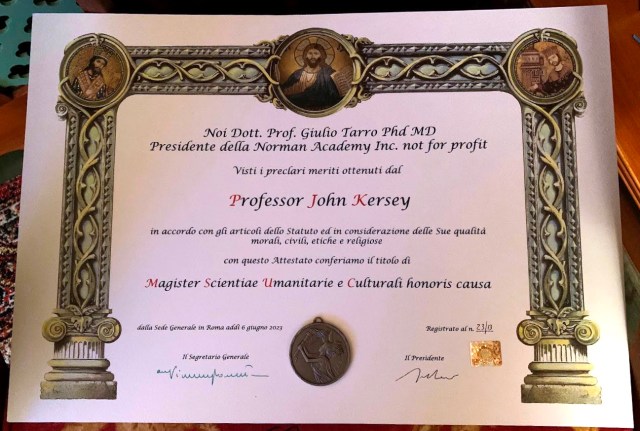
Honours and awards: Distinguished Fellow of the Oxbridge Institute of Professional Development

I have been honoured by the Oxbridge Institute of Professional Development, United Kingdom (OIPD), which has awarded me an honorary membership in the category of Distinguished Fellow. This award is made at post-doctoral level equivalent to level nine of the UK Regulated Awards Framework, and is the highest award of the Institute.

OIPD has entered into an agreement of recognition with OXCEL – The Oxford Centre for Leadership (UK), and European-American University (Bunyoro-Kitara, France, Florida USA) under my leadership.

New CD published -Piano Music of Heller Nicholls (1874-1939), Cuthbert Harris (1870-1932) and Ernest Austin (1874-1947)

A new CD has been issued by Romantic Discoveries Recordings.

Piano Music of Heller Nicholls (1874-1939), Cuthbert Harris (1870-1932) and Ernest Austin (1874-1947)
John Kersey, piano
RDR CD110

Total time: 70 minutes 6 seconds.

(WILLIAM) HELLER NICHOLLS
1. Alsatian Echoes (9:52)
i. The Old Gateway ii. In the Cathedral iii. Flight of Storks iv. La belle ville Strasbourg – Alsatian Melody v. Mont St. Odile
2. Evesham Vale: Suite for pianoforte (12:23)
i. The Abbey Tower ii. On the Avon iii. Plum Pickers’ Dance iv. Apple Blossoms v. A Walk in the Fields
3. Changing Moods (4:45)
4. In the Wood; three pieces (7:56)
i. Swaying Trees ii. Night iii. Running Water

CUTHBERT HARRIS
5. Poetic Pictures (11:34)
i. Memories ii. The Wreck iii. The Angelus iv. Evening Shadows v. An Old Minster vi. Prelude
6. Moonlight (3:05)
7. Five Impressions for pianoforte (8:36)
i. The Sea ii. In a Swiss Valley at Night iii. The Faun iv. The Setting Sun v. In Shady Woodlands
8. Toccatina (2:07)

ERNEST AUSTIN
9. English Pastorals, op. 43 (9:27)
i.In Sun-Lit Forest Glades ii. A Quiet Valley iii. Sunset Harmonies iv. On the Hilltops

New CD published – Piano Music of Leonard Butler

A new CD has been issued by Romantic Discoveries Recordings.

Piano Music of Leonard Butler (1869-1943)
John Kersey, piano
RDR CD109

Total time: 78 minutes 27 seconds.

1. In the Heart of the Garden (10:11)
i. In the Sunshine ii. In the Heart of the Garden iii. Song of the Sun-Dial iv. To the Maid of the Garden v. The Song of the Garden vi. May-Bells

2. Sweet Auburn, The Deserted Village, suite for piano (after Goldsmith) (13:48)
i. The Village Bells ii. A Spring Phantasy iii. On the Village Green iv. A Meditation v. A Remembrance vi. The Weeping Willow vii. The Deserted Village – A Lament

3. From the Surrey Hills: Fifteen Tone-Pictures for Piano (28:48)
i. Sunday Morning (Ranmore, Dorking) ii. The Meadow Path iii. Where Primroses Grow iv. Through “Bluebell Land” v. In the Merry Month of May vi. Through the Pines vii. Swaying Tree-Tops viii. A Song of my Homeland ix. The Song of the “Tillingbourne” x. The Song of the Old Windmill xi. In the Noontide Heat xii. The Dance in the Harvest-Field xiii. Sunset xiv. Brownies xv. As the Children Fall Asleep

4. Monastique (Tintern Abbey) (1:50)

5. On a Summer Shore (9:33)
i. On a Summer Shore ii. In Saint Martin’s Summer iii. Arietta iv. Rondel

6. Rhapsody: At Twilight (3:44)

7. Outdoor Life – five sketches for pianoforte (10:18)
i. Sunrise ii. The Bird by the Brooklet (“Bury Hill”, Dorking) iii. Through the Forest (Souvenir of a Holiday in the High Pyrenees) iv. By the River (The Fisherman’s Path – Fowey River – Bodmin Road, Cornwall) v. In the Silver Haze (Lantivet Head – Fowey)

New CD published – Piano Music of Percy Elliott

A new CD has been issued by Romantic Discoveries Recordings.

Piano Music of Percy Elliott (1870-1932)
John Kersey, piano
RDR CD108

Total time: 57 minutes 16 seconds.

1. Under the summer moon; idyll (4:23)

2. The Glamour of the East – A Kashmiri Suite (13:03)
i. By the Lake of Dal ii. The Dancer of Jamu iii. In The Hills iv. The Maharajah Passes

3. My Garden of Dreams; Three Imaginations, Suite for pianoforte (9:29)
i. In My Lady’s Rose Bower ii. Hammock Song iii. Floral Dance

4. Dream Lagoon Suite (14:16)
i. Yellow Jasmine – Intermezzo Gracieuse ii. Queen of the Roses – Petite Valse Caprice iii. The Dream Lagoon – Barcarolle

5. Sunbeams and Moonbeams: Four more Contrasts for piano (15:54)
i. Dancing Sunbeams ii. Moonrise O’er the Lake iii. Flaming June iv. Moonset

New CD published – Piano Music of Alfred Frederic Mullen (1865-1936) volume 3

A new CD has been issued by Romantic Discoveries Recordings.

Piano Music of Alfred Frederic Mullen (1865-1936) volume 3
John Kersey, piano
RDR CD107

Total time: 63 minutes 49 seconds.

1. Saga (5:22)

2. writing as “Gustave Lind”: Rubaiyat, suite for piano (10:22)
i. Sunrise ii. The Flower Garden iii. Lovers’ Meeting iv. The Farewell

writing as “Gustave Lind”: Spring Tales – suite for piano
3. The voice of Spring (1:51) 4. One Spring morning (2:47) 5. The pleasant month of May (2:21) 6. Around the maypole (2:18)

writing as “Gustave Lind”: The silent mere, three impressions for piano
7. Once upon a time (2:26) 8. The Woodnymph (1:44) 9. Moonrise (3:10)

writing as “Pierre Lescaut”: The city of dreams
10. In the Palace of Happiness (2:47) 11. The Princess (1:37) 12. The City of Dreams (3:23) 13. Love’s Awakening (1:35)

writing as “Gustave Lind”: Edda, suite for piano
14. Frigga and the Shepherd (2:35) 15. The Magic Mead (3:52) 16. In Flower Land (2:27) 17. The New World (2:03)

writing as “Gustave Lind”: In an old world city – a suite for pianoforte
18. By the old lily pond (1:53) 19. Where the hedgeroses grow (1:29) 20. Starlight through a little window (2:52) 21. When all the world was young (1:18) 22. In a little churchyard (2:46)

New CD published – Piano Music of Alfred Frederic Mullen (1865-1936) volume 2

A new CD has been issued by Romantic Discoveries Recordings.

Piano Music of Alfred Frederic Mullen (1865-1936) volume 2
John Kersey, piano
RDR CD106

Total time: 72 minutes 38 seconds.

PIANO MUSIC OF ALFRED FREDERIC MULLEN (1868-1936) volume 2
John Kersey, piano

1. writing as “Pierre Lescaut” The Valley of Repose, four impressions (11.16)
i. Night Thoughts ii. The Water Nymph iii. At Twilight’s Magic Hour iv. The Meeting of the Waters

2. Twelfth Night – three incidental dances (9:50)
i. Shadow Dance ii. Twilight Dance iii. Torchlight Dance iv Roses and Rue

3. writing as “Jean Morel” O’er Moorland and Mountain, suite for pianoforte (7:49)
i. Purple Heather ii. Thistledown iii. A Passing Cloud iv. A Freshening Breeze

4. writing as “Victor Salcède” Three Romantic Idylls (9:01)
i. The River of Dreams ii. Serenade iii. Peep O’Dawn – Scène de Ballet

5. Venetian Suite (6:29)
i. On the Grand Canal ii. Serenade iii. Tarantella

6. writing as “Pierre Lescaut” Indian Scenes, four impressions (7:51)
i. Snake-charmer ii. Siva iii. By the Taj Mahal iv. Nautch Dance

7. writing as “Jean Morel” In fancy’s realm, lyric suite for piano (10:22)
i. Day-Dreams ii. Stepping Stones iii. Nature’s Mirror iv. Dragon Flies

New CD published – Piano Music of Alfred Frederic Mullen (1865-1936) volume 1

A new CD has been issued by Romantic Discoveries Recordings.

Piano Music of Alfred Frederic Mullen (1865-1936) volume 1
John Kersey, piano
RDR CD105

Total time: 62 minutes 14 seconds.

1. Highways and Byways, four sketches for piano (9:12)
a. In the Still Woodland b. The Little Shepherdess c. By the Lych-Gate d. On the Broad Highway

2. writing as “Gustave Lind”: In an old Italian garden (Piacenza, 1914) (9:14)
e. By a Forgotten Well f. In Bocaccio’s Days g. A Deserted Temple h. A Shepherd’s Song i. In Brocade and Silk

3. A Garland of Memories (7:58)
j. For Remembrance k. Columbine l.. ‘Neath the Pergola m. Snapdragon

4. writing as “Gustave Lind”: Eventide (10:38)
n. Forest Piece o. The Heart of the Sunset p. Chant Poetique q. The Queen’s Minuet

5. writing as “Pierre Lescaut”: The Enchanted Isle; four impressions (10:35)
r. By the Pools of Silence s. Elfin Glade t. Mystic Night u. Roseate Dawn

6. writing as “Gustave Lind”: The Black Iris Suite (9:15)
v. The Black Iris w. Ayesha x. The Lotus Pond
“Thus said Vikrama, the Godborn: ‘When after a thousand times thousand Karmas the black Iris will appear in the Lotus cup of the sacred lake Manassorowa, bathed by the beams of Arjana, then shall thy soul obtain the Nibhanam.” – From an old M.S. of Brahmacharya Yengar

7. A Hunting Morn (3:25)

Recorded in 2014.

New CD published – August Wilhelm Hartmann: Piano Sonata in C minor, with works by Lachner, von Hessen and Sterndale Bennett

A new CD has been issued by Romantic Discoveries Recordings.

August Wilhelm Hartmann: Piano Sonata in C minor, with works by Lachner, von Hessen and Sterndale Bennett
John Kersey, piano
RDR CD104

Total time: 62 minutes 14 seconds.

A.W. Hartmann (1775-1850): Piano Sonata in C minor (unpublished, prepared from the composer’s manuscript)
1. (6:49)
2. (5:36)
3. (4:33)

4. Alexander Friedrich Landgraf von Hessen (1863-1945): Fantasiestuck, op 2 (8.36)

Franz Lachner (1803-80): Suite, op 142
5. Praeludium: Allegro moderato (3:45)
6. Andantino (6:48)
7. Menuetto: Allegretto (8:33)
8. Allegro agitato (4:04)

Sir William Sterndale Bennett (1816-75): 4 Studies in the form of Capriccios from op 11
9. no. 1 Allegro con Precisione (4:24)
10. no. 3 Allegro Brillante (2:12)
11. no. 4 Vivace Giocoso (3:05)
12. no. 6. Allegro Agitato (3:24)

Our thanks to Klaus Zehnder-Tischendorf for supplying scores of these rare works. Recorded in 2014.

Honours and awards: Cavaleiro de Acre from the Ordo Templum Domini

In 2018, I was awarded Honorary Knighthood in the Ordo Templum Domini, a Templar Order based in Brazil whose Prior is Archbishop David Caparelli, representative for Brazil of the Apostolic Episcopal Church. I have recently been pleased to receive promotion to substantive Knighthood in the Order.

In addition, the Order has conferred the honorary distinction of “Knight of Acre” on me.

Honours and awards: Commemorative Medal of the Union of Polish Monarchist Groups

By Resolution of the Chapter of Decorations of the Union of Polish Monarchist Groups no. 41 of 17 April 2023 for Outstanding Merits in Promoting the Concept and Distinction of Nobility, His Serene Highness Archbishop Professor Edmond John Kersey de Polanie-Patrikios of His Own Armigerous House was Awarded a Commemorative Medal Celebrating 25 Years of the U.P.U.M.