Speech to the British Democrats Annual Conference 2025

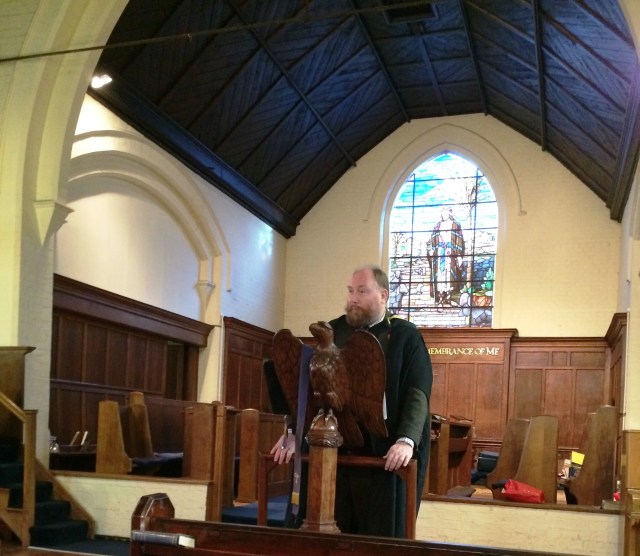
I was a guest speaker at the annual conference of the British Democrats on 25 October 2025. This is the speech I gave:

Last year I encountered a sticker on a town wall placed there by a Marxist group. The content was as you might usually expect, but there was also something new about it. Not only did it proclaim its opposition to fascism and the so-called far right, but it also attacked patriotism. I will leave it to your imagination as to what I did to the sticker.

We should consider why it is that at the present time the Left is so opposed to patriotism. It is not so long ago that the Left was generally supportive of Britain and our national character. Working-class Labour supporters would have defended the British way of life and our values. While there might have been much that separated us politically, there was still a common national culture that acted as a unifying force.

What has happened now is that the Labour Party and indeed most mainstream political parties have unceremoniously ditched the working class. It is not hard to see why. The working class have been blamed for voting for Brexit and it is clear that they constitute the principal opposition to the globalist system. They are held by those in power to have nationalist and patriotic views and to oppose mass immigration. It is of course the working class that feels the impact of mass immigration most acutely in the changes to its communities and in the destruction of its culture, and that is at the heart of the present ongoing protests at the housing of asylum seekers in hotels. If any political party succeeds in mobilising the working class, it will be in a position to change this country’s destiny.

And yet the current Labour government has members of its Cabinet who are beyond any doubt from the working class. What has happened to them? The answer is that in order to progress and profit from their positions, they have shown that they will adopt the values of globalism in place of those of the working class. They have done the same as was always said of those working class people who became managers and foremen. As soon as that promotion came along, their personal interest was put ahead of any kind of class solidarity. Yet these government ministers will still be paraded as evidence that the working class is still being represented, even though they have no interest in reflecting the views of the indigenous people of their community.

So if any political party wants to understand Britain as it is now, the most obvious aspect here is that there is a stark division in our society. On the one hand we have the new middle class. This not only includes those in government and the public sector but will also include anyone who pledges public support for its chosen values. In this way, this is not a class that is determined solely by income or financial status, but instead by ideology. The ideology of the middle class is wokeism, and by pledging support for wokeism even the most mediocre of individuals can find themselves in a position of power. In publicly aligning with woke values, they have shown themselves fit for such promotion, because they have replaced any values they might once have held themselves with a new set of values, many of which are unnatural and inhuman. Those values are a test of belonging, a shibboleth, and they act as a gatekeeper for those who are to be admitted to the new middle class. The reality of course is that they are also Marxist values.

Almost all of our public institutions, including government, have been taken over by a post-Marxist ideology that looks to the middle class rather than the proletariat to spread itself. By devolving power to quangos and other unelected bodies, and by creating a charity sector that is allowed to lobby politicians, the New Labour project ensured an open door to Marxist infiltration. It is now endemic in every sector.

And on the other side of the divide is the traditional indigenous working class of our country. They form a numerical majority, but they have progressively been disenfranchised by those in power. If we go back only twenty years, we could still find a recognizable British working class culture. It was lively, varied, and visible in homes, communities and as the basis for a good deal of media content. It probably found its truest expression in our pubs, which were centres both for community engagement and for the building of solidarity through the sharing of common views.

But who speaks for the working class now? It looks a lot as if the globalist middle class have taken it as their project since Brexit to crush and eliminate the indigenous working class of this country. One major impact has been mass immigration. This disproportionately affects the working class, and it is also part of a larger impact caused by globalism.

Our government, under the pretext of Covid, destroyed a significant part of our economy by targeting small businesses while protecting and strengthening globalists. It was planned and it was intentional. The aim was to launch an economic attack on working class businesses, which often have few reserves of capital to draw upon and are dependent on a constant supply of customers to stay afloat, and to ensure that what financial help was available would be specifically directed away from them. The report by Simply Business in 2021 found that there were six million small and medium enterprises in the UK – accounting for over 99% of all businesses, 33% of employment and 21% of all turnover – and that Covid lockdowns had blown a £126 billion hole in their books (1). Add to this the cost of living crisis that government has no answers to.

The world of employment has turned against the working class not only in the jobs lost to Covid lockdowns, but also because the job market prizes adherence to the woke values of the middle class. With many applicants for each job, employers can select not only on the basis of competence, but on the basis of compliance. With graduates, they also can rest assured that navigating the current British university system is likely to mean adapting to a left-wing environment where any residual working class values are likely to be firmly dismissed. We also seem to have given up on social mobility and any idea of bettering ourselves. The education system has been reduced to training young people for employment. It has eliminated any support for reflective academic study that does not lead to an objective result that can be measured according to narrow, reductive criteria. All of this is controlled by centralised management systems which are designed to place workers under such a burden of petty bureaucracy and policy compliance that they are too stressed and ground down to complain.

And we can also see that even given this situation, the jobs market is still shrinking. Entry level jobs are increasingly being eliminated firstly through government’s punitive economic measures on employers and secondly because artificial intelligence is being allowed to replace many of them. I don’t know how many of you enjoy interacting with artificial intelligence in the place of a human, but I certainly don’t. Many customer service functions are now entirely unaccountable because there are no humans to speak to, and the entire thing is controlled by bots who are designed to fob you off. Where customer service is human led it seems that fluency in English is too rarely a criterion for employment. Again, making it difficult for you to be understood is another way an organization can avoid addressing your concerns.

This is something that we should not put up with. It is not only betraying our working class, it is destroying our society. Those of us who have lived through the past thirty years can see the decline very clearly. Those who have arrived here more recently through mass immigration are not likely to complain against the political establishment but rather to support a system that continues to be strongly biased in their favour, and that is why they are preferred to our indigenous people by those in power. The less they know about Britain the better, because they will not be asked to assimilate to our culture or to understand it. Those in power will divide us in order to rule, and their instincts are entirely authoritarian. The more our society is atomised the easier it is to control it. We must resist the sinister and intrusive menace of Digital ID, and we must particularly stop it from being forced on our children (2).

So what can we do to reverse this decline? The first thing to say is that we can indeed reverse it even though every aspect of the establishment, including both the mainstream and social media, will tell us that is impossible. We have had enough of politicians who do little more than manage failure. Our economy is in tatters and we are faced with constantly rising prices, rising immigration, but falling productivity and failing culture. If we do not act now, we will not get another chance. We must recognize that there will be monumental resistance to any change from the blob of public sector workers and the huge amounts of money that are ploughed into advocacy for Marxism. But the fight to overcome this is vital and it can succeed.

We must use all peaceful means within the law to undo the damage that has been done to Britain since the coming to power of New Labour in 1997. That is not to say there were not problems before then, but that date saw an acceleration of the Leftist takeover of Britain and put in place the measures that would make that possible, destroying the constitutional basis of our nation. If every piece of legislation passed since 1997 were simply abolished by a nationalist government we would be the better for it.

And so to the practical measures a nationalist government must take to put things right. Firstly we should withdraw from the European Court of Human Rights and abolish the Human Rights Act 1998, not because we do not care about human rights, but because these two combine to provide a Left-wing means to stop us from controlling immigration and defending our own borders. The European Court has even started inventing its own powers, whereby it recently anonymously issued an injunction against the UK, preventing a plane deporting migrants from leaving the airport (3). This kind of arbitrary European activist so-called justice has no place in our country and Brexit was supposed to rid us of all of it and make our own courts sovereign rather than subject to the oversight of foreign powers. We do not need the European Union to impose its view of human rights on us. Britain taught the world about human rights and our record on that issue, though not spotless, is nevertheless one that we can look back on with pride.

We then need to withdraw from the Refugee Convention of 1951 and similar measures. The world in 1951 was a very different place compared to today, and these measures are now seized upon by left-wing forces determined to let foreign men of fighting age into our country when in many cases their aim is purely economic gain rather than any consideration of safety.

Many more problems of a similar nature are caused by the United Nations. The United Nations is dominated by dictatorships and autocratic regimes that are deeply opposed to Western values (4), and it is ineffective at preventing conflict. We should leave the United Nations and instead build up the Commonwealth of Nations into a truly active and representative international body that stands for and defends the values we have in common with other countries.

Lastly on this, we need to make a fundamental change to the way our country sees its mission. We need to make it clear that in all major political decisions, the national interest comes first. We hear far too much about Britain’s international obligations and the reality is that international interests are far too often placed before those of our nation. We need to put Britain first, always. That need not mean complete isolation, but it does mean that we should never be dominated by foreign powers. Our foreign policy must be decided in our own nation’s best interests and we must not become involved in foreign conflicts except where British interests are threatened. Our defence policy should be focused on exactly that – the defence of Britain and the British Overseas Territories – and not on involvement in foreign wars.

Our whole justice system needs to be reset. The House of Lords should once again become our highest tribunal because Parliament is the servant of the people, and it should remain supreme, not the courts. Decisions taken democratically in Parliament by elected politicians should not be subject to judicial review, which simply obstructs the passage of legislation. A US-style Supreme Court is entirely  un-British. We need to bring back the Law Lords, who Tony Blair abolished without any good reason. We also need to return to the system of appointing judges that we had before Tony Blair, who handed that responsibility to a quango – the Judicial Appointments Commission. Any quango is likely to become dominated by leftist views. People whose views are firmly of the Right do not get asked to join quangos and they are unlikely to be interested in joining them when they are controlled by a Left-wing majority. We need to remove judges who see their role as being to exercise Left-wing activism from the bench (5) and we also need to restore the balance of political views among the judiciary.

Our police are showing the strain of the burden placed on them by the Blair era verdict that they were “institutionally racist” – which has inevitably made the police far more Left-wing than they were before. The police should represent the community they serve, and there is no substitute for police officers who know the people in their neighbourhood. Too much has been abdicated to CCTV, which is an unwarranted invasion of the privacy of the public, and which should be confined to our city centres. In the recent policing of demonstrations, we have seen the reality that the police are under Left-wing pressure from both the courts and the media, which causes them to go easy on Left-wing protestors (6). A nationalist government would take measures to liberate the operations of the police so that they can do their job without being concerned about the machinations of the Left against them. The job of the police also needs to become much more locally centred. It should be concentrating on restoring law and order in our towns and cities, and ensuring that our women feel safe to walk the streets without being threatened. We need to return to a concept of policing that understands that a visible police presence in a community is an effective deterrent to crime.

Most of the Left-wing ideology that has ruined this country has come from urban people and their institutions. The cities have lost much of their British character to mass immigration, and now consist of divided communities with little or nothing in common. Where there is no common heritage and culture, this creates a void where Marxist ideas are easily infiltrated. It also makes the city increasingly divorced from any concept of national identity since its allegiance is primarily to globalism. The death of many smaller shops and businesses has hastened this process.

The nature of rural life in Britain means that those who live in the countryside are much less likely to fall for Marxism. This is largely because country life is rooted in the real and the practical, and its closeness to nature means that it is not given to artificial constructs such as postmodernism, gender identity and critical theory. This is a principal reason why the current establishment hates the countryside and its people. The family tax on farms, building houses on farmland and the crushing weight of bureaucracy on agribusiness is indicative of this.

Our government must also take immediate steps to uphold freedom of speech in our country. The past decade has seen a great restriction of the freedom of speech where what is said is deemed to have given offence to someone. Our laws should not recognize a right not to be offended. Unless what is being said is directly inciting violence, it should be fully legal, and that includes the burning of religious books of whatever kind. The politics of offence have almost completely killed off what was a strong and living legacy of radio and television comedy that was often irreverent and at times included strong elements of black humour (7). Now, we are left with comedy that is deliberately neutered so as not to offend anyone who regards themselves as protected by law, and that far too often simply presents a leftist perspective in order to play it safe. We need to return to a position where comedy and satire are free to flourish, because they are key to our country’s culture and indeed to its very survival. It is truly said that the first thing a British person is likely to do when faced with dire peril is to make a joke. That approach got us through two world wars and we need it now.

We must above all reassert our common culture. If anything is part of the enormous variety that is the British heritage, we must cherish it and promote it as much as we are able ahead of globalist mass culture. Reasserting our culture does not mean only that we celebrate its past, but that we nurture its present and future. To do this we do not need to abandon online culture, but we should never allow the internet to take over completely. And we must look back on Britain’s history with justifiable pride. Our nation’s past is not faultless, but it is full of glory and achievements that we should celebrate. We should not pay a penny in reparations to the descendants of slaves. White people were also sold into slavery – the difference being that few of them were allowed to leave descendants (8).

And one of the greatest things in the British character is the amateur spirit. The contribution made to our culture by those who were not making money from it has been enormous. Whatever your interests in British culture may be, I urge you to do as much as you possibly can to keep those interests active and to share them.

Related to this is the need to reassert the masculine in our culture. Men have been hit hard by the nature of the changes in our society over the last thirty years, which, whatever their intentions, have generally been against their interests. We need more attention to be paid to reversing the underperformance of White boys in our education system. We also have nearly a million young men not in education, training or employment (9) and many older men who have had to give up on employment altogether. The jobs that men once did have disappeared and been replaced by growth in areas such as health and social care, education and public administration where there is a majority of women in employment. Industry and manufacturing, which once employed a majority of men, have virtually disappeared. In addition, women have been introduced to traditionally male spaces where it would have created outrage had men been introduced to similar female-only spaces. We need to get back to a position where it is acceptable for men to have their own spaces apart from women, just as it is acceptable for women to have their own spaces apart from men. We should not allow gender politics to confuse these issues, because the Supreme Court has ruled very clearly on the application of the law in that area (10). Men and women are equal but different, and our society should recognize and respect that difference. There needs to be an acceptance of men and masculinity, not to the detriment of women, but as part of a society that is healthy and that has room in it for everyone.

Taking back control will help redress that balance. It is not in Britain’s interests to have vital industries and utilities owned by foreign businesses. With foreign ownership comes foreign control and influence. We need to ensure that we can stand on our own two feet when it comes to basic necessities in this country, and not always make decisions on the basis of the availability of cheaper foreign imports. We need to maximise our own supplies of gas by using our reserves to the full, and we must not become dependent for our energy on foreign suppliers that could then hold us to ransom (11). We must consign net zero to history, because its cost and impact on our nation is ruinous (12). We should also invest in reviving manufacturing and industry to serve the UK domestic market and reduce our reliance on imports. We must be more than simply a nation of consumers. British  products were once regarded as the finest in the world. A start would be a government committed to buying British and to ensuring that British goods are readily available at affordable prices.

The threat that is now facing us is one that we have not encountered before. It is an existential threat against British culture and against its people. If steps are not taken to stop uncontrolled mass immigration, the native British will follow the pattern already seen in London, Birmingham, Leicester and Luton, (13) and be reduced to a minority in our own country (14). We cannot afford to wait. Action is imperative now, and all politicians need to start listening after years spent ignoring us. The first step we can take is to stop paying foreigners to live here, and spend that money on a sensible programme of deportation. Ten billion pounds of Universal Credit went to non-UK citizens in 2024 (15).

Then we immediately need to reassert the British culture and way of life, and insist that everyone who is here needs to assimilate to its very broad boundaries, and above all that if anyone wishes to live in this country, they must learn English and they must contribute to our society. Our public services should not be spending a penny on translators.

Our nation and our people are worth every sacrifice. The call is now to save our country and we must give everything we can to that aim. In doing so, we must be prepared to see beyond boundaries and work with all who support this cause. Together, we can win our Britain back.

References:
(1) https://www.simplybusiness.co.uk/knowledge/business-news/the-impact-of-covid-19-uk-small-business-2021
(2) https://www.itv.com/news/2025-10-10/digital-id-cards-for-children-as-young-as-13-government-suggests
(3) https://news.sky.com/story/first-deportation-flight-to-rwanda-halted-after-last-minute-legal-appeals-home-office-confirms-12634130
(4) https://www.cfr.org/blog/minded-dictatorships-and-united-nations 
(5) https://www.independent.co.uk/news/uk/politics/robert-jenrick-wig-judges-conference-speech-birmingham-b2840897.html 
(6) https://news.sky.com/story/police-urged-to-pay-more-attention-to-extreme-left-wing-protesters-13140819
(7) https://www.thesun.co.uk/tv/37098982/woke-culture-killed-comedy-ally-ross/
(8) https://byfaith.org/2022/07/02/the-forgotten-white-slaves-and-the-ignored-history-of-slavery-worldwide
(9) https://www.bigissue.com/news/employment/young-people-work-education-neet-disability-health/
(10) https://supremecourt.uk/uploads/uksc_2024_0042_judgment_aea6c48cee.pdf
(11) https://www.theguardian.com/business/2025/apr/29/nationalise-gas-power-plants-to-boost-energy-security-thinktank-urges-uk-ministers
(12) https://www.bbc.co.uk/news/uk-politics-48540004
(13) https://www.independent.co.uk/news/uk/luton-leicester-london-slough-redbridge-b2235261.html
(14) https://www.dailymail.co.uk/news/article-14777983/White-Brits-minority-UK-40-years-report.html
(15) https://www.telegraph.co.uk/news/2025/10/11/one-six-pounds-universal-credit-foreigners-benefits

Speech to the Heritage and Destiny Memorial Meeting 2025

With the other speakers

On September 7, I was one of the speakers at the Heritage and Destiny Memorial Meeting in the North of England. Here is the speech I gave.

Video of the speech is at https://odysee.com/@Nationalism:3/04_Prof.-John-Kersey-(7th-Sep-2025)-5MB:e

Our theme today is The Roots of the British, and so let me begin by reminding us just who the British are. Firstly, I want to refer to the work of geneticist Adam Rutherford, who has done extensive work on historical genetics and has applied statistics and probability to questions of descent. His findings are that if you are of predominantly British descent, and were born (or are descended from someone who was born) in the 1970s, it is virtually impossible that you are not directly descended from King Edward III of England[i]. And if you are descended from him, you are also a descendant of William the Conqueror, Alfred the Great, and every ruler of Europe in the 10th century. So, on the basis that I am talking here to an audience comprised of British people of British descent, I have a message for you: the blood of kings runs in your veins. You are the descendants of British men and women of greatness whose names will live evermore in history. You are the connexion between them and future generations. You need not only to know your ancestors but to honour their example. Be truly who you are. And, by the way, that means that almost everyone in this room is related to everyone else. We are all distant cousins.

In our literature, the figure of William Shakespeare is not only the greatest British writer to have ever lived, but in my view, the greatest in the world. And if we want to hear some of his words that speak to us just as clearly today, let us go to the orchard in Swinstead Abbey and listen to the words of Philip the Bastard, son of King Richard I, who has just seen his uncle King John die:

This England never did, nor never shall,
Lie at the proud foot of a conqueror,
But when it first did help to wound itself.
Now these her princes are come home again,
Come the three corners of the world in arms,
And we shall shock them. Nought shall make us rue,
If England to itself do rest but true[ii].

And today, England has again helped to wound itself. We can rightly ask at the moment, “who runs Britain?” The answer isn’t Keir Starmer.

We can find the roots of what has happened in the ideas of the Socialist Workers Party. Its former leader Yigael Glückstein (known as Tony Cliff) devised the concept of “deflected permanent revolution” in a 1963 essay, which holds that where the proletariat cannot take power, a section of the intelligentsia can work towards a bourgeois revolution. Cliff defines very accurately the position of the intelligentsia regarding the working class by saying “The intelligentsia are anxious to belong without being assimilated, without ceasing to remain apart and above. They are in search of a dynamic movement which will unify the nation, and open up broad new vistas for it, but at the same time will give themselves power.” [iii]

So this is not classical Marxism, which is class-based and concerned with the struggle of the working class. Instead, this contemporary ideology addresses itself to issues of race, gender and identity politics, and to what it identifies as oppressed minorities. It operates through the intelligentsia, which can be drawn from any class and is identified by its access to university education and the professions. If we were to analyse it academically, we would most accurately describe it as post-Marxism. It rejects classical Marxism for its reliance on grand narrative, and instead is anti-essentialist, not economically determinist, and strongly based on Gramsci’s concept of hegemony. Although it is primarily directed against the politics of the Right, it is also opposed to the traditional Left. It has no time for the socially conservative elements of Labour or for the socialism of Jeremy Corbyn.

The communist Antonio Gramsci advanced the idea of cultural hegemony, in which a ruling class maintains its power through establishing its ideology as so-called “common sense” so that it becomes a universal norm that is firmly established in the social order, particularly through education and the media[iv]. The idea is that this ideological takeover comes to be seen as natural and inevitable rather than having been achieved by force. For that reason, its proponents take an approach of pushing forward gradually, manufacturing consent, and embedding their ideas through entryism into every public institution.

And so this quiet revolution has been undertaken by the liberal middle class of today. This is a class which defines itself by adherence to specific beliefs and ideological conformity, and it is that which keeps it apart and above. The beliefs are often deliberately absurd – that men can become women, for example – but that is the whole point. These beliefs are shibboleths, and they are used to mark people out as belonging to the middle class. In addition, the choice of shibboleths is deliberate. By making someone believe and pledge public allegiance to something which is obviously false, you destroy their moral fabric and their sense of what is right and wrong. The overall aim is that of culture war, in which everything that is traditional in British life is to be attacked and destroyed. It will be replaced by a society whose members are isolated, atomised, without cultural or moral values, and compliant with whatever their masters want them to do. It seems very clear now that the Covid lockdowns were a trial run for this.

This system doesn’t rely on anything as obvious as state ownership. On the contrary, it spreads its control through a multitude of bodies, many of which are in theory private, but all of which are broadly committed to post-Marxist ideas. They are charities, trade unions, universities, political and special interest lobby groups, and non-government organizations. They are united by their opposition to the nation-state and everything that Britain has stood for culturally. They includes groups that have significant ideological differences, but when it comes to achieving the overall aims, there is an agreement that these differences should be smoothed over and ignored.

Parliament has spent several decades giving away its power to unelected bodies. In doing so, it created the ideal environment for this post-Marxist takeover. In 2012, Christopher Snowden commented on this phenomenon during the Blair era in a paper for the Institute of Economic Affairs, in which he said, “In the last fifteen years, state funding of charities in Britain has increased significantly while restrictions on political lobbying by charities have been relaxed. 27,000 charities are now dependent on the government for more than 75 per cent of their income and the ‘voluntary sector’ receives more money from the state than it receives in voluntary donations.

It has been argued that state funding weakens the independence of charities, making them less inclined to criticise government policy. This paper argues that there is a deeper problem if government funds and/or creates pressure groups with the intention of creating a ‘sock-puppet’ version of civil society which creates the illusion of grassroots support for new legislation. These state-funded activists engage in direct lobbying (of politicians) and indirect lobbying (of the public) using taxpayers’ money, thereby blurring the distinction between public and private action.

State-funded charities and NGOs usually campaign for causes which do not enjoy widespread support amongst the general public (e.g. foreign aid, temperance, identity politics).”[v]

Yes, these charities, which include one with which we are all familiar – Hope not Hate[vi] – do receive money from the state. But more than this, they can easily be funded by other interests who intend to further the post-Marxist agenda. And these other interests can stay in the shadows, without any serious scrutiny.

With so much devolved to these groups, our Parliament is effectively bypassed as a place of cultural influence. Instead, what rules is the web of special interest groups which effectively decides what government policy should be and tells politicians what to do. It is entirely deliberate that this system is out of touch with the electorate. It is being ruled by post-Marxist activists who are working to bring about a position where their ideas form a Gramscian hegemony and will go unchallenged. The electorate has no relevance to these people, since most of them are unelected and unaccountable. Writing recently in The Telegraph, Allison Pearson said “It’s as if we were under occupation by a group of hyper-liberal progressives who have infected every corner of national life with their weird, righteous dogma, endlessly searching for proof of native loathsomeness and treating any pushback as proof of guilt.” [vii]And that is precisely what is happening.

The primary aim of the activists can be summarized as being first to break down any institution they infiltrate, and then to rebuild it with their people and their principles in absolute control. We can see this with the NHS, and with the effect of net zero policies on manufacturing, farming and energy. It is entirely deliberate. Sometimes the destruction is obvious, as with the removal of historical monuments and the renaming of institutions to obliterate the memory of figures who do not fit the post-Marxist agenda. The wider agenda is to destroy tradition and the nuclear family, and to put such a burden of tax, censorship and debt onto people that they will become entirely dependent on the state as the only option that can save them.

And what of mass immigration? There is one reason above all others why the post-Marxists favour mass immigration, and it is because bringing foreigners into this country with no assimilation whatsoever is an extremely effective way to attack and destabilise British culture. For the post-Marxists, the more different the immigrants are from British people, the better. When there is no common people, there is no common culture and a low trust society, allowing those in charge to divide and rule. And when the British people are preoccupied by mass immigration and the problems it causes, it takes their focus off the people and organizations who are encouraging it to happen in the first place.

As part of the post-Marxist project, all resistance to the hegemony must be suppressed. Our culture is deliberately being dumbed-down. Many of us will remember a popular culture of thirty or forty years ago that relied not on formal education but on the native intelligence of our people and their willingness to build on the formidable cultural roots of the British. It was a culture that did not talk down to people and that gave a high priority to the discovery and exposure of working-class talent. There was an assumption that wherever people found themselves in life, they could better themselves.

Since then, our British popular culture has been replaced by a globalist mass culture dominated by the internet, and this consists increasingly of people being told what to think by others. AI is the newest manifestation of this, but what we see as the product of AI is exactly what is decided that we should see by those in power. We have also lost many of the individual voices that once made the online environment a haven for the intellectually curious. Instead, we now have a dominance of online material that is overwhelmingly and crassly commercial, often AI generated, and that is pitched at a moron level of cheap sensationalism. This is the bread and circuses approach that keeps people down. It is not just about turning people into mindless consumers, but it is far more about breaking down their resistance. The ugliness of much modern art and architecture, and the soullessness of much modern commercial music, is part of the same phenomenon.

We also see a loss of aspiration. At one point, it was possible for someone from the British working class to succeed through a combination of talent, hard work and good luck. Now, the system deliberately disadvantages White working class boys in particular[viii]. In the post-Marxist new world order there is no place for those who want to better themselves, and there is no place for those who might have the intelligence to dissent or rebel.

It is still possible for someone from the White working class to learn a trade and do well. But tradesmen have no access to national power. Even the lowest member of the managerial middle class has more access to power than a successful electrician or plumber. And the liberal middle class is there because they have been compliant enough to jump through the post-Marxist ideological hoops of the universities and employment. They compromised early, and learned that if they were to get on and become part of the intelligentsia, they would need to abandon thinking for themselves and fit in to the prevailing establishment.

What also keeps people down is the web of monitoring and control. This was the major change to workplaces during the Blair era and now it dominates every office. It is a culture whereby everything a worker does is pre-planned and monitored. There is an obsession with data as a means of measuring accountability but the reality is that this is a system that knows the cost of everything and the value of nothing. It is an attempt to get rid of any subjective measure of value, and yet it is precisely that subjective measure that makes us human. Everything is now tied up in a stultifying bureaucracy that serves no real purpose in terms of making work better or more effective, but takes up enormous amounts of time and effort. Why should it predominate, then? Because it is a method of ensuring that people are too busy, tired and ground down to complain or revolt. The system is there to control them, and ensure that uniformity is imposed and individuality is destroyed. It’s exactly the same tactic that was employed in the Soviet Union.

This change to our culture also promotes short-termism. This is in contrast to the post-Marxists, whose project is long-term and designed to progress slowly over the course of decades and multiple generations. The long-term outlook is one which can be identified particularly with the principles of faith, folk and family, and understands our generational context as the bridge between the past and the future. We can talk about this in the context of religious belief, but far more important is the residual effect that religious belief and specifically Christianity has had on our national culture. The Christian Faith was there in the background, providing the basic principles by which we lived in every aspect of British life. When this is taken away, because we will find the post-Marxists in the churches just as everywhere else, we have been left with a society that has no common moral foundation and whose members can be easily controlled from above.

Freedom of speech is one of the first casualties of this process. We have already established that the intelligentsia relies on shibboleths to determine its membership, and that these include ideas that are obviously wrong and absurd. For that reason, free speech must be suppressed because if these ideas are subject to challenge, they will be shown openly to be wrong and absurd. In Britain today, we have lost what was one of the foundations of our society – that all should be able to speak freely and that ideas, particularly political ideas, should be subject to robust debate. Now, there is ever-increasing censorship, and as ever, if you seek to know who rules you, ask who you are not allowed to criticize. We have also become a permanently divided nation. It really is a two tier system consisting of the post-Marxist establishment on one side and everyone else on the other. You cannot have compromise and civilised debate with people who believe that anyone who is opposed to them is (in their very limited understanding) “Nazi scum”. The philosopher Hans-Hermann Hoppe advances a proposal for a society based on liberty in his 2001 book “Democracy, The God that Failed”, and says that democrats and communists, as well as those who advocate alternative, non-family and non-kin-centered lifestyles, will need to be physically removed from society[ix].

Every working day the Prime Minister is greeted by a procession of men and women in suits telling him what he should do and what he should say. These are the people who are pulling the strings that make the politicians jump, and the post-Marxists have significant direct or indirect influence on them. They are embedded inside the Civil Service, and because most government ministers have no actual expertise in their fields, they are the ones with the power.

How do the post-Marxists do it? Well, they have worked tirelessly to get their ideology into every institution that has power. Think, for example, of the police. The 1999 Macpherson Inquiry branded the police “institutionally racist” and the response was that the police were then taken over by post-Marxist ideology in order to purge themselves. If you were to ask most public institutions before the Black Lives Matter protests whether they were racist, they would respond by telling you that they did not discriminate on the grounds of race, and tried to treat people of different racial backgrounds equally. But since the post-Marxists have imposed Critical Race Theory on them, those institutions will now tell you that they are not merely “non-racist”, they are “anti-racist”. And what they mean by “anti-racist” is that they have now completely adopted post-Marxist teachings on race.

It might be thought that if we simply elect the right government, this could change. Well, in order for that to happen, we will need politicians who actually understand the problem. One of the few people in politics who did articulate something on these lines was Dominic Cummings, who referred to the web of influence I have described as “the blob”[x]. If any politician is to succeed in changing Britain, they must have a strategy for not only purging but replacing the blob, and ensuring that it cannot become a mere vehicle for post-Marxist entryism. And if Reform are going to win the next election, I hope they are listening.

As the electorate, we must also have a realistic view of the limits of what Members of Parliament can do. If we ask why there is no significant progress in our country despite changes of government, why we remain culturally stagnant, and why no matter who is nominally in power, the ideology is the same, then we need to look to the fact that politicians are only the public face of the problem, and too often they are simply puppets. The real control, and the real damage, is going on all around them, but they have no willingness, nor perhaps the capability, to resist it. If we support the mainstream parties, our choice is between what we have now, which is a government of activists who are going to support the agenda of the blob, or what we saw with the last Conservative government, which gave up challenging the blob and simply went along with it. In other words, you get exactly the same outcomes whichever party is in power, but with the Conservatives it happens slightly slower.

Many of us have argued in the past for a small state. I think we can now see that this argument has caused the problems we now face. When government devolves its responsibilities to unelected and unaccountable bodies, they get taken over by post-Marxist ideology, and then government either supports this ideology or else does not have the power or the will to do anything to oppose it. There is no alternative but for government to take back what it has given away.

So our country is in an emergency situation, and we therefore need appropriate solutions. There is an immediate need for a strong patriotic national government that will make it its business to tackle the blob, and that will take back power from the post-Marxists by whatever means necessary. It will need to make itself an enemy of the middle classes which have come to depend on post-Marxist ideology, and to instead ally itself with the working class of this country, and that will mean that it cannot be composed of career politicians. It will need to be prepared to fight every dirty trick that the professional classes can throw at it, and it will need to abolish many of the laws that have been introduced since 1997. It will also need to oppose the powerful financial interests that are working through charities and NGOs to push post-Marxist ideas into national policy. It will need to put a complete stop to illegal immigration and begin an extensive programme of repatriation. Lastly, it will need to rebuild our economy so that we are no longer dependent on foreign ownership, because this always comes with strings attached.

It will not be easy and it will not be quick, but we are now in an existential crisis where this is the only option, and we need men and women who are able to commit to making Britain great again and restoring a decent and civilised society.

So let us end by going back to the Bard,

And you, good yeoman,
Whose limbs were made in England, show us here
The mettle of your pasture; let us swear
That you are worth your breeding; which I doubt not;
For there is none of you so mean and base,
That hath not noble lustre in your eyes.
I see you stand like greyhounds in the slips,
Straining upon the start. The game’s afoot:
Follow your spirit, and upon this charge
Cry ‘God for Harry, England, and Saint George!”[xi]

NOTES:

[i] See https://www.waterstones.com/blog/family-fortunes-adam-rutherford-on-how-were-all-related-to-royalty
[ii] Shakespeare: King John – Bastard, Act 5 Scene 7
[iii] Tony Cliff: “Deflected Permanent Revolution” (1963) retrieved from https://www.marxists.org/archive/cliff/works/1963/xx/permrev.htm
[iv] See Thomas R. Bates: “Gramsci and the Theory of Hegemony”, Journal of the History of Ideas Vol. 36 no. 2 (Apr-Jun 1975), University of Pennsylvania Press, pp. 351-366, retrieved from https://www.jstor.org/stable/2708933
[v] Christopher Snowdon: “Sock puppets; how the government lobbies itself and why”, Institute of Economic Affairs Discussion Paper no. 39, June 2012, retrieved from https://iea.org.uk/wp-content/uploads/2016/07/DP_Sock%20Puppets_redesigned.pdf
[vi] https://register-of-charities.charitycommission.gov.uk/en/charity-search/-/charity-details/1013880
[vii] Allison Pearson: “Nigel Farage speaks for the millions ashamed of what Britain has become”, The Telegraph, 2 September 2025, retrieved from https://www.telegraph.co.uk/news/2025/09/02/nigel-farage-house-judiciary-committee-free-speech-starmer
[viii] See Julie Henry “Why White working-class children fail: The race divide in English schools”, The Telegraph, 30 August 2025, retrived from https://www.telegraph.co.uk/news/2025/08/30/why-white-children-fail-the-race-divide-in-english-schools/
[ix] Hans-Hermann Hoppe, “Democracy: The God That Failed: The Economics and Politics of Monarchy, Democracy and Natural Order”. New Brunswick, NJ: Transaction Publishers (2001), pp. 216–218 “”There can be no tolerance toward democrats and communists in a libertarian social order. They will have to be physically separated and removed from society.”
[x] See for example https://www.dailymail.co.uk/news/article-8458865/New-report-blames-Whitehalls-blob-civil-servants-scientists-coronavirus-failures.html
[xi] Shakespeare: King Henry, Henry V – Act III, Scene I

This speech is released under a Creative Commons CC BY 4.0 licence, which means it can be freely reproduced and quoted from providing the author is acknowledged.

Speech to the Traditional Britain Group Annual Luncheon, 2025

On May 10, 2025, I addressed the Traditional Britain Group Annual Luncheon in London.

The text of my speech is below.

As I speak to you today, we have recently seen Reform’s extremely impressive performance in the local elections, and if such a performance were to be repeated at a General Election, Nigel Farage would be our next Prime Minister. This is highly significant because it is the first time in living memory that there has been any disruption to the two-party system of government in this country by a new party of the Right. It tells us that voters are not only looking for change but are prepared to put their trust in Reform, doubtless in no small part because of Nigel Farage’s high profile.

It is interesting to note that one extremely skilful aspect of Nigel Farage’s public image is his appearance. Yes, like most politicians, he tends to wear dark suits when he appears on political programmes on television. But when he is canvassing and speaking in public, he alone among our party leaders and prominent politicians wears classic English country clothes. We see him wearing tweed jackets, Barbours, tattersall check shirts, ties with pheasants on them, yellow corduroys and red chinos. These things are the nearest thing we have to an English national costume for men. They at once mark out the wearer as an Englishman, but moreover they speak of his affinity with the rural rather than the urban, and with traditionalism rather than the modern. They are also quintessentially masculine. This is therefore not just clothes, it is a set of values. Of course, we will need to see whether Nigel Farage can follow this up with policies that match his appearance, but we can see from this that he is at least visually distancing himself from the current establishment.

What this image suggests is something fundamental to our identity as a nation. It is that of society on a human scale. We find this most clearly expressed in rural life because it is there that we see the traditional concept of Englishness in the rural professions, above all agriculture, as well as communities that are built around villages and market towns, most of which have managed to preserve at least some of their historic buildings. There has been much technological change in farming over the last few decades, but it has generally been absorbed within the same outlook as has always been characteristic of those who are in touch with the land and with livestock. There is above all a continuity and long-term view in rural life that is very different from the alienation that predominates in the urban setting. The rural existence is an indigenous way of life, and reminds us of our heritage, our identity, and that we are rooted in the very soil of our nation. It is also a life that includes not only purposeful activity but stillness and silence. As so eloquently summed up by the ruralist farmer and author Henry Williamson, “What is this life, if, full of care, we have no time to stand and stare?”

But our political class is generally opposed to rural life. It has become a regrettable aspect of our political system that it is now dominated by urban concerns and urban people, and that the voice of the countryside is increasingly excluded. This began with the Labour government of 1997, and many will remember the Countryside Marches in London in those years in protest at the government’s policy on rural affairs, including the Liberty and Livelihood march in 2002. We would have to go back before 1997 to remember politicians who had a genuinely rural perspective, such as the late Sir Richard Body, who was a great supporter of environmental issues and the natural and organic communities that are the bedrock of the countryside. Rather than this, we have seen in more recent years the banning of hunting and now potentially of trail hunting, the substantial increase in bureaucracy and regulation in farming, and now the potentially enormously damaging imposition of death duties on farms, many of which are worth a lot in terms of their land value but actually do not make much in terms of profit. The position seems to be that our present politicians want there to be fewer farms, presumably so they can cover empty farmland either with housing or with solar panels. They also want to feed our cows additives that reduce their methane output, a matter on which former Reform MP Rupert Lowe has expressed concern.

I do not believe our farmers will stand for this, as witness the tractor protests in London earlier this year, and nor do I think they will simply be bought off. To farm is to understand the profound connexion between ourselves and the natural environment, and to be the antithesis of those who we might rightly say know the price of everything and the value of nothing. If we understand Nature and its laws, then we know the fundamentals on which everything worthwhile is based, and also comprehend that to be against Nature is to be against life itself.

From a rural perspective, our view of the destiny of our nation is very different from that of our politicians. Since the 1980s, the dominant consensus in our politics has been that of internationalism. One reason why so much faith has been lost in our democracy – and as witness I cite the pitiful turnout at the last General Election – is because politicians are increasingly blatant in their rule for the benefit of an elite class, and in too many cases place their personal interests before any ethos of public service. They take their lead not from the working people of this country but from unaccountable international bodies, not least the World Economic Forum. I say that this is entirely wrong. Our government is elected by our people to rule for their benefit, to put the national interest first, and not to sacrifice it for the benefit of the so-called international community. And politics is about solving people’s problems. While I certainly have political disagreements with the Liberal Democrats, one thing I will say of them is that they have well understood the importance of engaging directly with local people on local issues and being visible and active in their local communities. We all need to learn from that example, because it achieves far more positive results than grandstanding on the international stage.

Our people see the increasing damage that this approach is doing in their daily lives. They are the ones who are faced with the harsh realities of the past decades. If we look to our towns that grew up around now-dead British industries, we now see a catalogue of neglect of these communities and more importantly a loss of hope. No government can look at generations of our people surviving on benefits because there are no jobs for them and say that is any kind of success. And we should remember that we lost our industries because they were sacrificed to cheap foreign imports. The argument is always that our industries are uneconomic and cannot survive amid market pressure. But market pressure in this context is not a neutral force. It represents nations competing not merely on the price and quality of goods, but nations competing for power and influence in foreign countries. If we do not want to sacrifice that power and influence as a nation, we must accept that the purely economic interest cannot always be the deciding factor.

There seems to be no solution to this situation coming from our politicians, and we now have a rampant cost of living crisis that shows no signs of being tackled effectively and that is yet again hitting the poorest in society the hardest. Our political class often seems to ignore the realities of life outside the Westminster bubble. Those realities in our towns and cities are of an increasingly fractured nation and also one that is increasingly plagued by violence and anti-social behaviour.

If we look at the causes of this, we can see a major reason being uncontrolled mass immigration. One problem that this creates is that we move from a high trust to a low trust society. If we look at historical British communities, even up to the last years of the last century, we see a predominance of a shared culture among our indigenous people. I remain to be convinced that there was anyone who lived through the Second World War who did not know all the popular songs of that era by heart. There was a cultural basis of Christian principle that even if it did not express itself in churchgoing, was still a part of our politics, our judicial system, our schools and our arts. And there was a justifiable pride in our nation as a civilised influence that had rightly been highly regarded around the world. And that is before we get to our many local traditions. All of this created bonds between people in a way that mere proximity never could. Even our customs were held in common. It was rightly said that when two Englishmen met as strangers, their first talk would be of the weather, and there were standards of appearance and behaviour that were part of our culture and observed by most people.

What Nigel Farage wears now was at one time not unusual to see in most men of the country and still can be found there. Away from this, it is not so long ago that we can remember when both young and not so young people would dress according to particular tribes and enthusiasms in music. Now, we have a predominance of “athleisure” which makes everyone look the same. That, of course, seems now to be the whole point, because most people no longer want to stand out or look distinctive.

High trust is what makes a society work. Low trust, on the other hand, occurs when people are forced to live and work with others who may hold very different and opposing values to their own. The Ancient Greeks understood this, and Aristotle expressed the view that democracy was only possible within homogeneous societies, whereas those which were fragmented would be ruled by despots. The key was philia, which he defined in his work Rhetoric as “wanting for someone what one thinks good, for his sake and not for one’s own, and being inclined, so far as one can, to do such things for him.” It can be seen that such a principle was historically present in our Britain, indeed it represents one of the finest aspects of the archetypal British character. Where it exists, it produces a unity and commonality in society which is then based on mutuality, trust and respect.

But our government in recent decades has not wanted a unified society. It has done everything to ensure that divisions, whether ethnic, cultural or class-based, have come to predominate in Britain today. Rather than strengthening democracy, this promotes an unaccountable rule which does not govern for the benefit of the people but rather for an elite sector that sees itself as having a responsibility to control the people by telling them what to do and what to think. The growth in the nanny state is due to this, and we can see the Covid lockdowns as a dry run for a controlled population that would willingly follow instructions from on high that deprived them of even the basic comforts of human contact with loved ones and the liberty of free movement.

As people are increasingly controlled by the state, so their liberties are ever more circumscribed. Opinion is now only permitted within narrow boundaries set by the political elite. We have seen people thrown in prison for statements that were not only conceded to have been legal, but in many cases were also true. We have seen something that I had only thought would happen in societies like Communist China; foreign websites unable to permit British visitors access, because they are unable to comply with the Online Safety Act. It is essential that we should regain our faith in freedom of speech and our commitment to it as one of the most fundamental freedoms that a civilised nation should uphold. On matters of politics and religion in particular, there must be a freedom to voice and debate all opinions openly, and we must end the belief that anyone’s right not to be offended should take priority over the principle of freedom of speech.

One major reason why we have ended up in this situation is that our society has been deliberately dumbed down. There has been a movement in government to prioritize   safety and security rather than favouring risk and its rewards. This has led to a system of centralized control, a significant increase in regulation, and a tick-box culture that cannot cope with anything that is not objectively quantified, with technology increasingly used to monitor and enforce. Individual and local variation, and more significantly, any suggestion of difference or subjectivity, have been forced out in favour of uniformity and consistency. There is no greater enemy of excellence than this agenda. It favours the mediocre and the time-serving. And this is fundamentally against human nature, which represents a genuine diversity of all kinds and which flourishes in conditions of freedom.

My school and university education was centred upon academic excellence, and in those days it was rightly said that a person with a good degree from a top university then had the capacity to attain a reasonable mastery of any subject they might choose, because they had acquired the analytical and research techniques that they could apply to anything. The acquisition of a critical faculty was seen as essential. We would know what we considered good and bad and we would be able to justify those positions with some form of reference to the aesthetic foundations laid by others or to wider religious, moral or cultural principle. The traditional liberal education of the English worked on the tolerant and civilised principle that all ideas regardless of their merit should be heard, and that those which were bad or wrong could then be shown to be so through rational debate. An important principle of this was that people had the freedom to advance ideas that might later be shown to be wrong, or to change their mind about what they believed, without those things then being held against them. Someone’s politics, unless they were running for office, were generally held to be a private matter, and the topics of politics and religion were placed off-limits in certain social situations because of their capacity to cause division. Even when there was strong disagreement, it was right that we would echo Evelyn Beatrice Hall in her biography of Voltaire in saying “I disapprove of what you say, but I will defend to the death your right to say it.”

Now, people are encouraged not to ask questions, and to accept blindly anything outside their specialism that is delivered by those who are proclaimed as experts, even  when this is subjective opinion. This is an agenda all about control and the suppression of dissent, whereby those who defy the views of the mainstream are cancelled and many are afraid to speak their minds openly. One major reason why this has happened is because the ideas that are held by the mainstream in some cases will not stand up to rational debate, and therefore need to be protected by censorship.

We are also seeing the growth in political decisions which are made not based on accountability to the people of this country but rather are abdicated to nebulous international forces over which voters are given no say and which politicians will simply treat as beyond their control. We learned recently that our government intends to put pollutants into the air to dim the light of the Sun. The Guardian called this “barking mad” and they are right to do so – it is not only barking mad but potentially catastrophic. Eight states of the USA have recently introduced laws that prohibit solar geoengineering, but Britain still persists. And nobody here voted for anything like this. We were never asked. Yet the government has every intention of pressing ahead with this and anything else that will prove its loyalty to the United Nations’ Agenda 2030. It is to be hoped that Reform, which has expressed its opposition to net zero, will soon start to exert enough pressure to stop this dangerous lunacy in its tracks.

Unlike the United States, where the Constitution acts as a unifying force, we have nothing in Britain that could bind us together except for our own indigenous identity as an island nation, giving rise to our culture and its values which were once revered the world over. We have moved from a situation where immigrants to Britain at least in some cases admired and wanted to be a part of our culture, to one where immigration has now given rise to deeply divided communities in which there is no assimilation and the reasons for coming here are largely economic rather than cultural.

It is no coincidence that this has happened along with the promotion of globalist mass culture, largely online, in which we have lost much of the distinctiveness of our own cultural output and are now being fed the same bland globalist slop as the rest of the world. For this reason, I believe it is imperative that we should rediscover and reclaim our national culture in all its vigour and variety.

Some say that this is a downward spiral from which there is no escape. This is not so. All the problems that I have outlined could be solved in this country by a British government committed to restore our liberties and to once again put our national interest and our people first. It would take a tremendous effort, it would involve radical and major change, and it would be done in the face of enormous opposition by the current establishment, but it is nevertheless achievable and it would probably be easier than it might at first sight seem.

The vision which needs to be put forward is very different from the current viewpoint. It foresees a Britain that in many ways is less a part of the international community, that withdraws from its membership of international bodies where that membership is not in the national interest, just as we did with the European Union, and that focuses instead on meeting the needs of our citizens first and foremost.

The money that goes to meeting what are known as our international obligations would instead go to providing first class public services in which the public service ethos would be restored and self-interest deprecated. We should also ensure that Britain is self-sufficient and does not become reliant on foreign imports, foreign labour, or foreign ownership of our industries or our utilities, because with this comes the risk of ceding national control to interests which may at times not be favourably disposed towards us. We should once again take measures to encourage small business and revive our high streets, and not simply give in to the pressures of global big business. We should ensure that our police focus on violent crime and anti-social behaviour so that people again feel that they can walk the streets safely. This requires above all a visible police presence on the streets – officers walking the beat – and a return to local policing, where police officers serve their local communities, are themselves known there, and in turn know the people who form that community.

And we should ensure that our borders are protected and that any person who arrives in this country illegally, or is found to have done so subsequently, is not housed at the taxpayer’s expense, nor supported by our benefits system, but is instead sent back to their home country as quickly as possible. A full overhaul of the immigration system would be based on the fact that we should in all cases be training and employing our own people to fill job vacancies and not relying on cheap unskilled imported labour.

We can also see some excellent measures begun by Reform at the local level that could be scaled up nationally. The first is the end to net zero policies, which would bankrupt our country and are grossly disproportionate considering Britain’s minimal global contribution to carbon emissions. The second is an end to wokeism and the culture of diversity, equity and inclusion, which has far too often simply become a means to push Marxist ideas and to attack White people. We need D.E.I. to D.I.E.

These are some of the things that could be done with the right government. But what if this does not happen? What if things do not go well for us and we, the indigenous British, become a minority in our own country, as some predictions indicate will happen and as is already the case in several of our cities? It is imperative that we ensure our survival and preservation if this should come to pass. And there are still things we can do to ensure that what survives of us is something that reflects the debt we owe to our ancestors –the “democracy of the dead” as the late Sir Roger Scruton put it – and the responsibility we have to our descendants. And we can begin doing all of these things now. We should only put our energy into politics if there is a realistic prospect of winning power at least at some level. If not, we should bypass politics entirely and concentrate on other ways to improve our lives and prospects.

The first thing to do is to take every opportunity to promote solidarity among our people. We need to learn from other nations and peoples in the world who are unashamed about their identity and culture, and stand up for our own. That which is good for our people is to be prized. We need to keep our traditions and culture alive, and to ensure that whatever happens we never compromise the values that make us who we are. Where we stand, we stand in peace, and with dignity and integrity, and we never forget that our duty is to set an example, however difficult the circumstances we may face.

As consumers, we make choices every time we make a purchase. What if we were to decide wherever possible to trade and buy with our own people rather than with globalist corporations? What if we were to focus our purchases upon things that reflect our culture and values, rather than a culture and values which are imposed on us by others? What if, when we could, we started businesses or non-profits that would provide something useful and valuable to our communities? We can make these choices, but we are too often pressured into avoiding them. Let us resist that pressure. Often, small and local is the best way to be.

And lastly, we need never to forget ourselves and the noble mission in which each of us can play our part. I will end with the words of that great patriotic poet Sir Henry Newbolt:

To set the cause above renown,
To love the game beyond the prize,
To honour, while you strike him down,
The foe that comes with fearless eyes;
To count the life of battle good,
And dear the land that gave you birth,
And dearer yet the brotherhood
That binds the brave of all the earth.

(from “Clifton Chapel”)

Speech to the Heritage and Destiny meeting, September 2023

The Heritage and Destiny Annual Meeting – “Honour the Past – Conquer the Future” – took place at Preston, Lancashire, on 9 September. This year, the meeting honoured Derek Beackon and Andrew Brons, and remembered Sir Oswald Mosley and Ian Stuart Donaldson.

The text of my speech to the meeting is below. A video can be seen here.

Mr Chairman, ladies and gentlemen, the theme of our meeting today is “Honour the Past – Conquer the Future”, and I am going to address that theme. Let me begin with a few views on where we are politically at the moment.

Our political system has changed radically in the past forty years. The most significant change has been that we are no longer ruled in the national interest. Our Prime Minister often seems weak and ineffective precisely because he is. The policy and the agenda are not being set in Westminster any more. Instead, they are set internationally, by a web of treaties, international agreements and international organizations – the World Economic Forum, the World Health Organization and the United Nations among others – to which our nation is tied and by which it is controlled. It is through this web that the global corporate interests who pull the strings operate, allied to a plethora of think tanks, academia, the media and non-government institutions through which their funding is channelled and their influence bought. It looks a lot like an unelected world government. And in this context, nations are forced into lockstep. If Rishi Sunak wanted to change any of this, he can’t, because he simply doesn’t have the power to do it.

I don’t deny that there are still people today who go into politics because they have a genuine concern for people and want to make their lives better. I am well aware we have a number of them here today. However, most successful politicians at national level are there because if they please their masters, they can move effortlessly from political office to positions of money and influence with the corporate sector and its wider web of influence. They don’t get to change the agenda, but they do get to benefit from it.

At the moment, the British system of democracy is broken. Even when the Conservative Party was delivered a true mandate from the people of Britain at the last election, resulting in an eighty-seat majority, they have achieved nothing significant since Brexit, and the Brexit they have delivered was not the one the British people voted for. The agenda that the government have enacted is that of the globalists, and it has nothing to do with the interests of the ordinary people of this country, who are increasingly regarded by politicians with contempt and disregard. The proof of this can be found in the Liz Truss government, which tried to introduce some actual conservative policies only to find itself blocked by the same international financial markets that are controlled by the global corporations.

On the face of it, the Conservative government claims to be of the right. Yet their actions prove entirely otherwise. The truth is that the Conservatives gave up being of the Right around 2005 and instead adopted a Faustian pact. The deal was that they would not challenge the globalist and authoritarian left agenda. In return, they would be allowed to enrich themselves and benefit both personally and financially. We now have the biggest gap between rich and poor since before 1939. The poor are taught to know their place and that if they step out of line, they will be crushed. The rich are taught that if they speak out, they will be cancelled.

When we see our politicians shrug their shoulders faced with our grotesque cost of living crisis, we are witnessing the truth of their powerlessness. They, of course, are insulated from the misery inflicted on ordinary folk. But they are also controlled from above. In the 1970s, we had a socialist government that promised, and largely delivered, a cradle to grave welfare state. We had a working NHS, a working education system and cheap public transport. The present government spends far more money now than it did then, but it is no longer concerned with improving the lives of its citizens. It will spend our money on war with Russia, green policies and overseas aid, and leave our elderly to freeze. It will shut our schools because it did not fund the investment necessary to keep their buildings in good order. It will allow our public transport system to be run for profit by private, and often foreign, companies who are out to fleece us of every penny they can. And the line between private and public interest in the NHS has become so blurred that it often seems that doctors are simply salespeople for Big Pharma.

And if politicians question the tactics that are being used by their corporate masters, they are cast out. Consider Andrew Bridgen, MP, who lost the Conservative whip for voicing the concerns of a cardiologist about the harm being done by Covid vaccines. If you want to be part of the globalist club, you can’t criticise Big Pharma, however many people happen to be dying suddenly. And you also can’t escape the agenda for more control over people’s lives. Whether it be state surveillance, central bank digital currencies, net zero or the increasing merger of the state with the corporate world, nobody prominent in politics is standing up for freedom or privacy. It’s more than their job’s worth.

That censorship also extends to the way in which we are losing the freedom of speech that many of us consider to be an integral part of the character of our nation. The mass public use of the internet is now around twenty-five years old. We had two good decades during which there was a great deal of opportunity, entrepreneurialism and plenty of chances for independent voices to be heard.

Now we are entering into a new age of censorship and control where the online environment is being drastically remodelled according to the corporate agenda. Giant online corporations – Google, YouTube, Facebook, Twitter – have shut out the competition in a massive centralization of market power, and everything is being made subject to a commercial purpose, usually the serving of advertising. It is also being actively controlled. What you see on these platforms is not random, but instead a carefully manipulated algorithmic nexus of advertising and content designed to lead you to spend more time and money on the platform.

The globalist interest is overtly censoring whatever it finds unacceptable, often under the pretext of “disinformation”. And much of what is presented as spontaneous reaction online has in fact been carefully arranged and manipulated behind the scenes. This is why when the media reports on particular stories, we as seasoned observers can predict which facts will be omitted from the story and what reactions are going to be allowed. And every time we feed these systems data, it is gathering that data and using it to profile us.

This situation gives free rein to militant interest groups, who can use the minority group that they claim to represent as a means to push woke ideas online and to cancel those individuals who question them. These people seek to make others afraid to oppose them, because the power that they can muster online is capable of destroying businesses and individual livelihoods.

This kind of bullying goes unquestioned and unchecked because it suits the globalist agenda. Globalists don’t necessarily believe in the agenda of the militant interest groups, but they find that agenda to be an extremely useful tool in their aim to bring an end to national identity, culture, a cohesive society and to overcome any other barrier to people becoming compliant, faceless servants of global power. So it is happy to push Marxist ideas that destroy our institutions and our society, and that reduce it to atomised individuals whose will to resist has been broken and who are caught up in the distraction of Marxist identity politics where nothing is genuine or permanent and everything can be manipulated. Likewise, the relentless push of mass immigration is another attempt to break down those aspects of society that will resist the globalist agenda.

A successful society depends on a relatively high level of trust between its members. This is how our society used to be, and the trust level has gone down rapidly in the past thirty years. Where there is low trust, society falls apart and in a worst case scenario we are left with a Mad Max world. And this, ultimately, is why the globalist agenda will fail.

In the future, we will need to adopt a more selective and critical approach to technology. Technology in itself is neutral, but in practice it becomes controlled by forces that are often hostile to us. Everything is presented to us in terms of convenience. But that convenience comes at a price. And convenience is not good for us – it turns us into passive consumers.

We are also facing an imminent revolution of artificial intelligence. It is predicted that in the future most online content, including writing, music and film, will be generated by AI rather than written by humans. So again we have a choice. We will need to stand up for humanity and its values. The individual and the imperfect are always preferable to sterile perfection. Rather than become more like machines, we need to reemphasise our true nature and our connection to the divine.

There is precedent for this in one of the most successful examples of a group maintaining its culture separately from the mainstream. I am talking about the Amish in the United States. Contrary to popular belief, not all Amish groups completely reject modern technology, but all of them consider it critically before they accept it. They ask the important questions; is this for the good of our people? Will this help or hinder our way of life and our values? And will it interfere with our relationship with God? Mankind has only been industrialised relatively recently. If we look at the way in which we have existed through much of our history, we find organic communities living close to nature. The stresses of the city and the impositions of modern life are not our natural state. We need to find alternatives that replace machine-scale living with human-scale living.

Here is an uncomfortable truth; efforts to wake up the masses are a waste of time. For years we might have thought that the day would come when the British people as a whole would speak truth to power and bring about positive and meaningful change. But the pandemic showed this to be a fantasy. It hasn’t all been bad news, though. We have succeeded in raising awareness. The issues that we care about are at least now firmly on the national agenda even if they are being discussed by others and not on our terms. And never believe the lie that there are not many, many people out there who will agree with everything we are talking about as long as they do so in private and in situations where they risk nothing by giving their opinion. Unfortunately, the reality is that most people will compromise when it comes to truth. As long as they have a minimal level of comfort and safety, and sometimes not even then, they will not rock the boat. They have been conditioned by the political classes to know their place. They are where the globalists want them; weak, afraid and controlled.

So I’m here to talk to those of us who are awake, because it’s in your hands that our future lies. If we are going to keep our people, our culture and our way of life alive, we need to be concentrating on doing what is necessary to survive. Nobody is coming to save us. Certainly we should continue to engage with electoral politics when that is possible, but we need to take other measures too, because the change that is going on around us is too rapid for us to endure. The rate of immigration to our country is deliberately being kept high not least because it is preventing the building of a serious united resistance movement. The globalists know the truth is that in order to rule, you first divide.

The first thing I want to emphasise is that we will be judged by our descendants as to how we conduct ourselves in the present and coming adversity. We must provide them with an example to follow. Each of us is the result of the love of thousands. Let us listen to the voices of our ancestors as they tell us to fulfil our destiny and do our duty as we preserve their values and meet the challenges of our age with resolve, strength, integrity  and wisdom.

And we should be aiming not only to survive, but to really live. All of us see plenty of content on social media that is devoted either to complaint, to passive endurance or to escapism. To despair or to embrace nihilism is all too understandable, but this is a defeatist, soul-killing mentality that does no honour to our ancestors. We need to keep a proper perspective and accept that whatever our fate may hold for us, we need to genuinely love life and get the most out of it that we possibly can. We were born for this life and we have no other. Our lives have purpose and meaning, and there is still plenty of pleasure and fulfilment to be had. Rather than gravitating to those schools of thought that teach us to hate our lives, that destroy pleasure and that suppress our vigour, the best thing to do is to embrace the simple truth that there is no point worrying about things that we can’t change.

We need to truly engage with life to get the best out of it. Our movement talks a lot about the fulfilment of family life and I can certainly recommend that from my own experience. But for those who don’t have a family, there is still a lot to enjoy. Men of my father’s and grandfather’s generation cultivated interests that absorbed them and kept them going, as well as providing a means to get involved with like-minded others should they want to. We could also talk at length about the benefits of getting out in nature, and the fulfilment that comes from developing your spiritual life.

But above all one of the best things to do is actively to engage with our rich culture and heritage, whether as an enthusiastic observer or fan, or as someone who makes or does things. And so I’m going to talk about creativity, and specifically about music.

An important truth about doing anything creative is that the point at which you’re going to achieve anything worthwhile is when you stop worrying about whether what you’re doing is any good. You need to turn off your inner critic and stop listening to outside critics. In art or music you need to be able to make mistakes and to revise what you’ve done as you develop further on your artistic journey. The more you put in to your work of yourself, the more meaning it will have both for you and for others. And the more you develop yourself through absorbing as much of our culture as you can, the more you will have to say through any creative output.

At the present time, creativity is subjected to commercial exploitation and control by an establishment that says that the only definition of having “made it” is to achieve commercial and critical success on their terms. They say of us that we have no culture, and only the Left has. And it’s easy to say that when being left-wing is a requirement for their promotion. But musical freedom comes the moment you say it isn’t about the money or the fame, or about what anyone, powerful or not, thinks of it. It’s about the need to engage with our culture and community, to create, to communicate and to inspire. The reward isn’t money or fame. The reward is doing it and making your audience feel that you have connected with them in a way that nothing else can.

At the moment, the mainstream of music is stagnant. There’s nothing there that is going to inspire anybody, however heavily it is promoted. We need to get back to music that is made live in our own communities by our own people. We need music that bursts with raw truth, energy and attitude. We need people to rediscover our traditions of folk music, art music and British rock ‘n’ roll. And when this happens, we will find out again that one song can influence and inspire more people than dozens of political podcasts.

A lot of attention lately has focused on Oliver Anthony’s song “Rich Men North of Richmond”. Whatever happens to him in the future, we won’t forget that this was a song that spoke for a generation and that reflected some hard, universal truths. And it came from one man and his guitar, standing in a wood, originally recorded on his mobile phone.

You don’t need anyone’s permission to get out there and make music. You don’t even need formal training – many musicians learn simply by copying the records they like. And you don’t need anyone’s approval. Whatever you do, some people will like it and others won’t, and everyone will have an opinion. But if it is truly yours, if it speaks your truth in your language, as the latest link in a chain stretching back to the bards who inspired our ancestors, then it has an integrity that nobody can take away. You will have created a legacy that has the potential to reach beyond your own life and that can share your ideas, your outlook and your emotions in a way that could be an inspiration for others.

My own field is Western art music. It’s the richest legacy we could possibly have. It speaks to us of the best that we can be. It is a living, breathing artform with divine power and essence. And there is no barrier to discovering it. Every great musical work is available to listen to online for free. Never let anyone make you think that the very best in our culture and heritage is not your birthright. Try it, and you might well find you like it – because your ancestors certainly did.

This year, sales of cassette tapes reached their highest level since 2003. Vinyl is already firmly re-established. That shows that people are coming back to the depth and richness of analogue sound. Where digital sound is clinical and inhuman, we need to get back to recordings that sound real again. Again, it’s about prioritising the things that define us.

So I say to you today, do creativity, whether in music, or art, or poetry, or anything else that you can do. Do it for our culture, for our heritage and for our people. Do it so that once again our culture is a grass roots movement, by and of the people, and not a top-down movement where everything is dictated by commercial masters. And do it because we need creativity to inspire us. Let me end with the words of Irish poet John Anster,

What you can do, or dream you can, begin it,
Boldness has genius, power, and magic in it,
Only engage, and then the mind grows heated—
Begin it, and the work will be completed!


This has also been published at the website of the Libertarian Alliance (https://libertarianism.uk/2023/09/10/speech-to-the-heritage-and-destiny-meeting-september-2023/)

Index to Other talks

Speech to the 2022 Richard Edmonds, Colin Jordan and John Tyndall Memorial Meeting

Today, I was among the speakers at this meeting in Preston, organized by Heritage and Destiny.

The review of my speech by Heritage and Destiny said that I “gave a cogent analysis of the burgeoning threats to traditional British values and freedoms – and to the Christian values that are the bedrock of British and European civilization. The dictatorial grip of the political establishment is at last being resisted: the forces of resistance are no longer marginalised – our agenda of maintaining and restoring British traditions is now at the centre of political debate.”

The text of my speech follows below. A video recording can be found here.

“The New World Order”

Mr Chairman, thank you. I want to begin today by drawing your attention to the two greatest shocks that the globalist establishment has received since it began its work in the years after the end of the Second World War.

The first of these events was when, on the 23rd of June 2016, against the combined power of everything the establishment did and stood for, the British people, and largely the indigenous British working class, told the European Union to get lost. The Eurofederalists, every media outlet and every global corporation stood against us. They never wanted us to have a vote. But the British people had had enough. The European Union began as a Common Market but was fast developing into a socialist superstate in which our nationhood would be lost and we would be relegated to a mere region controlled from outside our borders. And the EU’s open border policy meant unlimited mass immigration to Britain.

The second was later that same year, on the 8th of November 2016, when Donald Trump was, again contrary to every media outlet, every global corporation and the vast amount of money and resources deployed against him, elected President of the United States of America, principally again by White working class voters. Everything was done to prevent Trump’s election and to frustrate his Presidency, including two failed impeachment attempts. But he served his term, delivered on most of his campaign promises, and became the first President to defy the political establishment openly.

We should not think that these things have been allowed simply to go unremarked by the globalist establishment. That establishment has spent a lot of time, money and energy trying to ensure that nothing similar can ever happen again. And in doing so, they have identified as their principal enemy the White working class.

The globalists have gained at least a temporary victory in the United States, and they are also well on the way in Britain. The answer is what the World Economic Forum announced in 2020 as The Great Reset, with a launch video by our now King Charles III.  This means among other things that control will move from government to large multinational companies, thus rendering the voting public impotent, that we will “own nothing and be happy” by 2030, that policy will be driven by environmental priorities made by those who believe in man-made climate change, and that taxes, trade and regulations will be harmonized to achieve so-called “fairer outcomes”. It also promotes the idea of implanting our children with microchips and running increasing parts of our lives via artificial intelligence. We are already seeing systems like Facebook and Google turn over large parts of their decision-making not to human beings but to artificial intelligence algorithms. Banks have been doing this as well, and now it is not just “computer says no”, but a situation where humans cannot override the policies the computers implement.

We should not think that all this is driven by any regard for our benefit. It is driven by the billionaire class and by global corporations that long ceased to be about just making money and are now convinced their mission is to tell us how to live our lives. There is a new class system developing, and it is to consist of the super-rich at the top, everyone else at the bottom, and a middle class that people can aspire to if they do what the super-rich want. How will it work? In China, they are rolling out what they call a social credit system that will turn every interaction with authority into a system of rewards and punishments, with dissenters shut out from the privileges reserved for the compliant.

In Britain, there are two Brexits; the one that we voted for and the one the politicians have given us. Our politicians have talked tough, but what they have delivered is far closer to what Brussels wanted than what British voters wanted. We have been landed with a mess in Ireland that threatens our sovereignty and the Union, and this comes after years of our own government selling Ulster out to the Republicans. And in place of mass immigration from the European Union we now see mass immigration, both legal and illegal, from Africa and the Middle East. The globalists are still pulling the strings. But now they have the White working class in their sights. They are determined to destroy our culture so that our people are atomised and isolated, to force multiculturalism on us, and to replace us with immigrants who have no loyalty to our way of life or our nation, but who can be used by their masters to create a society of compliant wage-slaves.

If you are a Marxist-leaning billionaire who wants to influence government and global corporation policy, the methodology is simple. You ensure that the media carries your message both online and in print. You fund supposedly independent think-tanks which produce policy reports which are then used as levers for decision-makers to act. You endow universities with funding to produce graduates and research that conform to an agreed common leftist ideology. You fund scientific research that produces the answers you want to see to questions that you hand-picked. You fund charities that are in fact campaigning fronts for particular ideological views. And that’s without the direct and indirect influence you can have on politicians themselves. There is a web of influence here, and all of it is intimately connected. It is being used to push Cultural Marxism on our society in such a way that it is permanently baked-in to our institutions and anyone who dissents is pushed out.

In our institutions, the priority is now diversity before all else. The agenda is openly anti-White and opposed to the nuclear family. If you are from an ethnic minority, you are promoted as a victim of racial oppression, regardless of whether that is actually the case, and automatically given a superior status because of your race. If you are White,  the only way you can attain a similar status is to identify as a member of a sexual minority, the more esoteric the better, and claim victim status as a result. The media seems to feel now that it cannot create television programmes, advertising or films without representing Black people in a way that used to be criticized as tokenism; where they are given automatic privilege for their race regardless of their actual merits. And even the government seems to follow suit. Could you imagine the governments of Nigeria or Ghana promoting Whites to the senior positions in their cabinets in order to parade their diversity credentials? I have worked closely with both Nigerians and Ghanaians and I can tell you that they have preserved something which should be cherished by all of us – pride in their race and pride in the nations it has created.

Of course, diversity doesn’t extend to opinions. For many years the middle class in Britain has been a class that is not so much defined by money and possessions as by shared opinions and values. To be middle class today means to agree with diversity and wokeism, not least because all of the professions now impose those values on their members, so that they are now socially promoted and accepted as the only way to be. From time to time, one of their members finds that they are turned upon for a real or imagined transgression against these rules, often by a Twitter mob, and thrown out of the middle class club. They are made an example of so that the others will toe the line.

That is not the only way that the New World Order is being imposed. One of the oldest lessons from history is that one of the best ways to ensure compliance is to create fear. Frightened people do as they are told. Now, you could frighten people by creating a totalitarian state, but that’s far too obvious to win mass support. Far better to use an authority figure that almost everyone obeys without question – the doctor.

To further the purposes of the New World Order, it would not really matter what the chosen disease was. It could be Covid-19, it could be flu, it could be monkeypox or almost anything else. The key is the way that this is then used to create mass fear and to destroy civil liberties on a scale never before seen in peacetime. Lockdowns did immense and possibly irreparable damage to our nation. They were vastly disproportionate to the risk that Covid actually posed, and they were imposed in a way that silenced any dissenters.

The response to any objection was fear, fear and more fear. This is how you control people. Everyone deferred to the experts, particularly scientists and the medical establishment, because they had been encouraged by the system to do this rather than thinking for themselves or seeing the wider picture. If they had seen the wider picture, they would have seen that the multinationals were being protected by lockdown rules while small businesses were left to go to the wall. Our way of life and our society, even our family bonds, were being attacked and the damage is still evident. It is time we saw lockdown tactics for what they are, because there are plenty of people who would love to see them reimposed on us. What we need to remember is that a life lived in fear is no life at all. Could you imagine the Britain of even thirty years ago giving up its freedoms so easily? Freedom is hard won but easily lost. Let us resolve that whatever health crises our country may face in the future, as far as lockdown is concerned our answer must be never again.

In 2015, the World Economic Forum was talking about making injectable rNA vaccines to create genetic changes in mice. Every time this technology was tried in humans, it was abandoned because the side effects were too severe. But come Covid, and rNA vaccines suddenly became the answer, despite their very limited effectiveness and side effects that include death and debilitating illness. We are told that only a very small proportion of those taking the vaccines will suffer any side effects, though we will not know for sure until there is any proper long-term testing on them – which there has never been. So effectively, that’s like saying you should play Russian Roulette with better odds against getting the bullet. There is also now significant evidence that the vaccines are indeed bringing about a reduction in the population. Mortality rates per hundred thousand in Britain are lowest among the unvaccinated in all age groups. In UK government data quietly released during the weekend of the Queen’s funeral, we also find that there have been over twenty-four thousand “unexplained” excess deaths since April, while the triple vaccinated accounted for 91% of Covid deaths throughout 2022.

The most important thing I’m going to say to you is this. Yes, the globalists have the money. They have the control over the institutions, the media and the government. But we have something far more important. And a time is coming when our people will tell the New World Order where to go.

It will not be easy. In fact, it will be the hardest fight of our lifetimes. To win, we must focus on what victory means for us. What are we fighting for? We must secure the existence of our people and a future for White children.

Now how are we going to do it? The globalists fear us because we have already shown that when we get together and exercise our power, there is nothing that can stop us. When they try to divide us, we will come together. When they try to silence us, our voices will grow ever louder. When they try to make us live in fear, we will show them that the British spirit will never be ground down by faceless authority. To be part of this great nation is to have won first prize in the lottery of life. It is our birthright, and the weight of thousands of years of noble history is on our shoulders. Let us tell our children and grandchildren in the years to come that we faced down our enemies; we looked them straight in the eye and we took our country back.

Talk to the National Liberal Club

Photo credit: © John Lubbock (CC BY-SA 4.0)

On 2 September 2015, I was the invited speaker at a lunch at the National Liberal Club. Here is the talk given on this occasion:

NLC 2 September 2015 – Music in education

Ladies and gentlemen, thank you for the opportunity to speak to you this lunchtime. I am going to venture a few remarks concerning music in education. Over the years, I have had the good fortune to teach music at all levels from junior school to postgraduate, and have examined it for graded examinations, A level and degree level, so I hope I have picked up the odd point of value along the way.

I should begin by emphasising that music is arguably the most important subject that can be taught in a school. Why do I say that? Because music engages the whole person and not merely the intellect. It also calls upon the emotions and, where singing or playing an instrument are concerned, the body. Moreover, it requires us to balance and control all of these elements of the whole person at once. Some of those who encounter music in school will go on to make careers in music. But many more will continue to enjoy music as members of amateur choirs and orchestras, or playing for their own pleasure at home or with friends, or simply listening to live or recorded music as a means of enriching their lives. It is not difficult to be an evangelist for music, because its effects are so comprehensively beneficial. I believe that music is also an important way for us to process emotional and spiritual events in our lives, leading to greater well-being and fulfilment.

It is unfortunate that these benefits are not as widely acknowledged as they should be. That this is the case is due to a philosophical difficulty on the part of government. If we look back to a Liberal Party report of 1974, we find the following,

Once the basic needs of food and shelter are met, the individual’s greatest satisfactions are to be found in love, trust and friendship, in beauty, art and music, and in learning, none of which are served by the mythology of growth for its own sake.

We are no longer living in a society where politicians make statements of this kind. Indeed, they are afraid to do so. Education in the contemporary sense has become interchangeable with training, and as such it has one purpose only, and that is to produce workers who will aid Britain’s economic growth. The concern is no longer with individual development but instead with the subordination of the individual to the aims of the prevailing system through mass social engineering. Our government supports participation in higher education not because it believes that it is an aim of a civilised society that those who can benefit from a university education should have that opportunity, but because it holds that young people in higher education are less likely to commit crime and become involved in anti-social behaviour.

Furthermore, education and society in general have increasingly accepted the agenda of mass commercialism. Western art music fares very poorly when judged by commercial standards. It is expensive to perform large-scale works and difficult to turn a profit from those performances; most instruments are relatively expensive to buy and maintain; instrumental tuition costs money, and there is also the time cost involved in the many hours of practice required to gain proficiency. Against this, pop music in particular succeeds because it makes few if any demands on its audience and is designed and marketed for nakedly commercial ends. Its exponents, who rarely need to have an advanced technique, enjoy obvious success and fame, while a career in classical music, for all its greater demands, rarely garners such rewards.

Economic arguments for music education are, to my mind, doomed to failure. But for the first time in the post-1997 period, we have also lost the cultural arguments. It was bad enough in the 1980s where politicians asked why opera should receive a greater place in the nation’s cultural life than football, given that football was both self-supporting economically and demonstrably more popular among the electorate. Now we are in a position where the question is not even asked. Austerity politics means not only that Western art music has lost much of its central funding but – and I would argue more importantly – its lack of support from the establishment has led to its disappearance from our cultural agenda. When politicians and other establishment figures appear on “Desert Island Discs”, their choice of records nowadays generally centres on pop music, which is no longer regarded as the preserve of the young. And yet to experience music merely through the series of shallow three-minute formulaic commercial vignettes that constitute mainstream pop music is merely to scratch the surface of an art form that encompasses the entirety of the human experience.

This position has been accompanied by the adoption of an ideology whereby education is measured and assessed according to reductive criteria. Success or failure are subject to what is essentially a tick-box system; we see this through our public exams, and also through the league tables by which our schools are judged. This is driven partly by an emphasis on accountability and a desire to make clear that public money is being spent wisely. But it is also driven by a mindset that is fundamentally soulless. It rejects music, which is pushed to the margins in the national curriculum, because music is too hard to quantify, because music’s benefits are too difficult to assess in reductive terms, and because music, and particularly Western art music, is now culturally alien to those making policy. For years, a special case in education was made for Western art music because of its perceived benefits and cultural status. Now, a false parity is maintained in our education system between Western art music and other forms of music, where in reality there is no valid comparison.

Western art music is differentiated from other types of music, such as non-Western art music and Western and non-Western popular music by one particular aspect: it is written down, or codified. Our culture has, for centuries, regarded codification as important. It is an act of preservation, but it is more than that: it is the means by which a work of art enters the public domain. Through codification, a piece of music is replicable by others who may never have met the composer and may indeed be several centuries removed from him or her. It can thus be discussed with reference to a central written text that permits detailed analysis and comparison with other similar works. Codification matters because it constitutes a definitive statement, even if that statement may be subsequently revised.

Codification is fundamentally alien to Western popular music and those non-Western art and popular musics, such as, for example, Indian classical music, that rely upon improvisation for their source. It is also, incidentally, alien to those recent developments of Western art music that incorporate aleatoricism, or chance events. It is symptomatic of the malaise of our current culture that we too often confuse chance events with creativity, where in fact they are simply the random or idiomatic exploration of a sound medium. Why should we be confused in this way? Firstly, because we lack the critical apparatus to assess creativity, a default which is due to inadequacy in musical education. Secondly, because of our reliance on sound recording. We confuse sound recording with the process of musical codification via a score. In fact, sound recording is like a photograph of a bird in flight. It depicts a given moment in that flight, but cannot capture the mechanism by which the bird flies. By contrast, a musical score does just this. The mechanism of the given work is captured within its notation, enabling it to take flight again and again when presented to a performer of sufficient ability.

We are ultimately doing uncodified music a disservice through the way in which it is studied. Where works in a jazz or pop idiom are set for study in GCSE or A level, they are first notated into score by transcribers employed by the exam boards, and then subjected to the same kind of analysis as any other notated score. This is absolutely not the way in which jazz or pop musicians think about their music. It ignores the most fundamental element of that music, which is that jazz in particular is by essence of the moment and is dependent upon a living interaction between performers (often also composers) and audience. For all that jazz and pop are frequently recorded, they are essentially subordinate to the live experience; because they rely on improvisation, every recording is essentially a “live recording”. The decision not to codify substantial aspects of those musics is therefore entirely deliberate. As a result, all too often we are trying to understand an improvised art form not through a genuine encounter with that form itself but merely through an artificial and constructed description of it; we are re-living the dictum that talking about such music is like dancing about architecture.

I am not seeking to imply that uncodified music is not worth studying as a cultural phenomenon. Nor do I say that it cannot appeal to the emotions or provide a source of enrichment as composer, listener or performer. But I will illustrate my point with an example. What if we were to say that we would study English literature based not on books, on novels, poems and short stories that have been codified, but instead on improvised poetry, folk tales or hip-hop lyrics? Would doing so, and thus depriving the next generation of the time that would otherwise be spent studying Shakespeare and the Brontes, not be seen as the utmost folly? If that is the case, then it is the more unfortunate that we are depriving that same generation of the means to understand and to enjoy Bach, Mozart and Beethoven because we are giving them insufficient emphasis within the musical curriculum.

The reason why this dumbing-down is taking place is fundamentally because our politicians do not see the difference. They, and unfortunately some musicians who should know better, have jumped on the bandwagon that music knows no division other than good or bad, in other words whether you like it or not. This is a philistine’s approach to artistic endeavour. What you like and what is easiest to understand are generally synonymous. We do not teach mathematics or science on the basis of what pupils like about them, but on the basis that each constitutes a body of knowledge from which our curriculum selects vital information and techniques that are necessary to grasp the subject to the level concerned.

One thing that distinguishes the great works of the Western musical tradition is that they do not give everything up at first hearing. They seek to express something that requires concentration, analysis and contextual understanding. They require hard work to pick apart, and similar work if we want to write something that emulates them. It is easier to take a music lesson where the pupils are given percussion instruments and encouraged to make some noise than to teach them musical notation, structure and harmony. But if we do not emphasise those aspects that need to be taught in order to be understood, we are not teaching them anything of value, merely providing them with an extension of the playground. To return to my comparison, if we want pupils to write English and to genuinely express themselves, we must first introduce them to grammar and structure so that their writing is comprehensible and cogent. If we want to provide facilities for pop music on top of a sound foundation, all well and good. But it is worth remembering that most of our established pop musicians succeeded on the basis of a secondary education in Western art music, not in pop. Indeed, I think many of them would recall that grounding as having given them the best opportunity to succeed in their field.

Much of these developments are due to the flight from formality that characterized the past decade. Entirely wrongly, both politicians and educators have seen the formality of musical grammar and structure as a negative attribute. They associate it, and indeed they associate much Western art music, with elitism. But it is not elitist to want for our children the best of our culture and its values. In the 1920s, coal miners and their families in Yorkshire used to form amateur string quartets, choirs and brass bands so that they could hear and play the music that they valued. No-one forced them to do it, and indeed their actions were the ultimate in anti-elitism; they brought Beethoven to the working person. They said that the best things in life were rightly theirs to aspire to, and we today should be saying the same. We live in a world where commercialized music has become a mass market product. But when we teach music, we should not simply see our role in terms of producing fodder for a system that judges quality by the yardsticks of the media and the flashy materialism it promotes. We need to aspire to raise standards, not just within schools but within our society in general. As part of that process, we should not accept unquestioningly the commercial pressures placed upon our young people, often by global brands, to become consumers of a mass market product.

The irony of the current system is that because it is depriving pupils of the means to understand and appreciate Western art music, it is making that music and indeed the musical profession ever more the preserve of those educated at independent schools, where an emphasis upon classical music is seen as a very strong selling-point. Nor are those schools embarrassed to present classical music because of the cultural relativism that seems prevalent within the maintained sector. Independent schools, indeed, have an extremely diverse student body these days because of their overseas recruitment. Those students rightly view the experience and understanding of Western art music as an indication of what it is to receive an English education. We should take note of their view.

If we are to bring about a change in musical education, several things need to be done. Firstly, we need to ensure that the foundations are sound. That means teachers who are fully and properly trained in the history and techniques of Western art music. Sadly, at the moment, many are not, because some of our university music courses lack rigour and do not, for example, prepare their students to conduct a choir or an orchestra, which should be a basic requirement of a school music teacher. Secondly, we must ensure that it is part of every primary school pupil’s experience to sing in a choir and to learn to play an instrument that can be bought cheaply and played in a group. In my day it was the recorder. It could equally well be the ukulele. Thirdly, we must ensure that music regains priority at secondary level. Each school should have a good representative selection of recordings of Western classical music and offer pupils the chance to listen to them. There should be the opportunity for choirs and orchestras in which all can participate. And there should be the opportunity to learn an instrument for all who want to do so, regardless of their financial circumstances.

Talk to the Central School of Religion Reunion

I was the invited speaker at the Central School of Religion Reunion at St Jude’s Free Church of England, Balham, in November 2014. Here is the talk given on that occasion:

Ambrose Philipps de Lisle, 1809-78

I am going to talk to you today about a nineteenth-century English pioneer of the ecumenical movement, Ambrose Philipps de Lisle, and give a brief account of his life and achievement.

Ambrose Lisle March Phillipps de Lisle was born on 17 March 1809. He was the son of Charles March-Phillipps of Garendon Hall, Leicestershire, and Harriet Ducarel, a lady of Huguenot descent. The de Lisle family of Leicestershire were originally simply the Phillipps from London. The Garendon estate near Loughborough, was inherited by Thomas March, who adopted the name Phillipps, and married Susan de Lisles. Their son, Charles, adopted the de Lisle crest and arms. Steady accumulation of landed property made him one of the ‘wealthiest commoners’ in England and a member of that class known as the landed gentry. When Charles March-Phillipps died in 1862, Ambrose took the additional name of Lisle, becoming Ambrose Charles Lisle March Phillipps de Lisle. For the purposes of this talk, I shall take the liberty of referring to him as Ambrose, not least because in doing so I will also recall the saint and Doctor of the Church after whom he was named, one who provided a model for him in his famous saying “When in Rome, do as the Romans do”.

Ambrose spent his earliest years at his birthplace and was brought up as a member of the Church of England, receiving his first religious instruction from his uncle, William March Phillipps, a High Church clergyman of the Church of England. The Bishop of Gloucester, having married Sophia March Phillipps, was his uncle by marriage, and so the boy spent Sundays and holidays at the bishop’s palace. In 1818 Ambrose was sent to a private school in South Croxton, whence he was removed in 1820 to Maizemore Court School, near Gloucester, kept by the Rev. George Hodson.

At school he met for the first time a Catholic, the Abbé Giraud, a French émigré priest. A visit to Paris in 1823 gave him his first acquaintance with the Catholic liturgy. The effect on his mind was shown on his return home when he persuaded the Anglican rector to place a cross on the communion table, but this first effort to restore the cross to English churches was stopped by the Bishop of Peterborough. He converted to Catholicism, and immediately removed from Mr. Hodson’s school, and returned home with his father, who arranged for him to continue his preparation for the university under the private tuition of the Rev. William Wilkinson. He was obliged every Sunday to attend the Anglican church, but did not join in the service.

Ambrose was admitted to Trinity College, Cambridge in November 1825, though he did not go into residence there until 16 October 1826. At the university he found a congenial friend in Kenelm Digby, author of Mores Catholici and The Broadstone of Honour, who was, like himself, a member of a long-established family of the landed gentry and a recent convert. In those days there was no Catholic chapel at Cambridge, and every Sunday for two years these two young Catholics used to ride, fasting, over to St. Edmund’s College, Ware, a distance of twenty-five miles, for Catholic Mass and Communion. It was on one of these visits to St. Edmund’s, in April 1828, that Phillipps was seized with a serious illness, having burst a blood-vessel in his lung. The doctors recommended his father to take him to Italy for the winter, and this necessarily cut short his Cambridge career, so that he had to leave the university. It should be remembered that at this point, because he was not an Anglican, he was debarred from taking a degree at the University.

On his return to England in 1829, he became acquainted with the Hon. George Spencer, then an Anglican clergyman, and his conversation was largely instrumental in leading to Spencer’s conversion to Catholicism, as the latter admits in his Account of my Conversion – he says “I passed many hours daily in conversation with Phillipps and was satisfied beyond all expectations with the answers he gave me to the different questions I proposed about the principal tenets and practices of Catholics.” The following winter (1830–1831) Ambrose again spent in Italy, on which occasion he met the Blessed Antonio Rosmini-Serbati, the philosopher and founder of the Rosminian Order, who made a great impression on him.

On 25 July 1833, Ambrose married Laura Mary, eldest daughter of the Hon. Thomas Clifford, son of Hugh, fourth Baron Clifford of Chudleigh, in the Church of St James, Spanish Place, London. Charles March Phillipps gave his son possession of the second family estate, the manor of Grace-Dieu in Leicestershire, which before the Protestant Reformation had been the Augustinian Grace Dieu Priory. Here Ambrose Phillipps built a new manor-house Grace Dieu Manor, 1833–34, and in the meantime he and his wife resided at Leamington, or at Garendon Hall. Writing a few years before his death he summed up the chief aims of his own life in these words: “There were three great objects to which I felt after my own conversion as a boy of fifteen specially drawn by internal feeling for the whole space of forty-five years which have since elapsed. The first was to restore to England the primitive monastic contemplative observance, which God enabled me to do in the foundation of the Trappist monastery of Mount St. Bernard. The second was the restoration of the primitive ecclesiastical chant, my edition of which is now recommended by the Archbishop of Westminster for the use of churches and chapels. The third was the restoration of the Anglican Church to Catholic Unity.”

According to Edmund Purcell’s 1900 biography of Ambrose, “In that early day no one did more for the Catholic revival in England, almost single-handed, than Phillipps de Lisle”. In the foundation of the Cistercian Mount St. Bernard Abbey in Leicestershire he received generous support from his friend John, Earl of Shrewsbury, but it was Ambrose himself who conceived the idea, believing it necessary that the ascetic aspect of Catholic life should be presented to the English people. Mount St. Bernard Abbey was the first monastery built in England since the Reformation. Ambrose gave both land and money, severely depleting his own resources in providing the necessary buildings. This work was begun in 1835 and completed in 1844, while, during the same period, he founded missions at Grace Dieu and Whitwick. His disappointment was great when he found that the Trappists were prevented by their rule from undertaking active missionary work, because he attached the greatest importance to a supply of zealous missionary priests who would labour in English villages; he said, “I would have them go about and preach everywhere on the foreign plan, in the fields or in the high roads even”.

In 1838 Ambrose joined his friend Rev. George Spencer in establishing and propagating the Association of Universal Prayer for the Conversion of England. In a continental tour he and Spencer made together, accompanied by Mrs. Phillipps and two of her children, in 1844, they passed through Belgium, Germany, and North Italy, meeting many distinguished Catholics and enlisting the sympathy of prelates and clergy in the cause. Nicholas, soon to be Cardinal, Wiseman was co-operating in Rome, and soon the movement spread widely through the Catholic world. Ambrose was for some time the only Catholic who was in confidential correspondence with the leaders of the Oxford Movement, including Blessed John Henry Newman, receiving them at Grace-Dieu. He saw the Oxford Movement as a step towards his desire of reconciling the Anglican Church with Rome. As his son stated: “National Conversion by means of Corporate Reunion he likened unto the Apostolic practice of fishing with a net ‘gathering in multitudes of all kinds of fishes.’ And this he considered to be his own special call from on High, to prepare the way and hasten the time when the Divine Word should again be spoken to Peter, ‘Cast your nets into the deep’.”

In a letter of 1841 to John Rouse Bloxam of Magdalen College, Oxford, who was, in the words of Lord Blachford, “the grandfather of all Ritualists”, Ambrose explained that for him, the Church of England was the true Catholic church of the British nation, despite its lack of communion with Rome. He regarded Anglican Holy Orders as valid, and the eucharistic service of the Book of Common Prayer as a true Catholic sacrificial Mass. It was the State, for Ambrose, that had impaired the Catholic witness of the Church of England; if reunion could be achieved, he saw the possibility of all churches and cathedrals being united in the celebration of the Sarum Rite in Latin, while some portions could be given simultaneously in English translation. He also foresaw circumstances in which the Anglican clergy would be permitted to retain their wives. These insights came about because Ambrose was closely in touch with European thought on these matters, in contrast to the British Establishment which was much less cosmopolitan in its inclinations. Equally, the capacity of Ambrose and his wife to offer lavish hospitality at Grace-Dieu Manor helped secure him a greater measure of support, even among the clergy of the Church of England.

As well as his Catholic works of translation and compilation, Ambrose in 1855 authored a work entitled Mahometanism in its relation to Prophecy; or an Inquiry into the prophecies concerning Anti-Christ, with some reference to their bearing on the events of the present day. This is an interesting work, and I will quote a few words from its conclusion, “If Mahomet be not Antichrist, may humanity be spared the revelation of something worse, of something still more horrible ! But if the imagination of my reader would be satisfied with something less horrible than Mahomet, let me, at least, congratulate humanity that it has already seen the worst phase of evil, while I leave it to the contradictor to adjust the balance between the statements of prophecy, and the phantoms of his own brain.” In fact, this was a longstanding preoccupation of Ambrose, who as a boy had seen a bright light in the sky and heard a voice say “Mahomet is anti-Christ, for he denieth the Father and the Son”.

Ambrose welcomed the restoration of a Catholic hierarchy in the United Kingdom in 1850, and tried to reconcile to it some of the Catholic laymen who thought it inexpedient. He saw great significance in the fact that Pope Pius IX had not named any of the new dioceses after any of the medieval Sees, since he surmised that the Pope must therefore share his view that the Church of England was the true church of the English nation. During the debates that ensued throughout the country he wrote two pamphlets: A Letter to Lord Shrewsbury on the Re-establishment of the Hierarchy and the Present Position of Catholic Affairs, and A few words on Lord John Russell’s Letter to the Bishop of Durham. The progress of events raised his hopes so high that he regarded the reconciliation of the Anglican Church to the Holy See as imminent, and to hasten its fulfilment entered on a new crusade of prayer, in which the co-operation of non-Catholics was desired. Following Ambrose’s eirenic pamphlet “On the future unity of Christendom”, “The Association for Promoting the Unity of Christendom”, (A.P.U.C.) was founded on 8 September 1857, by fourteen people including Father Lockhart and Fr. Collins; the rest were Anglicans, with one exception, a Russo-Greek priest. Cardinal Wiseman gave it his blessing.

The only obligation incumbent on members, who might be Catholics, Anglicans, or Greeks, was to pray to God for the unity of the baptised body. At first the association progressed rapidly. Ambrose wrote to Lord John Manners and said, “We soon counted among our ranks many Catholic Bishops and Archbishops and Dignitaries of all descriptions from Cardinals downwards; the Patriarch of Constantinople and other great Eastern prelates, the Primate of the Russian Church … I do not think any Anglican Bishops joined us, but a large number of clergy of the second order” – that is to say, presbyters. He gave the number of members as nine thousand. The formation of this association was, however, regarded with distrust by Cardinal Manning and a good number of other influential Catholics, who also took exception to Ambrose’s treatise On the Future Unity of Christendom. The matter was referred to Rome by Cardinal Manning and was finally settled by a papal rescript addressed Ad omnes episcopos Angliæ, dated 16 September 1864, which condemned the association and directed the bishops to take steps to prevent Catholics from joining it.

As might be expected, this was a great blow to Ambrose, who considered that “the authorities had been deceived by a false relation of facts”. He however withdrew his name from the A.P.U.C. “under protest, as an act of submission to the Holy See”. The ground on which the association was condemned was that it subverted the Divine constitution of the Church, inasmuch as its aim rested on the supposition that the true Church consists partly of the Catholic Church in communion with Rome, “partly also of the Photian Schism and the Anglican heresy, to which equally with the Roman Church belong the one Lord, the one faith and one baptism”. His own pamphlet was not censured, but the condemnation of the A.P.U.C. was regarded by him as the death-blow of his hopes for the reunion of Christendom during his own lifetime. But his own belief in it persevered and influenced his views in other Catholic affairs. Thus he warmly supported the attendance of Catholics at the English universities, and he even approved of the abortive project of a Uniate English Church. He pointed out that his prophesy of 1841 had come true, and that at least a few parish churches were now using the Sarum Rite in the vernacular. Writing in 1867, he noted that within the Church of England we could now find churches that were “restored in all their grandeur. The sweet perfume of holy incense is again inhaled in our ancient temples, the names of Mary and the Saints are again honoured and invoked, and men are once more called to the practice of sanctity, and the imitation of the Saints”, while “Catholic morality is again inculcated in pulpits that used to utter only the errors of Calvin or Luther”.

During the remainder of his life, Ambrose continued ever to take an interest in public affairs as affecting the fortunes of the Church, and in the same connexion he carried on intimate and cordial correspondence with men as different as Cardinal Newman, William Ewart Gladstone, and Charles Forbes René de Montalembert. He counted among his friends John, Earl of Shrewsbury, Cardinal Wiseman, Augustus Pugin, who provided designs for Grace-Dieu, and many other well-known Catholics, and though he differed on many points from Cardinal Manning and Dr. W.G. Ward, the professor of moral philosophy at St Edmund’s College, he remained on friendly terms with both. In 1868, he was appointed High Sheriff of Leicester, and chose Dr Frederick Lee of Lambeth, one of the founding prelates of the Order of Corporate Reunion, as his chaplain. Lee’s second son was named Ambrose de Lisle Lee after him. Ambrose’s plans for a Uniate Church continued to occupy him and his colleagues, and he was among the first to propose that the clergy of the Church of England should be conditionally reordained in order to secure their validity. This proposal, too, would eventually be adopted by the Church of England following the 1931 Bonn Agreement with the Old Catholic Churches.

On 5 March 1878 Ambrose died at Garendon, survived by his wife and eleven of his sixteen children. His achievement was to be the prophet of much that was to follow him, and that would eventually find expression in the current Personal Ordinariate of Our Lady of Walsingham.

Deserting the muse – what happened to music education?

Text of a public lecture delivered by John Kersey in the Cafe Philo series at the Institut Français, London, UK, June 2007.

“…a dense and brilliant talk. You managed to keep the audience suspended to your every word for more than an hour.”
Christian Michel, convenor of the Cafe Philo series

Deserting the muse; what happened to music education?

Abstract

Why can’t many of today’s music graduates play and write music? Why can they talk fluently about cultural theory yet not write a simple fugue? Why have university music departments lost confidence in historical and applied models of musicology? In this talk, Professor Kersey traces the development of British music education over the past 150 years with particular reference to higher education. He will explore the ways in which a socialist agenda has caused music education to lose touch with its roots in the applied art, and how political influence has played a large part in destroying the uniqueness of the elite musical education once offered by the major conservatoires.

Introduction

During the majority of the post-Enlightenment period up to at least the 1970s there has been a reasonable degree of consensus on the aims of postsecondary musical education in favour of equipping its graduates with the ability to perform and/or write music, or to teach others to do these things. This consensus has come about as a result of societies that have valued music that is written with cogency, formal command and structure, and that communicates the higher values of those societies – in which respect we might refer to such words as nobility, beauty and complexity, by which latter term I mean the capacity to reveal hidden levels of meaning upon greater exploration.

Good music lifts the spirits, challenges the mind and opens us to the riches of Western civilization. Even works which may be considered of lesser stature in that they express matters of no great emotional import have the capacity to accord enjoyment from their craft and charm of execution, in the same way that we may derive pleasure from an Agatha Christie novel despite being aware of its formulaic nature. In the best composers we discover a capacity to surprise and constantly renew their chosen forms. This renewal leads to organic development and also to experimentation, sometimes with dramatic and effective results.

Music education

Although an appreciation of music is probably innate to mankind, it would be a mistake to believe that Western art music will yield up its secrets without an appreciation of its context and techniques. Certainly we can appreciate music that is strongly rhythmic, or that relies on simple repetition for its effects – such as that which underlies most commercial television advertising – without much in the way of specialist knowledge. But when encountering a Bach fugue for the first time, many of the uninitiated will be put off by what appears impenetrable and difficult to follow. To traverse the unknown region, a roadmap is necessary.

The roadmap comes in the form of understanding both the circumstances in which that piece came to be written – the details of the composer’s biography and the way in which the work in question fits into his output and the genre in question – and the means by which the piece makes its effect. The first consideration belongs to the realms of history and musical appreciation. The second belongs to the realm of musical techniques.

If our aim is merely to appreciate music at the level of the amateur, so that we can enrich our lives as a result, we need to go down both of these routes on the roadmap. If our aim is either to write music that is worthy of comparison with that of the masters, or to perform it in some way that does it justice, we need to travel further and explore more widely. I also believe, without apology, that those who aim to teach need to travel just as far as those who compose or perform if they are to be able to convey the fullest sense of the art and science of music to their students.

The conservatoire system

In 1843, Felix Mendelssohn founded the Leipzig Conservatoire, the first specialist institution of postsecondary musical instruction in Germany. During the remainder of the nineteenth-century, other major capitals followed suit in establishing institutions where musicians might be trained to a high level. In England these included the Royal College, Royal Academy and Royal Northern College of Music, the Guildhall School and Trinity College of Music.

The conservatoire system supplemented a previous tradition of private study with an eminent teacher, although this remained a frequently-exercised option for musicians before, as an alternative to, and after conservatoire study, which I will return to later. The object of the conservatoire was to provide an environment in which the values of Western classical music could be explored and talent nurtured so as to provide the musical profession with a high standard of entrants.

At this point in time, the universities in the UK did not offer any form of instruction in music. Although they retained the power to confer degrees in music, and appointed a professor of music and outside experts to examine those degrees, for the best part of one hundred years the role of the university as far as music was concerned was to be the validator of external study, as well as providing music for internal functions such as chapel foundations. It was quite possible at the turn of the twentieth-century to take the Bachelor and Doctor of Music examinations of the University of Cambridge without ever having been a student in residence there, but instead having prepared for the examinations privately under a teacher or teachers of one’s own choice. Indeed, one of the main roles of the conservatoires by the beginning of the twentieth-century was to prepare students for these degrees.

The consequence of this system was that the conservatoires were largely independent from government interference and indeed, from wider university culture. This independence led to their development as notable centres of musical excellence which, in time, would go on to produce the majority of orchestral players for the top British orchestras as well as noted soloists and successful teachers. Because the curriculum of the conservatoires was deliberately specialist, it offered an unusual degree of freedom to the student, who if he or she chose, could also read widely at their own choice, take extension classes at other institutions, learn on the job by taking on voluntary or professional engagements, or even, as I did in the latter part of the twentieth-century, pursue parallel qualifications in other subjects for the sake of interest. The great virtuoso pianist Moriz Rosenthal, who was born in 1862, studied privately with Mikuli and Joseffy and with Liszt, but also in his twenties attended the University of Vienna and took a degree in philosophy purely from intellectual interest as well as an awareness that an artist should be a well-rounded person.

At the same time as the conservatoire system was developing, a second system of musical education was in operation that was aimed primarily at intending teachers and those performers who opted to study privately. This was the system of “taking one’s letters”, whereby external diplomas at various levels were available from a large variety of examining boards. Almost all of these boards operated wholly within the private sector, with some also offering tuition. More usually, the student would prepare for the examination privately and then, if successful, acquire what amounted to a license to teach or perform. Because these were grass roots organizations and because they were wholly in the private sector, with no government funding to prop them up, these institutions were compelled to charge prices that were affordable even to many who could not afford to go to university or conservatoire full-time, and drew their most substantial following from the working and lower-middle classes. Several of these independent examination boards survive today, including the Victoria College of Music, founded in 1890, and the National College of Music, founded in 1894. Following their lead, the conservatoires introduced their own parallel system of diploma awards, most of which were available to external candidates just as they were to those who had studied there full-time. Equally, many good performers and composers chose not to take qualifications at all, relying purely on their education, skill and contacts to make their way in the profession.

We can therefore see that, up to the 1940s, English musical education was focused on specialist institutions functioning largely independently, a thriving private sector and a university sector whose role was largely as a validator of independent study. This was the system that gave us the great figures of twentieth-century English music – among them Holst (who studied at the Royal College), Elgar (who studied privately), Vaughan Williams (who was at the Royal College and also read history at Cambridge), Bax (who studied at the private Hampstead Conservatoire and later at the Royal Academy) and many others. Notably, it also contributed to a high standard of music teaching and of musical literacy in the general public. Even as the growth of radio and television made concert-going less popular, the following for Western art music among all sectors of society remained strong, as witnessed by the continuation of the private music clubs (which were a leading employer of young artists), music appreciation societies and amateur choirs and orchestras.

In hindsight
We can now look back at this as something of a golden era in musical education. One of the main aspects that characterizes it as such is its confidence. Musicians and music educators were not generally beset by existential angst as to the justification for their art. There was a distinctively English approach to music-making, though regrettably this was much decried by critics of the time who preferred the allure of foreign names and flashier approaches. Although there was certainly public funding of the arts, there was also an extensive private sector that provided employment for many performers and teachers. Above all, music was localised and not centralised, and an understanding of the Western tonal tradition was accepted as an essential element of what it was to be educated and civilised.

I want in particular to point out one particularly significant aspect of the music education that has been discussed hitherto. This is that within it, in and of themselves, musical composition and performance are considered assessable disciplines within the academy. As will be seen, this position is not the outcome of a rejection of the essential subjectivity of these disciplines; rather it is a recognition that this subjectivity is in fact no more nor less than would be the case in the assessment of anything else within the arts and humanities. In 1910, it was possible to take the Doctor of Music degree at Edinburgh in musical performance and in that discipline alone (with no written component to the assessment); now the same feat is impossible at any institution.

In 1974, an official report of the Liberal Party said,

“Once the basic needs of food and shelter are met, the individual’s greatest satisfactions are to be found in love, trust and friendship, in beauty, art and music, and in learning…”

It is indeed difficult to imagine any political party of today, and certainly not the modern Liberal Democrats, coming out with such a statement. What has changed in the intervening years? In 1974, it would be easy for a reasonably educated member of the public to name half a dozen English classical composers or performers who were prominent internationally and whose artistic output was genuinely popular. These days, I would suggest it would be more difficult to achieve the same result, and where artists were indeed named, they would generally be from the “crossover” category. A decline has occurred, and I will now endeavour to trace its origins.

Popular vs. classical
One substantial change, of course, is in the growth and nature of popular music. The sound of popular music at various points has not been so different from that of classical music. In the 1950s and before, popular singers performed to orchestral backing or to a jazz rhythm section. Early jazz also borrowed heavily from the classical soundworld and used classical forms, particularly variations and the improvisatory cadenza, as models.

Where jazz and the more sophisticated elements of popular music succeeded in absorbing the Western art heritage was in their adoption of spontaneity and individual freedom as interpretative models. These models were a key element of the Romantic aesthetic and led to a great flowering of individuality in performance and composition. In early classical recordings of pianists and violinists, for example, each performer can easily be distinguished by their own personal timbre and approach in a way that is impossible today.

Just as popular music – with the age of the teenager from the mid-1950s onwards – absorbed this creative energy, so classical music sought to divorce itself further from popular sensibility, indeed regarding popularity itself as a mark of disdain and corruption. The music of the Second Viennese School and of Darmstadt and its successors, which became the prevailing fashion in the post-war years, was defiantly inaccessible to the general public, and for all its complexity, seemed and seems to many devoid of any emotional connexion to those finer aspirations of mankind which I outlined earlier. It is notable that when the general public most often encounter music written in these styles it is as the soundtracks to films where horror and chaos are being depicted.

Parallel with these developments in composition, the interpretation of classical music was becoming progressively more conservative following the First World War, with the rise of the concept of a reductive aesthetic – a “correct way” of playing Beethoven, Bach etc. and the decline of individualism in interpretation. This concept was in itself an extended reaction against Romanticism, and its effect was to create a more establishmentarian profile for the classical music world. Individuals could and did still break through that world to express a personal response to music, but unsurprisingly many considered it stuffy and class-ridden, and many were marginalized as a result of its prejudices. These were, after all, the days when Liszt’s music was frowned upon because of his love affairs, and where music written to entertain or display technical skill was looked upon as second-rate. Where the divine spark of Romanticism had been essential to an understanding of the very purpose of music, now music was been written and promoted that denied that nature and sought to destroy it.

Composers such as Bax, Elgar and Walton had a very difficult time being heard on Radio 3 and its predecessor the Third Programme, since under the direction of Sir William Glock, this station had become a champion of the values of modernism and postmodernism. Glock, incidentally, as an accomplished pianist, did not play this music for his private pleasure, instead revealing himself as a Haydn aficionado.

Fortunately, the private sector continued to value the output of tonal composers and local musical events in England continued to focus upon tonal repertoire both classic and modern. Others understandably tended to regard jazz and popular music as preferable outlets of energy and emotion.

Adornoism
For this misconception about the nature of Western art music we have largely the Frankfurt school to thank, and in particular the legacy of Theodor Adorno. Adorno as a pupil of Berg believed that composers should relate to the past as a canon of taboos rather than a canon of models for emulation. His concept of art was also structured on that of Marxist Kulturkampf, in that he saw the duty of art to be “corrosively unacceptable” to the sensibilities of the middle class, and therefore to be a succession of shocking, difficult and obscure events.

This is not merely an idea that is wrong, it is one that is deeply patronising. At its root is the idea that the masses, given the choice, will discard Bach and Beethoven in favour of the fad of the day unless their political masters tell them what is good for them. This idea has no historical basis in fact. During the nineteenth-century, when music was largely kept within the private sector, composers of all kinds flourished and prospered, and even those who were not in the front rank produced music whose craft and appeal has put much written since in the shade. Above all, good music was as much a part of working-class life as for the rich. Almost everyone, but particularly women, learned to play an instrument or sang in choirs or amateur societies. It was this indigenous working-class musical culture that Adornoism was to attack most pervasively.

The Adornoist concept has the advantage of wrapping music up in an impenetrable web of self-meanings. It means that music structured on these lines is likely to be theoretically extremely complex, divorced from significant cultural reference, emotionally arid and exceptionally difficult both to play and to listen to. Of the thousands of works written during the post-war years in this style, not a single one has attained genuine public popularity. They speak only to an elite, and that elite is specifically ideologically driven. As far as many executant musicians are concerned, they are indeed tolerated but not loved. Indeed, many would say that one might just as well love industrial noise or the random clatter of tin cans as the work of Boulez or Stockhausen, for all the intellectual accomplishment of both. What is created is effectively non-music, non-art, because of its rejection of the musical values that I outlined at the beginning of this lecture. It preserves the colour, the instrumentation, the dynamic variety, but it ignores what David Hellewell has called “music’s unique language; the dialectic of notes.”

The effect of this movement on classical music has been disastrous. Because Adornoist music cannot exist without significant public subsidy and is explicitly Marxist in its aesthetic, the general tendency of governments to become more controlling with regard to the arts in the post-war period has had a field-day. Without the government supporting the Adornoists, they would fail in a blink of an eye when subjected to the popular market. Yet this support has achieved nothing in terms of producing a wider popularity outside the limited circle of initiates. People today listen to Elgar, Beethoven, Frank Sinatra and the Kaiser Chiefs for pleasure – all representing work which has clear form, emotional import and the power to rouse the spirits. They do not listen to Boulez, Carter and Lachenmann (unless they are really depressed). Yet it is the latter that receive the accolades of the musical establishment, while deserving figures such as the late George Lloyd are shamefully neglected.

As an Austrian in economic terms, I conceive most forms of government interventionism in the free market as undesirable. In terms of that influence in English musical culture, it has been all but fatal. A combination of centralising tendencies and Marxist ideology with a decline in support for composers who do not fit the Adornoist and government image of what they should be, has left several generations without access to new music in the classical tradition which has the prospect of speaking directly to them. I can assure you that this tradition has been there – in the music of such post-war figures as Howells, Hadley, Ferguson, Arnold, Lloyd and Stevenson – all of which have written vital and much underrated music – but even though all but the last are dead, their music remains largely sidelined by the mainstream today. And the concept of an official line on what composition should be – so very Soviet in its way – has led also to a situation where it is axiomatic that musicians be if not actively Marxist, then at least tolerant of that ideology. This gives us “luvvies for Labour”; it also means that those who doubt the left-wing consensus are afraid to speak out for fear of losing their livelihoods.

For a time the classical tradition was present within mainstream pop – reaching its zenith in the progressive rock years where popular music started to adopt classical form and aspirations, albeit with a strongly improvisatory element – but this was swept aside by the untutored, uncontrolled energy of punk, which to my mind remains much more interesting as a social phenomenon than it ever was musically. With the coming of MTV and the pop video, the image finally took over from the music as the key message, and with the exception of examples of good craftsmanship and occasional felicity, the serious musician will find limited interest in much mass market pop music of today.

What is significant, however, is that when the Adornoists want to prove that they, too, can be popular, they ape the techniques of popular music. The contemporary focus on the physical appearance of classical artists and on short, memorable pieces as the vehicle for their success belongs to the world of pop. What it is not is the popularisation of classical music. Rather, it is the presentation of classical music or something passing for such as pop music, with attendant assumptions of limited shelf-life and quick profits rather than long-term viability. Perhaps that lack of long-term viability points to the paucity of the concept; when these artists turn to pop, their models are bubblegum pop acts. This effect also makes itself felt in other ways; the Royal College of Music Magazine twelve years ago was a serious journal of record; now their alumni tabloid sheet consists merely of shallow PR and speaks of desperation for approbation by the outside world.

Education post-1945
We should now catch up with the effects of these developments on music education. Although some universities had started a limited teaching of music for degrees before the Second World War, it was the post-war period that saw the universities seek to mount a genuine challenge to the conservatoires and the private institutions. This period, of course, coincided not only with a general move towards the control of education by the state, but with the rise of Adornoist music which required the support of the state in order to maintain its stranglehold.

University music departments
Given that many university music departments had at best limited facilities for the performance of music, and did not attract the best teachers of performance or composition, they were largely forced to find other rationales for their existence. These rationales tended to centre upon the theory and history of music, with compositional techniques, keyboard harmony and a certain amount of free composition thrown in. Some institutions, notably York, made a concerted attempt to create performance-based degrees, but these were the exception.

In hindsight it is surprising that the obvious pattern adopted in the teaching of fine art was not applied to music. Just as the art school could be seen as equating to the conservatoire in concentrating on the applied aspects of the discipline, so the history of art department could be balanced by a department of musicology concentrating on the history and theory of the subject.

The failure to make this sensible distinction has led to two developments which are inherently highly undesirable. The first is the phenomenon of university graduates who have so-called degrees “in music” but cannot play or compose music to any significant level of competence, and the second is a denigration of the applied aspects of music as being not worthy or not assessable within the university purview – a view which you will recall is in direct opposition to that of the university at the turn of the twentieth-century. Being staffed generally with individuals whose competence has lain outside applied music, universities have not fully understood musical performance in particular as a discipline, and as a result have not embraced it and have regarded it as the sole preserve of the conservatoire sector.

Pressures on the conservatoires
Into this messy situation we must add the plight of the conservatoires, which by the 1990s, when I was most involved in that sector, were entirely beholden to government subsidy. This led directly to the pressures they were to face both academically and ideologically. These were pressures that could not be withstood largely because independence had by now been ceded to the state to the point where it could not be regained.

There was great pressure in that era for conservatoires to close or merge; as a result the London College of Music became the music department of Thames Valley University, the RAM was absorbed into the University of London with an affiliation with King’s College, and the RCM, having held out the longest, eventually accepted an affiliation with Royal Holloway. The long-standing external diplomas of the conservatoires such as the Guildhall and Trinity College were replaced as internal qualifications by degrees validated by the post-1964 universities, and the University of London withdrew its entire external degrees programme in music.

There was a palpable loss of confidence within the sector. No longer did the conservatoires believe that they could set the standard. Now the politicised arts establishment led, and they begged for its acceptance. Strikingly, one aspect that had already begun to make itself felt in the conservatoires was that those institutions only became interested in promoting students when they won external competitions or attracted external sponsorship. They were examining all the time, as a key function of their activity, but seemed to have no confidence in backing their internal judgements.

Governmental interference
This process was exacerbated with the coming of the New Labour government in 1997. Shortly afterwards, those responsible for music education were essentially told that they would be compelled to embrace the Government’s educational priorities. Those priorities were towards Leftist multiculturalism and political correctness, and to the replacement of education with vocational training in pursuit of a social engineering agenda. Institutions would no longer be permitted to be determinedly exclusive in their admissions policies; the focus on excellence was seen as “disenfranchising people”. Yet, of course, the public in the form of the free market could not be allowed to have what they wanted; government must tell them what it considered best for them.

Interestingly, this development presaged the cult of the amateur and the disparaging of expert status that has since become such a prevalent feature of the Internet. It owes its roots, of course, to the prevalence of postmodernism, itself an ideology owing much to Marx. Once the idea that there are central concepts of value or meaning that run through all good music can be thrown aside, or that critical rationalism is a basis for assessing the worth of a statement that lies outside of the realm of pure opinion, the ground is clear for all sorts of phony replacements. Minimalism takes over where progressive rock left off, offering a dazzling surface but no depth as an Adornoist attempt to subvert the inevitable return to tonality and the popularity of popular music, to which it offers a counterpart without soul. Adornoism re-models itself into what has been called “the new complexity” and produces various hybrids of composers steeped in the Boulez tradition but groping towards some kind of accessible interface with the public.

Above all, what is promoted is a closed, totalitarian system in contrast to the Popperian open society. It is a system where government funding creates an expensive elite based on ideology, not ability. That elite is dedicated to the promotion, by definition, of that which is not popular, and of that where complexity and obscurity of method are valued over any reasonable results. Those who point out that the emperor has no clothes find themselves out in the cold. The last major attempt at bringing this situation to public notice was in the short-lived Hecklers movement led by tonal composers Frederick Stocken and Keith Burstein in the mid-1990s. Both are now not involved in challenging the status quo through protest, and Stocken in particular seems keen to de-emphasise his past activities in order to bid for acceptance by the musical establishment. Presumably both have found this to be a price worth paying.

Effects on schools
To some extent the rot had set in earlier. The imposition of the national curriculum in schools led to the marginalisation of music, a situation that got worse with the New Labour emphasis on numeracy and literacy. Music in primary schools had generally been taught by non-specialists, but now those non-specialists were significantly less likely to have musical general knowledge or the ability to play an instrument to a reasonable standard. A further problem was the replacement of the O level by GCSE in 1988, again the outcome of Leftist pressure by the teaching unions and incompetence by the Conservatives.

Part of this cultural shift was towards concepts such as “diversity” and multiculturalism in general. In his excellent book, “Cultural Revolution, Culture War”, Sean Gabb reminds us that,

“In October 2003, the Association of British Orchestras organised a symposium on Cultural Diversity and the Classical Music Industry, and effectively required attendance from every classical music organisation in England larger than a string quartet. Among those addressing the symposium was Professor Lola Young, Head of Culture at the Greater London Authority. She said: “We must change the look of the classical music industry”. She was supported by Roger Wright, head of BBC Radio 3, who confessed that everyone at the BBC now underwent “diversity training”.”

 The GCSE examination, in contrast to the O level that preceded it, lays limited emphasis on the ability to play and write Western tonal music to a high standard. Instead it draws a false analogy between Western tonal music, popular music and music from other cultures, maintaining that all are equally worthy of study. In doing so, it illustrates a key postmodern dilemma. Individuals in the music establishment feel that they cannot any longer make the statement that the music of Beethoven, itself the outcome of Enlightenment thought, hundreds of years of artistic and spiritual experience, and of one of the most original and humane minds that ever lived, is of greater significance to Western students than a piece of commercial pop music or the repetitious communality of African drumming. They feel that they must pander to the perceived sensibilities of ethnic minority groups in order to satisfy themselves that they are sufficiently politically correct to please their masters and that their curriculum does not concentrate solely on dead white men.

Further to this, the emphasis on free composition without significant structural requirements means that music in many schools is now reduced to mindless pounding on percussion and synthesisers in the hope that this more-or-less random, untutored activity will produce something worthwhile. Within this atmosphere of the glorification of unstructured creativity governments have felt free to cut one of the last lifelines of the Western tonal tradition – subsidised instrumental tuition at school. Many local authorities discontinued their music services and, driven by opposition to elitism, ended their support of assisted places at the junior departments of the conservatoires. Meanwhile, the provision of private sector music-making, such as good church choirs and amateur orchestras, was also suffering from ideological shift as evangelical churches developed opposition to the concept of employing professional musicians and replaced well-written music with insipid pop, and amateur orchestras found the number of musicians coming from the school sector dwindling. The local music clubs and societies were centralized under a single national organization run by the arts establishment, which would then arrange for the artists and music it wished to promote to be hired by them, effectively putting the final nail in the coffin of private sector alternatives to the arts establishment in concert promotion. This further diminished the opportunity to hear classical music in live performance.

A further exemplification of this situation is in the increasing resources devoted by musical organizations to outreach work. This is effectively a piecemeal attempt to patch over the deficiencies in state music education provision. Where at one point schools would have had their own orchestras and choirs, and the local authorities would have supplemented this with borough-wide ensembles, now an occasional flying visit by a professional orchestra for workshops is taken as a substitute.

This dilution of musical education – effectively robbing the young of their heritage as Englishmen and women within the Enlightenment tradition – has been carried through to A level to a lesser extent. However, the greatest problem has been that universities are now compelled to accept not merely the A level and the Scottish Higher as a qualification to enter a degree course in music, but a variety of “vocational courses” such as A level “music technology” and BTEC which offer nothing in the way of a theoretical or historical basis for the study of music and no real test of practical ability as a composer, instrumentalist or singer.

I well remember my first appointment as a lecturer in music on a new degree course validated by a new university. Of the ten students in my class, only one had done A level music. All the rest had come the way of BTEC or access courses. Their knowledge of the theory of music was zero and their executant ability as musicians was largely limited to the cushioned confines of the recording studio with its copious electronic assistance. It became clear fairly quickly that some of those present were there because of the financial benefits that education offered as an alternative to the dole, and had no interest in what was being taught, one or two turning up to class under the influence of recreational pharmaceuticals of various kinds. My task was effectively to cram a theoretical basis for music as well as some basic aural training – material that used to occupy the curriculum from ages 14 to 18 – into their first year of undergraduate study. At the end of the year, the numbers having dwindled in the meantime, I was told that if the remaining students did not pass, the funding for the course would be withdrawn and I would consequently be out of a job, with the implication that I had better inflate their grades until they got through. In a moment of weakness, I agreed to pass them and then resigned, vowing never to teach in the state sector again.

Deserting the muse
At university level, the post-1997 era has been notable for two parallel influences that have come close to destroying significant musical education in this country. The first is the Research Assessment Exercise and its cognate processes, which have imposed a narrow definition of acceptability on music degree courses – of course, imposed by the universities, not the conservatoires. As a result of this, in order to meet government-imposed “quality criteria”, pure performance or composition cannot now be considered the sole criterion for the award of a degree except in very rare, almost never awarded cases of higher doctorates. The Royal College introduced a Doctor of Music programme in my last year there, and as part of it insisted that all submissions must have a written component. Effectively, it was acknowledging that it had no confidence in its ability to assess the very arts of performance and composition that it was set up to specialise in. Those degree courses where group and individual performance were a significant part of assessment also found themselves under threat; this was the case at Bristol where a bachelor’s degree with a strong performing basis found itself effectively replaced by one where the basis was in the more easily assessable musicology. Cardiff offers a PhD option in composition, but only if you also submit a dissertation. And at Cambridge, where the Doctor of Music in Composition remains on the statute books, potential applicants via the Faculty are told, quite contrary to the written regulations, that they need to undertake a PhD before they will be considered.

The new musicology
The musicology that is taught now bears little relationship to that of even ten years ago. Its chief difference is that, following upon the flight from applied music, it talks about everything except music itself.

Presaging New Labour by a couple of years came the movement entitled the “new musicology”, a jackdaw hybrid of gender and queer studies, cultural theory, post-structuralism, postcolonial studies and the theorising of Adorno and Walter Benjamin. When I arrived as a postgraduate at Cambridge, I found to my dismay that the music historians had either decamped elsewhere or resolved to keep a low profile while their faculty was effectively hijacked by those who stood to benefit from the bandwagon – invariably those who published the least and were the most aggressive in defending their turf. The new musicology was in its pomp, and criticism from outside was not to be tolerated. My objections that I had made it clear in my application to undertake research there that I was a music historian and not at all sympathetic to left-wing pseudo-disciplines such as “cultural studies” were answered in simple terms by “that’s what we do here” and the implication that if I disagreed with the totalitarian direction in which the faculty was being pushed I should leave. What was happening was that an ideology which had no defence in rationality was being protected from criticism by individuals who had much to lose from its failure. This was crude academic bullying and it was not something I intended to tolerate; accordingly I completed my doctorate elsewhere.

What is notable in the “new musicology” is how little of originality it contains. It is as if someone were to gather up the most leftist elements of university teaching and then unite them in a single Marxist behemoth. There is psychology, of course, and pointless theorising as to whether one can tell whether Schubert was gay or not from his use of the German sixth. There is cultural theory a-plenty, the return of extended prose written in numbered paragraphs, and the meaningless, self-referential cant of structuralism and post-structuralism. Indeed, Laurence Kramer says that in order to survive, musicology must embrace a network of “postmodernist strategies of understanding”. To appease the multiculturalists, ethnomusicology has now taken much of the space and funding formerly allocated to dead white males, meaning that the folk songs of obscure Third World tribes are now accorded the importance that the powers that be feel they deserve. Feminism of a particularly assertive kind has been allowed free rein, determining among other things that sonata form is sexist and misogynist. Because we are no longer talking about music as music, but instead music, in the words of Susan McClary, “as a medium that participates in social formation”, pop music is suddenly OK again – this is of course a point where Adorno’s objections to it are conveniently forgotten. And actual performance and composition can be reduced to the margins without guilt or hindsight.

The straw man
What the new musicologists have done is effectively set up a straw man in order to justify their ideological lurch. That straw man is the idea that music has no meaning and no political or social significance. As Charles Rosen points out, with the exception of nineteenth-century critic Hanslick, it is doubtful whether anyone has ever actually believed this. Rather, there has always been what we might refer to as a divine fusion in the performance of music between what is deemed to be the composer’s meaning and significance and that overlaid or recreated by the performer, and then a third overlay of meaning and significance by the listener. Not only are those perceptions likely to differ between individuals, they may well differ among the same individuals on different occasions, depending on emotional state. Even the eminent may legitimately see different and contradictory things in a musical work.

New musicology as authoritarian Adornoism
Earlier, I mentioned control as a key element of the changes in musical education with respect to government activity. It is equally prevalent in the new musicology. New musicologists usually seem to be telling us what to think and what to feel when we listen to music. By imposing meaning they present their opinion as dogma. By refusing to acknowledge the essential subjectivity that is at the heart of musical meaning they deny the individual the right to experience music in his or her own way and – heaven forbid – to use cultural references that are not chosen from the fashionable Left. The result is an edifice built on sand; once one does not accept the authority of the critic to dictate significance and meaning, much of what remains is merely ideological cant. Does the recapitulation of the first movement of Beethoven’s Ninth represent “the throttling murderous rage of a rapist incapable of attaining release”? Susan McClary published just that analysis, which to my mind is an excellent illustration of the way that this mode of discourse has a tendency to lapse into self-indulgent fantasy.

The aim of all this is, of course, to offer a further justification for the Adornoist position on music as high art inaccessible to all but the elite. By connecting music with other disciplines, links are created that are harder to break and that make music harder to isolate within the academy. By borrowing highly obscure modes of language and reference from those disciplines, and effectively talking about everything except music, new musicologists make it more difficult to discuss their work in anything other than its own terms, unless (as I do) one stands wholly outside their viewpoint. They also fulfil Marxism’s inherent self-hatred by focussing on the effort expended in method and execution rather than the value or intelligibility of the results. And by ensuring that those disciplines chosen support the broadly Adornoist view – in other words that they support the concept of paternalistic, nanny-knows-best culture ruled by experts who tell the underclass what to like and what to think, they create a perfect ideological fit with academia’s Leftist zeitgeist and with the culture industry as defined by New Labour.

The effects of the new musicology
It is a testament to the qualities of musical educators that they managed to withstand such nonsense for as long as they did. But from the late 1990s the onslaught came at them with a vengeance. Around five years after I had left the RCM, I looked out of curiosity at its list of teaching staff posted on its website, thinking that the exceptionally low staff turnover that I had noted during my time there would have continued. By contrast, I found and confirmed through subsequent enquiry that most of those responsible for the teaching of musicology – a very competent faculty, by the way, representing a good deal of expertise in analysis, history and musical techniques – had either retired, been sacked or left. In their place were individuals who were overwhelmingly graduates of institutions that taught the new musicology and presumably advocates of the same from the indications of the course changes that had taken place. In the case of the RCM – and this is surely astonishing – none of these new members of staff had been through a competitive process of external appointment. They had simply been recommended and chosen from the inner circle of the establishment. A similar pattern of ideological appointments has been repeated at other music departments around the country.

What we are witnessing is effectively the continuation of the process that drove Western tonal music underground under the weight of post-war ideology. Traditional musicologists and music historians are no longer welcome in British academia unless they are willing to accept the new musicology. Indeed, Laurence Kramer has said,

“The theories that ground [postmodernist] strategies are radically anti-foundationalist, anti-essentialist, and anti-totalizing. They emphasize the constructedness, both linguistic and ideological, of all human identities and institutions. They insist on the relativity of all knowledge to the disciplines–not just the conceptual presuppositions but the material, discursive, and social practices–that produce and circulate knowledge. While often disagreeing with each other, poststructuralists, neopragmatists, feminists, psychoanalytic theorists, critical social theorists, multiculturalists and others have been changing the very framework within which disagreement can meaningfully occur.”

Once you can control disagreement, there’s not much else that isn’t within your power.

It will perhaps not come as a surprise that those who like myself regard this sort of thing as an irresponsible waste of public funds (and are not afraid to say so) have had to seek academic positions abroad (in my case in a privately-funded institution that is fully supportive of my views). Most have accepted that kow-towing to the musical establishment’s chosen fads and cults is the price they pay for having a job in the area at all, particularly given that the glut of post-1997 music graduates has resulted in greater competition in the areas of lesser competence such as arts administration.

Conclusions
Until around 1945, English musical education consisted of a hybrid of private tuition, private sector diplomas and the conservatoires, with universities performing a validating rather than teaching role and the government not involved in the process to any significant extent. This system produced composers and performers who achieved lasting and continuing recognition at both a popular and initiate level.

Today, English musical education consists of an emasculated conservatoire sector increasingly subordinate to the universities, a university sector subordinate to the government which in turn controls the arts establishment, and an arts establishment subordinate to Marxist ideology. This ideology is committed to the promotion of the obscure and the unpopular provided such are the outcome of complex intellectual methods and do not challenge the ideology itself. It recognises that the applied art of music is a threat to ideology because it relies primarily on individual, rather than collective interpretation. It remodels musicology as an insecure art reliant on dogma and resting on other disciplines for its validity. It has produced few composers and performers whose popular success is not the result of aping popular music.

I generally try to end occasions like this with some kind of constructive suggestions for improvement. In this case, the issue is probably not so difficult to deal with. Without state funding of universities and of the arts establishment, the new musicology will fall into the dust where it belongs. Perhaps then we can get back to understanding that music consists of performance and composition and the means by which these are achieved first and foremost, and as a support to these the historical and analytic contexts which enable us better to understand and benefit from their creative power.