

In 2018, I was faced with a challenging combination of circumstances. With our third child now expected, my family had outgrown San Luigi House and needed a bigger home. Moreover, having elderly family members living on the other side of the country, we no longer wished to make marathon train journeys to see them. Added to this, the AEC had continued to grow overseas, but had dwindled in Great Britain to the point where I was now the only remaining clergyman in major orders. With the exception of my own family, the remaining laity were, through age and geographical disparity, no longer in a position to form a viable worshipping community.
In such circumstances, a public chapel could no longer easily be sustained, and when we moved to Shropshire in December 2018, it was with an awareness that the provision of congregational worship in Great Britain would no longer be a priority. Even in far larger and better-resourced churches than ours, the decline in congregational worship was endemic. For all that our vision of the church is built upon the worshipping community, it proved necessary for us to reconsider how and where ministry can take place when people are no longer turning to the church as they have done in the past. Our immediate solution was in various forms of voluntary service in the community and in the preservation of the distinctive history, tradition and identity of our communion through curation of its archives, the preparation of further book and article publications, and the maintenance of its detailed and informative website. Through all of this, we continued to support our overseas parishes and missions through practical assistance and in prayer. In time, we would develop a more substantial view of the mission of an inner church dedicated to the contemplative tradition.
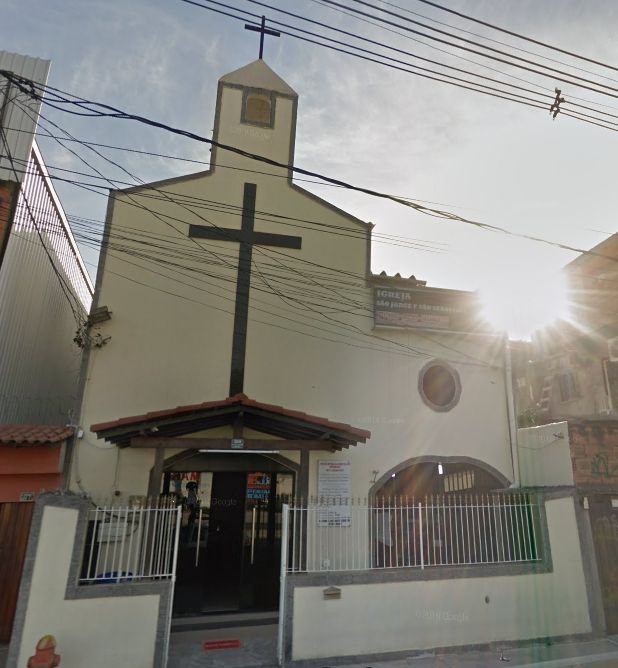
During 2019, I was particularly pleased when a group of Brazilian clergy joined the Byelorussian Patriarchate, having previously been part of the related Belarusian jurisdiction of the American World Patriarchates (which was now issued a Perpetual Charter in the Catholicate of the West). The creation of the Brazilian Exarchate under Dom Nagui Zayat brought about a new headquarters for our mission there in the form of the Cathedral of St George and St Sebastian in Rio de Janeiro.
The new year and the challenges of the coronavirus pandemic brought a much-needed opportunity to re-think the structure and organization of our missions going forward. The outcome of this was that the Abbey-Principality of San Luigi became the parent body for all jurisdictions, and the Catholicate of the West was established as the ecumenical organization within the Abbey-Principality under which they would be gathered.
The most visible blows dealt to us by the pandemic were the deaths of Dom Nagui Zayat from complications of Covid-19 and the death of the wife of one of our senior priests in Scandinavia as a result of a reaction to the Covid-19 vaccine.
Following the death of Dom Nagui, the Synod of the Byelorussian Patriarchate elected Dom Bartholomews his successor as Exarch. Unfortunately, the Cathedral in Rio de Janeiro was claimed by Dom Nagui’s family as their personal property and consequently became unavailable for worship. Fortunately, alternative premises were soon found and a new Cathedral of St George and St Expedite established in Águas Lindas do Goiás, and it was not long before the Patriarchate was once more engaged in a productive mission among some of Brazil’s poorest citizens, also expanding further overseas.

In Holy Week of 2023, the decision was taken to bring a formal end to the Patriarchate’s remaining missions and congregational outreach, returning it to its pre-2015 role as a purely dynastic ekklesia, and to transfer its clergy and laity to the Apostolic Episcopal Church and the Order of Antioch where their missions would be better served.
Between October 2021 and November 2022, I also took on responsibility for the oversight of a number of parishes and missions in Spain and Latin America under the aegis of the Apostolic Episcopal Church. These parishes followed the Use of Sarum, a rite with a long tradition within the Catholicate of the West, and had previously been organized under a Continuing Anglican ministry.
During this time, we had seen very welcome growth in the membership of the Order of Corporate Reunion, in which I serve as Prelate and Rector Pro-Provincial of Canterbury, and the roll of the Order now stands at well over one hundred members. The Order has been associated with the Apostolic Episcopal Church for over ninety years, with the AEC described as “the only concret result of the vision of a uniate church, once created by abbé Portal and Lord Halifax, and that has its ideological root in The Order of
Corporate Reunion.” (Bertil Persson: The Order of Corporate Reunion, Solna, St Ephrem’s Institute, 2000, p. 30).
The Order of Corporate Reunion is dedicated to ecumenical unity between Catholics and Anglicans, a cause which has long been close to my heart. In August 2023, the Order was granted a Federal service mark for its name in the United States, affirming its position as the only legitimate legal successor of the 1874 foundation.
Throughout my ministry, I have also maintained a supplementary ministerial status with the Universal Life Church in California, USA. I have written on my experiences with the ULC here.
As a postscript to this series, I have included some general observations drawing on my experiences of exercising the episcopate in the smaller churches, which can be read here.
 Professor John Kersey